


Levent Kenez/Stockholm
A September 2026 report by the Center for Middle Eastern Studies (ORSAM) says Greece’s planned “Achilles Shield” air defense system could significantly expand the country’s ability to detect and intercept air threats in the Aegean and eastern Mediterranean.
Defense researcher Arda Mevlütoğlu, who wrote the report, argues that the effect on Turkey will depend less on the number of new weapons than on how effectively the systems are connected. Titled “The Achilles Shield Project and Greece’s Air Defense Umbrella,” pro-government ORSAM’s report focuses on the roughly 3 billion euro package that Greece and Israel signed in Tel Aviv on August 31, 2026. Israel’s Defense Ministry called it the largest defense export deal in the history of relations between the two countries. A separate 26 million euro contract covers Drone Dome, a counter drone system made by the Israeli Rafael company.
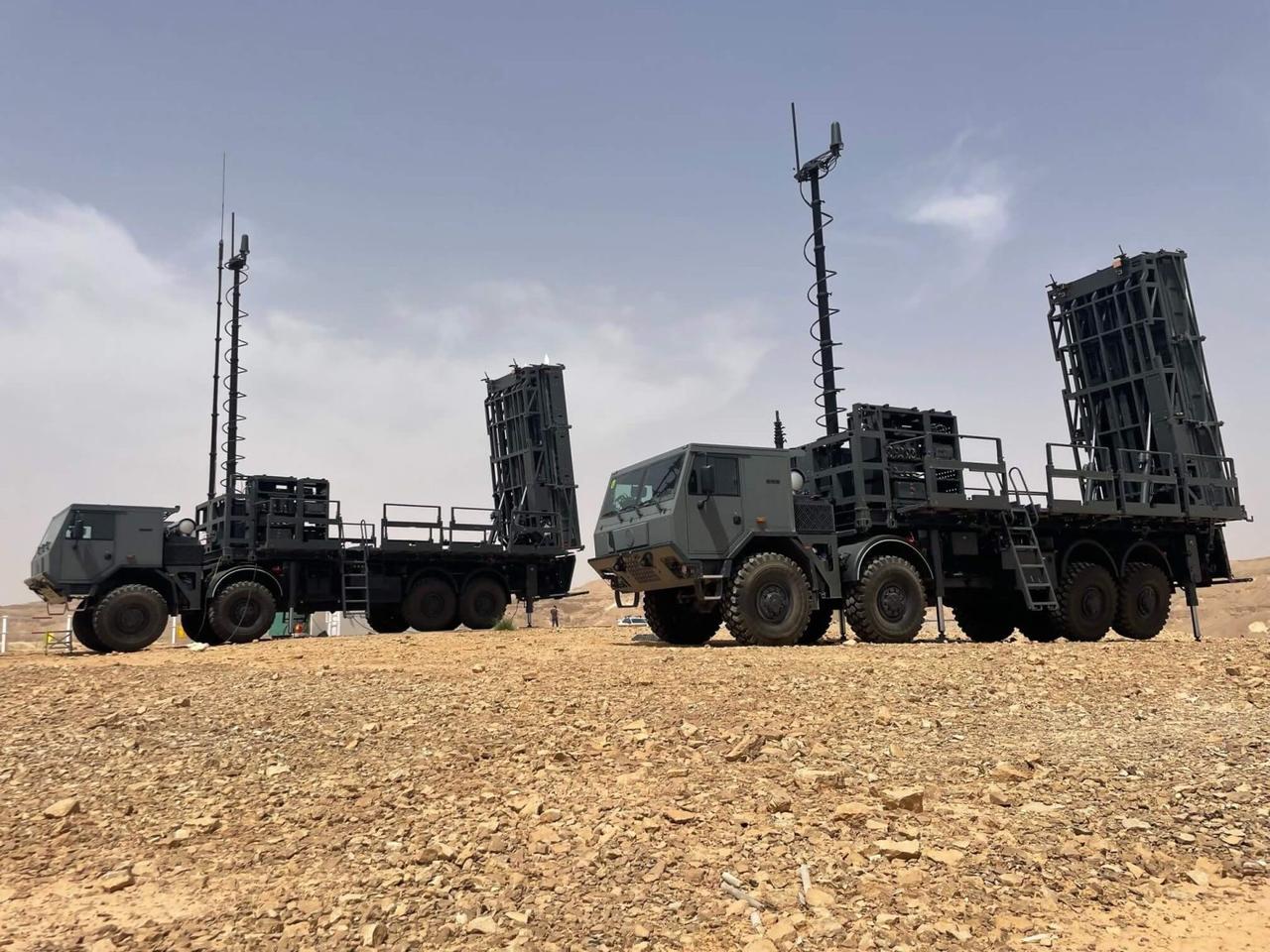
Greek Prime Minister Kyriakos Mitsotakis announced the project in 2025, and it is scheduled for completion by 2027. The package combines David’s Sling, which is meant to engage targets at roughly 40 to 300 kilometers, Barak MX, which covers 35 to 150 kilometers and SPYDER MR and LR variants, which cover 20 to 50 kilometers. An ELM-2084 multi mission radar, able to detect air targets at up to 470 kilometers depending on configuration, would support all three.
Moshe Patel, director of the Israel Missile Defense Organization, said after the signing that SPYDER would protect islands far from the mainland and that Barak MX would cover islands closer to it. David’s Sling would defend the mainland and some surrounding islands. The package also includes software that would use artificial intelligence to recommend which interceptor should engage each threat. Turkish media reported on September 8 that Israel had said Greece would not receive the software’s source code, a statement that prompted backlash.
Years of trouble with Greece’s mixed Western and Russian inventory preceded the purchase. Athens received the Russian S-300PMU1 in 1998 after the Republic of Cyprus, which Turkey does not recognize as the government of the whole island and calls the Greek Cypriot administration, ordered it from Moscow in 1997, with Turkey applying heavy military and diplomatic pressure. The system was deployed on Crete. Sanctions imposed after Russia’s invasion of Ukraine cut off spare parts and technical support, and the readiness of Greece’s 25 Russian-made Tor-M1 systems has fallen sharply, according to Mevlütoğlu. Media reports have claimed Athens considered transferring the S-300 and Tor-M1 systems to Armenia.
Greece’s seven I-HAWK batteries, in service since 1972, and its 39 Osa launchers are also slated for retirement. The six Patriot batteries Greece bought in 1999 and 2000 are expected to remain and work with the new architecture. One of them has been deployed in Saudi Arabia with 120 to 130 personnel since 2021. The Greek newspaper eKathimerini reported in January that Greek and Saudi officials were negotiating a roughly $300 million upgrade to the PAC-3 MSE standard.
Athens stands to gain in several ways, according to the study. About 25 percent of the package is planned for production by Greek defense industry. Handing air defense to a network-centered system would free Rafale and F-16V fighters, and F-35 jets in the future, for offensive missions, the study says, expanding Greece’s ability to project power in the eastern Mediterranean. Mevlütoğlu also notes that Greece has been part of NATO’s integrated air defense system since the 1960s and that the project is presented as a Greek contribution to European efforts to counter threats from the East.

For Turkey, the author focuses on sensors and information more than on missiles. He argues that ELM-2084 radars and a wider sensor network in Greece and Cyprus would give Israel an intelligence and early warning capability along Turkey’s southern and western flanks. Combined with NATO and European radars, the network could make Turkish aircraft and naval vessels, particularly drones, detectable much earlier, in his assessment. Cyprus is also expected to acquire Barak MX and the ELM-2084, which the study says would extend the network from Tel Aviv to Thessaloniki.
Israel could also pass on operational concepts drawn from its 12 day war with Iran in June 2025 and from the 2026 war involving the United States, Israel and Iran, Mevlütoğlu says, so that these lessons may reach Greece alongside the hardware. He describes the system as a significant threat to Turkish air assets in the Aegean and Eastern Mediterranean, drones in particular. He adds that it should be followed primarily as a long term change to the regional balance.
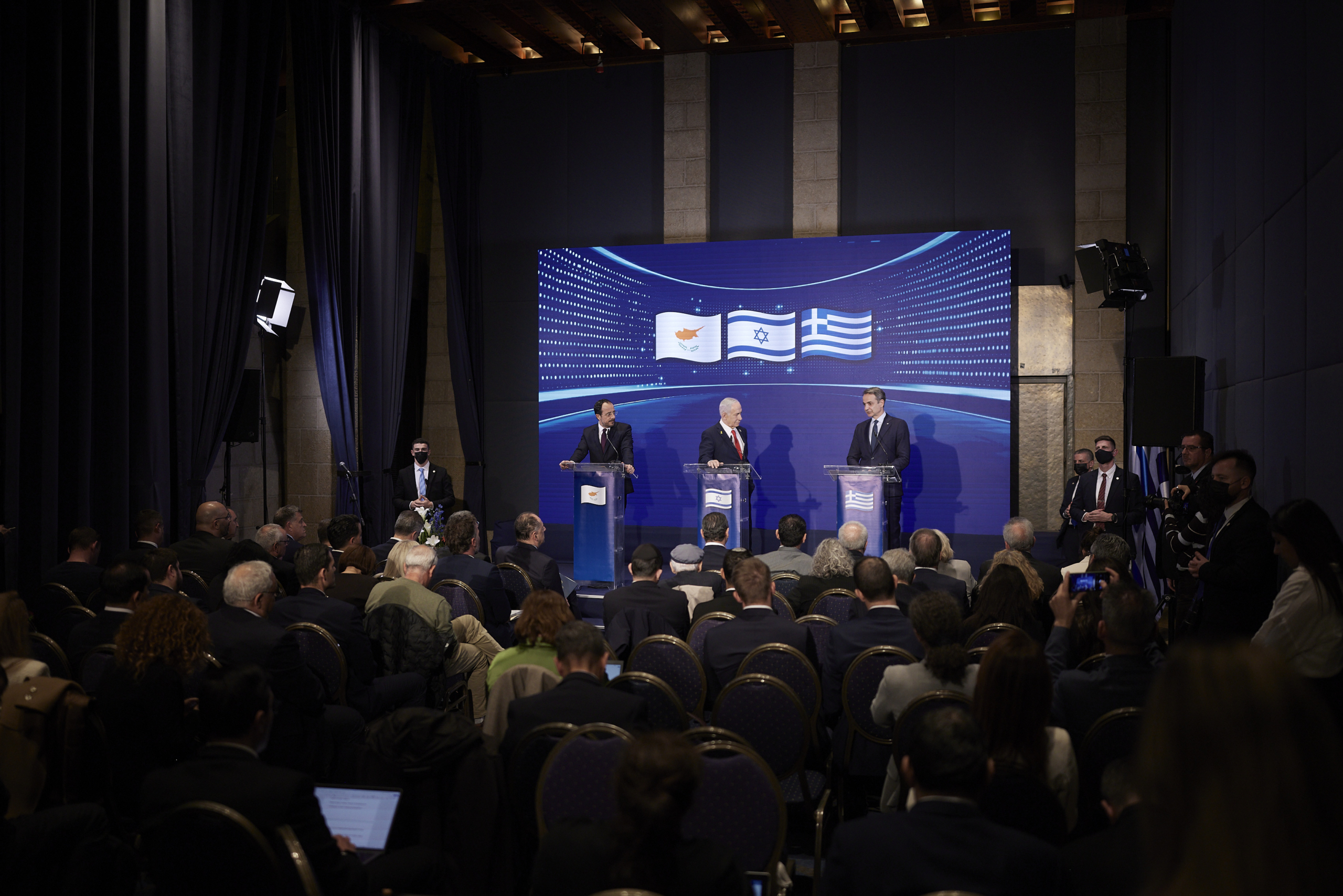
A broader political frame surrounds the deal. Leaders of Israel, Greece and Cyprus held their 10th trilateral summit in Jerusalem on December 22, 2025, and issued a joint declaration covering security, energy, connectivity and technology. Mevlütoğlu argues that a partnership first framed around energy and economics has become a strategic bloc aimed at balancing, encircling and isolating Turkey. He writes that the political language around the Greek and Israeli partnership casts Turkey as a “target actor” and describes a “re-encirclement strategy” directed at Ankara.
The study does not present the deal as risk-free for Greece or as something Turkey cannot respond to. Mevlütoğlu notes that Turkey’s own radar and early warning networks are strong. He also warns that Greece could replace its reliance on Russian spare parts with reliance on Israeli missiles, software, technical support and upgrades. In networked systems, he writes, software, threat libraries and encryption matter far more than they do in older weapons. The outcome will depend on how much Greek industry takes part and how much control Athens gains over critical technologies.
Cost is another concern. Mevlütoğlu cites the example of a $35,000 drone that can force the use of a $4 million PAC-3 MSE interceptor. Barak MX and David’s Sling remain subject to the same cost and high volume salvo problem as other missile defense systems, he says, and SPYDER is not designed for upper tier ballistic missile defense. Effectiveness will ultimately depend on radar placement, command and control integration and the depth of missile stocks, according to the study.
Beyond missiles, the author points to the sensor layer as the part that deserves the closest attention. In his view, radars, electro-optical sensors, passive detection systems and satellite-based surveillance would make it easier to track air and naval platforms not only in the eastern Mediterranean but also around the Black Sea. A sensor fusion network centered in Europe could also build the regional air picture in capitals outside Turkey, he writes. If Greece, Israel and Cyprus add further military projects, bring in new partners and move toward closer integration in intelligence, early warning and joint air operations, the combined capability would matter more than any single weapon system, according to the study.
The deal could also shape European defense politics. The study says the project is presented as a Greek contribution to the European Union’s ability to counter threats coming from the East and that a new European-centered integrated air defense network could redefine the institutional relationship between NATO’s architecture and EU defense initiatives. It adds that the project can also be read as an Israeli attempt to “infiltrate the EU defense architecture” through Greece and Cyprus. Israeli and indirectly, American military and technological capacity would be injected into efforts by the bloc to build its own defense capabilities with homegrown solutions, according to the study. That could make it hard to avoid a fresh debate over how the newly acquired systems relate to EU initiatives such as the European Defence Fund and the European Sky Shield Initiative.