
Abdullah Bozkurt/Stockholm
Turkey is developing a sprawling rocket launch facility on Somalia’s Indian Ocean coast that is publicly presented as a civilian spaceport for commercial satellite launches but is also emerging as a potential testing ground for the country’s expanding long-range ballistic missile arsenal, according to Turkish government documents, parliamentary testimony and reports on Ankara’s enhanced military hardware acquisition plans.
An examination of financial records published by the Turkish Space Agency (Türkiye Uzay Ajansı, TUA) reveals that the government allocated 2.1 billion Turkish lira, equivalent to approximately $42 million at November 2026 exchange rates, for transfer to the Defense Industry Support Fund under the country’s national space access and spaceport program.
The financial arrangement, disclosed in a footnote to the agency’s 2026 performance program, establishes an official connection between Turkey’s civilian space ambitions and the financial mechanism used to support its military and its defense industry. The documents do not specify how much of the allocation, if any, has been spent on the construction of the Somali facility or on missile-related infrastructure.
The project, estimated in media reports to cost approximately $350 million, is taking shape near the coastal town of Warsheikh, about 70 kilometers north of Mogadishu. The planned development covers an area reportedly measuring about 900 square kilometers, giving Turkey access to a substantial stretch of territory for launching rockets toward the Indian Ocean.
Its location is critical to both the civilian and potential military dimensions of the project. Somalia’s proximity to the equator offers advantages for putting satellites into orbit, while the vast expanse of the Indian Ocean provides a geographically convenient corridor for long-range missile trials, reducing the risk of rocket debris falling on densely populated areas or neighboring countries.
The clearest documentary indication of the project’s connection to the Turkish military appears in TUA’s official 2026 Performance Program, published on the agency’s website. The detail was buried in a footnote on page 23 that said an additional 2.1 billion lira was incorporated into the agency’s 2025 budget under the National Space Program’s Uzaya Erişim ve Uzay Limanı (Access to Space and Spaceport) activity.
The Turkish Space Agency’s 2026 Performance Program reveals a 2.1 billion lira ($42 million) allocation for transfer to the Defense Industry Support Fund under its spaceport program, highlighting a financial link between Turkey’s civilian space ambitions and its defense industry:
The document specifies that the allocation was intended for transfer to the Savunma Sanayii Destekleme Fonu (Defense Industry Support Fund, SSDF), citing legislation published in the Official Gazette on July 24, 2025, issue No. 32965.
The fund is a vital financing instrument for Turkey’s military-industrial programs and is institutionally distinct from the Turkish Armed Forces’ operational budget. It supports the development and procurement of defense technologies, including strategically significant domestic capabilities.
The use of this financing mechanism for a program publicly promoted around satellite launches raises questions about the division of responsibilities between TUA and Turkey’s defense establishment, particularly the Presidency of the Defense Industry (SSB) which reports directly to President Recep Tayyip Erdogan.
The same performance program puts TUA’s overall 2025 budget at approximately 4.58 billion lira, with a 2026 budget of 5.92 billion lira.
In his introduction to the program, Industry and Technology Minister Mehmet Fatih Kacır said the planned spaceport was intended to support Turkey’s independent access to space and strategic launches. The description reinforces the government’s emphasis on strategic autonomy, without defining the military or civilian status of individual future launches.
The connection between Turkey’s space ambitions and its military-industrial establishment predates the construction of the Somali facility. TUA’s 2022 Activity Report reveals that the agency began an extensive assessment in 2021 under the National Space Program to study future launch vehicles, payloads, orbital requirements and rocket launch facilities.
Four working groups were established to examine payloads, launch vehicles, innovative propulsion and component technologies and launch-base infrastructure. On February 22, 2022, TUA held a meeting to present the findings of its Independent Access to Space and Spaceport Analysis Report. Among the organizations invited were leading Turkish defense contractors Roketsan, ASELSAN, Turkish Aerospace Industries (TUSAŞ/TAI), STM and DeltaV, together with TÜBİTAK SAGE, TÜBİTAK UZAY, TÜRKSAT and other aerospace companies.
The agency said the resulting analysis was distributed to relevant stakeholders. It was kept confidential from public scrutiny.

The involvement of Roketsan is particularly significant. The company is a major developer of Turkish rocket and missile systems, including the Tayfun ballistic missile family. It also works on technologies intended to provide Turkey with independent satellite-launch capabilities.
TUA’s website identifies Roketsan as the contractor selected under a 2018 agreement with the Presidency of the Defense Industry for the Micro Satellite Launch System, known by its Turkish abbreviation MUFS. The program aims to develop the ability to put satellites weighing up to 100 kilograms into low Earth orbit at altitudes of at least 400 kilometers. It also envisages the development of domestic infrastructure for manufacturing, testing and launching space vehicles.
Although satellite-launch vehicles and ballistic missiles serve different purposes, some of their underlying technologies overlap, particularly rocket propulsion, structural materials, guidance and control and testing infrastructure. The overlap means that investment in satellite-launch technology can also strengthen the industrial capabilities needed for sophisticated missile systems.
Further evidence of the facility’s anticipated use by Turkish defense contractors emerged in December 2025 when Selçuk Bayraktar, chairman of drone manufacturer Baykar and son-in-law of President Erdogan, discussed the Somali project at a technology event in Istanbul.
Bayraktar said the state had begun construction of the launch facility and specifically identified Roketsan as a prospective user. He also said he hoped to use the site for launch vehicles developed by his own aerospace ventures. His remarks identified a direct prospective role for Roketsan at the Somali facility, going beyond its participation in the earlier feasibility studies.
Turkey’s search for an overseas launch facility is closely connected to the geographical limitations it faces in developing both an independent space program and longer-range missiles. Launching spacecraft eastward from a location close to the equator can improve the efficiency of reaching certain orbits by taking advantage of the Earth’s rotation. Such launches also require large safety zones to accommodate the possibility of falling rocket components.
Turkey’s own geography creates complications. To its north lies the Black Sea, bordered by Russia, Ukraine and other countries, while its southern approaches involve the Mediterranean, Cyprus and densely trafficked air and maritime routes. A launch site facing the Indian Ocean offers a potentially much larger testing corridor.
President Erdogan had previously announced plans to increase Turkey’s inventory of missiles with ranges of around 800 kilometers while accelerating work on systems capable of reaching 2,000 kilometers. Reports suggested that Turkey is working on testing missiles with a range of some 6,000 kilometers as well. The Somali site could provide testing opportunities for those programs, although there is no publicly established evidence that particular missile systems have been assigned to launches from Warsheikh.
According to an account published by the state-run Anadolu news agency on January 1, 2026, the Somali project is being developed in three phases, with the initial focus on establishing launch infrastructure and the subsequent ambition of offering commercial services.
The envisioned facility would initially support Turkish satellites and eventually serve foreign customers seeking access to low Earth orbit and other orbital destinations. The government also expects the project to stimulate the development of domestic rocket engines, propulsion technologies, advanced materials, avionics and ground-support systems. Such programs routinely involve technologies relevant to military communications, reconnaissance and navigation, even when launch services are sold commercially.
Turkey is believed to have been trying to combine its expanding ballistic missile ambitions under the pretext of developing a spaceport in Somalia. Ankara has not publicly disclosed a comprehensive operational framework separating the site’s civilian satellite-launch activities from any military testing arrangements.
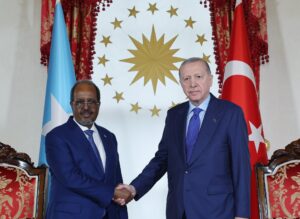
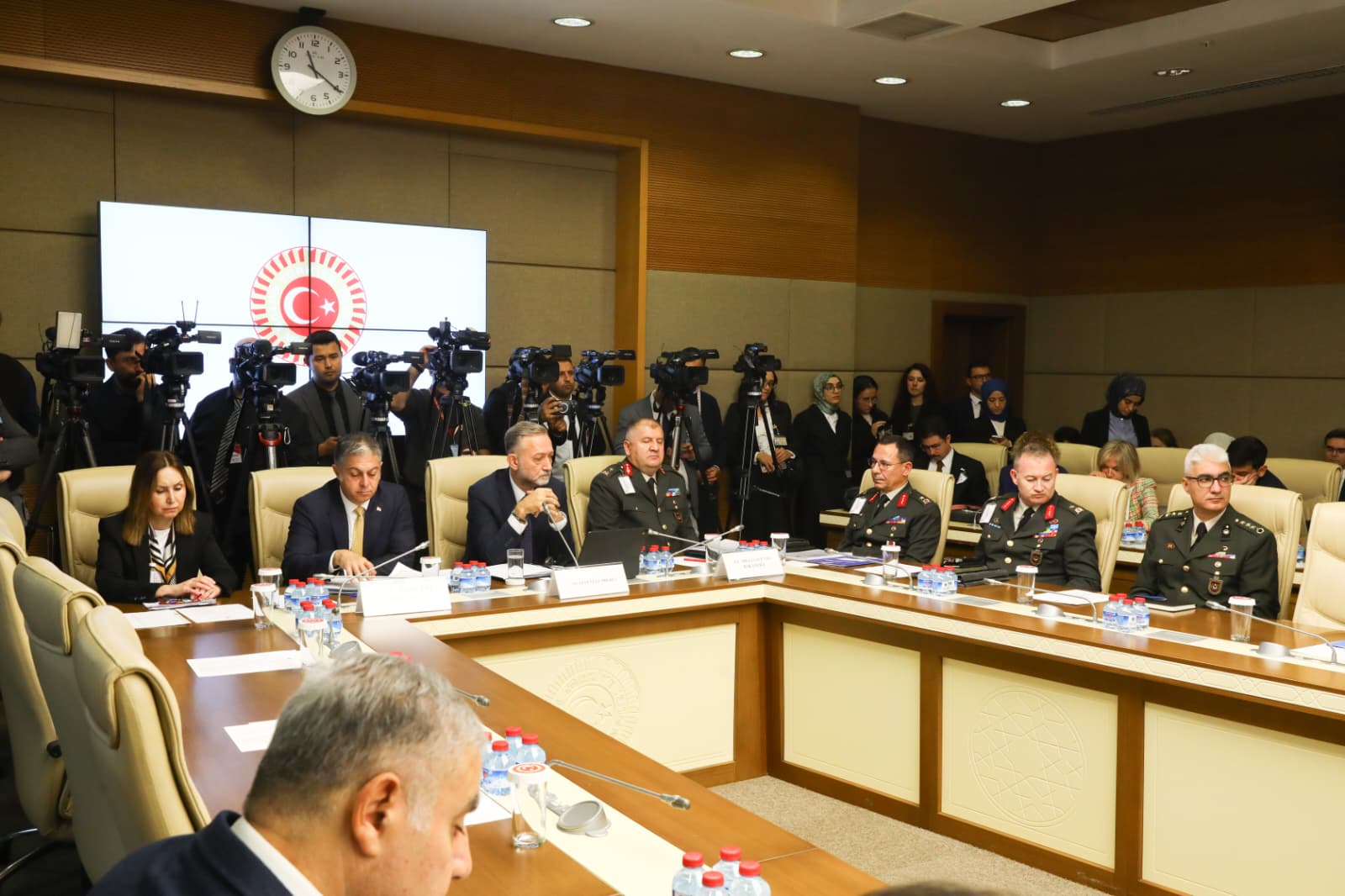
The government provided a fresh confirmation of the project’s progress during a November 2, 2026, hearing of the Turkish Parliament’s Planning and Budget Committee. Presenting the Industry and Technology Ministry’s 2027 budget, Minister Kacır said the government was moving toward the capability to launch Turkish satellites using domestically developed rockets.
He specifically referred to construction of the Somali spaceport as a central element of this ambition. The minister said the facility would give Turkey independent access to space and enable it to obtain a larger share of the global space economy. He carefully avoided making any reference to the military aspect of the project. His remarks nevertheless confirmed that the Somali facility has advanced beyond an initial proposal and forms part of Turkey’s active national space strategy.
The Turkish government also has ambitions to deploy space-based systems that could support intelligence collection, communications and navigation, capabilities of obvious interest to the country’s military establishment.
Another potentially important development appears in a June 26, 2026, announcement published by TUA. The agency disclosed that it had hosted a meeting involving the ambassadors of Somalia and Qatar in Ankara to discuss cooperation in space-related activities.
The Somali ambassador, Fathudin Ali Mohamed, and Qatari Ambassador Faisal bin Abdulla Al-Henzab attended the meeting, which focused on access to space, space systems, opportunities for cooperation and regional partnerships. According to the agency, participants also considered ways to strengthen exchanges of knowledge, experience and technology.

Although the announcement did not specifically identify the Somali launch complex as the subject of a trilateral agreement, the presence of both countries at a meeting devoted to space access is noteworthy. Qatar is an important strategic partner of Erdogan’s government, with extensive defense and economic ties to Turkey, including defense-industry cooperation. While Turkey provides muscle and technology to military projects, Qatar is poised to bankroll such ambitious projects in Turkey.
The spaceport is being established against the background of Turkey’s extensive military, economic and political involvement in Somalia. Ankara has substantially expanded its presence in the country since Erdogan’s visit to Mogadishu in 2011, building relationships across defense cooperation, infrastructure, energy, education and government institutions.
Turkey opened a major overseas military training facility in Mogadishu in 2017. Commonly known as TURKSOM, the installation serves as a center for training Somali military personnel and represents one of Turkey’s most important military commitments outside its immediate region. The facility, reportedly established at a cost of around $50 million, has the capacity to train thousands of Somali soldiers.
Turkey and Somalia have subsequently concluded additional defense and maritime security agreements, expanding Ankara’s role in helping protect Somali territorial waters and supporting Somali security institutions.In July 2024 the Turkish Parliament approved a presidential motion authorizing the deployment of Turkish naval forces to Somalia under the countries’ defense cooperation arrangements.
Turkey’s expanding security role has coincided with growing commercial interests, including infrastructure management and prospective hydrocarbon exploration. Turkish companies have a significant presence in the management of Mogadishu’s airport and seaport, while Ankara has also pursued agreements involving offshore and onshore energy exploration.
The spaceport would add another strategically important installation to this network, potentially allowing Turkey to combine military training, maritime security, aerospace technology and launch operations within a single partner country.
The financial structure of the project remains largely undisclosed. Although TUA’s performance program identifies a 2.1 billion lira allocation associated with a transfer to the Defense Industry Support Fund, the agency has not established in the reviewed documents which contracts were financed through that mechanism or whether the money was spent directly on the Warsheikh site.
Similarly, the frequently reported $350 million construction estimate has not been reconciled with a publicly available, comprehensive project budget. There are also unanswered questions about the companies responsible for building the complex.

Turkey’s Albayrak Group, a conglomerate with considerable business interests in Somalia and close ties to President Erdogan, has been mentioned in reports concerning visits by Turkish delegations to the spaceport construction site. Ahmet Sami İşler, the group’s general manager in Somalia and chairman of the Turkey–Somalia Business Council, reportedly briefed a visiting delegation on the project.
The Albayrak Group has longstanding ties to Erdogan’s government and has supported political Islamist initiatives in Turkey and abroad. Its flagship media outlet, the Islamist Yeni Şafak daily, has been a staunch supporter of Erdogan and his political Islamist agenda, consistently promoting his government’s policies and ideological positions.
The government’s own statements more clearly identify Roketsan as a prospective user of the facility, while TUA’s earlier planning documents show the involvement of numerous other Turkish defense and aerospace organizations. Satellite launch vehicles and ballistic missiles rely on some common engineering disciplines, including propulsion, aerodynamics, structural design, navigation and control. Investment in one field can therefore provide technical benefits to the other.
The involvement of the Presidency of the Defense Industry and companies such as Roketsan reinforces the strategic importance of this technological convergence. The Erdogan government has consistently promoted domestic defense production and technological independence as central pillars of Turkey’s national security strategy.
The Somali spaceport appears to fit into this broader strategy, combining ambitions to compete in the international space industry with the development of strategically sensitive technologies. For now, however, it remains unclear how much of the facility’s infrastructure, financing and operational capacity will ultimately be devoted to advancing Turkey’s military missile program.