
Abdullah Bozkurt/Stockholm
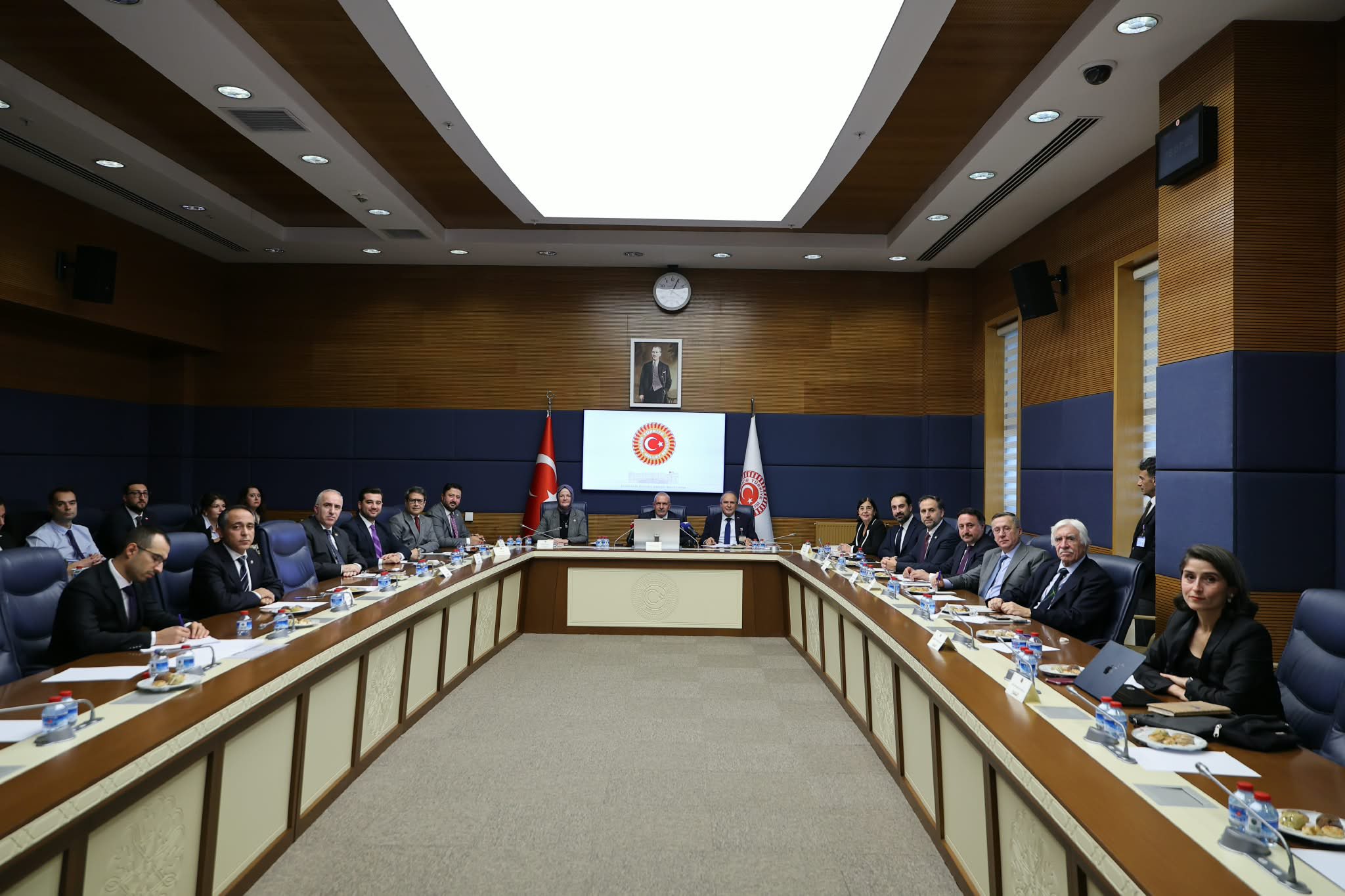
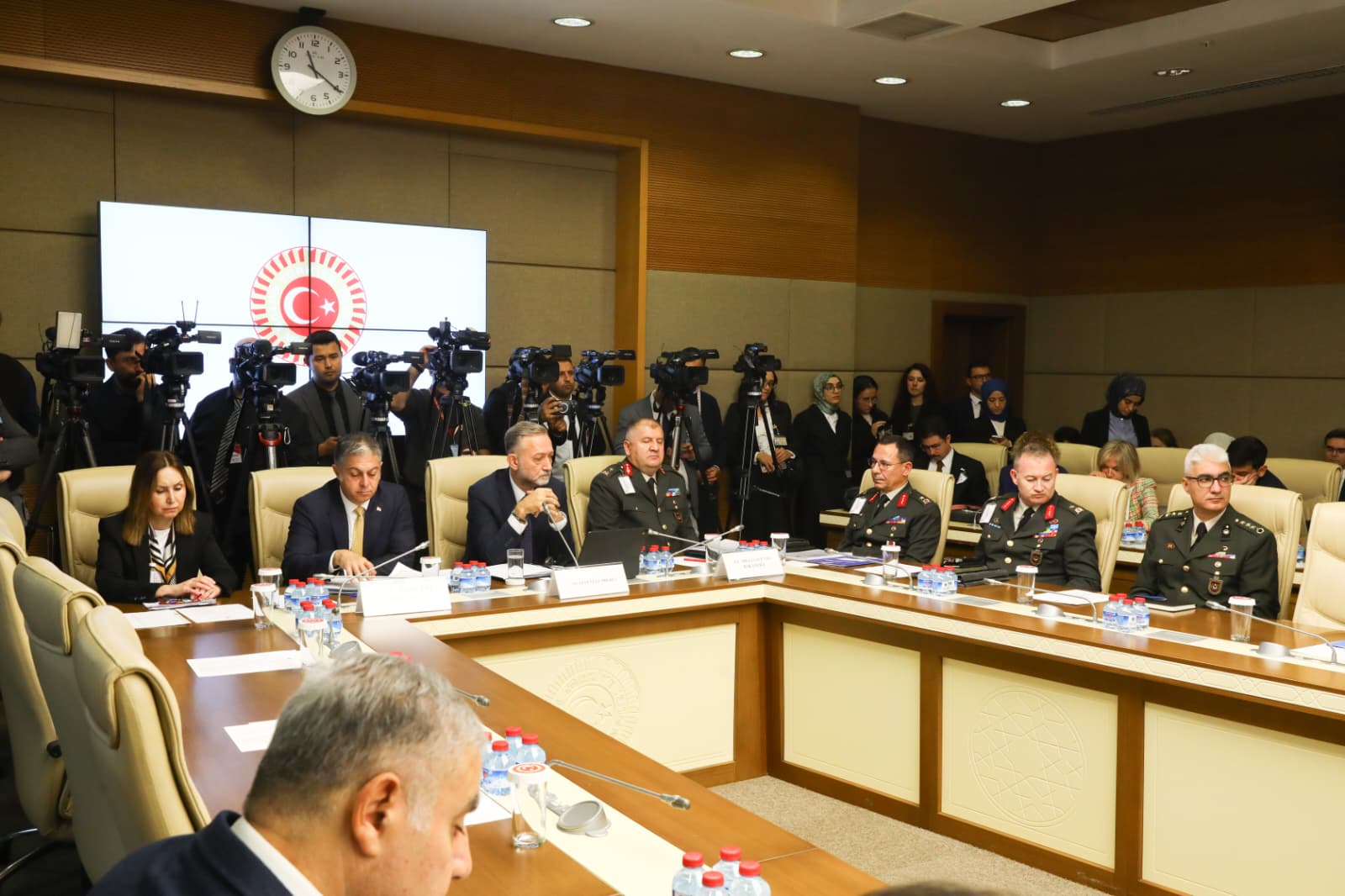
Turkey is moving to establish a NATO-style collective-defense alliance with Pakistan and Saudi Arabia, creating a new regional security bloc under which an armed attack against any one member would be considered an attack against all three, according to a detailed explanation provided by a senior Turkish diplomat during a parliamentary hearing on October 27.
Deputy Foreign Minister Zeki Levent Gümrükçü, addressing the Turkish parliament’s Foreign Affairs Committee, drew parallels between the Mecca Agreement, signed by the three countries on August 7, and NATO’s collective-defense system, making clear that Ankara intends to build an institutionalized military alliance capable of expanding to other countries.
His testimony, obtained by Nordic Monitor, provided one of the clearest official explanations of the agreement’s far-reaching military and security implications, including mutual-defense obligations, joint responses to external threats, military coordination, intelligence sharing and the establishment of permanent governing structures.
The agreement, which was hastily approved by the Foreign Affairs Committee despite objections from opposition lawmakers and no review by the Defence Committee, has raised concerns that Turkey could become entangled in regional conflicts involving Saudi Arabia and Pakistan, potentially exposing Turkish military personnel to confrontations in Yemen, the Persian Gulf and South Asia.
At the heart of the agreement is Article 2, which closely resembles NATO’s collective-defense principle enshrined in Article 5 of the North Atlantic Treaty. It explicitly states that an external armed attack against one party shall be considered an attack against all parties. The provision commits the three governments to assisting an attacked member by using the full range of mutual assistance available to them, including military capabilities, subject to an assessment of the attack and a joint determination of the scope and nature of the assistance.
Gümrükçü acknowledged the similarity to NATO’s collective-defense arrangements but emphasized that the new alliance would not automatically compel Turkey to enter a war whenever Pakistan or Saudi Arabia was attacked.
The full English text of the Turkey-Pakistan-Saudi Arabia agreement:
He explained that there was no such automaticity within NATO, either, pointing out that military assistance under the Mecca Agreement would require a request from an alliance member, a collective assessment of the situation and agreement on the response.
The senior diplomat said the three countries would jointly evaluate the circumstances before deciding what military or other support could be provided. Such decisions would be made through mutual agreement, taking into account each government’s national procedures and constitutional obligations.
He further confirmed that a lack of consensus would prevent a joint decision, effectively giving each participating country a say in determining the alliance’s response to a security crisis. The same consensus model also operates within the NATO alliance as well.
The agreement also contains a consultation mechanism comparable in purpose to NATO’s Article 4, under which allies consult when their territorial integrity, political independence or security is threatened. Gümrükçü explicitly drew attention to this article, which calls for regular consultations on international security issues and cooperation in developing individual and joint measures against threats. The mechanism is intended to enable the three governments to coordinate their assessments of emerging regional threats before deciding whether collective-defense measures are warranted.
The deputy foreign minister’s interpretation demonstrates that the agreement goes beyond conventional bilateral military cooperation, establishing the foundations of a standing multinational defense organization modeled in several respects on NATO’s institutional and operational practices.
However, the NATO-style collective-defense provisions drew criticism from lawmakers who questioned the necessity of a second military alliance and warned that Turkey could be drawn into military confrontations involving Saudi Arabia or Pakistan without a clearly defined national security benefit.
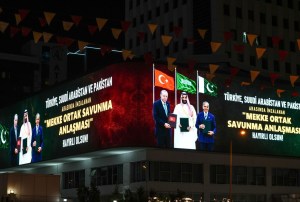
Lawmakers questioned what additional security benefits Turkey would gain from joining a second collective-defense alliance while already benefiting from NATO membership, warning that the agreement could impose obligations comparable to, or potentially exceeding, those under NATO.
They expressed concerns that Turkey could become entangled in regional conflicts involving Saudi Arabia and Pakistan, including the war in Yemen, tensions with Iran and potential military confrontations between Pakistan and India. They also warned that the new commitments could conflict with Turkey’s existing NATO obligations, damage diplomatic and economic relations and disrupt trade and maritime transportation.
Questions were raised about possible Turkish troop deployments to Saudi Arabia, including their mission, duration, command structure and parliamentary authorization. Lawmakers further highlighted ambiguities between the treaty’s requirement for immediate assistance following an armed attack and the government’s assurances that military involvement would depend on consultations and consensus.
They demanded clarification on who would determine threats, authorize military responses and bear the financial costs of deployments, weapons and logistical support. They also questioned how the three countries could coordinate counterterrorism operations given their differing classifications of terrorist organizations.
Gümrükçü rejected the suggestion that the agreement would automatically embroil Turkey in another country’s war. He maintained that collective-defense decisions would require consultation and consensus, while any overseas deployment of Turkish troops would remain subject to Turkey’s constitutional procedures, including parliamentary authorization where required.
Article 8 of the agreement provides for the creation of a Strategic Political and Defense Committee composed of the foreign ministers, defense ministers and chiefs of general staff of the participating countries. The committee will meet twice a year, while the leaders of the member states may hold annual meetings when necessary.
The agreement also establishes a permanent secretariat headquartered in Saudi Arabia and led by a secretary-general appointed on a rotating three-year basis. The first secretary-general will be a Pakistani national. These institutional provisions would give the alliance a permanent political and military coordination mechanism rather than leaving cooperation dependent solely on occasional bilateral consultations.
A letter dated October 20, 2026, signed by Turkish President Recep Tayyip Erdogan and submitted to parliament, seeking legislative approval for the Mecca Agreement on Joint Defense involving Turkey, Pakistan and Saudi Arabia, signed in Mecca on August 7, 2026:
Gümrükçü confirmed that the three founding members were already discussing the organizational framework, although binding decisions about the secretariat’s structure had not yet been taken. He estimated that establishing the alliance’s institutional arrangements could take approximately six to 12 months.
Another significant feature is the possibility of expanding the alliance beyond its three founding members. Under Article 8, the founding countries can unanimously approve procedures for admitting additional states. Gümrükçü told parliament that Turkey envisaged the organization developing into a broader regional security structure. He specifically mentioned Egypt as a country Ankara would welcome into the alliance.
Gümrükçü emphasized that Turkey would be pleased to see Egypt join, explaining that Turkey, Pakistan, Saudi Arabia and Egypt had already been cooperating through a regional consultation mechanism known as R4. According to Gümrükçü, the distinction between the three founding members and future participants could eventually disappear as additional countries join with equivalent rights and obligations.
The membership provisions resemble NATO’s enlargement process in requiring agreement among existing members, although the new arrangement will operate under its own treaty and decision-making procedures. Gümrükçü also confirmed that future accessions would be submitted to the Turkish Parliament for approval, just as Ankara has sought legislative approval for the admission of new NATO members, i.e., Sweden and Finland.
The emergence of another collective-defense organization involving Turkey, a longstanding NATO member, prompted lawmakers to question whether the new alliance could create overlapping or potentially conflicting military obligations. Gümrükçü rejected the suggestion that the Mecca Agreement represented an alternative to NATO, insisting that the two organizations would complement rather than compete with each other.
He argued that NATO’s security responsibilities were not confined to a particular direction or threat and that instability in the Middle East could directly affect Euro-Atlantic security. The deputy foreign minister pointed to NATO’s role in European security since its establishment in 1949, crediting the alliance’s collective-security umbrella with helping maintain peace on the continent.
He presented the Mecca Agreement as an effort by Middle Eastern countries to develop a comparable framework of regional responsibility and collective deterrence. He also disclosed that Ankara had formally informed NATO about the agreement shortly after its signing. According to Gümrükçü, Turkey’s permanent representative briefed the North Atlantic Council on two or three occasions, initially explaining the treaty’s contents and guiding principles and subsequently providing additional information about its planned operation.
He claimed that Turkey’s NATO allies had responded positively to the briefings and the vision underlying the new defense alliance. The agreement itself contains a provision preserving the parties’ existing international obligations. Article 12 states that it does not prejudice rights and responsibilities arising from international agreements already concluded by the participating governments.
Official transcript of the Turkish Parliament’s Foreign Affairs Committee meeting on October 27, 2026, documents deliberations on the Mecca Agreement, a NATO-style collective-defense pact involving Turkey, Pakistan and Saudi Arabia:
Nevertheless, the arrangement introduces an additional collective-defense commitment for Turkey along with its obligations to NATO, raising questions about how Ankara would manage simultaneous security crises involving countries from the two alliances. The potential implications are particularly significant because Pakistan and Saudi Arabia face security challenges different from those confronting Turkey’s NATO allies.
Pakistan, a nuclear-armed state, has experienced recurring military tensions with India and security confrontations along its border with Afghanistan. Saudi Arabia has faced regional security threats, including those associated with the conflict in Yemen. Opposition lawmakers questioned whether the agreement could draw Turkish troops into conflicts involving either country, including a possible confrontation with the Houthis in Yemen.
Gümrükçü sought to reassure lawmakers that the agreement did not provide for an immediate deployment of Turkish forces to Saudi Arabia or any other country. He said no troop deployment was currently planned under the Mecca defense alliance and emphasized that future overseas deployments would have to comply with Article 92 of the Turkish Constitution, which governs parliamentary authorization for sending Turkish armed forces abroad.
Asked specifically whether Turkey would join Saudi Arabia in the Yemen conflict, he said there was no such plan at present. The deputy foreign minister also addressed speculation that Pakistan’s nuclear capabilities might provide a nuclear-security umbrella for other members of the new alliance. He stated that the agreement contained no provision concerning nuclear weapons or a nuclear guarantee by Pakistan.
While acknowledging the nuclear question, his explanation established that the treaty’s collective-defense provisions should not automatically be interpreted as extending Pakistan’s nuclear deterrent to Turkey or Saudi Arabia.
Beyond mutual defense, the agreement envisages extensive military integration and operational cooperation among the participating countries. Article 6 provides for personnel exchanges, joint military training, exercises and deployments aimed at improving interoperability among the three armed forces during both peacetime and wartime.
Article 7 calls for defense-industry cooperation, including joint production, technology transfers, research and development, innovation and the training of specialists. Another provision, Article 9, establishes a framework for intelligence sharing through mutually agreed secure channels, subject to information-security, data-protection and confidentiality requirements.
Article 5 provides for strengthening counterterrorism cooperation, including at the operational level, while Article 10 calls for mutual logistical support involving weapons, ammunition, fuel, spare parts and other equipment during peacetime, wartime and other extraordinary circumstances.
Taken together, these provisions would facilitate a degree of military, intelligence and industrial cooperation substantially broader than that normally associated with a political declaration of strategic partnership.

The agreement also establishes a long-term institutional commitment. Article 16 provides that the treaty will remain in force indefinitely, with ordinary withdrawal permitted only after 10 years from its entry into force and subject to at least three months’ advance notice.
The withdrawal restriction prompted objections from lawmakers who argued that a decade-long commitment could constrain the policy choices of future Turkish governments, particularly if the strategic environment or relations among alliance members deteriorated. They questioned why Turkey should accept such a prolonged restriction on its freedom to withdraw from a defense agreement whose military and financial implications had not been fully assessed.
Gümrükçü defended the withdrawal provision by comparing it with provisions in other international agreements, including NATO’s founding treaty and the Montreux Convention governing the Turkish Straits. The Mecca Agreement’s indefinite duration and delayed withdrawal mechanism underscore the intention to create an enduring defense structure rather than a temporary arrangement responding to a particular security crisis.
Despite the scope of the agreement, lawmakers expressed concerns about the adequacy of parliamentary oversight. One lawmaker criticized the absence of a substantive assessment by the Defense Committee, which had been designated to examine the proposal as a secondary parliamentary committee. He argued that an agreement involving the armed forces, defense industry and national security should have been subjected to detailed scrutiny by lawmakers specializing in military and defense matters before being considered by the Foreign Affairs Committee.
Foreign Affairs Committee Chairman Fuat Oktay confirmed that the Defense Committee had formally informed his committee on October 26 that it would not examine the proposal or issue a report at that stage. The lawmaker questioned the purpose of assigning parliamentary committees specialized responsibilities if they declined to examine an agreement with such extensive military implications.
A proposal to postpone deliberations until the National Defense Committee could assess the agreement’s potential benefits and risks was rejected by the parliamentary majority aligned with President Recep Tayyip Erdogan’s ruling Justice and Development Party (AKP) and its political ally, the far-right Nationalist Movement Party (MHP). A second proposal calling for the establishment of a dedicated subcommittee to scrutinize the treaty was also rejected.
The Foreign Affairs Committee subsequently approved the ratification proposal, advancing the agreement toward consideration by the full Turkish Parliament.
According to Gümrükçü, Pakistan and Saudi Arabia had already completed their domestic approval procedures, leaving Turkey’s ratification process as the remaining step before the agreement could enter into force under its terms.
The agreement would take effect after the final instrument of ratification is deposited with the alliance’s secretariat. For Turkey, which has been a NATO member since 1952, the new arrangement represents a significant expansion of its formal collective-defense relationships into the Middle East and South Asia.

Although Ankara insists the Mecca alliance is not directed against any particular country and is compatible to NATO, the treaty establishes a separate structure under which Turkey could be called upon to provide military assistance in conflicts involving Pakistan or Saudi Arabia.
Gümrükçü maintained that the alliance was intended to deter aggression and strengthen regional stability rather than create a military bloc directed at neighboring states. He acknowledged that the three countries had not designated any particular nation or organization as a common enemy, arguing that joint decisions would instead be based on assessments of threats to member states’ independence, sovereignty and territorial integrity.
He also noted that India has so far not expressed any criticism of the agreement.
The parliamentary debate nevertheless highlighted a fundamental disagreement between the government and its critics over the risks and benefits of the alliance. While the government portrayed the agreement as an additional security framework compatible with NATO, opposition lawmakers warned that Turkey could assume military and financial obligations stemming from disputes in which it had no direct national security interest.
The practical test of the new arrangement will come when the member governments confront a security crisis requiring a collective response, forcing them to reconcile their treaty commitments, national interests and existing international obligations. For now Gümrükçü’s parliamentary testimony makes clear that Ankara regards the Mecca Agreement as the foundation of an expanding regional defense alliance incorporating important elements of NATO’s collective-defense model while operating independently of the transatlantic organization.