
Levent Kenez/Stockholm
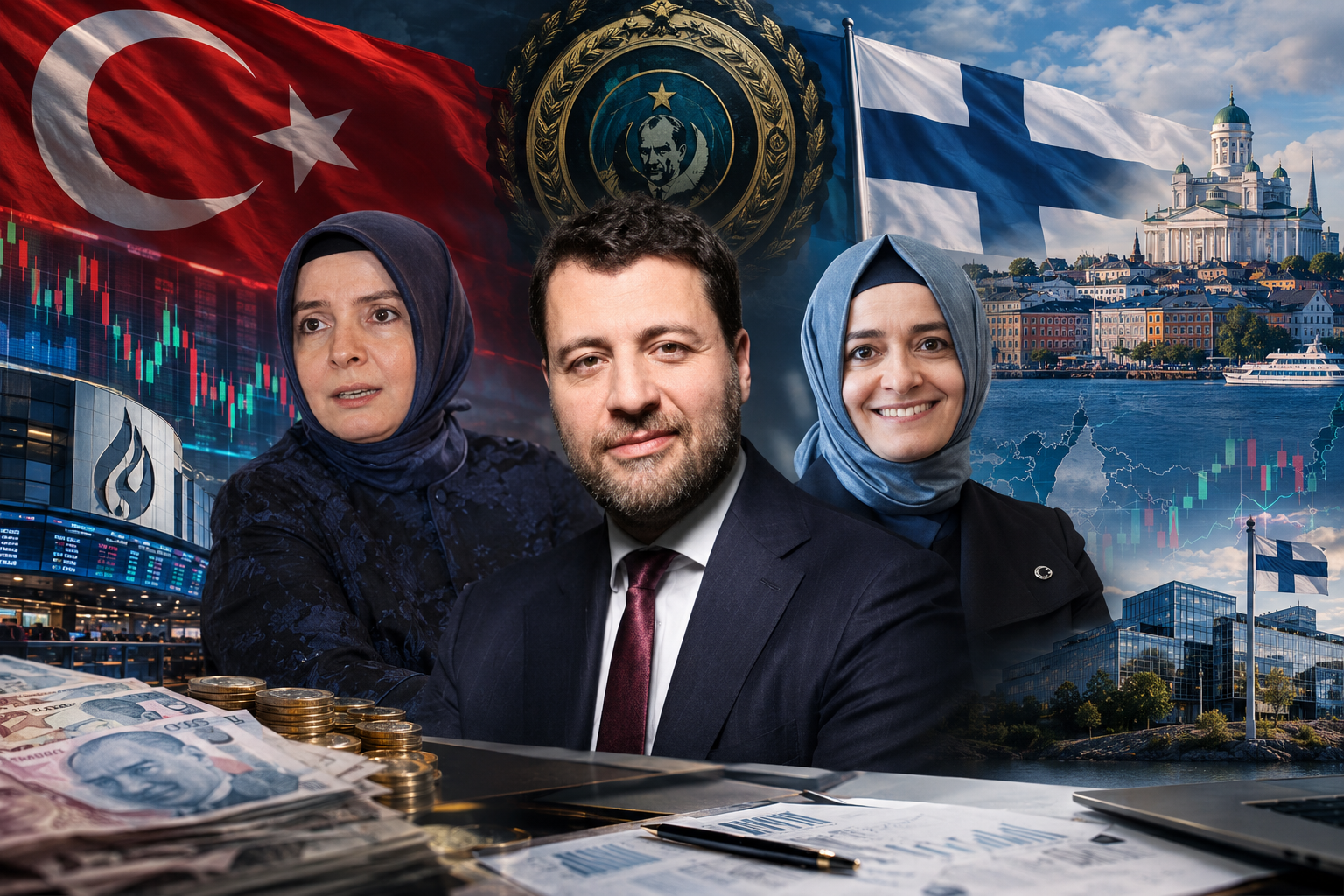
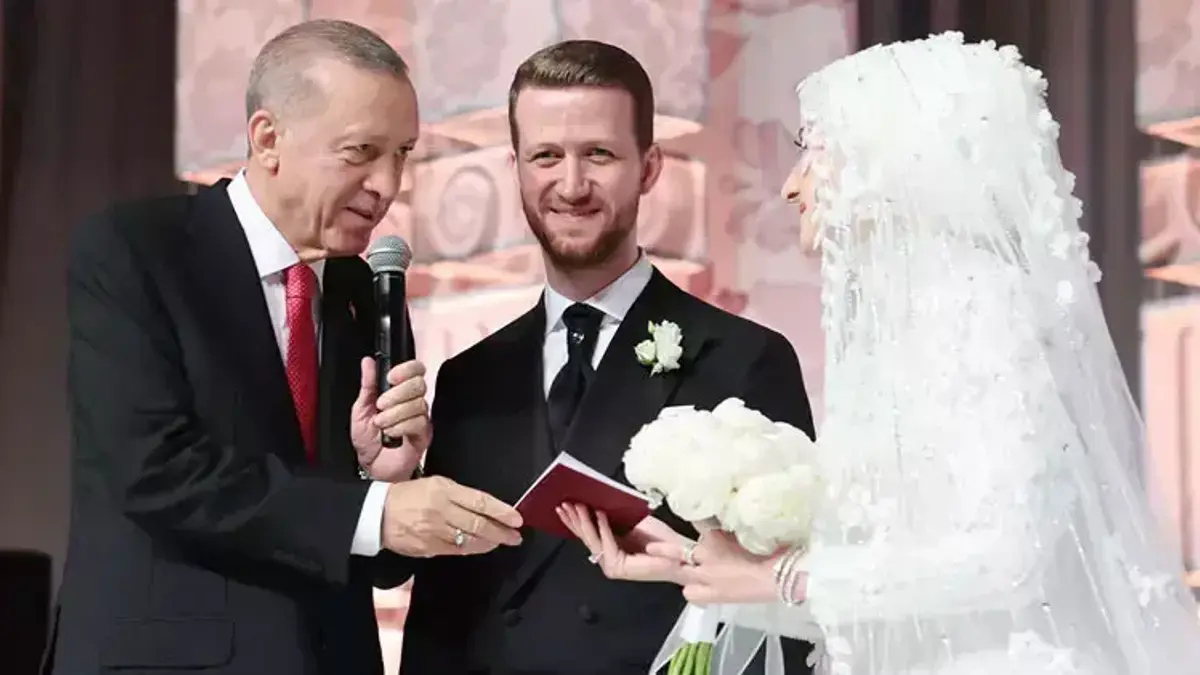
Turkey’s stock market manipulation investigation, linked to a crisis involving investment funds with about $18 billion in assets that has put the savings of 455,758 investors at risk, according to an official statement from the Capital Markets Board (SPK), has brought fresh scrutiny to the business network around President Recep Tayyip Erdogan’s nephew, Üsame Erdogan, even though his name has not emerged publicly as a suspect.
The crisis centers on allegations that investment funds accumulated large positions in thinly traded stocks, helping drive prices higher and attracting new investors. When investors began demanding their money back, funds were forced to sell shares or liquidate positions, putting further pressure on prices and contributing to a market collapse. The investigation has so far resulted in dozens of arrests, including senior figures from major investment and portfolio management companies. A former government minister who is now a deputy chairman of the ruling party also resigned after being accused of making illicit gains through manipulative stock market transactions.
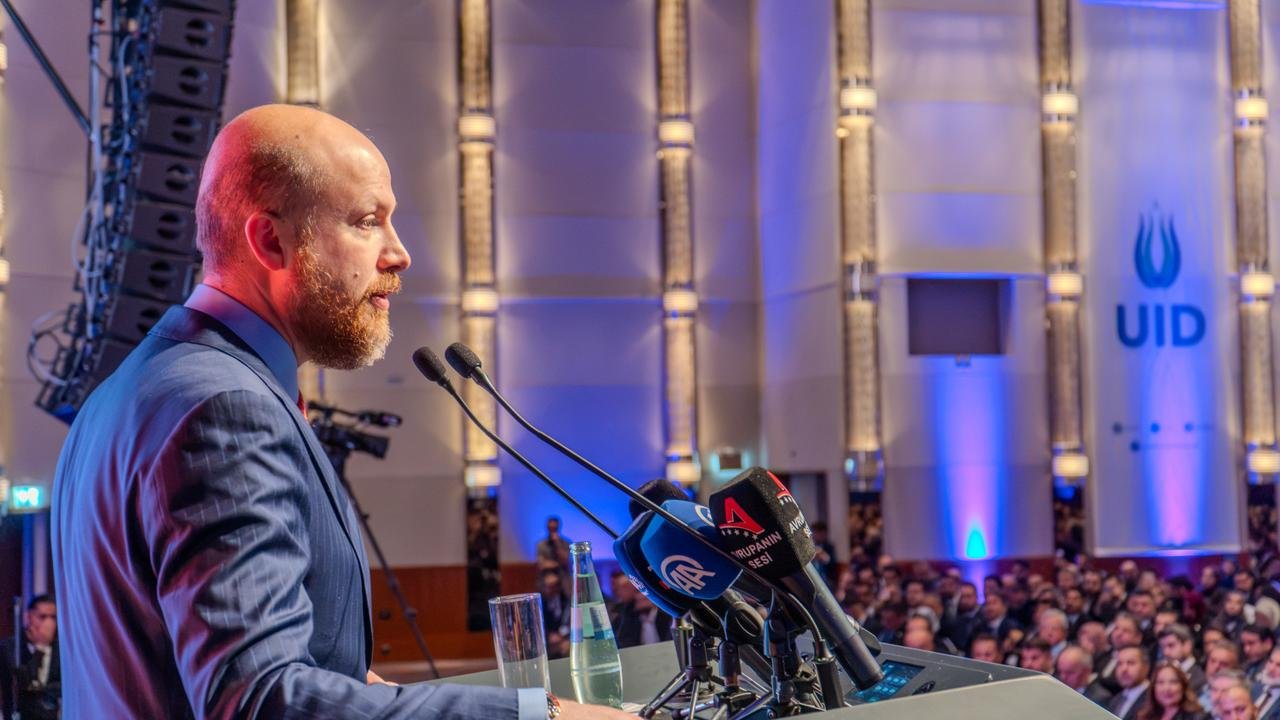
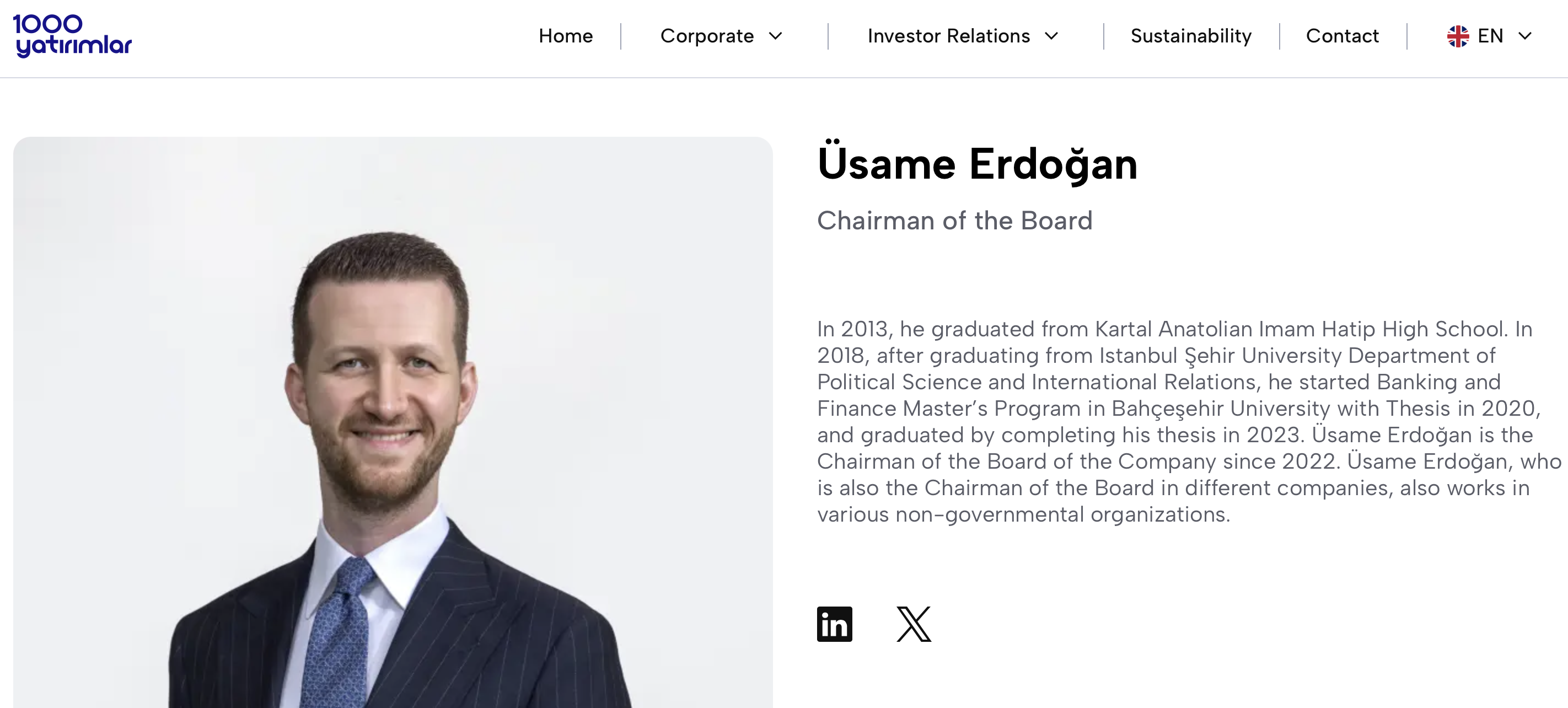
Thirty-one-year-old Üsame Erdogan, the son of President Erdogan’s brother Mustafa Erdogan, has been chairman of the board of 1000 Yatırımlar Holding since the company was established in March 2022. According to the company and the Public Disclosure Platform (KAP), he owns 18.37 percent of 1000 Yatırımlar and holds 24.09 percent of its voting rights, making him its largest individual shareholder.
1000 Yatırımlar has expanded rapidly, with a portfolio spanning mobility, energy, software, payments and technology: Bin Ulaşım ve Akıllı Şehir Teknolojileri A.Ş., Meta Mobilite Enerji A.Ş., Algoritma Donanım ve Yazılım A.Ş., Altay Yenilenebilir Enerji Üretim ve Depolama A.Ş., 4B Mühendislik A.Ş., 1000 Ödeme Hizmetleri ve Elektronik Para A.Ş. and Istanbul Dijital Taksi Uygulamaları A.Ş.
1000 Yatırımlar went public on Borsa İstanbul, Turkey’s stock exchange, in November 2023. At the opening bell ceremony, Üsame Erdogan and other board members appeared alongside Enver Çevik, founder of EC Yatırımlar Holding. Borsa Istanbul’s own account of the event lists Çevik among the participants. Corporate records show that the relationship predates that appearance: Reports on the establishment of 1000 Yatırımlar identified EC Yatırımlar Holding as one of its founding shareholders along with Üsame Erdogan, Kadir Can Abdik, Mustafa Saim Birpınar, Hüseyin Ardan Küçük and Haris Pojata. The 2023 public offering also included shares held by EC Yatırımlar Holding.
The ownership links extend from EC Yatırımlar and 1000 Yatırımlar to Çevik’s larger investment network. Çevik controlled Lydia Yatırım Holding, which later became a shareholder in 1000 Yatırımlar. KAP currently lists Lydia Holding, its successor entity, as having 8.97 percent of 1000 Yatırımlar and identifies Çevik as its chairman and controlling shareholder. Lydia Holding also owns a 33.33 percent stake in Bulls Yatırım Holding.
The ownership chain extends to Bulls Yatırım Holding. A corporate report shows Lydia, Kemal Akkaya and Neslihan Mumcu each holding one third of Bulls Yatırım Holding at the time covered by the report. Bulls in turn controls Bulls Menkul Degerler and has a majority stake in Bulls GYO.
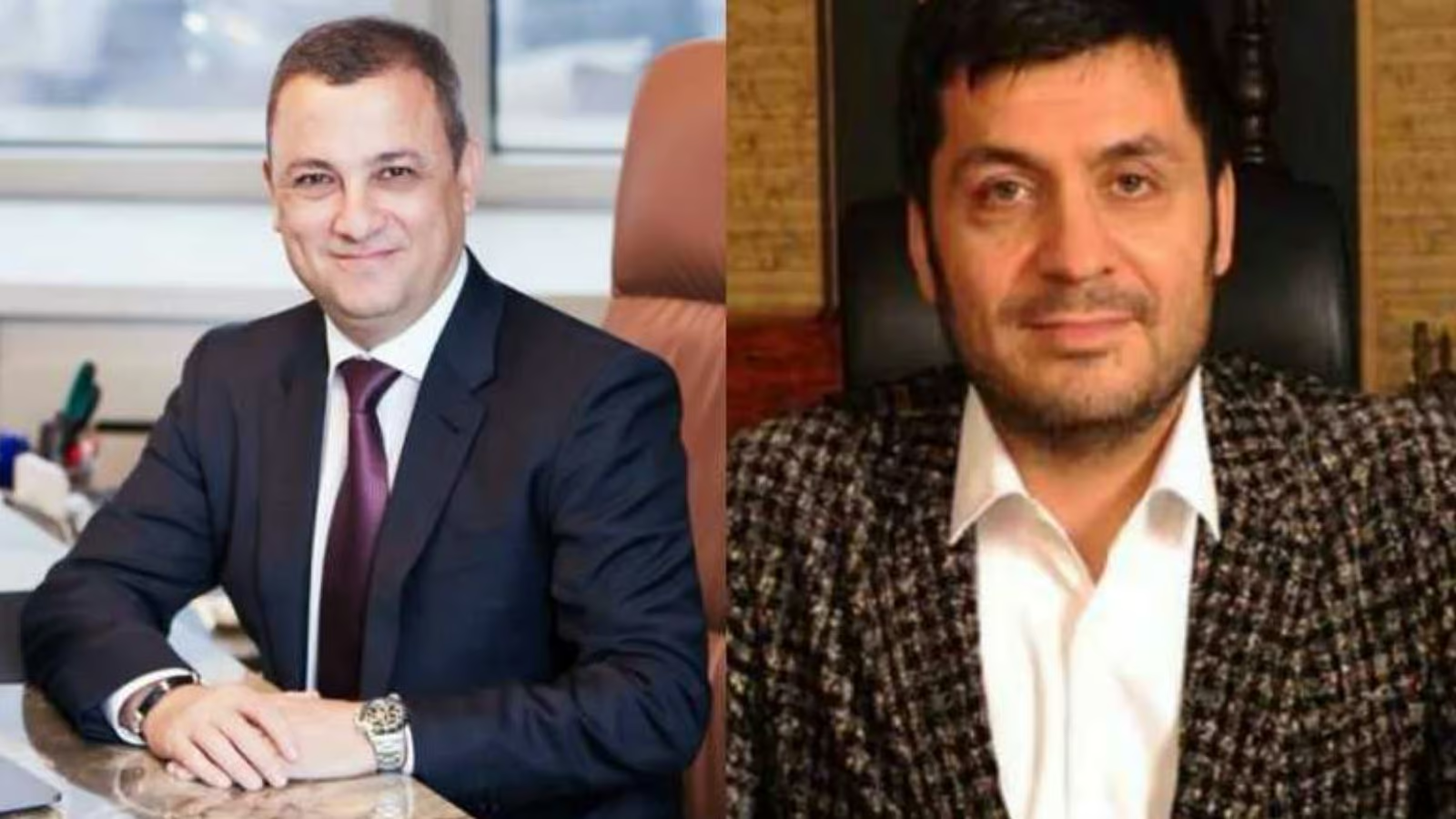
Mumcu is the wife of Batuhan Mumcu, who served as deputy culture and tourism minister until August 31, 2026, when he was appointed to the board of Turkey’s Information and Communication Technologies Authority (BTK), the country’s telecommunications regulator. Batuhan Mumcu has also been publicly associated with President Erdogan’s son Bilal Erdogan, including through events involving the latter’s public and business network. Separately, claims that Mumcu advised senior Justice and Development Party (AKP) figures on stock market investments, as well as allegations concerning his wife’s stake in Bulls, have previously been raised in parliament. These remain unverified political claims rather than established criminal findings.
Nordic Monitor has learned that Üsame Erdogan does not appear as a formal shareholder or partner in some companies with which he has business ties through the wider network. One direct connection involves Tera Holding, one of the groups whose executives have been caught up in the fund crisis investigation. Tera subsidiary Veridion Teknoloji, which operates in mobile applications, digital payment systems and card technologies, acquired all shares of 1000 Ödeme Hizmetleri ve Elektronik Para A.Ş., a company wholly owned by 1000 Yatırımlar, for $15 million in June 2026, according to KAP records. In July 2026, shortly before the market crisis erupted, Tera sold its entire stake in Veridion to Albaraka Portföy, the portfolio management company of Albaraka Türk, a bank with close ties to the Turkish government.
Üsame’s 1000 Yatırımlar’s financial performance has also attracted attention. In the first quarter of 2025 the company reported a net profit of about 5.05 billion lira, compared with just 827,727 lira a year earlier, an increase of more than 600,000 percent.
KAP financial statements show that the company recorded no revenue from ordinary sales during the period and posted an operating loss. Investment activity income, reported at 8.81 billion lira, was the dominant positive item. Fair value gains were subsequently excluded from operating cash flow calculations because they were not cash movements. In other words the figures do not show that the holding generated 5 billion lira in cash from selling products or services. A substantial part of the reported profit came from investment activity, including increases in the fair value of financial holdings, which can increase accounting profit without generating an equivalent amount of cash. The financial statements do not establish that these gains resulted from market manipulation.
According to the financial statements of Üsame Erdogan’s 1000 Yatırımlar, its financial investments totaled more than 18.1 billion Turkish lira (approximately $388 million) as of June 30, 2026:
The company’s reliance on investment-related gains was also evident in the first half of 2026. During that period 1000 Yatırımlar reported 898.45 million lira in investment activity income, 560.71 million lira in gains from sales of financial investments and 337.74 million lira in fair value gains. Its financial investments totaled more than 18.1 billion lira as of June 30, 2026. The financial statements establish the source of these accounting gains but do not by themselves establish that any illegal market activity caused them.
Turkey’s stock market was hit by a liquidity crisis in September 2026 after funds holding relatively illiquid stocks ran into trouble. SPK ordered the liquidation of 131 investment funds managed by seven portfolio management companies, affecting hundreds of thousands of investors and hundreds of billions of lira in assets.
The Istanbul Chief Public Prosecutor’s Office is separately investigating alleged manipulation and other capital market transactions. Muhammed Yarız, chairman of Pusula Portföy, was arrested, and executives from Tera, Pusula, Hedef and other companies were subsequently detained. Enver Çevik and Kemal Akkaya were both questioned in connection with the inquiry and released. Lydia Holding said in a disclosure that its companies, Lydia Holding itself, Lydia Yeşil Enerji and Ufuk Yatırım, had not been parties to manipulative transactions, market-disrupting conduct, unusual money transfers or activities that could undermine market confidence.
Neither Üsame Erdogan nor 1000 Yatırımlar appears in the publicly reported list of people arrested in the fund investigation reviewed for this article. He was also not among the 48 people reported on September 17 as subject to a travel ban, a list that did include Çevik and Akkaya. This is despite the overlapping ownership links connecting 1000 Yatırımlar, Lydia Holding and Bulls Yatırım Holding.
1000 Yatırımlar was established in 2022 with capital of 7.5 million lira (approximately $452,600 at the 2022 average exchange rate). Üsame Erdoğan has a total stake of 1.57 million lira (approximately $94,800):
Under Article 107 of Turkey’s Capital Markets Law, market fraud is a criminal offense that can involve various transaction patterns designed to affect prices or create misleading impressions about supply, demand or trading activity. The definition is broader than simply buying and later selling a share at a profit. The current investigation has focused on allegations that certain funds and market participants built large positions in stocks with limited free float and that unusual transactions contributed to artificial price movements and the subsequent liquidity crisis.
That mechanism is distinct from simply noting that a company’s accounting profit came from investment activity. In 1000 Yatırımlar’s case, the available financial statements show investment valuation gains as a major source of reported profit, but they do not establish that those gains resulted from an illegal scheme or that retail investors’ money was transferred to the company.
The questions surrounding Üsame Erdogan therefore concern documented ownership and business relationships as well as the extraordinary financial growth of a holding in which the president’s nephew is the largest individual shareholder. The prosecution has so far publicly identified other executives and investors in the investigation, while Çevik and Akkaya were questioned and released. There is no public indication in the records reviewed for this article that Üsame Erdogan or 1000 Yatırımlar has been accused of participating in the alleged market manipulation.