
Abdullah Bozkurt/Stockholm
A Turkish al-Qaeda aspirant and other jihadist actors figured in a plot to carry out a mass-casualty attack against US soldiers at a sensitive military installation in Turkey, where US military intelligence had identified specific extremist threats operating within hours of the troops’ position, underscoring that a violent jihadist assault on US forces in a NATO ally country was considered a genuine operational risk, according to US federal court documents.
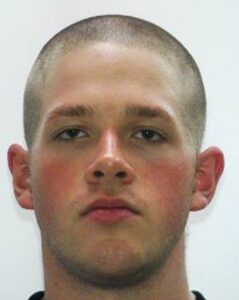
The plot centered on Ethan Phelan Melzer, a US Army private and member of the extremist Order of the Nine Angles (O9A), who supplied classified and sensitive military information to associates in the hope that jihadists would attack his own platoon during its deployment to Turkey.
The government described the case as one of the most extraordinary acts of betrayal ever prosecuted from within the US military, accusing Melzer of weaponizing the access and trust afforded to him as a soldier in an attempt to have his own comrades murdered.
The information Melzer disclosed was particularly dangerous because it closely mirrored the threats the US Army itself had identified as posing serious risks to the unit. A military intelligence officer who prepared Melzer’s platoon for the mission testified that soldiers were briefed about enemy forces and terrorist organizations, including specific actors and organizations that might have been operating within eight to 16 hours of the platoon’s position.
The intelligence briefing included possible attack scenarios against the sensitive military base, its vulnerabilities, transportation routes and other information intended to help the American troops survive precisely the type of jihadist assault Melzer was seeking to facilitate.
At the same time, Melzer and his online associates were discussing getting his information to jihadists. One co-conspirator told him that another participant, identified only as “CC-2,” was a Turkish individual joining al-Qaeda and “needs to know” about the impending US military deployment because “he has plans.” The CC-2 was using a screen name Kurt Cobani during his conversation in a Telegram group that involved Melzer as participant.
The court testimony of Capt. Joshua Kraus, a US Army military intelligence officer, laid bare the terrorist threat facing US forces in Turkey:
As the conspiracy developed, Melzer explicitly sought locally based participants, telling his associates, “I need some Turkish people to cause some shit to put it lightly.” When asked how many “jihadis” he wanted, he reportedly responded that he needed a “squad sized” group.
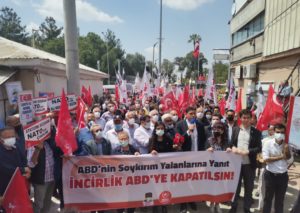
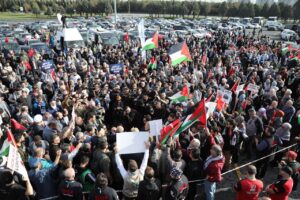
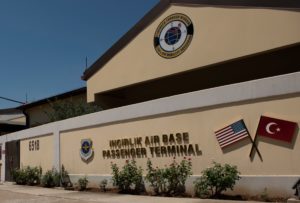
The details disclosed in the US federal case corroborate findings from a series of investigative reports published over the years by Nordic Monitor, which identified terrorist and extremist groups ranging from al-Qaeda and the Islamic State in Iraq and Syria (ISIS) to the Iran-backed Turkish Hizbullah and the neo-nationalist Aydınlık group as having targeted US troops deployed in Turkey, particularly at Incirlik Air Base in the southern province of Adana, where the US Air Force’s 39th Air Base Wing is stationed.
The combination of those disclosures in the US federal case presents a disturbing picture: US military intelligence had assessed jihadist threats in the vicinity of the unit’s destination as sufficiently serious to brief deploying soldiers on specific organizations and possible methods of attack, while a soldier inside the unit was simultaneously leaking sensitive information and looking for Turkish jihadists who might be able to exploit those vulnerabilities.
Federal prosecutors later argued that the attack scenarios discussed by Melzer were not imaginary or far-fetched. They were essentially the same threats his unit had been trained to anticipate.
“They are not high fantasy,” a federal prosecutor told the sentencing court, stressing that scenarios that might sound unrealistic from a courtroom in New York represented genuine dangers at a remote military installation in Turkey protected by roughly 40 US paratroopers.
The plot was ultimately disrupted after an FBI confidential source embedded in the conspirators’ communications alerted law enforcement, leading authorities to postpone the deployment and take Melzer into custody.
Melzer eventually pleaded guilty to attempting to murder US military service members, attempting to provide and providing material support to terrorists and illegally transmitting national defense information. He was sentenced to 45 years in federal prison.
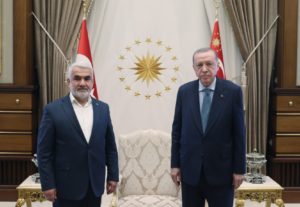
The military intelligence prepared for the Turkey deployment provides critical context for understanding why Melzer’s disclosures alarmed US authorities. It also highlights how, after more than two decades of rule by the Islamist government of President Recep Tayyip Erdogan, whose policies have accommodated and supported radical jihadist groups, the operating environment for US troops in Turkey has become increasingly hostile and unpredictable despite the country’s status as a NATO ally.
Capt. Joshua Kraus, a US Army military intelligence officer who was directly responsible for preparing Melzer’s platoon, testified that he briefed the soldiers on terrain, weather, enemy threats, travel considerations and presumed modes of transportation they might use after arriving in the country.
He also went over scenarios in which enemy forces, terrorist organizations or civilians could directly attack the military installation. In classified sessions Kraus identified specific actors and organizations believed to be operating within eight to 16 hours of the platoon’s position.
The briefing was not a theoretical exercise. Kraus’s job was to identify genuine dangers facing the soldiers and explain how adversaries might exploit vulnerabilities at the installation.
“I provided sensitive information on how I would attack this base if I were the enemy,” Kraus later told the sentencing court. He said he described potential vulnerabilities in detail and stressed that the assessment was distributed strictly on a need-to-know basis.
Melzer was therefore being trained to defend against the same types of attacks he was simultaneously discussing with extremists.
Kraus later reviewed some of the material Melzer had shared online and said he was “completely shocked” to recognize information he had personally provided to protect the platoon.
Complaint filed against Ethan Phelan Melzer:
“The information that I delivered to protect Ethan and his platoon was shared with our sworn enemies,” he told the court.
The government’s case depicts Melzer’s actions as particularly dangerous because the attack scenarios he passed to his associates were based on actual military threat assessments.
Prosecutors said Melzer effectively took information the Army had given him so he could protect the installation and his fellow soldiers and “regurgitated” it to people with whom he was discussing an attack.
The intelligence also covered the strategic purpose of the military installation. According to prosecutors, Melzer disclosed not only coordinates, troop numbers and weaponry but also the purpose of the base itself, discussing its importance and the potential damage an attack there could cause to US interests.
The details concerning the unidentified Turkish suspect emerged from electronic communications between Melzer and his co-conspirators in May 2020, shortly before the US unit was scheduled to deploy.
Melzer had been transferred in April to a new platoon preparing for a mission to guard a sensitive military facility in Turkey. On May 17 Melzer informed a co-conspirator identified as CC-1 about the impending deployment, which was then scheduled for May 28. CC-1 indicated that the information needed to be passed to CC-2, identified as a Turkish al-Qaeda figure.
The reference to the Turkish al-Qaeda aspirant came three days before Melzer received the classified May 20 briefing that provided him with more detailed information concerning the military installation, its strategic significance and possible jihadist attack scenarios.
Melzer subsequently disclosed increasingly sensitive information. By May 25 he had confirmed the coordinates of the base and provided details about the number of soldiers expected to be present and their weapons.
The sequence suggests that according to CC-1, CC-2 was already considered potentially relevant to the operation before Melzer obtained and transmitted the most sensitive military intelligence.
The government emphasized that Melzer did not simply send information to a single person. He distributed it to a broader online audience and actively sought people capable of getting the intelligence to those who could execute an assault on the unit.
The Turkish dimension became even more explicit as the planned deployment approached.
On May 23 CC-1 reportedly forwarded communications concerning the proposed attack to an online group with 18 participants. Among them were Melzer and the FBI confidential source who would ultimately expose the plot. The participants discussed the possibility of jihadists attacking Melzer’s platoon.
Melzer said he had previously been friendly with several ISIS members living in France. He also acknowledged that by disclosing information about his military deployment he was “risking his literal free life” and said he was “expecting results.”
His objective, according to prosecutors, extended beyond killing members of his own unit.
Melzer believed an attack on US forces could ignite another prolonged Middle Eastern conflict. He contemplated dying in the assault himself and suggested that triggering another 10-year war would allow him to leave a mark.
The planned operation was described in the communications as a “mass casualty” attack.
On May 25 Melzer confirmed the coordinates of the military installation and provided detailed national defense information, including the expected number of soldiers and weapons at the base. CC-1 then created a smaller, invitation-only Telegram group for vetted participants, including Melzer, another alleged co-conspirator identified as CC-3 and the FBI confidential source.
The exchange indicates that Melzer was looking for people with a Turkish connection who could potentially participate in an operation inside the country.
The court records show that discussions extended beyond a general desire to recruit jihadists. The conspirators discussed practical aspects of attacking the US unit and installation.
CC-1 asked for information about the military convoy involved in the deployment, including how many soldiers would be traveling, whether they would move by air or ground, what would be transported and what the military’s plans were.
The discussions also addressed attacking from elevated terrain and firing on the installation from multiple positions. CC-3 reportedly suggested that attackers should “come from the mountain” and said that if the operation were carried out quickly, there would be “no worries about air support.”
Melzer also disclosed information concerning a military convoy, including the road on which it would travel.
The court later found that jihadist propaganda recovered from Melzer’s devices — including footage of an improvised explosive device striking a military personnel carrier — was relevant in part because of its similarity to the type of attack under discussion.
The tactical discussions assumed greater significance in light of the Army’s own intelligence assessment. Prosecutors stressed at sentencing that the possible attack scenarios Melzer discussed had effectively been drawn from the threat briefing he received from military intelligence.
The Army had identified these methods because officials believed they represented real dangers to troops operating at the remote installation.
On or about May 26 the FBI confidential source exposed the conspiracy to law enforcement. The May 28 deployment was postponed. Prosecutors later told the sentencing court that when Melzer was apprehended, he was in uniform, his bags packed and waiting for the bus to take the unit to the airport.
In December 2024, the US Court of Appeals for the Second Circuit upheld Ethan Phelan Melzer’s conviction by the US District Court for the Southern District of New York:
O9A literature was reportedly packed in his luggage. Only hours before his apprehension, prosecutors said, Melzer was still discussing the attack with the confidential source and predicting that the consequences would leave the United States scrambling to send forces into the region and start another war.
The discovery of the plot delayed but did not cancel the military mission. Capt. Jacob Ferris, the platoon leader who ultimately commanded the soldiers during the deployment, testified that approximately three dozen paratroopers eventually proceeded with the mission.
They now had to leave for a remote and potentially dangerous location after learning that one of their fellow soldiers had attempted to provide terrorists with information that could be used to kill them.
Ferris described their destination as an “incredibly remote military base,” where the troops would spend approximately five to six months with little connection to their families or the outside world. They therefore had to depend heavily on one another immediately after discovering that someone within their own ranks had plotted against them.
After arriving in Turkey, the soldiers underwent a two-week quarantine. Ferris testified that during this period every member of the platoon was interviewed by investigating agents at Incirlik Air Base.
Investigators questioned the soldiers about whether they had noticed suspicious behavior by Melzer before the deployment. Some blamed themselves for failing to recognize the threat earlier, Ferris said.
Military officials testified that the information could never simply be retrieved from circulation. Kraus warned that the intelligence could potentially be shared with an unknown number of individuals or organizations and still be used to harm US service members and partner-nation forces.
The problem was compounded by the nature of overseas military deployments. Kraus explained that the Department of Defense could not simply move an installation because such facilities operate under Status of Forces agreements and other diplomatic arrangements.
The testimony means that while the immediate conspiracy was disrupted, US military officials believed the intelligence compromise itself created a potentially enduring security risk.
The identity of the military installation has never been publicly confirmed in the court documents reviewed. Before Melzer’s anticipated trial, the US government asked Judge Gregory H. Woods of the US District Court for the Southern District of New York to prohibit the parties from identifying the installation publicly. The judge agreed, directing that it be referred to simply as “the Military Base.”
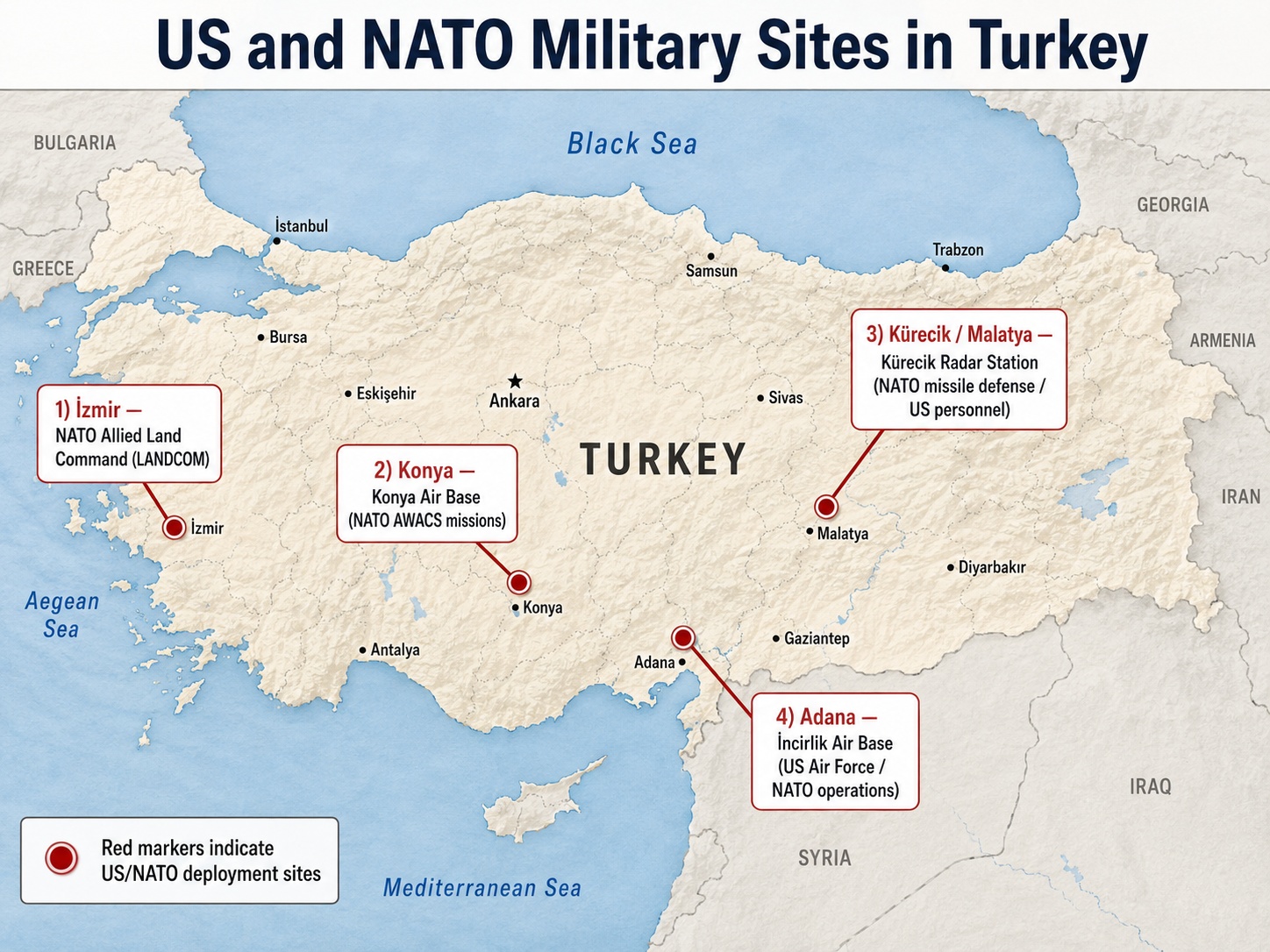
However, publicly available information suggests that only a limited number of strategically significant US or NATO installations in Turkey fit the broad description in the court record. Incirlik Air Base in Adana is the most prominent possibility because of its longstanding role in US military operations, although testimony in the Melzer case indicating that the platoon was questioned at Incirlik before moving on to the unnamed installation may point to a different facility.
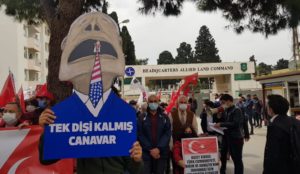
Other plausible candidates include the Kürecik radar installation in Malatya province, which hosts a US-owned, forward-based radar integrated into NATO’s ballistic missile defense architecture, and NATO’s Allied Land Command (LANDCOM) headquarters in İzmir, the alliance’s principal land-force command headquarters.
All three facilities have considerable strategic importance and represent highly visible manifestations of the US and NATO military presence in Turkey, potentially making them attractive targets for jihadist or other extremist groups hostile to the Western alliance.
The plot also illustrates the convergence that can occur between seemingly disparate extremist ideologies. Melzer belonged to O9A, described by prosecutors as as a violent white supremacist and satanist organization that glorifies Hitler and the Holocaust, promotes rape, murder and indiscriminate attacks, and aligns itself with terrorist and hate groups seeking the destruction of Western civilization. The group embraces accelerationism, believing that violence and chaos can hasten an inevitable global race war.
Prosecutors said Melzer was discussing O9A by February 2019, before beginning active military service. By March he was seeking recruitment into the group. By April he had downloaded and saved nearly a dozen O9A-related texts and was sharing them with others. In May he told O9A followers that he had enlisted in the US Army and intended to train as an airborne soldier.
He acknowledged that military rules prohibited O9A affiliation and said he would conceal his ties. Later that month he discussed establishing an O9A group with the motto “Total Aryan Victory.” By September 2019 he was stationed in Italy. In December he told another person: “I’m in the Army specifically for this. I literally did join for this exact reason.”
Prosecutors maintained that Melzer viewed his military service as a means of acquiring training and access that could ultimately be used to advance extremist objectives. The opportunity, according to the government, came when he was reassigned to the platoon deploying to Turkey.
Investigators also recovered a substantial collection of jihadist propaganda from Melzer’s devices. Among the material highlighted by prosecutors was ISIS footage depicting attacks on military forces, executions and other violence. One particularly relevant video showed the killing of US service members in Africa during an ambush involving a military convoy.
Weeks after the video appeared on Melzer’s phone, prosecutors said, he began discussing the possibility that an ambush of his own unit’s convoy could produce mass casualties. Other material depicted attacks on military compounds, the use of improvised explosive devices against military vehicles and mortar attacks.
Melzer himself wrote during discussions about the Turkey operation that “some mortar team could absolutely wreak havoc.” The significance of the propaganda was not simply ideological.
According to prosecutors, the methods depicted in some of the material resembled the same types of attack scenarios that Melzer was discussing with his associates — and the same types of threats US military intelligence considered realistic enough to include in pre-deployment briefings.
Melzer eventually pleaded guilty on June 24, 2022, to attempting to murder US military service members, attempting to provide and providing material support to terrorists and illegally transmitting national defense information.
The government characterized the offenses as an attempt to facilitate the killing of approximately 40 American soldiers. At sentencing the court calculated an offense level of 43 and a criminal history category of VI because the offenses involved a federal crime of terrorism.
The resulting guideline calculation would ordinarily have produced a life sentence, but the statutory maximum for the three offenses to which Melzer pleaded guilty was 45 years. Judge Woods imposed the full 540-month sentence on March 3, 2023.
The identity of CC-2 remains unknown. The concern, however, is that this Turkish individual may have gained access to highly sensitive operational intelligence that could potentially be exploited in a future attack. The publicly available court record does not establish that CC-2 personally received all of the classified information disclosed by Melzer, but it does show that conspirators intended to pass information to him because, according to CC-1, he “needs to know” and “has plans.”
What is clear from the court evidence is that an American soldier provided sensitive and classified information concerning a strategically important military installation in Turkey while seeking to facilitate a jihadist attack against his own unit. Melzer explicitly sought Turkish participants for the operation and discussed recruiting a squad-sized group of jihadists. At the same time, US military intelligence had independently identified terrorist actors operating within hours of the soldiers’ intended location and regarded jihadist attacks against the unit and the installation as realistic threats.
Military officials warned that the intelligence Melzer released could never be fully recovered from circulation, leaving open the possibility that information originally intended to protect US troops in Turkey could remain in the possession of hostile actors long after the immediate plot was disrupted.
The broader security environment has also become increasingly troubling. Amid growing anti-Western and anti-American rhetoric in Turkey over the past decade, President Erdogan’s government and senior officials have frequently employed confrontational language that at times echoes themes promoted by Islamist and other extremist movements. Against this backdrop, and with radical groups enjoying greater visibility and mobilization capacity, the threat environment surrounding Western military and civilian targets in Turkey — particularly those associated with the United States — has become noticeably more hostile and unpredictable.