

Levent Kenez/Stockholm
Turkey faces the prospect of losing access to European industrial subsidies and public procurement contracts under emerging European Union manufacturing rules, threatening the competitive position of Turkish automotive producers and other exporters despite three decades of economic integration with the bloc.
A compromise reached by France and Germany on October 16 would exclude Turkey from preferential treatment under proposed automotive manufacturing rules while opening a conditional path for Britain. The agreement has not become EU law but has introduced uncertainty for Turkish factories supplying European automakers and competing for publicly supported business.
The dispute centers on the European Commission’s proposed Industrial Accelerator Act, which would give preferential treatment to qualifying European products in selected public procurement procedures and subsidy programs. The legislation covers strategic industries including automotive, steel, cement, aluminum and clean energy technologies.
For Turkey the economic stakes extend beyond whether its exports can continue entering the European market. The proposed rules distinguish between ordinary market access and eligibility for publicly financed purchases or incentives, potentially allowing Turkish goods to circulate under existing trade agreements while excluding them from programs favoring European production.
The European Union is Turkey’s largest trading partner. According to the Council of the European Union, bilateral merchandise trade exceeded 217 billion euros in 2025, including 103.4 billion euros in European imports from Turkey and 114 billion euros in exports to the Turkish market. The bloc accounted for more than 36 percent of Turkey’s total merchandise trade.
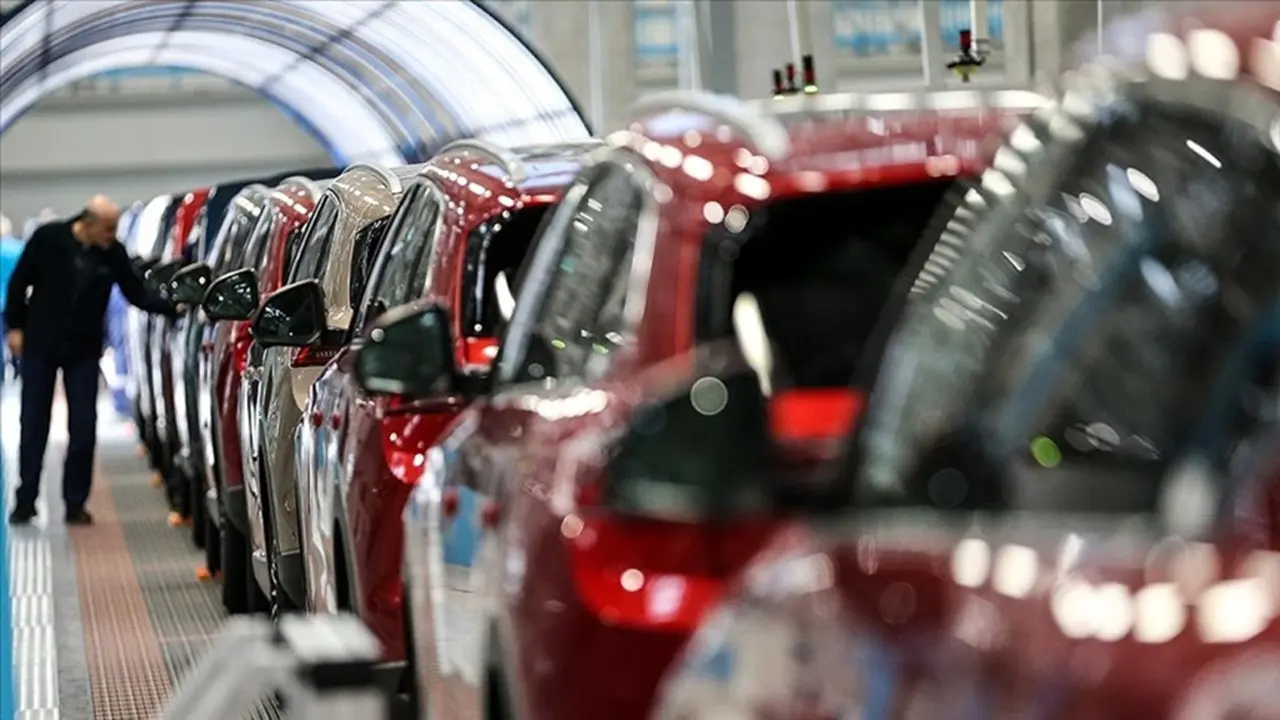
Automotive manufacturing represents one of the most exposed sectors. Turkey exported approximately 36.73 billion euros in vehicles and automotive components in 2025, an increase of 11.6 percent from the previous year, according to the Turkey’s Uludağ Automotive Industry Exporters Association. EU countries purchased approximately 26.65 billion euros worth of those exports, representing 72.5 percent of the sector’s overseas sales.
Germany imported approximately 5.85 billion euros in Turkish automotive products in 2025, followed by France with 4.50 billion euros and Spain with 3.03 billion euros. These markets account for a substantial share of Turkey’s automotive exports and could be affected by European manufacturing preferences.
Exclusion would not automatically eliminate existing automotive exports or prohibit Turkish vehicles from entering the European market. It could, however, prevent qualifying purchases of Turkish products from receiving incentives available to vehicles satisfying European origin requirements, depending on the final legislation.
The European Commission’s final proposal for the Industrial Accelerator Act, published on March 4, 2026, sets out new “Made in Europe” requirements:
International automotive manufacturers operating production facilities in Turkey serve European markets through established supply chains. Rules linking financial support to production origin could affect the eligibility of Turkish manufactured vehicles for certain incentives and influence future investment decisions.
Turkey’s automotive supply industry exported approximately 13.96 billion euros in products in 2025, accounting for 38 percent of total automotive exports. Components manufactured in Turkey are incorporated into vehicles assembled across European production networks, making origin requirements particularly important for suppliers.
The French and German agreement followed disagreements over the geographical scope of European industrial preferences. Under the proposed compromise, Britain could receive preferential treatment if it meets reciprocal trade and investment conditions and aligns with relevant EU policies. Turkey, Japan and South Korea were not included in the arrangement.
The compromise still requires approval through the EU legislative process. Its automotive provisions also differ from the broader Industrial Accelerator Act proposal, which initially provided a mechanism for recognizing goods originating in countries maintaining a customs union with the European Union.
In an April 24 written response to the European Parliament, European Commission Executive Vice President Stéphane Séjourné confirmed that the original proposal treats content originating in customs union partners, including Turkey, as equivalent to EU origin for specified requirements. That recognition remains subject to the proposal’s conditions.
Turkey has maintained a customs union with the European Union since 1996. The arrangement facilitates trade in industrial goods but does not automatically provide access to every European subsidy or government procurement program.
In an April 24, 2026, written response to the European Parliament, the European Commission confirmed that Turkish industrial content could qualify as equivalent to EU origin under certain provisions of the proposed Industrial Accelerator Act:
Nordic Monitor previously reported that Turkey’s inclusion in the proposed industrial framework could require reciprocal access to public procurement contracts, potentially obliging Ankara to open additional government tenders to European companies. Such changes could intensify competition for Turkish businesses seeking public contracts while allowing eligible Turkish suppliers to compete for selected EU procurement opportunities.
The proposed legislation also includes requirements for investments exceeding 100 million euros in industries where a single country controls more than 40 percent of global production capacity. Certain projects could face conditions involving employment, technology transfers and local production. Their application to investments in Turkey would depend on the final rules.
Exclusion could also affect steel, cement and aluminum manufacturers seeking contracts associated with European public purchases and industrial support programs. Turkish materials could remain legally available for import while losing eligibility for some publicly supported projects.
The European Commission introduced the Industrial Accelerator Act on March 4 with the objective of increasing manufacturing’s share of EU gross domestic product from 14.3 percent in 2024 to 20 percent by 2035. The proposed measures seek to expand demand for European industrial products through targeted government purchasing and financial support.
Turkey has continued pressing for inclusion. Turkish Trade Minister Ömer Bolat raised the issue during discussions with EU officials in October and met with automotive industry representatives on October 19 as Ankara pursued recognition of Turkish production under the emerging rules.

The economic relationship also runs in the opposite direction. The European Automobile Manufacturers’ Association reported that EU vehicle exports to Turkey reached 18.8 billion euros in 2025, an increase of 24.8 percent. Turkey represented 11.1 percent of the EU’s vehicle export market, making it the bloc’s third largest destination for new vehicle exports by value.
Neither the European Commission nor the French and German compromise has established a quantified estimate of the export losses, investment changes or employment effects Turkey could face under a final exclusion. Negotiations remain unfinished, leaving the treatment of Turkish vehicles and industrial products unresolved.
The negotiations also coincide with renewed tensions over maritime boundaries in the eastern Mediterranean. On October 20 Libya’s eastern based House of Representatives approved a maritime agreement signed with Turkey in November 2019 defining maritime jurisdiction areas claimed by the two countries. Greece rejected the approval, while the European Union has previously maintained that the agreement infringes on the sovereign rights of third countries and cannot produce legal consequences for them. Although the maritime dispute is legally separate from the proposed industrial legislation, renewed tensions with EU members Greece and Cyprus could complicate Turkey’s diplomatic efforts to secure inclusion in the Made in Europe framework.