
Abdullah Bozkurt/Stockholm
A Haitian-American businessman of Palestinian origin accused of providing logistical and material support for the assassination of Haitian president Jovenel Moïse found refuge in Turkey after a court operating under the tight grip on the judiciary of the government of President Recep Tayyip Erdogan refused to extradite him to Haiti to face criminal charges in 2022.
Four years later, however, Samir Handal was apprehended by US authorities and brought before a federal court, where an October 9, 2026, detention order detailed extensive allegations of his involvement in the conspiracy that culminated in Moïse’s assassination on July 7, 2021.
The case has brought renewed attention to Turkey’s handling of an internationally wanted suspect who is now facing charges carrying a potential life sentence in connection with one of the most consequential political assassinations in the Caribbean.
Samir Nasri Salem Handal, a Haitian-American real estate businessman who was detained while transiting Istanbul in November 2021 en route to Palestine, where he was born, was released following a July 4, 2022, ruling by the Istanbul 37th High Criminal Court. Turkish judges rejected Haiti’s extradition request, citing concerns that he could face torture, ill-treatment or punishment incompatible with human dignity if returned to the country.
The decision is particularly ironic given the Turkish judiciary’s handling of well-documented allegations of torture and ill-treatment in police custody and prisons involving opponents and critics of the Erdoğan government. While Turkish judges invoked human rights concerns to justify refusing Handal’s extradition, courts in Turkey have frequently dismissed or failed to effectively investigate credible complaints of torture and abuse by law enforcement officers, intelligence operatives and prison officials, allowing alleged perpetrators to evade accountability. The stark contrast raises serious questions about the consistency and selectivity with which Turkey’s judiciary applies fundamental human rights protections.
A superseding indictment filed in the US District Court for the Southern District of Florida on September 22, 2026, details an alleged international conspiracy involving Haitian political figures, businessmen and Colombian mercenaries in the July 2021 assassination of Haitian president Jovenel Moïse. The indictment also describes an alleged scheme to finance the operation through fraud involving US pandemic-relief funds:
The US District Court for the Southern District of Florida ordered Handal detained pending trial after Magistrate Judge Eduardo I. Sanchez determined that prosecutors had established both a serious risk of flight and a danger to the community. The judge cited evidence that Handal supplied accommodation, communications equipment, weapons-related resources and financial assistance to members of the alleged conspiracy.
The development is particularly significant because Turkey had previously declined to surrender Handal to Haiti.
Moïse, 53, was assassinated when armed attackers stormed his private residence in the Pèlerin district of Port-au-Prince during the early hours of July 7, 2021. His wife, Martine Moïse, was wounded. Investigators subsequently identified a network involving former Colombian soldiers, Haitian political figures, businessmen and individuals operating in the United States.
The investigation eventually extended beyond Haiti because significant elements of the alleged operation, including fundraising, recruitment and logistical planning, were linked to Florida.
On September 21, 2026, the US Department of Justice announced an expanded prosecution involving 30 defendants, including Handal, following an operation that transferred 18 accused individuals from Haiti to Miami. The charges describe an international conspiracy involving the financing, preparation and execution of the assassination as well as a related alleged fraud scheme involving US pandemic-relief funds.
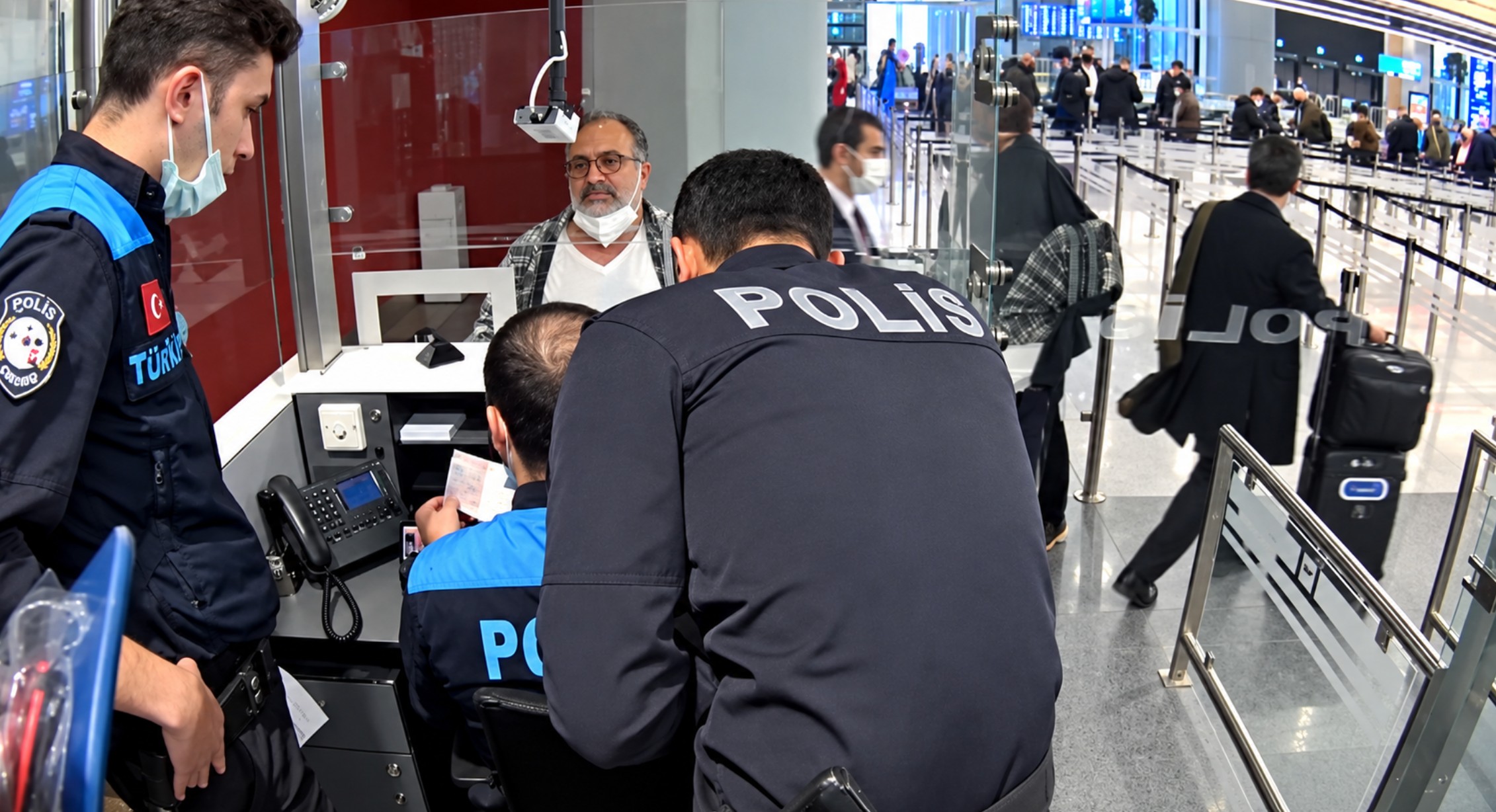
Handal’s connection to Turkey emerged on November 15, 2021, when Turkish authorities detained him during an international journey originating in Miami. The businessman was traveling to Jordan through Turkey when his identification triggered an INTERPOL Red Notice requested by Haiti. Turkish police took him into custody, initiating extradition proceedings that would continue for nearly eight months.
The warrant originated from an investigation by Haitian judicial authorities into Moïse’s assassination. An arrest warrant dated September 21, 2021, had been issued by investigating judge Garry Orélien in Port-au-Prince. The subsequent INTERPOL Red Notice, issued on November 14, listed criminal allegations including participation in a criminal association, murder, attempted murder and armed robbery.
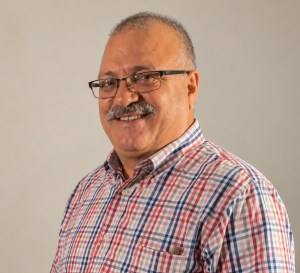
According to the Haitian information reproduced in the Red Notice, the allegations against Handal rested partly on claims made by Christian Emmanuel Sanon, a Haitian-American doctor whom investigators identified as an important participant in the alleged plot to remove Moïse from power. Sanon reportedly told investigators that participants had been accommodated at Handal’s residence in the Delmas 60 area of Port-au-Prince and that Handal had attended meetings aimed at eliminating the president.
Following the issuance of an INTERPOL Red Notice at Haiti’s request, Handal was detained at Istanbul’s Sabiha Gökçen Airport on November 15, 2021, and placed under provisional arrest by a Turkish court following an initial hearing. Haiti’s formal extradition request was forwarded by Turkey’s Justice Ministry to the chief public prosecutor’s office in Istanbul’s Gaziosmanpaşa district on December 23, 2021. The following day, prosecutors initiated extradition proceedings before the Istanbul 37th High Criminal Court, which ordered Handal’s continued detention pending a decision on his surrender to Haitian authorities.
Handal also applied for political asylum in Turkey in January 3, 2022, while he was still in detention. The outcome of that application is not known.
In the meantime Turkey sought additional clarification from the Haitian authorities regarding the possible sentences Handal could face, the applicable criminal provisions and whether punishment would conform to the country’s international obligations. In June 2022 Haitian authorities provided assurances to Turkey that Handal would not be subjected to torture or ill-treatment if extradited, that he would not be sentenced to forced labor and that Haiti did not impose the death penalty. The assurances were intended to address concerns raised during the Turkish extradition proceedings over Handal’s treatment and the potential punishment he could face in Haiti.
The matter was ultimately resolved on July 4, 2022, when the Istanbul 37th High Criminal Court rejected Haiti’s extradition request and ordered Handal’s release. An attempt to deport him on July 15 failed because a travel ban issued by the Justice Ministry based on the INTERPOL Red Notice was still in place. He was returned to a removal center and was subsequently deported to Canada on August 3, 2022. Under Turkey’s established deportation procedures, foreign nationals may be permitted to travel to a country of their choice, raising the possibility that Handal selected Canada himself.
Although Turkey brushed aside serious allegations against him, a US prosecution, however, has produced a markedly different assessment of the evidence against him. The October 9, 2026, detention order in the US provides one of the most detailed judicial accounts so far of Handal’s alleged contribution to the operation. According to the order, cooperating co-conspirators identified Handal as having provided lodging at his Port-au-Prince residence, domestic staff, meeting facilities, $3,000 in cash for food, fuel, radios, a shotgun and ammunition.
The July 4, 2022, ruling by the Istanbul 37th High Criminal Court rejecting Haiti’s request to extradite Samir Handal, a suspect in the assassination of Haitian president Jovenel Moïse, and ordering his release from custody_
The judge said these resources were supplied to Christian Emmanuel Sanon and Colombian mercenaries involved in the conspiracy. The order also refers to an alleged financial relationship between Handal and Sanon, stating that Sanon owed Handal approximately $4 million.
This alleged debt is a potentially significant element of the case because it raises questions about the nature of their business relationship, the financial arrangements between them and what Handal expected to obtain from Sanon’s political ambitions. Sanon allegedly sought to become Haiti’s president following the removal of Moïse. The judge described evidence that Handal had exchanged text messages with Sanon about his political rise and the possibility of obtaining an ambassadorship in the Middle East.
The diplomatic appointment reference introduces a dimension beyond ordinary property transactions, suggesting that prosecutors believe Handal had expectations concerning his own position in a prospective post-Moïse political administration. The court also cited testimony indicating that Handal regularly visited Sanon at the Port-au-Prince property for several hours while Colombian mercenaries were present.
Perhaps most damaging to Handal’s defense was the court’s reference to what it described as his admission to law enforcement of advance knowledge of the planned coup. The detention order further stated that Handal had made false statements to investigators regarding his knowledge of the conspiracy and deleted text messages exchanged with a co-conspirator.
These findings were central to the magistrate judge’s conclusion that Handal presented an unacceptable danger to the community and a substantial risk of fleeing prosecution. The court found that the government’s evidence was strong.
The Turkish judicial record also shows that Handal pursued a constitutional challenge to his continued detention during the extradition proceedings. In application No. 2022/56012, he complained to Turkey’s Constitutional Court that his continued incarceration lacked a sufficient legal basis after the INTERPOL Red Notice was suspended.
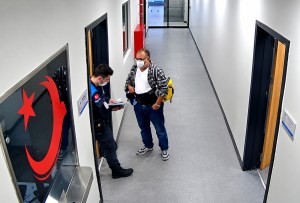
Handal lodged a constitutional complaint on May 27, 2022, before the extradition proceedings were concluded. In a ruling dated July 29, 2025, and published in the Official Gazette on January 28, 2026, Turkey’s Constitutional Court found that his continued detention during the extradition proceedings had violated his constitutional right to liberty and security. The court concluded that the lower court had failed to provide sufficient justification for keeping him in custody after INTERPOL blocked access to the Red Notice issued against him in April 2022.
While Haiti was unable to secure Handal’s return to face its investigation, the businessman eventually reached the United States, where federal authorities later charged him with participating in the same underlying assassination conspiracy.
Turkey’s decision prevented Haiti from obtaining custody of a suspect whom its authorities considered significant to the inquiry. The subsequent US proceedings have made the consequences of that decision a matter of renewed international interest.
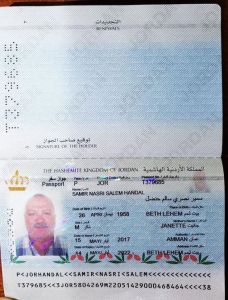
The October 2026 detention order also contains details concerning Handal’s international mobility and financial affairs. Although the US court identified Handal as a United States citizen with family ties to southern Florida, it found that his international connections made him a substantial flight risk. According to the order, Handal had recently traveled internationally on numerous occasions using passports issued by three different countries. Handal possesses citizenship in Jordan, Palestine, Haiti and the US. The court also noted that he had relatives living in several foreign jurisdictions and maintained ownership of properties abroad, the full extent of which had not been disclosed.
Combined with the severity of the charges and the possibility of life imprisonment, these circumstances led the judge to conclude that restrictions short of detention would not adequately ensure his appearance in court.
The expanded US indictment filed in September represents a major phase in the investigation into Moïse’s assassination. The prosecution alleges that the plot involved interconnected groups operating in Haiti and the United States, including businessmen, political figures, security contractors and former Colombian military personnel.
According to the Justice Department, participants allegedly coordinated financial support for the operation, arranged weapons and logistical resources and used communications networks to organize their activities. The indictment also alleges that proceeds from fraud involving federal COVID-19 economic relief programs were used to support aspects of the conspiracy.
Handal is charged with conspiracy to provide material support and resources for a conspiracy to kill or kidnap a person abroad resulting in death, providing such material support and resources, and conspiracy to kill or kidnap a person outside the United States. The allegations against him center on the assistance he allegedly provided to Sanon and other participants.
An October 9, 2026, order by US Magistrate Judge Eduardo I. Sanchez details allegations that Samir Handal provided accommodation, cash, communications equipment, a shotgun and ammunition to individuals involved in the assassination conspiracy against Haitian president Jovenel Moïse. The judge ordered Handal detained pending trial, citing strong evidence, a serious flight risk and danger to the community;
The allegations involving a possible diplomatic appointment suggest that investigators are also examining whether expectations of personal or political benefit played a part in Handal’s alleged conduct.
Handal, who emigrated from his native Palestine to Haiti in 1978, worked for the United Nations High Commissioner for Refugees (UNHCR) for approximately 20 years. He later moved to the United States, where he obtained a Green Card. Based in Miami, Handal reportedly spent three to four months each year in Haiti and was in the country at the time of president Jovenel Moïse’s assassination in July 2021.
If the allegations presented by US prosecutors are proven, Handal had hoped to secure an ambassadorship in the Middle East under a new Haitian administration following the assassination of president Moïse. Instead of pursuing a diplomatic career, he now faces serious federal criminal charges in the United States that could result in life imprisonment if convicted.