
Abdullah Bozkurt/Stockholm
A government-backed Turkish Islamist operative who has publicly praised terrorists associated with jihadist violence has stated that clandestine operations targeting opponents of President Recep Tayyip Erdogan will soon take place in several countries, raising concerns that Turkish intelligence may be preparing a new campaign of intimidation, abductions or other secretive activities against dissidents living abroad.
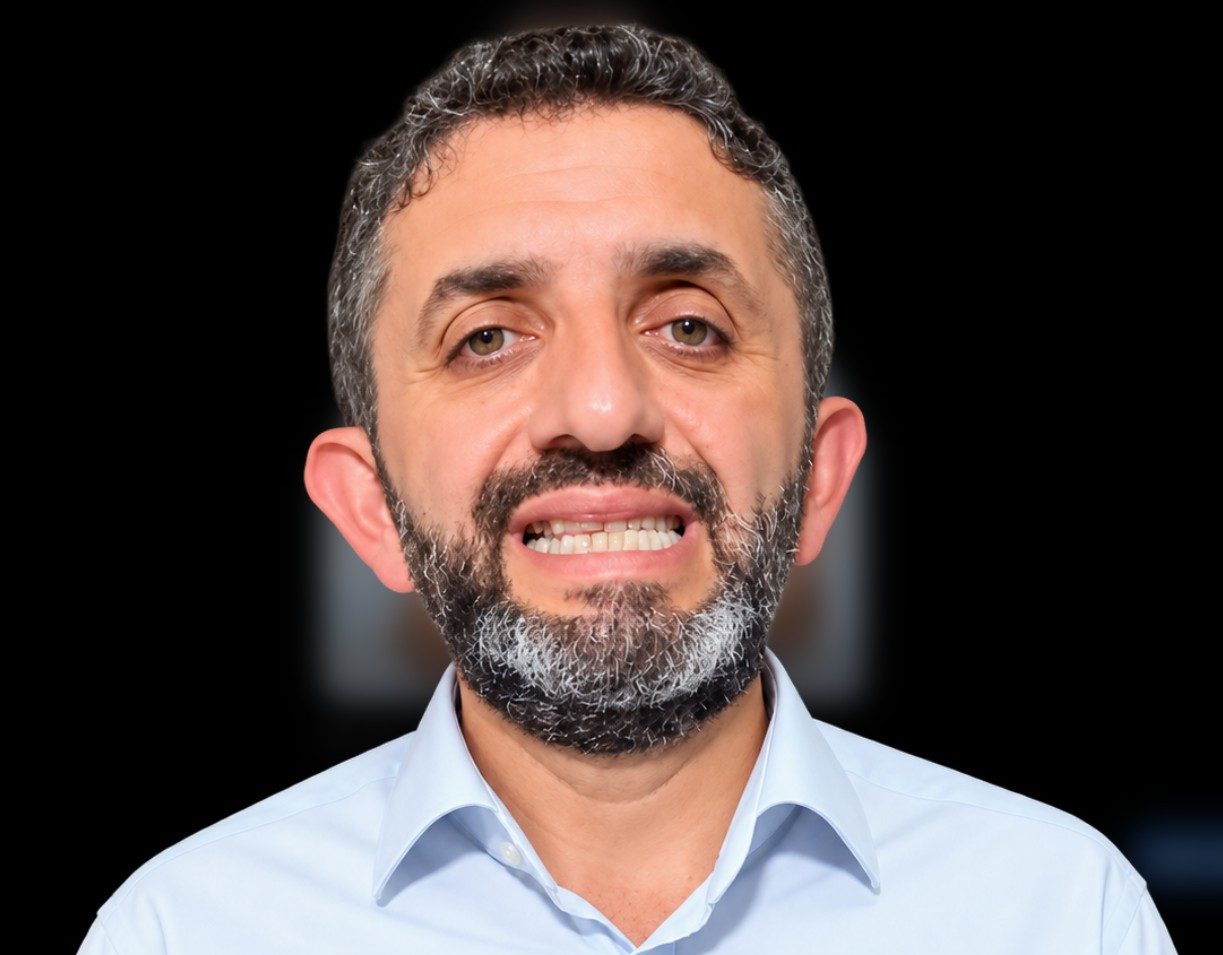
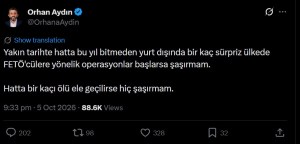
Orhan Aydın, a 44-year-old Islamist propagandist known for his aggressive attacks on government critics and opponents of Erdogan, issued the warning on October 5, suggesting that Turkish authorities may conduct overseas operations against members of the Gülen movement, a group opposed to the Erdogan government, in countries where such activities would come as a surprise.
“I wouldn’t be surprised if operations targeting FETÖ [Gülen movement] members were launched in several unexpected countries abroad in the near future, perhaps even before the end of this year,” he wrote.
The statement has raised particular concern among Turkish diaspora communities because of Turkey’s documented history of using its National Intelligence Organization (Milli İstihbarat Teşkilatı, MİT) to track, surveil and forcibly repatriate political opponents living abroad, sometimes with the cooperation of foreign intelligence agencies and local government officials, particularly in countries suffering from democratic deficits, systemic corruption, weak rule of law and entrenched political favoritism.
Aydın’s background, public statements and close connections to Turkish government’s media and propaganda operations raise additional questions about whether his prediction reflects advance knowledge of intelligence activities, an attempt to prepare public opinion for future operations or another episode in the intimidation campaign directed against Turkish dissidents overseas.
He has been recruited to what is known as the Turkish intelligence-backed Pelican psychological operation (PsyOp) network, a pro-Erdogan political and media operation associated with former finance minister Berat Albayrak, Erdogan’s son-in-law. The network emerged prominently in 2016 during a coordinated campaign against then-prime minister Ahmet Davutoğlu and subsequently became associated with aggressive online attacks against individuals perceived as challenging Erdogan or his close political and business allies.
At the center of this network is a group of government propagandists, political operatives and commentators whose activities have been connected to Bosphorus Global, also known as the Boğaziçi Küresel İlişkiler Merkezi, an organization that crafted the anonymous Pelican memorandum that helped precipitate Davutoğlu’s departure from office.
The Pelican network has been financed by the Turkuvaz Media Group, owned by Erdogan’s family, which operates pro-government outlets including the Sabah newspaper and A Haber television station. The media group is managed by Serhat Albayrak, the brother of Berat Albayrak, and has played an influential role in defending Erdogan’s policies and promoting government narratives concerning the Gülen movement, Turkey’s security establishment and the president’s political opponents.
Aydın is one of those operatives who were financed by Turkuvaz. His immediate handler is Hilal Kaplan, a government propagandist associated with Sabah and the Pelican network who also serves on the board of Turkey’s TRT state broadcaster. Aydın’s social media postings are also endorsed by Kaplan.
Aydın has been accused of helping shape political narratives against Erdogan’s opponents through social media commentary, including allegations concerning people linked to the Gülen movement.
The Pelican network has been supplied with information by Turkey’s intelligence agency, often in the form of distorted accounts, selective disclosures and half-truths designed to discredit Erdogan’s political opponents and critics. Senior members of the network including Kaplan’s now former husband Süheyb Öğüt are also alleged to maintain direct contacts within MIT to coordinate propaganda and public relations campaigns aimed at shaping public opinion, manipulating political narratives and undermining individuals perceived as threats to the Erdogan government.
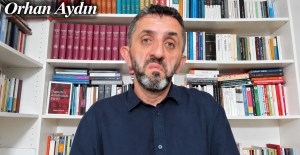
Against this background, Aydın’s October 5 posting warrants attention because it explicitly anticipates operations against members of the Gülen movement beyond Turkey’s borders. His statement did not identify the countries in question, specify the nature of the anticipated operations or explain the source of his prediction.
Nevertheless, the terminology is significant in the context of Turkey’s previous clandestine operations against government opponents abroad. Turkish authorities have repeatedly used the language of overseas operations to describe intelligence activities involving the capture and forced return of people accused of belonging to the Gülen movement.
The movement, inspired by the late Turkish Muslim scholar Fethullah Gülen, has faced an extensive government crackdown since corruption investigations in December 2013 implicated members of Erdogan’s government and his political and business associates.
Erdogan subsequently portrayed the corruption investigations as a conspiracy orchestrated by Gülen’s followers, an allegation the movement denied. The crackdown intensified dramatically following a failed military coup on July 15, 2016, which was organized by Turkish intelligence as a false flag operation to empower President Erdogan and to create a pretext to expand the crackdown on opponents, critics and dissidents. .
The movement’s supporters have also been among the most persistent critics of the Erdogan government’s record, including allegations of corruption, political interference in the judiciary, assistance to Islamist armed groups operating in other countries and the growing influence of organized crime figures within Turkey’s political and security establishment.
Aydın’s message may be intended to frighten such critics and reinforce the perception that distance from Turkey provides no protection from the government’s security apparatus. Even if the prediction amounts to psychological intimidation rather than advance notice of a concrete operation, it fits into a broader environment in which Turkish dissidents living overseas have been subjected to surveillance, harassment and threats.
Of particular concern are Aydın’s reported statements praising perpetrators of jihadist violence, which raise questions about his attitude toward politically and religiously motivated killings.
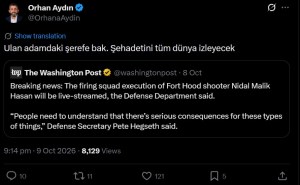
Aydın, a graduate of a religious school in Istanbul’s Maltepe district, has not hesitated to express hardline Islamist views in his public commentary. For example, in an October 9 social media posting, Aydın praised Nidal Malik Hasan, the former US Army psychiatrist who killed 13 people and wounded more than 30 others in the November 5, 2009, terrorist attack at Fort Hood, Texas. Hasan, who was sentenced to death by a US military court, had exchanged emails before the shooting with Anwar al-Awlaki, the American-Yemeni Islamist cleric associated with al-Qaeda in the Arabian Peninsula (AQAP).
According to Aydın, Hasan’s execution would be an honor for him, while his death as a martyr would be witnessed by the entire world. Aydın made the remarks in response to a Washington Post tweet on X reporting plans to livestream Hasan’s execution. Although US President Donald Trump subsequently called off the plans for a livestream, Aydın’s comments reflected his favorable portrayal of a convicted mass murderer motivated by jihadist ideology.
Aydın also celebrated the October 16, 2020, murder of Samuel Paty, a 47-year-old French history and geography teacher who was beheaded near his school in Conflans-Sainte-Honorine, northwest of Paris. Paty was killed by Abdoullakh Anzorov, an 18-year-old Russian refugee of Chechen origin who had been radicalized by Islamist extremism. Anzorov was subsequently shot dead by French police.
The teacher had become the target of an online campaign after showing students caricatures of the Prophet Muhammad published by the French satirical magazine Charlie Hebdo during a lesson about freedom of expression. False and misleading allegations about the classroom discussion circulated online, contributing to the campaign against Paty and helping expose him to a deadly threat.
The killing shocked France, triggered nationwide demonstrations defending freedom of expression and secularism and prompted investigations into individuals involved in the campaign against the teacher and those who assisted his murderer.
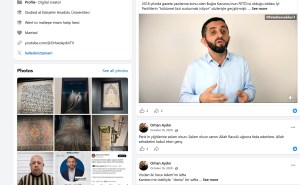
On the day of Paty’s murder, a Facebook statement posted by Aydın celebrated individuals who sacrificed their lives for the Prophet Muhammad. “Salute the brave men of Paris. Salute those who sacrificed their lives for the sake of the Messenger of Allah. May Allah accept your martyrdom, young man,” the statement read. He was effectively praising an act of jihadist terrorism.
Aydın has also taken positions sympathetic to jihadist armed factions operating in Syria and the Palestinian territories. He endorsed Jabhat al-Nusra, the Syrian jihadist organization that operated as al-Qaeda’s affiliate during the earlier years of the Syrian civil war. Other commentary has defended Hamas’s terrorist acts against civilians and defended Palestinian jihadist organizations against criticism.
The possibility that his inflammatory jihadist rhetoric could encourage individuals in Turkish diaspora communities to act independently against government critics is another concern. Journalists, former government officials and activists living in exile who have documented corruption, intelligence operations and Turkish government relationships with extremist or criminal networks could be vulnerable to threats from individuals motivated by such messaging.
The broader threat environment originating from Turkey is not hypothetical. Over the past decade, investigations and court proceedings in multiple countries have documented Turkish intelligence surveillance of dissidents, alleged kidnapping preparations and unlawful transfers of people accused by Ankara of involvement in the Gülen movement.
Germany has been among the European countries where Turkish intelligence activities have attracted sustained law enforcement attention. German authorities have opened investigations into allegations that Turkish intelligence operatives collected information about people associated with the Gülen movement. These concerns extended to the use of diplomatic and community networks to identify critics of Erdogan and monitor their activities.
In March 2017 German officials publicly warned that foreign intelligence operations targeting people living in Germany would not be tolerated. German court proceedings subsequently exposed more specific intelligence activity.
In a March 31, 2022, ruling, Germany’s Federal Court of Justice described serious evidence against a suspect accused of gathering information for MIT about supporters of the Gülen movement. The court described an alleged intelligence operation involving surveillance of individuals in Germany, contacts with representatives of Turkish intelligence, the transmission of information and the recruitment of sources.
It also emphasized that foreign intelligence operations against people residing in Germany could restrict their ability to exercise protected political and social freedoms by creating fear of repression.
Switzerland provides another example of a Turkish intelligence-related kidnapping allegation that progressed into criminal proceedings. In June 2018 Swiss federal prosecutors issued arrest warrants for two former Turkish diplomats who had served at the Turkish Embassy in Bern.
The men were accused of gathering political intelligence for a foreign state and involvement in an alleged attempt to abduct a Swiss-based businessman of Turkish origin who was believed to be associated with the Gülen movement. Swiss authorities had investigated the matter since 2017 and determined that the officials could not rely on diplomatic immunity for the alleged activities. The Turkish government denied the accusations.
The case illustrated the extent to which Ankara’s pursuit of suspected Gülen supporters could involve diplomatic personnel and allegations of covert operations on the territory of another sovereign state.
Similar concerns emerged in the United States, where Turkish operatives sought to enlist politically connected American figures in efforts directed against Gülen, who lived in Pennsylvania until his death in October 2024.
The most prominent controversy involved retired US Army Lt. Gen. Michael Flynn, a former director of the Defense Intelligence Agency who subsequently served briefly as national security adviser to President Donald Trump.
Flynn’s consulting company undertook work connected to Turkish interests during the 2016 US presidential election campaign. Its activities included efforts to promote narratives critical of Gülen and his movement.
Former CIA director James Woolsey publicly described a meeting involving Flynn and Turkish officials at which the possibility of removing Gülen from the United States illegally was discussed. Subsequent reporting raised allegations that proposals for Gülen’s forced transfer had been considered, including claims concerning possible financial inducements.
While these operations in Western countries have generally attracted media attention and legal scrutiny, Turkey has succeeded in securing the forced return of alleged Gülen movement members from countries where legal safeguards and institutional checks have proved weaker.
Across Africa and Asia, Turkish intelligence has worked with foreign governments and security agencies to locate, detain and transfer individuals accused of association with the movement. Such activities have occurred along with Turkey’s growing diplomatic, commercial and security relationships with governments in regions where Ankara has sought to expand its influence.
The Erdogan administration has increasingly used economic partnerships, defense cooperation, infrastructure projects, arms exports and diplomatic engagement as instruments of foreign policy. Allegations that particular rendition arrangements involved bribes, commercial concessions or defense-related incentives were widely reported.

Among the most revealing examples were the operations in Kosovo and Moldova in 2018. In Kosovo six Turkish nationals associated with educational institutions linked to the Gülen movement were detained and transferred to Turkey in March 2018 in an operation carried out through cooperation between local authorities and Turkish intelligence.
The operation generated a political scandal and prompted investigations into the role of Kosovo’s police, intelligence and immigration authorities. Driton Gashi, the former head of the Kosovo Intelligence Agency, was convicted in July 2023 of abuse of his official position in connection with the deportations and sentenced to four years, eight months in prison.
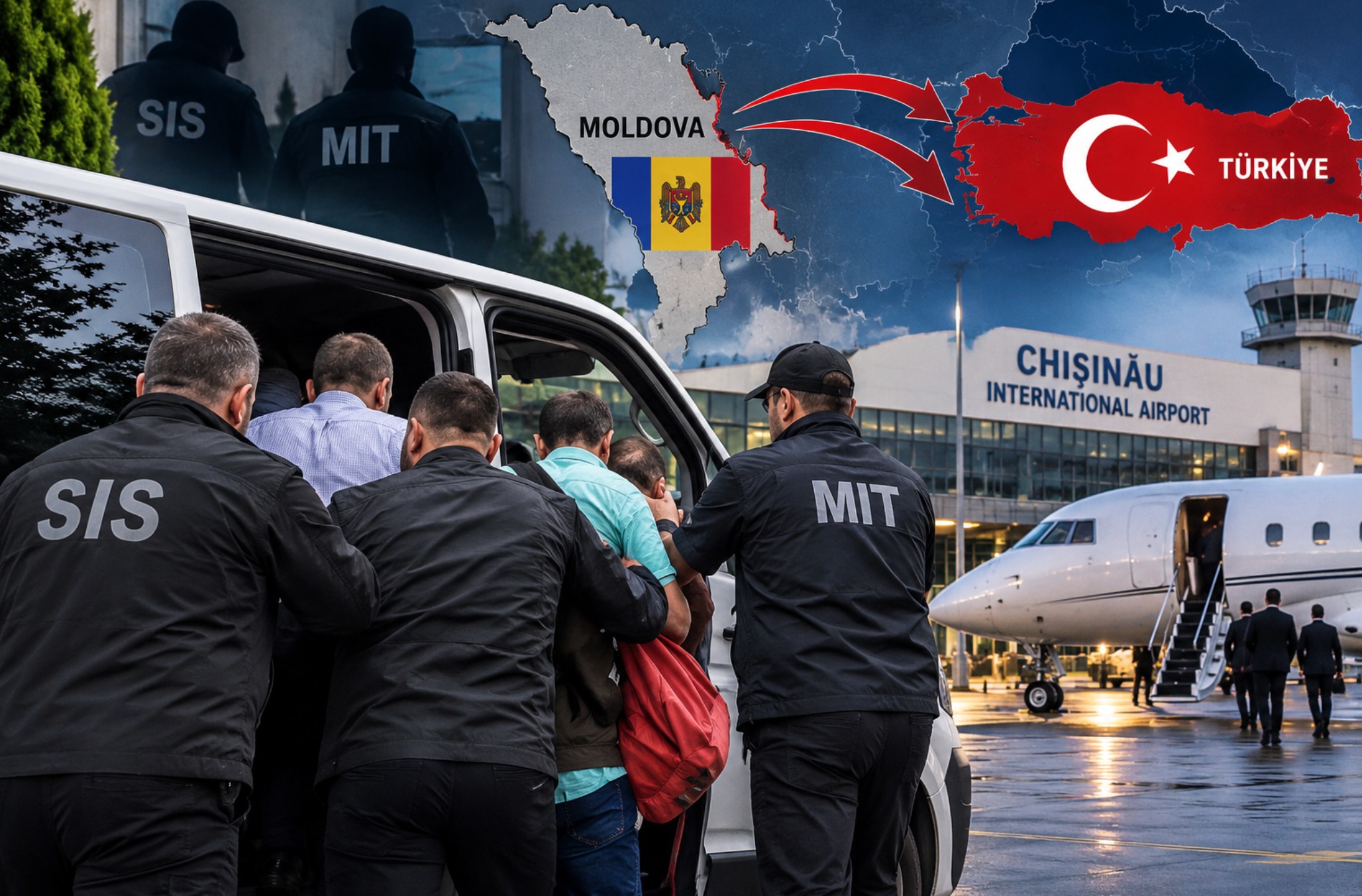
Moldova experienced a similar scandal in September 2018, when Turkish teachers working at the Orizont school network were detained and forcibly transferred to Turkey. The operation was subsequently challenged before the European Court of Human Rights, which found in June 2019 that Moldova had violated the teachers’ rights.
The Strasbourg court concluded that the manner in which the teachers were detained and removed from Moldova amounted to an extralegal transfer that circumvented the safeguards provided by domestic and international law. The case became an important judicial finding concerning the international campaign against alleged Gülen movement members, demonstrating how cooperation between local security institutions and Turkish authorities could result in violations of fundamental human rights.
The operation also triggered domestic investigations into Moldovan officials’ roles, some of whom were later convicted, highlighting allegations of political interference and the misuse of state institutions to facilitate the rendition of foreign nationals.
The Kosovo and Moldova cases are particularly relevant to Aydın’s latest message because they show that Turkish intelligence has previously been able to conduct operations in countries far beyond Turkey’s borders, sometimes relying on local authorities to provide the appearance of official legality.
In the last decade Turkish officials openly praised overseas operations in which alleged Gülen movement members were returned to Turkey. The government’s public messaging often presented such operations as victories in its campaign against an organization it accuses of attempting to overthrow the state.
For Turkish dissidents abroad, such announcements have reinforced concerns that the government’s security apparatus considers them legitimate targets even after they leave the country.
This history gives Aydın’s October 5 statement a significance it might otherwise lack. The language of anticipated operations in unexpected foreign countries echoes the government’s established practice of portraying cross-border actions against alleged Gülen movement members as part of an ongoing security campaign.
It remains unclear whether the commentator was repeating a rumor, expressing a political expectation, attempting to intimidate government opponents or drawing on information obtained from people with access to the Turkish security establishment. Nevertheless, the documented history of Turkish intelligence operations abroad, the government’s continued pursuit of Gülen movement members and the reported extremist rhetoric of the propagandist combine to make the statement a legitimate subject of scrutiny.
For European and North American authorities, the broader issue extends beyond the credibility of one pro-Erdogan commentator. It concerns the possibility that political messaging, surveillance of diaspora communities and clandestine activities by foreign intelligence services may overlap in ways that expose exiled journalists, activists and political opponents to intimidation and unlawful interference.
Whether Aydın’s latest warning proves to be propaganda or a precursor to further overseas operations remains to be seen. But previous incidents in Germany, Switzerland, Kosovo, Moldova and other countries demonstrate that Ankara’s pursuit of its opponents has repeatedly crossed national boundaries and violated the legal protections afforded to individuals living outside Turkey.