
Abdullah Bozkurt/Stockholm
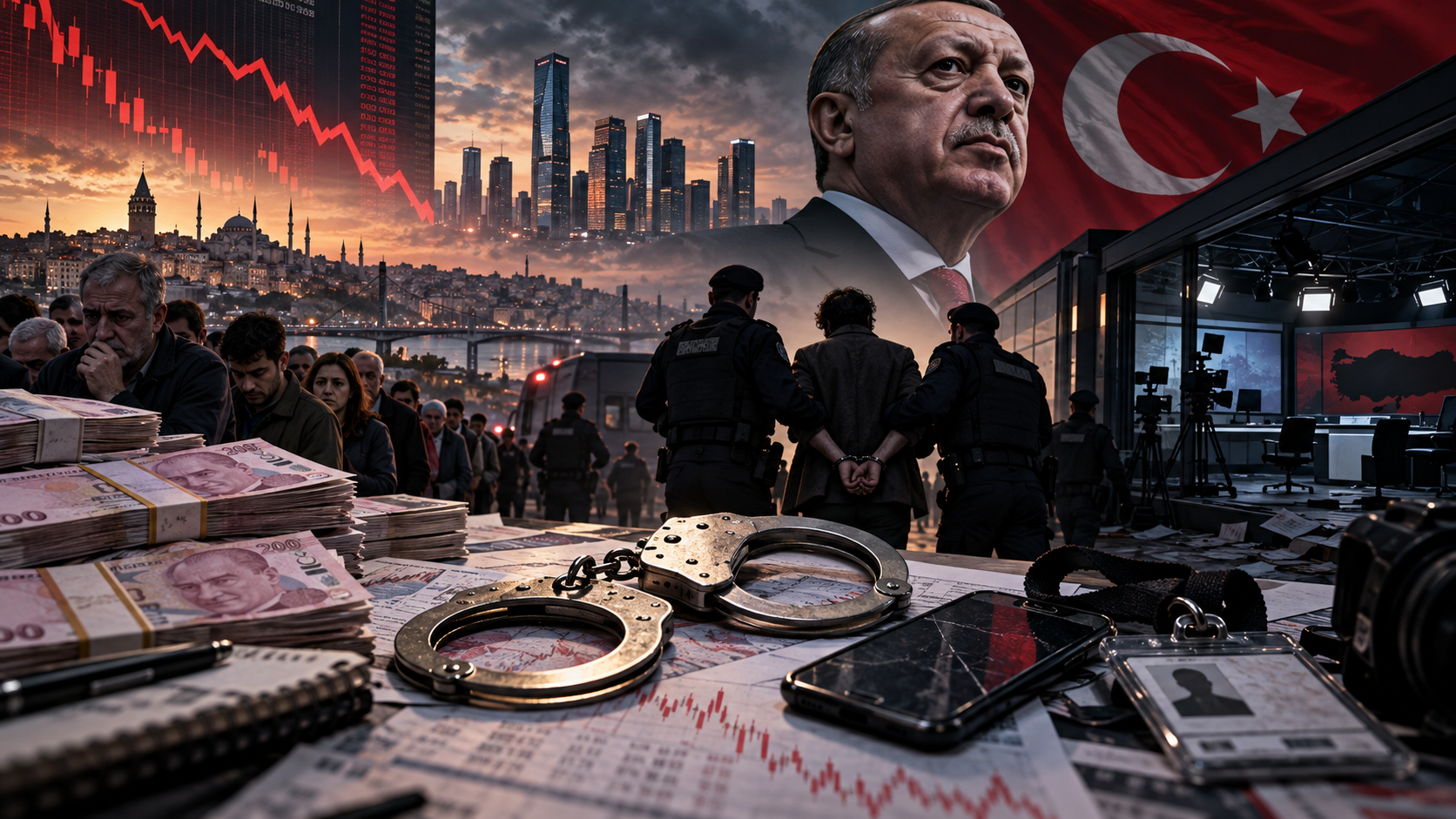
Turkey faces a growing risk of recession as a massive investment fund scandal threatens confidence in its financial system, wiping out more than $100 billion from stock market valuations according to opposition estimates and exposing a sprawling network of alleged financial dealings involving President Recep Tayyip Erdogan’s family, senior government officials, financial regulators and politically connected business groups.
The scandal, involving 131 investment funds ordered into liquidation in September, has expanded beyond suspected stock market manipulation into allegations of insider trading, preferential treatment, undisclosed corporate ownership, questionable public financing and the movement of investments through companies associated with Erdogan’s closest political and family circles.
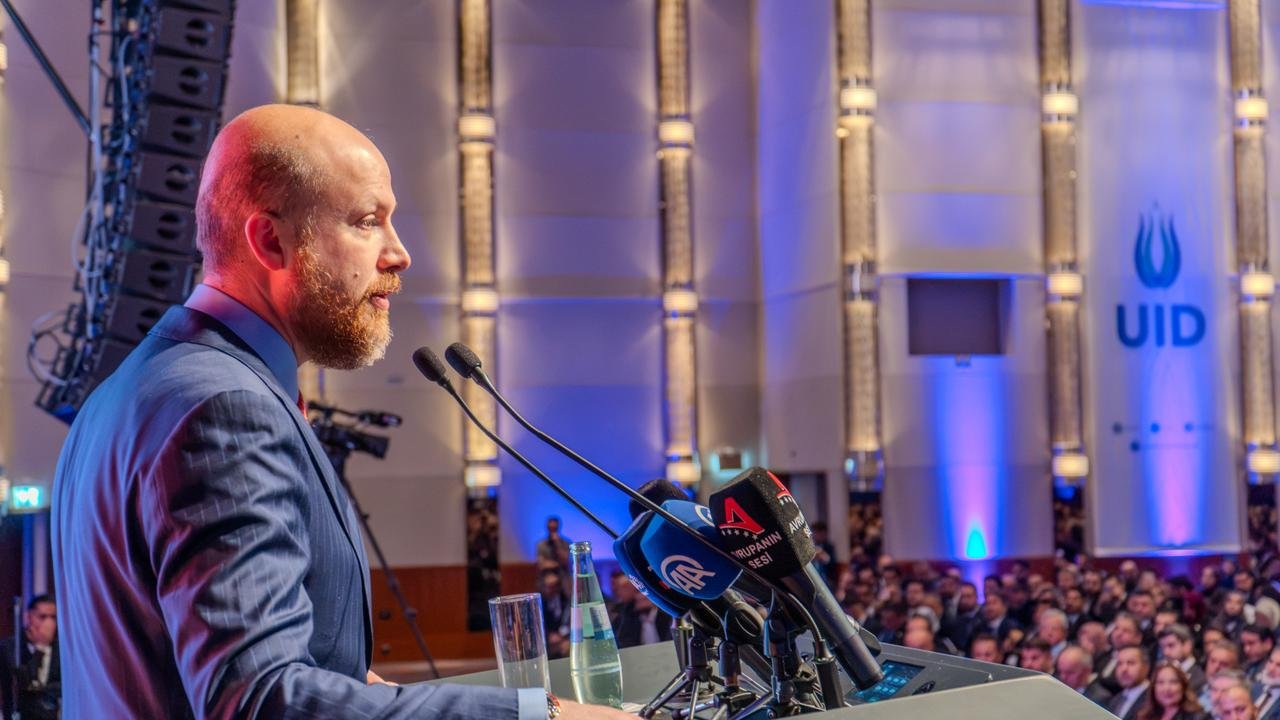
At the center of the controversy are investment companies including Tera, Bulls, Pardus, Pusula and Hedef, whose business relationships and investments intersect with corporate structures linked to Erdogan’s son Bilal Erdogan, brother Mustafa Erdogan, nephew Usame Erdogan and the influential Yeşildağ family, longtime associates of the Turkish president.
Questions surrounding the network have become more serious as allegations emerge that some politically connected investors withdrew enormous sums shortly before regulatory intervention, while hundreds of thousands of smaller investors faced uncertainty over their savings.
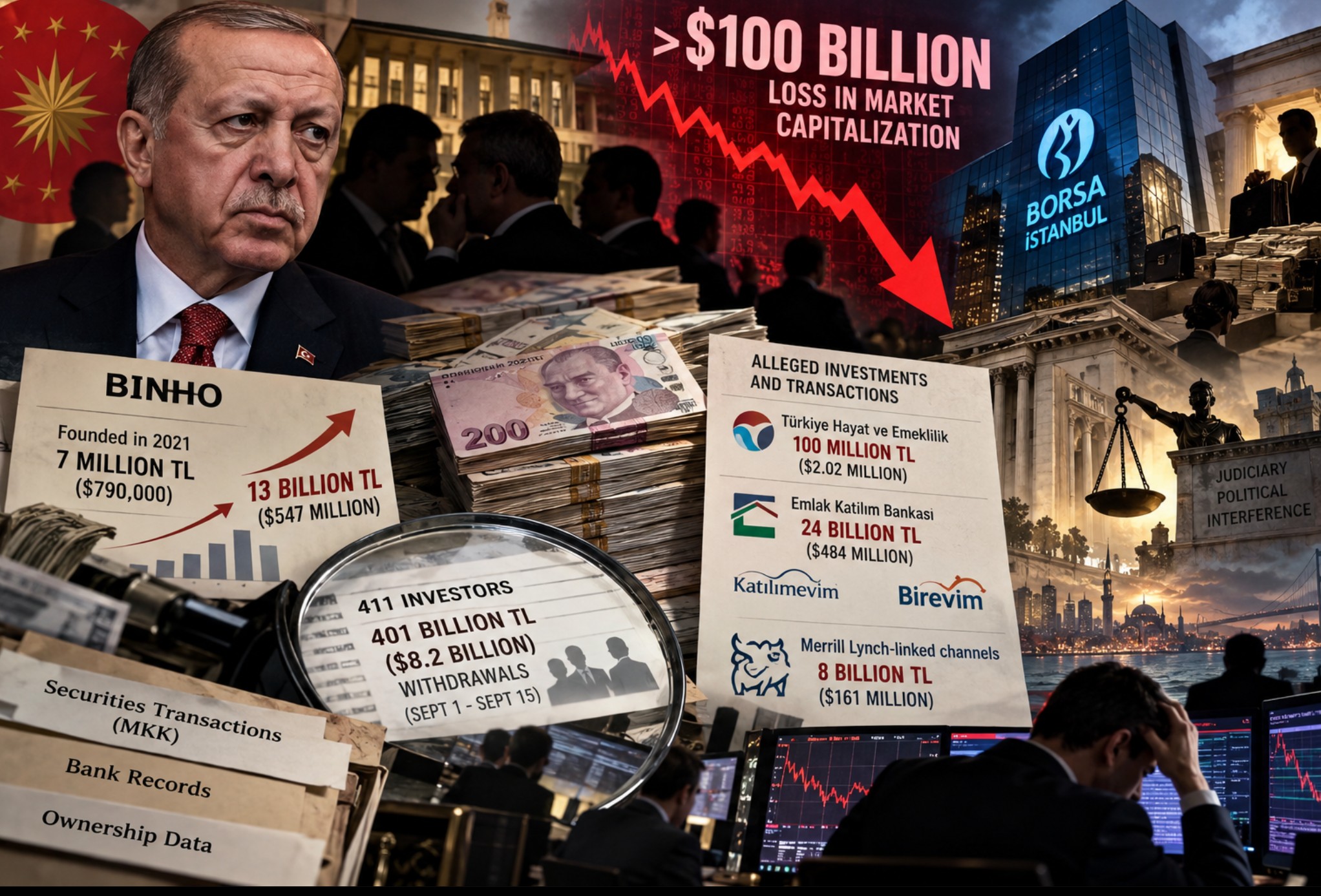
Turkey’s stock market has suffered an estimated loss exceeding $100 billion in market capitalization amid the turmoil, with the damage continuing to mount as the Erdogan government struggles to contain the fallout. Rather than pursuing a comprehensive investigation into the alleged masterminds and politically connected beneficiaries of the suspected market manipulation, the government has faced accusations of prioritizing damage control through selective enforcement measures that have targeted only a handful of those implicated, while leaving the greater network of influential figures largely untouched.
Approximately 7 million families are estimated to have experienced reductions in the value of their investments, potentially creating a negative wealth effect that could discourage household spending and worsen an already difficult economic environment.
The danger is that falling asset prices, declining consumer confidence and distrust among financial institutions could combine to slow economic activity sharply, pushing Turkey toward recession.
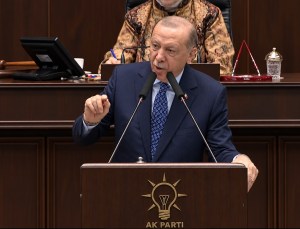
The crisis has also become another major test of whether Erdogan’s administration can investigate suspected financial misconduct involving individuals closely connected to the presidency without political interference. Erdogan weathered previous corruption scandals, most notably the December 2013 investigations that implicated senior ministers and members of his family. His government responded by reshuffling the police and judiciary, removing officials involved in the investigations and portraying the probes as part of a politically motivated campaign against his administration. The scandal was subsequently contained amid government efforts to control the public narrative and discredit the investigations. Unlike the current fund crisis, however, the 2013 allegations did not directly expose millions of ordinary investors to financial losses. This distinction presents a potentially more difficult challenge for Erdogan, as the economic consequences now extend beyond political controversy to household savings, investor confidence and the broader financial system.
The September 17 regulatory decisions involved 131 investment funds managed by seven portfolio management companies. Their rapid expansion had been accompanied by extraordinary returns, concentrated investments in relatively illiquid shares and concerns about coordinated trading that inflated market valuations.
Some funds attracted substantial investments from households seeking protection against inflation, while the financial companies managing them accumulated assets valued in the billions of dollars. Their sudden liquidation exposed investors to the possibility that the reported values of underlying assets would not be recoverable through ordinary market transactions.
The controversy intensified when allegations emerged that 411 investors had withdrawn approximately 401 billion Turkish lira ($8.2 billion) between September 1 and September 15, shortly before the regulatory intervention. The extraordinary scale and timing of the withdrawals raised suspicions that certain investors may have received advance information, allowing them to safeguard their assets before the funds were put into liquidation.
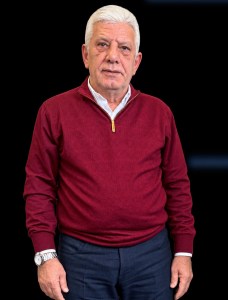
The identities of the ultimate beneficiaries, the reasons for the withdrawals and whether any transactions involved confidential regulatory information remain unresolved. The Erdogan government has yet to disclose the list of beneficiaries that opposition leaders claim is already on the president’s desk, fueling suspicions that its release would expose individuals closely associated with Erdogan, members of his family and influential figures within his political and business network. The continued lack of transparency has raised questions about whether the authorities are withholding the information to shield politically connected beneficiaries from scrutiny and potential criminal accountability.
Nevertheless, the records should be readily available through Turkey’s Central Securities Depository, or Merkezi Kayıt Kuruluşu (MKK), which maintains electronic information concerning securities ownership and transactions. Unlike land acquisitions, real estate transactions and public procurement deals, where off-the-books cash payments and illicit commissions have frequently featured in corruption allegations involving Erdogan and his close associates over the past two decades, the transactions at the center of the investment fund scandal were conducted through regulated banking channels and financial intermediaries. This leaves an electronic trail of purchases, sales, transfers and beneficial ownership that investigators can potentially reconstruct to identify who profited, who suffered losses and whether politically connected investors received preferential treatment.
The availability of such records also raises questions about why the authorities have not provided a comprehensive accounting of the transactions and their ultimate beneficiaries. The absence of a comprehensive public accounting has fueled concerns that individuals connected to the governing Justice and Development Party (AKP) or the presidential establishment could be receiving preferential treatment.
One of the most politically sensitive elements concerns 1000 Yatırımlar Holding, a publicly traded company associated with Erdogan’s nephew Usame Erdogan.
The holding company, listed on Borsa İstanbul under the symbol BINHO, reportedly experienced an extraordinary increase in valuation after being established with capital of approximately 7 million lira ($790,000 at the 2021 average exchange rate) in 2021.
Within two years, its market valuation was said to have reached approximately 13 billion lira ($547 million at the 2023 average exchange rate), raising questions about the sources of its expansion, the valuation of its subsidiaries and the involvement of investment funds in trading its shares.
The corporate relationships surrounding 1000 Yatırımlar extend across members of Erdogan’s family, associates of the Yeşildağ business group and relatives of senior government officials.
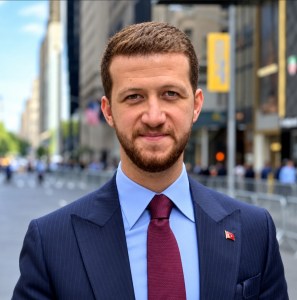
Usame Erdogan is the son of Mustafa Erdogan, the president’s brother. His business activities have attracted attention because of the family’s links to other politically influential companies and investors. Among the individuals identified in the holding company’s alleged shareholder network are Mustafa Saim Birpınar, Hüseyin Ardan Küçük and Haris Pojata.
Mustafa Saim Birpınar is the son of Mehmet Emin Birpınar, a former deputy environment minister who later became chairman of state-controlled lender Emlak Katılım Bankası. He has also been identified as a member of the Yeşildağ family through marriage, creating a connection between a major public-sector banking official, Erdogan’s nephew and a business family with longstanding ties to the presidency.
Hüseyin Ardan Küçük is another shareholder with family ties to the Yeşildağ group. His father, Bahattin Küçük, previously served in a senior position with the Istanbul police. Haris Pojata, a Bosnian-born businessman, has been associated with Mehmet Emin Birpınar through previous advisory and administrative positions. These relationships raise questions about whether corporate decisions, investment opportunities and access to financing were influenced by connections to public institutions.
The network extends further through Lidya AŞ, identified as a corporate shareholder or business partner connected to 1000 Yatırımlar and to individuals associated with Bulls. Enver Çevik, Neslihan Mumcu and Kemal Akkaya have been identified in connection with Lidya’s ownership and management. Mumcu is married to Batuhan Mumcu, a former deputy culture and tourism minister, creating another connection between the corporate structure and senior government circles.
The same network has been linked to former Capital Markets Board chairman İbrahim Ömer Gönül, whose father, Vecdi Gönül, served as defense minister in Erdogan’s government. The alleged relationships between Lidya, Bulls and 1000 Yatırımlar are important because they suggest that people connected through corporate ownership may have participated in transactions involving investment funds receiving money from the public.
Additional business relationships have been alleged involving Ufuk Yatırım and property investments in Istanbul’s Tuzla district. A real estate transaction valued at approximately 2 billion lira has been linked to companies within the wider investment network. The central question is whether funds entrusted with ordinary investors’ savings purchased assets from related companies at inflated prices or on terms that transferred disproportionate benefits to existing shareholders.

The transactions involving Pardus, Portföy and 1000 Yatırımlar are especially relevant. A Pardus-managed fund allegedly acquired approximately 14 to 15 percent of the holding company’s shares in 2025. The shares were reportedly purchased at around 299 lira each and sold approximately 55 days later at about 200 lira, implying a decline of roughly one-third between the stated purchase and sale prices. The transactions raise questions about whether the fund’s investment decisions benefited existing shareholders at the expense of its own investors.
Another potentially significant financial connection concerns Meta Mobilite, a company associated with 1000 Yatırımlar. A Tera-related investment involving approximately 20 percent of the company has been alleged during a period when the authorities were already examining irregularities in the investment fund sector. A September 14 corporate disclosure identified 1000 Yatırımlar as the owner of approximately 76.67 percent of Meta Mobilite and referred to a separate proposed transaction involving Yeşil Yatırım Holding.
The Tera controversy extends into the presidential establishment through senior advisers and former government officials who have held positions in companies associated with the troubled funds. Fecir Alptekin, who served as an adviser to Erdogan, was listed as an independent director of Tera Yatırım. His appointment placed a figure connected to the presidency within the company’s management during a period of growing concern about suspicious financial activity.
Former AKP deputy Ertan Aydın, who played a prominent role in Erdogan’s political communications and election campaigns, has also been associated with Tera’s management and alleged investment activities. Other figures named include Bülent Aksu, a former deputy finance minister who served during Berat Albayrak’s tenure as treasury and finance minister, and Erkan Kilimci, a former deputy governor of the Central Bank of Turkey.
The involvement of former senior officials in investment companies under investigation has raised questions about the movement of influential public figures into commercial financial institutions and whether their political relationships created advantages unavailable to ordinary market participants.
Another sensitive connection concerns Kerem Alkin, a former Turkish ambassador to the Organisation for Economic Co-operation and Development who also held positions associated with the Turkish Wealth Fund, the state sovereign fund, and Halkbank, a state lender. He was listed as an independent director of Tera Yatırım. His brother Emre Alkin, an economist who has held a position on a presidential advisory body, has likewise been identified in connection with Tera-related management.

The controversy also includes the political family of former AKP minister and senior party official Hayati Yazıcı. His son Mustafa Yazıcı has been linked to allegations to investment activities involving Tera and the establishment of Adil Katılım Bankası. Questions have been raised about an alleged asset-freezing order that was subsequently lifted within hours, reportedly following objections involving the family’s political connections.
A more direct family connection involves Erdogan’s son Bilal Erdogan and the Yeşildağ family. The Yeşildağ brothers, Hasan and Zeki, have longstanding personal and business connections to Erdogan, extending back to his political career in Istanbul in the 1990s. The family subsequently expanded into construction and media, becoming associated with businesses and media outlets operating within Turkey’s pro-government commercial environment.
Yapı ve Yapı İnşaat is a particularly important company in the alleged network. Bilal Erdogan has been described as an undisclosed beneficial shareholder holding approximately 50 percent of the company, with the Yeşildağ and Yıldırım families holding other interests. This ownership connection would have significant implications for the investigation because it could link the president’s son directly to companies participating in financial and commercial relationships associated with the troubled investment funds.
The network has also been connected to infrastructure contractors including Gülermak, Taşyapı, Makyol, Cengiz İnşaat, Kalyon and Kolin. Investment funds managed by Tera, A1 Capital, Hedef, Pardus and Pusula have been alleged to own shares or participate in transactions involving Gülermak.
The international business activities of Erdogan’s relatives provide another potentially important dimension. Dost Ziraat, an agricultural company allegedly associated with Mustafa Erdogan’s son-in-law Abdülkadir Karagöz, Usame Erdogan and Ahmet Enes Ülgen, has been linked to investments in Azerbaijan’s Karabakh and East Zangezur regions.
The projects reportedly involve approximately 6,000 hectares of agricultural land, livestock facilities with a capacity of 10,000 cattle, integrated meat production, seed cultivation, cold storage and large-scale agricultural warehousing.
These investments developed against the background of close political, military and economic cooperation between Ankara and Baku, including Turkey’s support for Azerbaijan and the prominent role of Turkish-made military drones produced by Baykar. Selçuk Bayraktar, Baykar’s chairman, is Erdogan’s son-in-law.
Other allegations concern a roughly 100,000-square-meter agricultural property in Istanbul’s Silivri district that was reportedly rezoned for industrial use after a marriage connection involving Usame Erdogan and the Saruhan business group.
Approximately 100 million lira ($2.02 million) belonging to state-controlled Türkiye Hayat ve Emeklilik was reportedly invested in Tera-related funds. Questions have also been raised about approximately 24 billion lira ($484 million) in financing associated with Emlak Katılım Bankası and transactions involving Katılımevim and Birevim.
A previously issued guarantee from state lender Ziraat Bankası benefiting Tera Yatırım has likewise attracted scrutiny, along with questions about possible exposure involving the Unemployment Insurance Fund.
Further questions concern the movement of money outside Turkey. Between $3 billion and $5 billion in digital assets were allegedly transferred abroad using cryptocurrency cold wallets during the larger financial turmoil. Concerns over potential capital flight have added an international dimension to the investigation, including questions about beneficial ownership structures, overseas assets and transfers through foreign financial institutions.
Another allegation concerns approximately 8 billion lira ($161 million) in transactions conducted through Merrill Lynch-linked channels before the September liquidation decisions. The ultimate account owners and motivations for those transactions have not yet been established.
The overlap between the financial crisis and politically connected individuals has put particular pressure on the institutions responsible for market supervision. SPK chairman Ömer Gönül is the son of Vecdi Gönül, a former defense minister and prominent figure in Erdogan’s political establishment. Elif Gülşah Gürlek, identified as the wife of Justice Minister Akın Gürlek, has also been associated with the SPK board. The family relationships have prompted questions about potential conflicts of interest and the independence of investigations involving politically influential individuals.
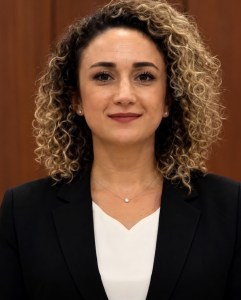
The government has maintained that criminal inquiries began before the September liquidation decisions and that prosecutors are investigating suspicious activity. Emergency legislation and liquidation measures have been introduced to recover assets and provide repayments to affected investors, with particular attention to smaller account holders.
However, concerns remain about the rights of investors who submitted withdrawal requests before the liquidation orders and whether subsequent legal changes might affect their ability to recover their money.
For Turkey’s economy, the consequences extend beyond the immediate value of the affected funds. Declining market confidence can increase financing costs, reduce household spending and discourage new investment. Businesses with no involvement in the scandal may also face lower share valuations and weaker access to capital.
The estimated $100 billion decline in stock market capitalization reflects the scale of wider market concerns rather than an established loss directly attributable to fraudulent transactions. The risk of recession depends on whether those effects spread sufficiently to depress economic output.
For Erdogan, the scandal poses an accountability challenge that reaches into his family’s business relationships and the overlapping networks of corporate executives, senior bureaucrats and political appointees surrounding his administration. The unanswered questions concern who benefited from early withdrawals, whether investment funds purchased assets from related businesses at inflated valuations, whether public financial resources were improperly exposed and whether the investigation can examine transactions involving politically connected individuals without interference.
Unless those questions are resolved through transparent financial records and credible legal proceedings, a prospect complicated by allegations involving President Erdogan, members of his family and his inner circle, the loss of confidence could continue to undermine Turkey’s capital markets and deepen the economic pressures threatening to push the country into a broader downturn. The extensive political connections surrounding the scandal have also raised serious doubts about whether an independent investigation can uncover the full extent of the alleged misconduct and hold all those responsible accountable, regardless of their proximity to the presidency.