

Abdullah Bozkurt/Stockholm
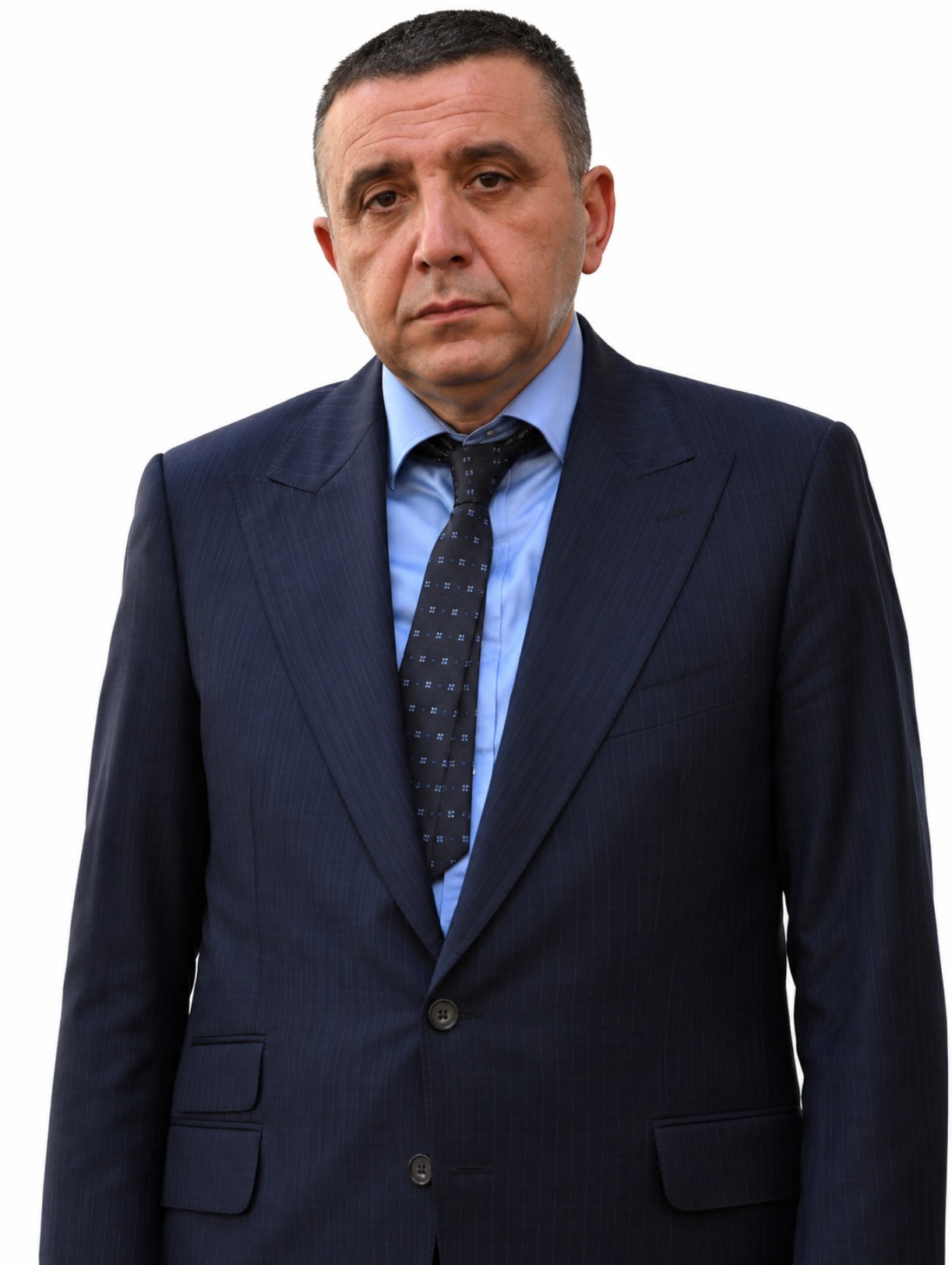
A 49-year-old former Turkish spy has quietly established a foothold in the United Kingdom through a London-registered private intelligence company, raising questions about whether Turkish intelligence-linked networks are seeking to expand their reach beyond Turkey’s borders through commercial structures operating in Western jurisdictions.
Corporate records filed in the United Kingdom show that Ali Burak Darıcılı, a former intelligence officer with MIT, the country’s national intelligence organization, set up Martolos Intelligence Limited which was incorporated in June 2023 under the original name K&D Security Intel Limited before rebranding only a few months later.
The company was registered from a modest commercial unit in East London (4 Raven Road, Unit 1C3) rather than from a traditional corporate headquarters, a location shared by numerous unrelated businesses and small enterprises. Its original director was listed as Ömer Yurtbaşi, 41-year-old Turkish national, who declared the establishment capital as merely 100 British pounds. A year later, the company filed its net assets as 1,834 pounds and later 7,007 pounds in 2025.
The initial filing documents show that the former spy owned all of the firm’s shares, giving him full control on the operations of the company. He listed a luxury villa (Karşıyaka Mah. 448. Cad. No: 3, Gölbaşı, Ankara) as his Turkish address, located in one of the more affluent villa districts south of central Ankara, close to Gölbaşı and near Mogan Lake. The price for luxury villas in this neighborhood ranges from half a million dollars to over a million.
UK corporate records for Ali Burak Darıcılı’s company:
Although the company formally lists another individual as its director, British registry documents identified Darıcılı as the person exercising significant control over the firm for much of its existence, giving him effective ownership and authority over the company’s affairs. The ownership structure was amended in June 2026, when Companies House records indicated that Darıcılı ceased to be the person with significant control and was replaced by another shareholder, 19-year-old Kaan Darıcılı, having the same last name as Darıcılı.
The company’s business portfolio was described in broad terms, encompassing management consultancy, business support and educational support services — categories sufficiently wide-ranging to potentially conceal intelligence-related activities.
The company’s emergence in Britain is notable in light of Darıcılı’s professional background. He had spent approximately 15 years as a case officer with Turkey’s intelligence agency before abruptly re-emerging as an academic specializing in intelligence, cybersecurity and terrorism studies. He appears to devote more time to television appearances and social media commentary promoting the agency’s positions than to teaching, sparking questions about whether his academic role serves primarily as a cover for continued intelligence-related activities.
His public interventions often resemble strategic communications efforts on behalf of the agency rather than detached and independent academic analysis.
His television commentary has at times revealed operational information. In February 2023 Darıcılı disclosed that MIT officers had monitored foreign rescue and humanitarian teams deployed to Turkey following the devastating earthquakes. He said the agency conducted background checks on aid workers, maintained round-the-clock surveillance in affected provinces and paid particular attention to the Israeli delegation. He further stated that MIT’s counterespionage department prepared reports on the foreign teams for President Recep Tayyip Erdogan.

Darıcılı had previously discussed MIT’s overseas abduction operations targeting Erdogan critics associated with the Gülen movement, a group that is opposed to Erdogan’s repressive regime . In May 2022 he said Turkish intelligence had secured the forcible return of individuals from African and Central Asian countries by bribing local officials. He acknowledged that similar covert operations were far more difficult in democratic countries such as Germany because exposure could create serious consequences under international law and amount to unlawful interference in another country’s internal affairs.
In social media circles Darıcılı was branded as a propagandist for Hakan Fidan, the former spymaster who led MIT for more than a decade before becoming foreign minister in 2023. After taking control of the ministry, Fidan transferred numerous intelligence operatives into the diplomatic service and reorganized the institution into a major hub for overseas intelligence gathering, relegating traditional diplomatic work to a secondary role.
These disclosures suggest that Darıcılı’s activities extend beyond conventional academic commentary. His detailed knowledge of ongoing and past MIT operations, combined with his repeated media appearances promoting the agency’s agenda, raises questions about whether his academic credentials function partly as a civilian platform through which intelligence narratives and influence operations can be advanced.
UK corporate records for Ali Burak Darıcılı’s company, Martolos Intelligence Limited, as of June 2026:
The launch of a private company in London by an individual with a background in Turkish intelligence would certainly attract attention from observers who have documented Ankara’s increasingly assertive intelligence activities abroad over the last decade.
Turkish authorities have openly acknowledged conducting overseas intelligence operations targeting political opponents of the repressive regime in Turkey, while several European governments have investigated allegations of surveillance and information gathering directed at dissidents living in exile.
On its website Martolos Intelligence markets itself as a provider of due diligence, business intelligence, cyber security and investigative services, with a particular emphasis on matters involving Turkey. The company’s Turkish focus and the intelligence pedigree of its founder are likely to invite scrutiny regarding where the line is drawn between commercial intelligence work and activities that may overlap with state interests.
UK corporate records show that Kaan Darıcılı, a Turkish national, was listed in June 2026 as a new shareholder in Martolos Intelligence Limited:
The company’s incorporation documents reveal another intriguing detail: Its original name, K&D Security Intel Limited, suggested a stronger emphasis on security and intelligence services before the later rebranding to Martolos Intelligence. The significance of the change remains unclear, but it coincided with efforts to establish a broader commercial identity in the British market.
Whether Martolos Intelligence represents nothing more than a conventional private intelligence consultancy or forms part of a wider ecosystem of former Turkish intelligence personnel operating internationally remains an open question. What is clear, however, is that London has become the latest base from which a former Turkish intelligence officer seeks to leverage his work in a rapidly growing global market for private intelligence and investigative services.