

Abdullah Bozkurt/Stockholm
A Turkish national’s cryptocurrency account, money exchanges operating in Istanbul and Turkish banking channels allegedly used to move Iranian oil revenues feature in a sweeping US lawsuit accusing Binance of helping finance Hamas and other Iran-backed groups, placing Turkey within several interconnected financial networks described by the plaintiffs.
The 396-page complaint, filed on June 10, 2026, in the US District Court for the District of North Dakota, alleges that accounts operated from Turkey moved tens of millions of dollars in cryptocurrency while transacting with networks linked to Hamas, Hezbollah, the Palestinian Islamic Jihad (PIJ) and Iran’s Islamic Revolutionary Guard Corps (IRGC).
Its defendants are Binance Holdings Limited, founder and former chief executive Changpeng Zhao and co-founder Guangying “Heina” Chen. The plaintiffs include US nationals and families of people killed, injured or taken hostage in the October 7, 2023, Hamas attacks on Israel and in subsequent attacks.
One of the most specific Turkish connections concerns Muhammed Abdulrahman, identified in the complaint as a Turkish national who was 21 when he registered a Binance account in February 2021.
According to the plaintiffs, the account handled more than $33 million in combined cryptocurrency deposits and withdrawals over 10 months. The complaint says Israel’s National Bureau for Counter Terror Financing (NBCTF) designated the account in December 2021 as part of the Al-Mutahadun for Exchange network. It alleges that the account transferred funds to other accounts in that network and interacted with wallets connected through transactions to Hamas-linked BuyCash and Hezbollah-linked wallets.
The plaintiffs also describe an account registered to Fayez Imad Fayez Alkhazendar, identified as a Gaza resident, that allegedly operated exclusively from Turkey. Between March and October 2021, it logged in 2,133 times from Turkey and recorded approximately $46 million in combined deposits and withdrawals.
The complaint characterizes the account as a pass-through channel. It says approximately $4.5 million entered the account in its first active month and almost the same amount was withdrawn, with similar patterns in subsequent months.
US civil complaint filed against Binance on June 10, 2026, detailing alleged Turkey-linked cryptocurrency transactions involving Hamas, Hezbollah and Iran’s Islamic Revolutionary Guard Corps:
Much of this activity allegedly involved transfers between Binance customers through the exchange’s internal ledger. Unlike transactions recorded on a public blockchain, these transfers are not publicly visible in the same way. The plaintiffs argue that Binance could see the relationships among the accounts and continued servicing them despite warning signs.
Another account, registered to Hadi Ghozlan, a Syrian national using a Dominica passport, was allegedly accessed primarily from Turkey and handled more than $52 million in combined incoming and outgoing transactions over eight months. The complaint says its owner purportedly worked in jewelry and gold and that the NBCTF designated the account in December 2021 as part of the same exchange network.
The Turkey connections extend beyond individual accounts to money exchange businesses. The filing identifies Khaldoun al-Dan as the owner of Istanbul-based al-Kahira Exchange and says Israel designated the business on December 3, 2025, as an alter ego or successor of the Gaza-based Dubai Company for Exchange.
According to the designation as described in the complaint, al-Kahira operated in Turkey and Gaza and was used by Hamas and the PIJ to transfer funds for terrorist activities.
The plaintiffs allege that Dubai Company for Exchange conducted at least $22 million in cryptocurrency transactions with Binance accounts before October 7, 2023, and at least $26 million afterward.
A further Turkey-based connection involves the Shamlakh family’s financial businesses. The filing reproduces a January 22, 2024, US Treasury designation statement identifying Al-Markaziya Li-Siarafa and Arab China Trading Company as businesses based in Gaza and Turkey and owned by Zuhair Shamlakh.
The Treasury statement quoted in the complaint describes Al-Markaziya, formerly Al-Mutahadun for Exchange, as facilitating tens of millions of dollars from the IRGC’s Quds Force to Hamas and the PIJ. It identifies Alaa Shamlakh as the sole employee and officer of Al-Markaziya’s Turkish branch and says he and Ahmed Shamlakh were involved in transferring money to Hamas.

Turkey also appears in the complaint’s account of Iranian oil revenue laundering through Zedcex and Zedxion, businesses the plaintiffs link to Iranian businessman Babak Zanjani.
Citing published reporting, the filing alleges that illicit Iranian oil proceeds passed through Turkish banks into Zedcex and subsequently into a Binance account belonging to its Dubai subsidiary. The account used Emirati and Turkish bank accounts under names including Zedpay Digital Software System, ZEDX DMCC, BZ Group and Solmaz Bani.
In a separate alleged gold-smuggling network, the complaint identifies Turkey and the United Arab Emirates as destinations for Venezuelan gold associated with Raed Abib Habib, a Syrian national with Venezuelan identification papers. It alleges that the network used Binance to settle gold transactions benefiting Hezbollah and the IRGC. Habib’s account was allegedly accessed from Turkey among numerous other countries.
Taken together, the allegations describe Turkey as a location for exchange businesses, account access, banking transactions and gold trading within overlapping networks. The plaintiffs argue that the accounts’ transaction patterns, links to designated entities and continued access to Binance formed part of a financial infrastructure that materially assisted terrorist organizations. They seek compensatory damages, statutory treble damages, legal costs and a jury trial.
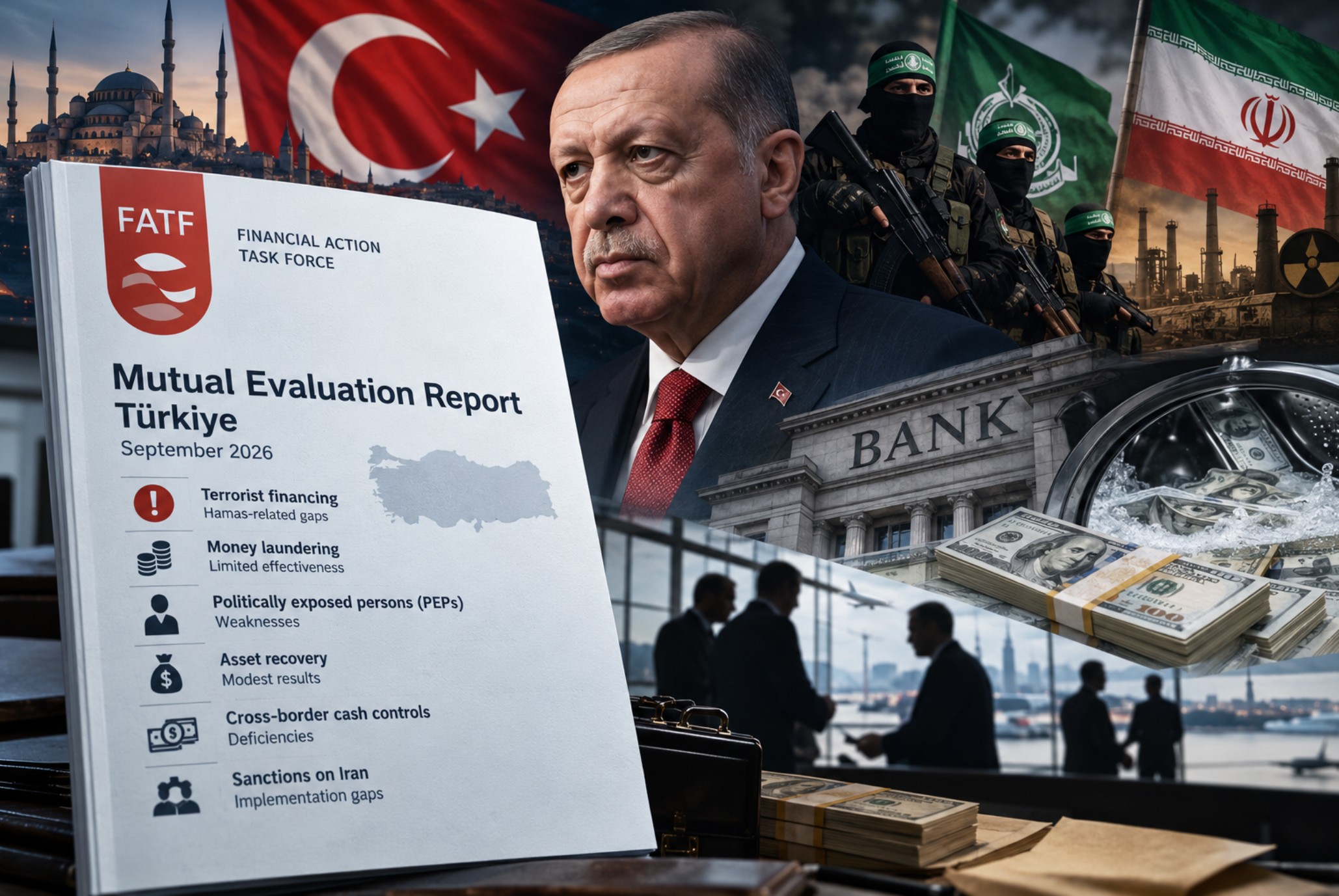
The IRGC, Hamas and PIJ networks have operated freely in Turkey, tapping the country’s financial, banking and corporate sectors, while the government of Islamist President Recep Tayyip Erdogan, which openly backs Hamas, has allowed these activities to continue unhindered. No legal action has been taken against the illicit financing of Hamas networks in Turkey. The last criminal investigation into the IRGC Quds Force’s Turkish network, known as Tevhid Selam, was thwarted by the government in 2014, allowing Iranian agents and their Turkish assets to walk free.