
Levent Kenez/Stockholm
Turkey’s military expenditure reached $30 billion in 2025, exceeding the combined defense spending of its immediate neighbors and marking a notable shift in the regional balance of power, according to newly released data and regional estimates.
The total surpasses the estimated combined military budgets of Greece, Iraq, Azerbaijan, Bulgaria, Armenia, Georgia and other nearby states, which together amounted to roughly $24 billion to $25 billion. The gap points to a widening disparity in defense capacity across a region shaped by overlapping security challenges.
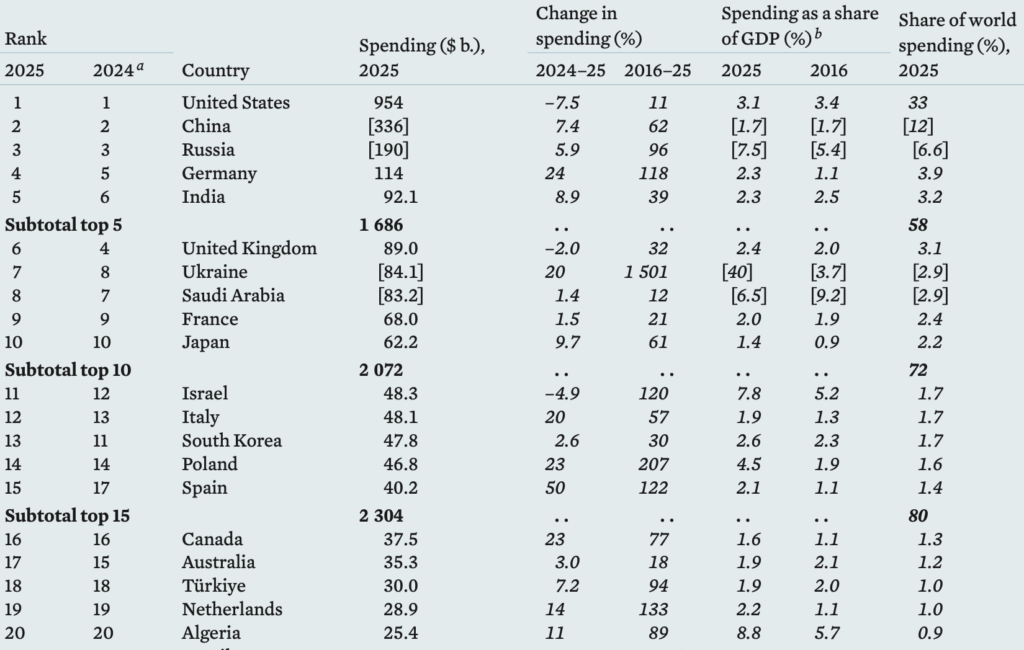
Data published by the Stockholm International Peace Research Institute (SIPRI) shows Turkey increased its military spending in 2025 by 7.2 percent in real terms compared to 2024. Over the past decade its defense budget has grown by 94 percent, significantly outpacing the global increase of 41 percent during the same period.
Global military expenditure reached $2.887 trillion in 2025, rising by 2.9 percent and marking the highest level ever recorded. The increase extended a trend of continuous growth, although at a slower pace than the sharp rise seen in 2024. Higher spending in Europe and Asia offset a decline in the United States, shifting the overall distribution of military expenditure.
Turkey ranked 18th among the world’s largest military spenders in 2025. Its military burden stood at 1.9 percent of gross domestic product, putting it below the 2 percent level that has become a reference point within NATO while still reflecting sustained allocation of public resources to defense.
The composition of Turkey’s military spending has changed along with its growth. An increasing share of the budget is directed toward domestic procurement and industrial development. In 2025 allocations to a dedicated fund supporting the national defense industry accounted for 22 percent of total military expenditure after rising by 25 percent compared to the previous year.
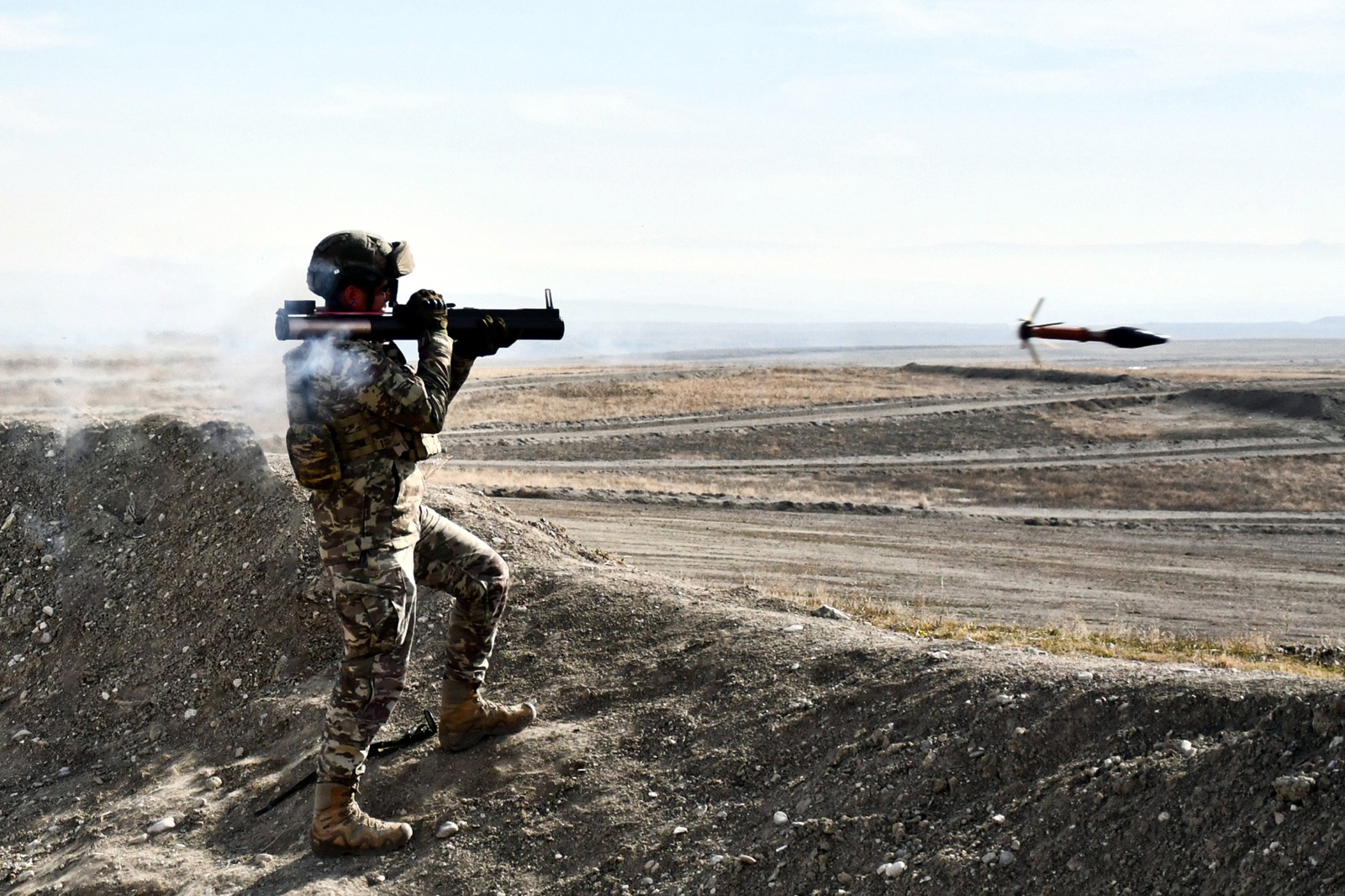
The government says this shift has reduced reliance on external suppliers and altered how defense spending interacts with the broader economy. Domestic companies now provide a large share of military equipment, including unmanned systems, armored platforms and naval assets. Several long-term projects remain under development, including a next-generation combat aircraft and integrated air defense systems.
Top 20 countries with the highest military expenditure in 2025 (SIPRI)
At the same time, operational demands continue to shape spending levels. Turkey maintained military activities in northern Iraq and Syria in 2025 and sustained deployments in locations such as Somalia. These commitments require ongoing funding for personnel, logistics and maintenance, contributing to steady budget increases.
The regional comparison illustrates the scale of the gap. Greece allocated about $6.5 billion to defense in 2025, continuing a multi-year modernization effort focused on air and naval capabilities. Iraq’s military spending reached approximately $6.4 billion, largely directed toward internal security and counterterrorism operations.
Azerbaijan’s budget stood at around $5 billion, reflecting continued investment following the conflict in Nagorno-Karabakh and efforts to integrate advanced systems. Bulgaria spent roughly $2.3 billion as it moved toward NATO benchmarks, including procurement of modern aircraft.
Armenia’s military expenditure reached about $1.7 billion, marking a substantial increase compared with earlier years as it sought to rebuild its defense capacity. Georgia’s spending remained comparatively limited.
Iran’s military expenditure was estimated at $7.4 billion in 2025 based on available data, showing a decline in real terms compared with the previous year. The decrease was linked in part to high inflation, which reduced purchasing power despite nominal increases. Some defense-related activities in Iran are funded outside the official budget, making precise comparisons more complex.
Even when including Iran’s figures, the combined spending of these countries remains below Turkey’s individual total. The difference shows a structural imbalance in regional military capacity, although spending levels do not fully capture differences in force size, operational readiness or procurement efficiency.
Across Europe, military expenditure increased sharply in 2025, rising by 14 percent to reach $864 billion, reflecting ongoing adjustments linked to the war in Ukraine and broader security concerns. Many European countries have expanded defense budgets and accelerated procurement programs, contributing to the overall increase.
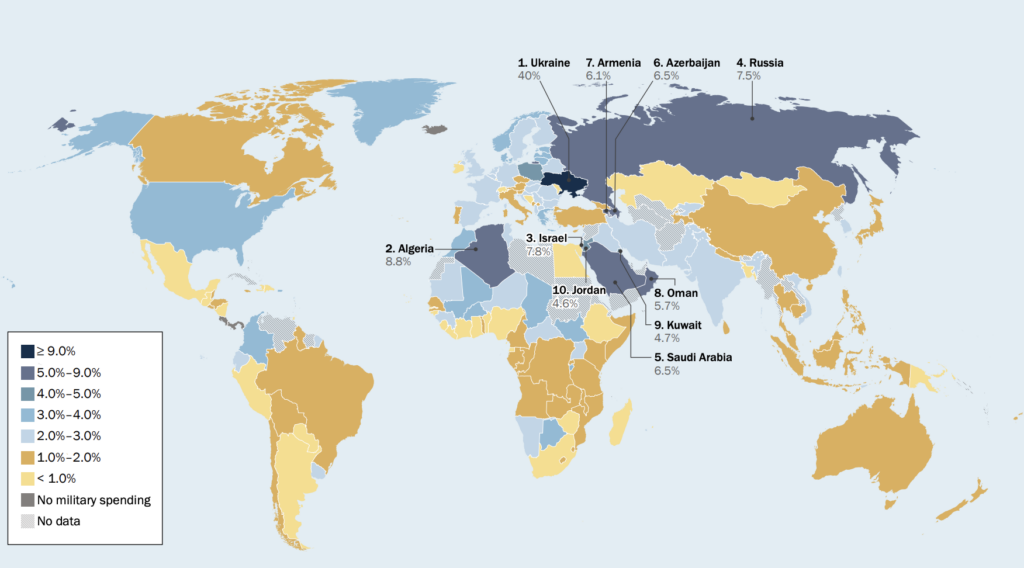
Within NATO, most member states now meet or approach the 2 percent of GDP guideline for military spending. Turkey’s level remains slightly below that threshold, but its total expenditure and force size place it among the more significant contributors in absolute terms.
Globally, military spending remains concentrated among a small group of countries. The United States, China and Russia together accounted for more than half of total expenditure in 2025. The top 15 countries represented about 80 percent of global military spending, underscoring the uneven distribution of defense resources.
The rise in military expenditure has taken place alongside broader economic constraints, requiring trade-offs within national budgeting. While defense allocations have grown, the military burden has remained relatively stable as a share of GDP, indicating that increases in spending have occurred along with overall economic expansion.
Findings from a 2025 research study conducted under the pro-government SAHA network, a group of defense and industry companies, and the Scientific and Technical Research Council of Turkey (TÜBİTAK) MBA program show that the relationship between defense spending and economic performance in Turkey has strengthened over the past two decades, with effects that are measurable but largely indirect. Between 2005 and 2024, defense expenditure increased from $7.5 billion to $21.9 billion, while defense exports rose from $250 million to $7.15 billion, marking expansion by a factor of 29. Over the same period, employment in the defense sector grew from 35,000 to 105,000, indicating a threefold increase in workforce capacity and a shift toward higher-skilled labor.
The expansion of Turkey’s defense spending has also taken on political significance domestically. Government-backed defense projects have featured prominently in election campaigns, where large-scale programs such as unmanned aerial vehicles, naval platforms and next-generation aircraft have been presented as indicators of national strength and technological progress.
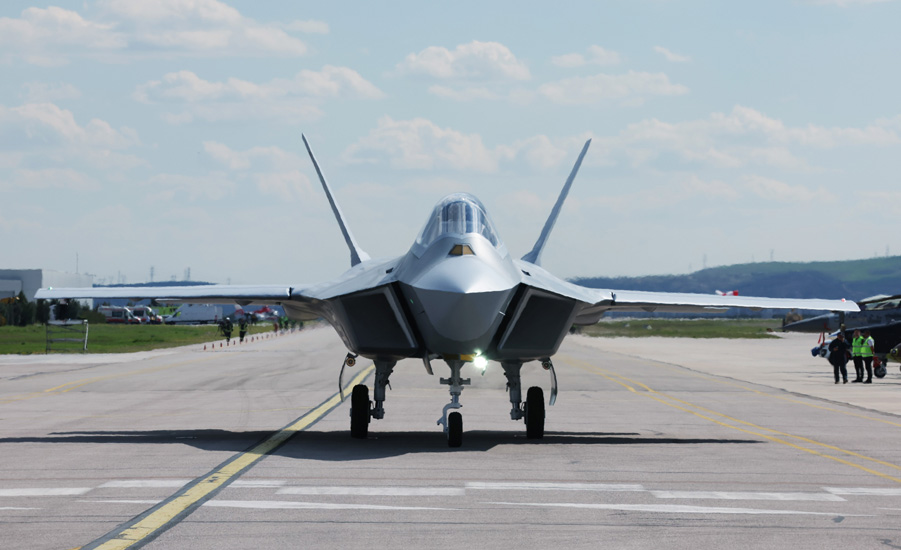
President Recep Tayyip Erdogan has repeatedly emphasized these initiatives in public messaging, linking them to broader themes of strategic autonomy and economic development. The role of private companies closely associated with the sector, including drone manufacturer Baykar, whose leadership includes members of Erdogan’s family, has further drawn attention to the intersection of politics and defense policy.
Some critical analyses and public debate around Turkey’s defense sector have pointed to the role of companies and business figures close to Erdogan in major procurement and industrial projects, raising questions about transparency, competition in defense contracting and the broader distributional effects of increased public spending in the sector.
At the same time economic indicators point to growing fiscal pressure. Inflation remained elevated in 2025 and public spending constraints have tightened, raising questions about long-term sustainability. Military expenditure, at 1.9 percent of GDP, has coincided with currency volatility and broader budgetary challenges, intensifying debate over resource allocation priorities.
In 2024 the government introduced a legislative proposal aimed at generating additional revenue for the Defense Industry Fund through a levy on individuals with high credit card limits. The bill targeted credit card holders with limits above TL 100,000 ($2,923) at the time, proposing an annual contribution of TL 750 ($22) to the fund. The proposal faced strong public criticism and was ultimately postponed and not advanced in its original form during the parliamentary process.