
Abdullah Bozkurt/Stockholm
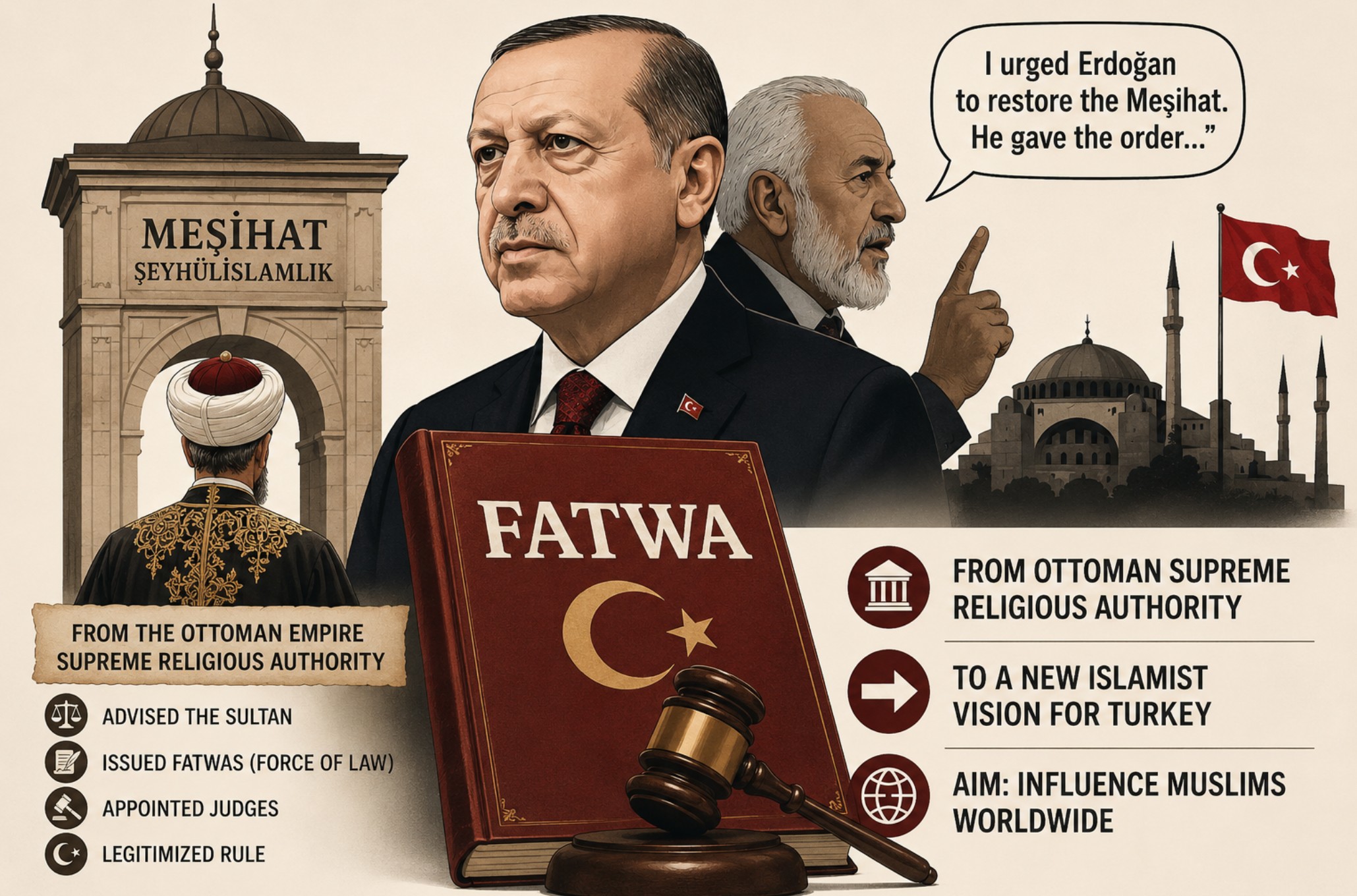
A televised interview with Sadık Albayrak, an in-law of Turkish President Recep Tayyip Erdogan and a longtime ideologue in Turkey’s political Islamist movement, has revealed that Erdogan personally confided in him about plans to revive the Ottoman-era Meşihat, the office of the Şeyhülislam (Sheikh al-Islam or Grand Mufti), which once served as the supreme religious authority in the Ottoman Empire.
Albayrak, 84, who has written extensively on the Ottoman religious establishment, the caliphate, Islamic law (sharia) and the early republican dismantling of Islamic institutions, used the program aired on the Islamist Yeni Akit TV network to highlight what he described as the destruction, neglect and possible restoration of the former Meşihat complex in Istanbul, once the seat of the empire’s highest religious authority.
The office of the Şeyhülislam performed a number of critical functions in the Ottoman state. It advised the sultan on religious matters, confirmed the legitimacy of newly enthroned sultans, legitimized government policies through religious decrees and oversaw the appointment of judges across the empire. The fatwas issued by the office effectively carried the force of law. The institution remained in operation until 1924, when the newly founded Turkish Republic abolished both the caliphate and the Ottoman religious hierarchy.
Now, according to a prominent figure from Erdogan’s own family circle, the resurrection of that institution appears to be under serious consideration nearly a century later.
Born in 1940, Albayrak was educated in imam-hatip religious schools and later became active in the political Islamist Milli Görüş (National View) movement during the 1960s and ’70s, a Turkish ideological current widely regarded as the local affiliate of the broader Muslim Brotherhood-inspired Islamist network.
He had worked for 15 years at Turkey’s religious affairs directorate, the Diyanet İşleri Başkanlığı (Presidency of Religious Affairs), before being dismissed, prosecuted and convicted of violating Turkish law. He later emerged as a prominent commentator in Islamist publications such as Milli Gazete and Yeni Devir, newspapers closely aligned with the Milli Görüş movement.
Milli Görüş was founded by Necmettin Erbakan, the openly anti-Western and anti-Semitic Islamist politician widely considered the architect of modern political Islamism in Turkey. Erdogan himself was politically nurtured within the Milli Görüş tradition before eventually breaking away to form his own party, the ruling Justice and Development Party (AKP).
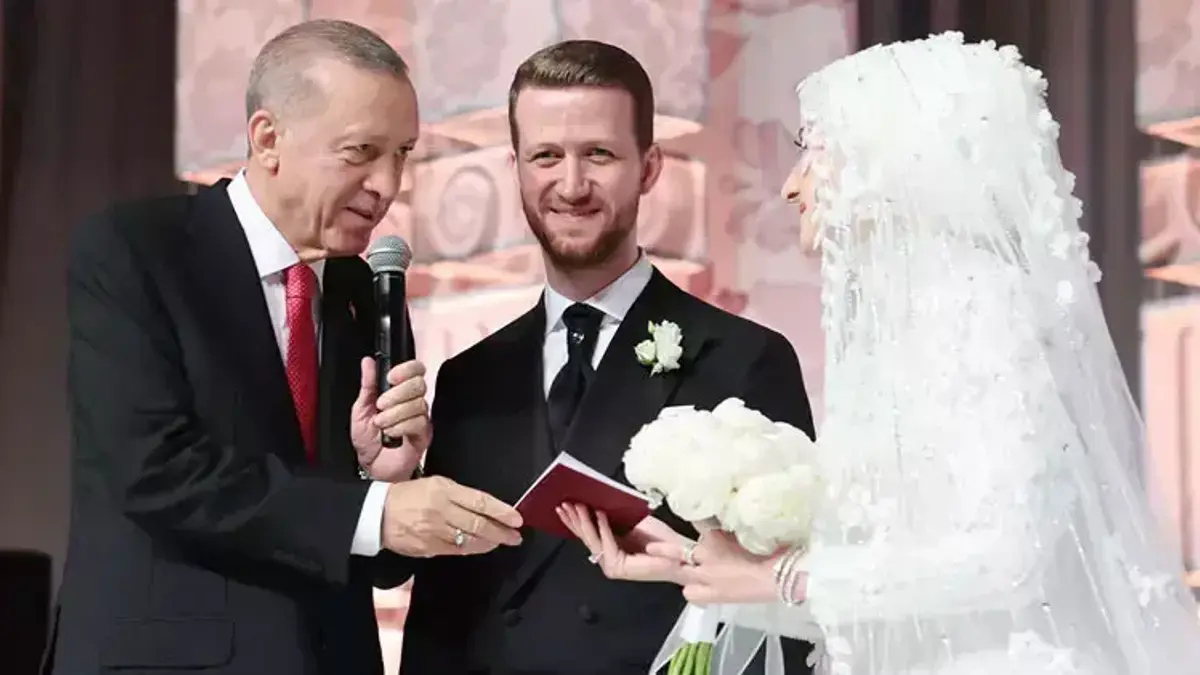
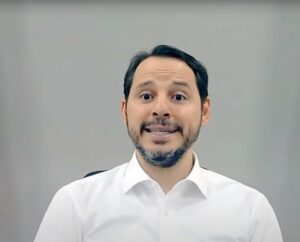
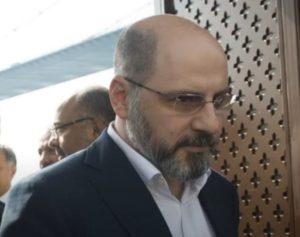
Albayrak’s remarks are difficult to dismiss as marginal commentary given the political influence of his family within Erdogan’s ruling establishment. One of his sons, Berat Albayrak, is married to Erdogan’s daughter Esra Albayrak Erdogan and previously served as both treasury minister and energy minister. Another son, Serhat Albayrak, has for nearly two decades managed the Erdogan family-controlled Turkuvaz media conglomerate, which includes dozens of publications and broadcasters, among them the government’s flagship propaganda outlets, the Sabah daily and the A Haber television network.
The media group has long been accused of coordinating psychological influence campaigns in close cooperation with Turkey’s National Intelligence Organization (Milli İstihbarat Teşkilatı, MIT), operating troll networks on social media and running covert anti-Western and anti-Semitic disinformation platforms that promote conspiracy theories targeting Jews, Western governments and opposition groups.
This vast media machinery has helped normalize and mainstream Albayrak’s long-held ideological views, shaping public discourse and influencing the social and political psyche of Turkish society in increasingly radical directions. Because Albayrak sits firmly within the inner circle of Turkey’s ruling elite, his historical narratives carry substantial political weight, especially when they intersect with current debates over religion, governance and state authority under Erdogan, who increasingly portrays himself as the de facto leader of Muslims worldwide.
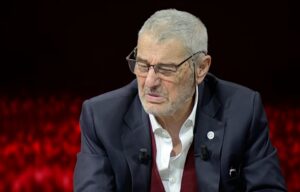
During the interview Albayrak recalled how he had once worked in the building that housed the Ottoman Meşihat and the office of the Şeyhülislam. He lamented that the office became vacant after the abolition of the Ottoman religious establishment during the early republican era and that the building was later converted into a girls’ high school, İstanbul Kız Lisesi, before eventually being destroyed in a fire.
He blamed the school administration for the destruction, alleging that parties and festivities held there contributed to the blaze and hinting, without evidence, that the fire may have been arson. His comments framed the destruction of the complex not merely as the loss of a historic building but as part of a broader erasure of Islamic legal and institutional memory in republican Turkey.
Albayrak disclosed during the interview that he had personally urged Erdogan to restore the Meşihat complex. According to him, he presented Erdogan with a signed copy of the 700-page “İlmiye Salnamesi,” a historical yearbook published in 1916 containing extensive documentary material and photographs related to the institution and the building itself.

He revealed that Erdogan subsequently ordered the reconstruction of the religious complex but said the effort became entangled in bureaucratic obstacles, property disputes and resistance from Istanbul University, which currently operates a botanical institute on the original site.
The program’s host concluded the segment by openly calling for the restoration of the complex, expressing hope that the interview would generate public momentum for rebuilding the institution.
The remarks strongly suggest that Erdogan has personally committed himself to the project but is waiting for the right political timing and conditions before moving forward, much as he did with the conversion of the Hagia Sophia from a museum back into a mosque in 2020, nearly a century after the iconic structure had been designated as a museum by the Turkish Republic.
Albayrak also called for the abolition of the Diyanet, implying that he favors replacing the current religious bureaucracy with a revived Ottoman-style religious authority centered around the Meşihat. The Diyanet, originally established by the republic to place religion under state supervision and curb radicalism, has under Erdogan increasingly been transformed into a political apparatus closely aligned with Islamist movements, including networks associated with the Muslim Brotherhood.
Apparently, Erdogan’s relatives and ideological allies view even that transformation as insufficient and seek a more expansive revival of Ottoman religious authority that would more effectively serve their broader Islamist political vision.
Albayrak’s remarks reveal that the former Meşihat building remains a potent symbol among Islamist circles that no longer view the Ottoman religious hierarchy as a relic of history but rather as a model whose institutional memory and governing philosophy should be restored in contemporary Turkey.
What Erdogan and his ideological allies ultimately seek is not merely the revival of a historical institution but the use of religious symbolism to sustain an increasingly authoritarian and corrupt political order, consolidate support among hardline Islamist constituencies and manufacture religious legitimacy for government policies carried out in the name of Islam while simultaneously obscuring widespread allegations of corruption, bribery and illicit enrichment surrounding the ruling elite.
The resurrection of the Meşihat could also serve as a powerful mobilization tool for Erdogan, enabling him to project religious influence not only within Turkey but across the broader Muslim world. Under such a framework, religious edicts issued by a revived Ottoman-style authority could be presented as binding guidance for Muslims globally, thereby strengthening Erdogan’s ambition to position himself as a transnational Islamist leader.
In that sense, the debate over the Meşihat is not simply about restoring a historic building in Istanbul or preserving Ottoman cultural heritage. Rather, it reflects a much broader ideological struggle over whether Turkey’s Islamist ruling class intends to rehabilitate the Ottoman model of centralized religious authority as part of a long-term effort to reshape the Turkish state and society along Islamist lines and project the newly found leverage abroad among Muslim communities worldwide.