

Levent Kenez/Stockholm
Turkey’s demographic decline accelerated further after newly released official statistics showed the country’s fertility rate dropping to 1.42 children per woman, intensifying concerns over the future size of the workforce, long-term economic growth and the country’s rapidly aging population.
The data, published by the Turkish Statistical Institute (TurkStat) on May 21, marked another sharp fall from the previous year’s rate of 1.48 and pushed Turkey further below the replacement level of 2.1 needed to maintain population stability without migration.
The figures confirmed a dramatic demographic transformation in a country that for decades viewed its young and expanding population as a strategic advantage. Turkey, with more than 85 million people and one of NATO’s largest militaries, is now confronting trends increasingly associated with aging European and East Asian economies.
The decline in births has become one of the clearest indicators of how prolonged economic strain is reshaping Turkish society. Rising housing costs, persistent inflation, expensive childcare and growing financial insecurity among younger adults are contributing to delayed marriage and smaller families.
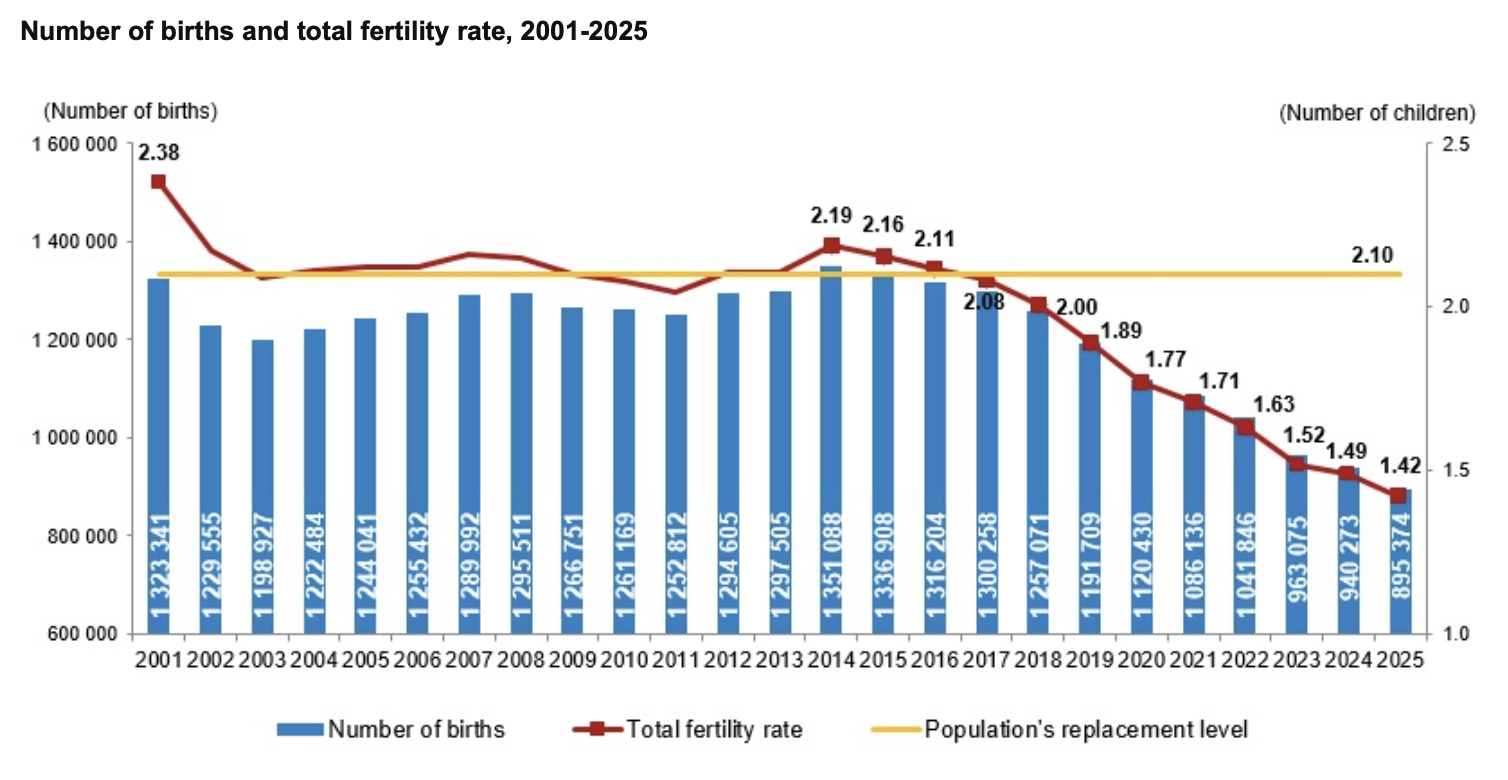
The latest TurkStat figures showed births continuing to decline across much of the country while the average age of mothers increased further. Younger generations are marrying later than in the previous decade, and many couples are choosing to have only one child or postpone parenthood entirely.
Births outside marriage remain relatively rare in Turkey because of prevailing social norms, making delayed marriage a direct factor behind the falling birth rate. The average age at first marriage has steadily risen over the last decade, particularly in large urban centers where the cost of living has sharply increased.
In cities such as Istanbul, Ankara and İzmir, fertility levels remain well below the national average. Smaller apartments, soaring rents and declining purchasing power have altered family planning decisions, especially among middle-class households.
The decline is particularly striking because Turkey maintained fertility rates above replacement level well into the 2000s. At the start of the century, Turkish women had an average of more than two children and the country’s population growth rate exceeded many European nations.
The new official statistics suggest that the transition has accelerated rapidly. Turkey’s fertility rate now stands near levels recorded in some of the world’s fastest-aging societies.
President Recep Tayyip Erdogan has increasingly framed the demographic slowdown as a national threat. For years Erdogan publicly encouraged families to have at least three children, but his government has recently expanded warnings that falling birth rates could weaken the economy, the pension system and military recruitment capacity over the long term.
Turkish officials have also linked the issue to broader concerns about national power and social stability. Government statements in recent months have described demographic decline as one of the country’s most serious structural challenges.
The administration has responded by promoting what it calls a long-term “Family and Population Vision,” alongside proposals aimed at encouraging marriage and childbirth. Authorities have discussed financial support for newly married couples, childcare assistance and housing incentives designed for younger families.
Religious institutions and pro-government organizations have also intensified campaigns encouraging larger families and earlier marriage. Yet the latest figures indicate that official appeals are struggling to reverse deeper economic and social trends.

Turkey has experienced years of high inflation that significantly increased the cost of everyday life. Food prices, rent and education expenses have risen sharply, while many younger workers face unstable employment conditions and declining real wages.
These pressures have reshaped attitudes toward parenthood. Many young Turks increasingly see raising children as financially difficult, particularly in major cities where household budgets are already under strain.
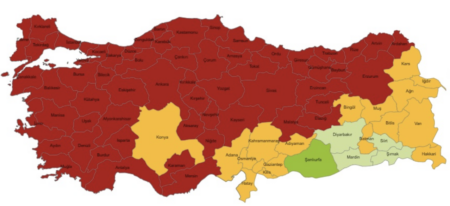
The latest data also reflected growing regional differences. Southeastern provinces continued to record relatively higher fertility levels than western urban centers, although birth rates there have also declined steadily in recent years.
At the same time Turkey’s population structure is changing rapidly. TurkStat projections released in recent years showed the country’s median age rising steadily over coming decades, while the proportion of elderly citizens increases significantly.
The working-age population is expected to peak before gradually declining, creating additional pressure on healthcare spending, social security systems and labor supply.
The shrinking younger population could also create challenges for sectors dependent on a large labor force, including manufacturing and construction, both central to Turkey’s economic model.
Demographic trends are also reshaping rural areas. Some provinces have experienced population stagnation or decline as younger residents migrate to major cities for work and educational opportunities. In several regions reduced student numbers have already affected school enrollment levels.
Turkey’s fertility decline mirrors patterns seen across many developed and developing economies undergoing demographic transition. However, the speed of the decline has attracted particular attention because Turkey entered the process later than most European countries.
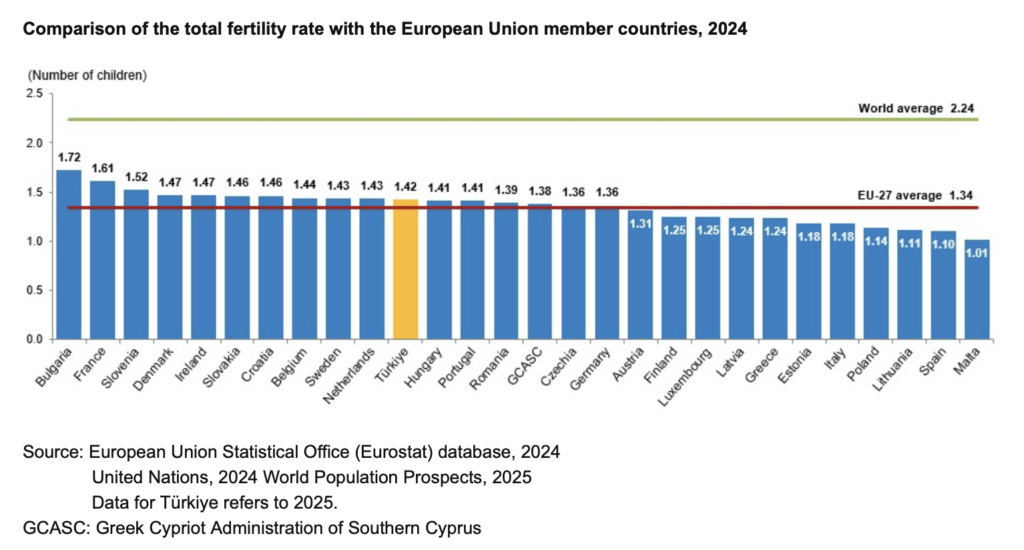
Even countries with extensive family welfare systems such as Sweden and Finland have struggled to reverse falling birth rates, suggesting financial incentives alone may not quickly restore fertility levels once social habits change.
For Erdogan’s government, however, the issue has become increasingly political as well as economic. Turkish leaders frequently present population growth as closely connected to geopolitical influence, economic resilience and military strength.
The latest TurkStat release has therefore intensified debate over whether the government can realistically reverse the trend while economic pressures continue to weigh heavily on younger generations.
Opposition politicians argue that worsening living conditions and declining purchasing power are central causes of the demographic slowdown. They point to rising marriage costs, expensive housing and economic uncertainty as the main reasons that couples postpone having children.