

Abdullah Bozkurt/Stockholm
A sweeping tax proposal unveiled by Turkish President Recep Tayyip Erdogan last week — promising a 20-year exemption on foreign-sourced income for individuals relocating to Turkey — is raising serious concerns that it could open vast new avenues for money laundering and illicit financial flows in a country already known as a hub for international crime syndicates and domestic networks that have been able to move illicit funds through its financial and banking systems with relative ease.
The proposal targets individuals living abroad who have not been tax residents in Turkey for the past three years, offering an unusually generous package: no taxation on foreign income for two decades, minimal taxation on domestic income and a sharply reduced inheritance tax rate of just 1 percent. While framed as an effort to attract capital and encourage expatriates to return, the plan’s structure is set to create new systemic vulnerabilities that could be exploited by criminal networks and politically connected actors.
At the heart of these concerns is the absence of robust safeguards in a country where enforcement of financial regulations has long been questioned. Turkey has faced repeated criticism from international watchdogs over deficiencies in its anti-money laundering (AML) regime, including weak oversight, inconsistent enforcement and political interference in judicial processes.
Under the proposed framework, individuals would be able to bring foreign-earned wealth into Turkey without meaningful scrutiny of its origin, effectively shielding funds that may have been generated through illegal means abroad. Without stringent source-of-funds verification mechanisms, the scheme risks functioning as a legal gateway for laundering proceeds derived from corruption, organized crime, sanctions evasion and other illicit activities.

The proposal reflects a familiar pattern under Erdogan’s two-decade rule, in which mechanisms designed to attract foreign capital have doubled as conduits for undeclared or illicit wealth. Known in Turkish as “varlık barışı” (wealth amnesty), such legislation has been enacted eight times by parliament, due to the ruling Justice and Development Party’s (AKP) legislative dominance. The most recent version, adopted in July 2022, granted sweeping immunity by prohibiting any audit or investigation into assets brought into the country.
That amendment allowed individuals including those already under investigation to declare questioned assets as foreign transfers, effectively neutralizing scrutiny. Subsequent criminal cases have revealed how such provisions were exploited by organized crime figures to launder proceeds from illegal activities.
One prominent example is Ayhan Bora Kaplan, a convicted felon who rose to prominence in Ankara under the protection of former interior minister Süleyman Soylu. When confronted with bank deposit slips seized during his arrest on September 7, 2023, Kaplan claimed: “I earned this money by winning it in foreign casinos at various times. I deposited it into [Turkish] banks during the wealth amnesty.”
Another case involves Çetin Gören, who used similar legal mechanisms to repatriate and legitimize large sums of illicit capital. Gören was a central figure in the high-profile “Bataklık” (Swamp) operation launched in 2020 under international pressure. Despite being subject to INTERPOL notices and sought by multiple countries, he and his associate Nejat Daş were acquitted of charges related to leading a criminal organization and laundering money. The controversy deepened in 2026 when Spanish authorities seized a vessel carrying approximately 10 tons of cocaine and identified Gören as the ship’s owner.
Similarly, Croatian drug lord Nenad Petrak exploited Turkey’s wealth amnesty framework to move illicit funds into the legal financial system without scrutiny. Petrak also acquired Turkish citizenship through real estate investment, allowing him to operate under legal cover despite being internationally wanted. He was eventually arrested in November 2023 following pressure from foreign governments.

The new tax exemption plan unveiled by Erdogan risks perpetuating these same loopholes, not only for foreign criminal actors but also for Turkish nationals engaging in so-called “round-tripping,” a well-documented laundering technique in which domestic funds are moved offshore and later reintroduced as ostensibly foreign income. Given that the proposal requires only three years of non-tax residency, individuals with access to offshore structures could easily exploit the system to legitimize previously concealed wealth.
The plan also creates fertile ground for abuse through complex offshore arrangements. Shell companies, trusts and nominee ownership structures could be used to obscure the true origin of funds, making it difficult for authorities to distinguish between legitimate earnings and illicit proceeds. In countries with strong rule-of-law safeguards, such risks are mitigated through rigorous auditing and international cooperation. In Turkey, however, persistent enforcement gaps raise doubts about whether such controls would be applied effectively.
Another major concern is the proposal’s treatment of inheritance. By reducing the inheritance tax rate to just 1 percent, the government effectively opens a low-cost channel for transferring large volumes of wealth across generations. Experts warn that this could be used to “clean” illicit funds by reclassifying them as inherited assets, further complicating efforts to trace their origin.
Real estate markets, already a preferred vehicle for laundering funds globally, are also likely to come under pressure if the plan is implemented. Tax-free inflows of foreign capital could be funneled into property purchases, driving up prices while providing a convenient mechanism to integrate illicit funds into the formal economy. Similar patterns have been observed in other jurisdictions that introduced aggressive tax incentives without adequate safeguards.

While several European countries have adopted special tax regimes to attract wealthy individuals, Turkey’s proposal stands out for its breadth and duration. Programs in countries such as Italy and Greece typically impose fixed annual taxes on foreign income or require substantial investment commitments, while maintaining stronger compliance frameworks. By contrast, the Turkish model appears to offer near-total exemption with minimal conditions, significantly amplifying the risks.
The broader political environment further compounds these concerns. Over the past decade, numerous cases have documented how individuals with alleged ties to organized crime or corruption have benefited from lenient treatment by Turkish authorities. This pattern raises fears that the proposed tax regime could disproportionately benefit politically connected elites, effectively institutionalizing preferential treatment under the guise of economic policy.
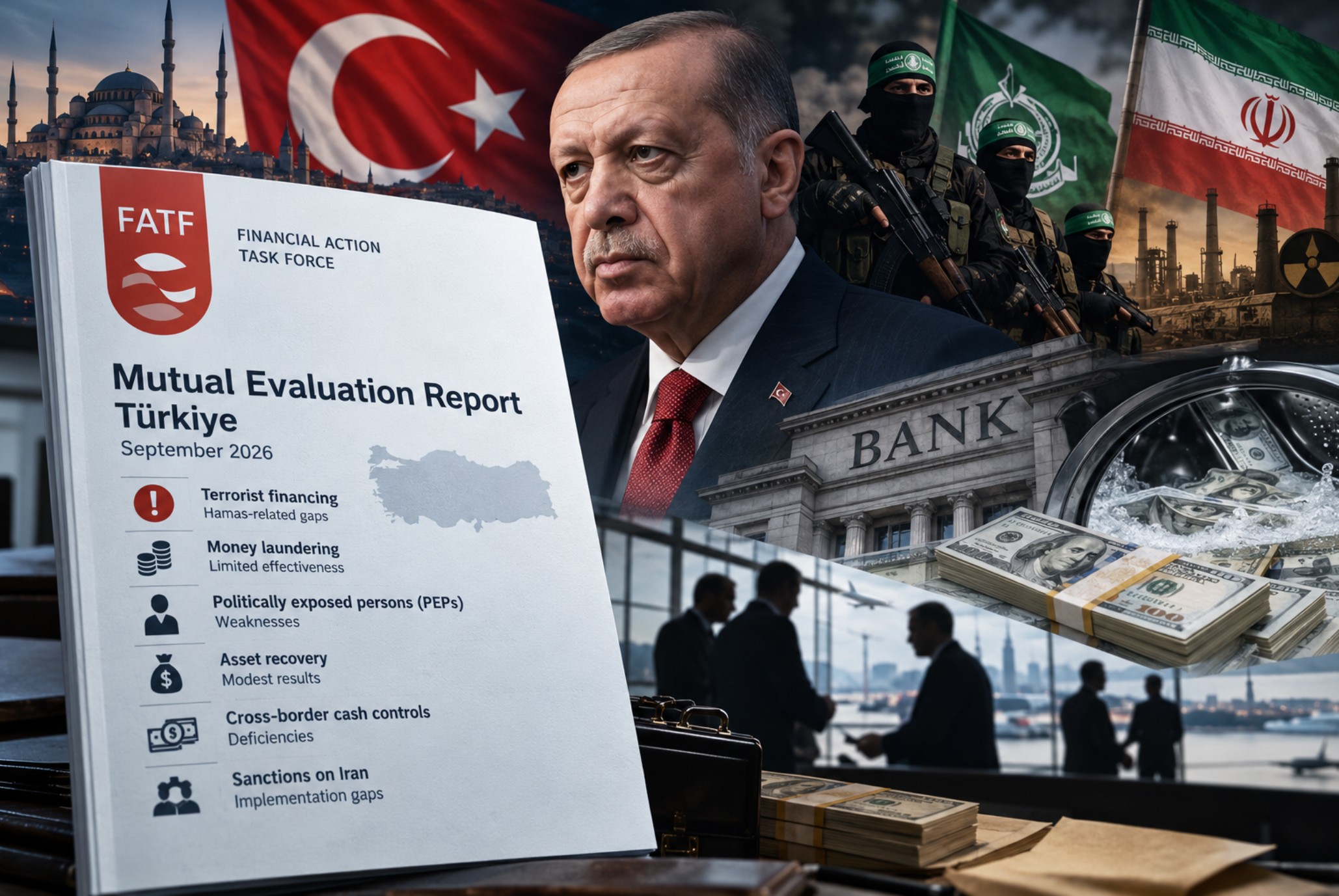
Internationally, the proposal is also likely to attract scrutiny from bodies such as the Financial Action Task Force (FATF), which put Turkey on its “grey list” in 2021 over deficiencies in its AML framework. Turkey was delisted after taking some steps with a promise to do more in 2024. A policy that facilitates large-scale inflows of opaque foreign wealth could further complicate Ankara’s efforts to remain off the FATF’s grey list and restore investor confidence and may even risk renewed or prolonged listing by the watchdog group..
Ultimately, the effectiveness and safety of such a policy depend on the strength and independence of the institutions tasked with enforcing it. In Turkey, however, these institutions have been significantly weakened under the rule of Erdogan, particularly following the mass purge of more than 100,000 public officials in 2016-2017, a process that has eroded the independence of law enforcement, the judiciary and key regulatory bodies.
In the absence of credible safeguards, a persistent concern in Turkey, Erdogan’s tax exemption plan risks doing more than simply attracting capital. It could further transform the country into a magnet for illicit wealth seeking legitimacy, adding to the already substantial volumes of illegal funds that have been laundered through Turkish banks and financial institutions, often with the tacit backing of the government.