
Abdullah Bozkurt/Stockholm
Turkey’s judiciary has never been flawless, but it once maintained a meaningful degree of independence from the executive branch, enough that relatives of senior political leaders and even cabinet members were investigated and prosecuted on corruption charges. At the time prominent prosecutors resisted intense government pressure to shut down cases, even in the face of mounting political interference and offers of bribes, positions and privileges.
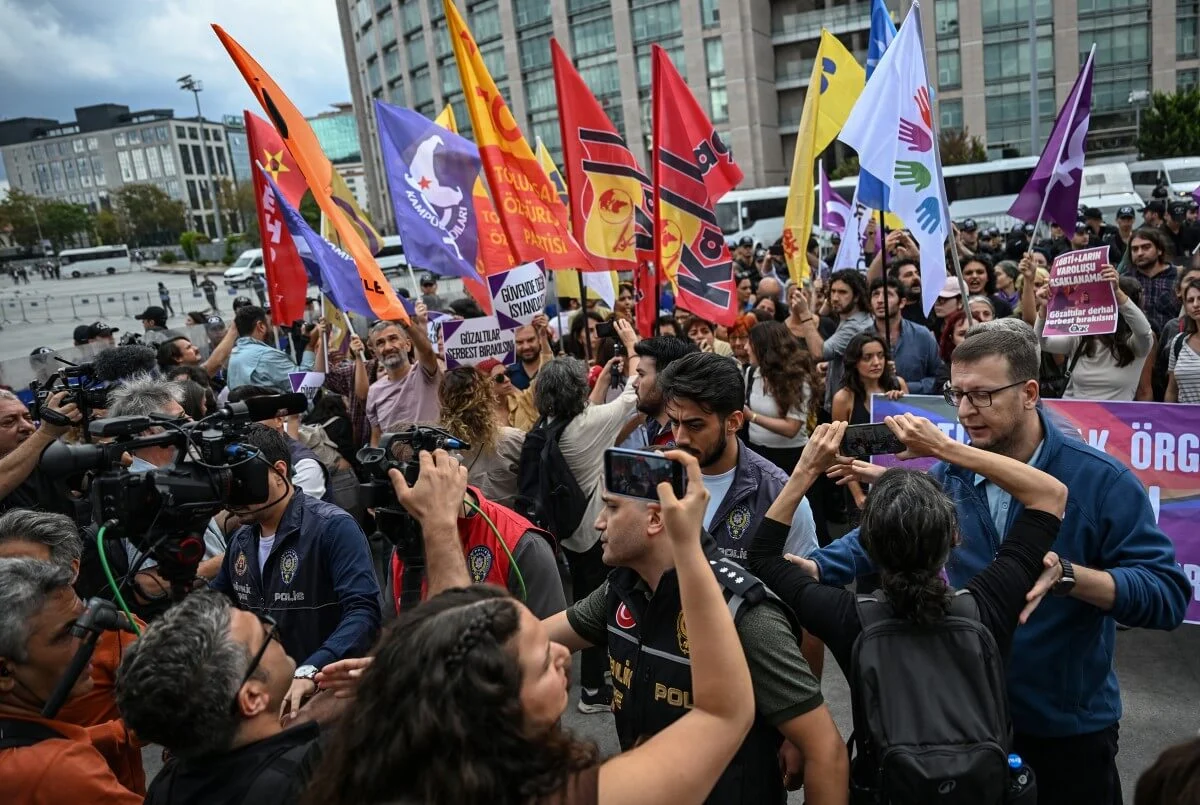
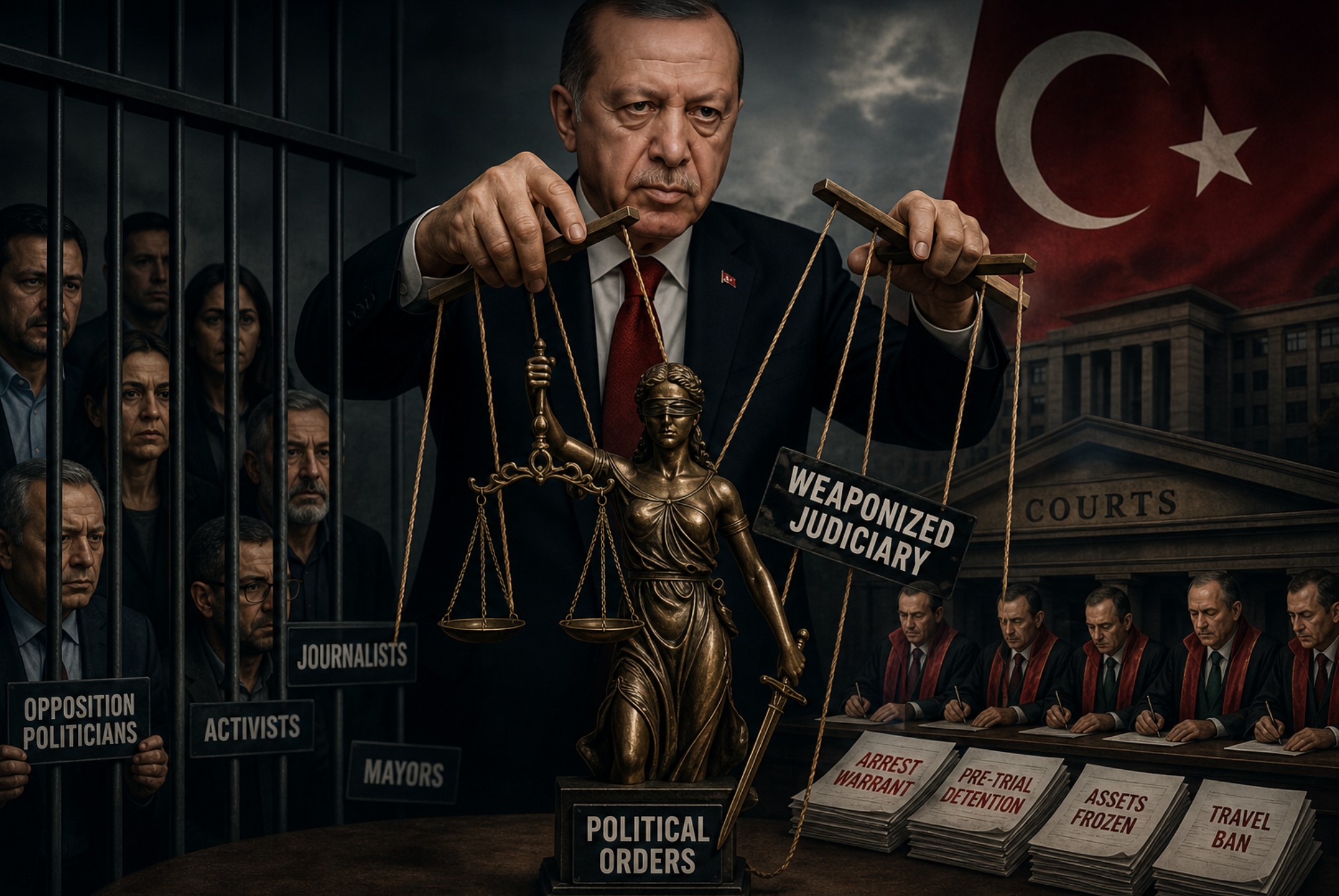
That reality has changed dramatically over the past decade. The judiciary has been transformed into a political instrument under President Recep Tayyip Erdogan, a shift critics say was enabled in part by segments of the opposition that once stood against him. Today, the criminal justice system is widely seen as a tool to target political rivals, with elected mayors removed from office and jailed, while opposition politicians, journalists, academics and activists face politically motivated prosecutions and wrongful imprisonment.
The critical turning point came in 2014, following a series of criminal investigations that implicated individuals at the highest levels of government, including close family members of then–prime minister and current president Erdogan.
Two major corruption probes made public in December 2013 revealed how Erdogan’s inner circle — including his son Necmettin Bilal Erdogan, son-in-law Berat Albayrak, four cabinet ministers and senior advisers such as Ibrahim Kalin, now head of Turkey’s National Intelligence Organization (Milli İstihbarat Teşkilatı, MIT) — were involved in organized criminal activity involving bribery, influence peddling and abuse of power.
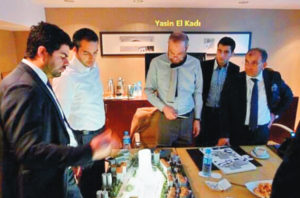
These investigations exposed a vast scheme in which millions of dollars in kickbacks and bribes were siphoned off through clandestine operations that facilitated Iranian sanctions evasion. Central figures included Reza Zarrab, a sanctions-busting operative linked to Iran’s clerical regime, and Yasin al-Qadi, once designated by the United States and the United Nations as a financier of al-Qaeda.
Caught red-handed, Erdogan quickly moved to dismantle the investigations by purging prosecutors, judges and police chiefs involved in the cases. However, he initially faced resistance from members of the judiciary who refused to comply with political directives.
In January 2014, just weeks after the corruption exposé, prosecutors in the provinces of Adana and Hatay launched three separate terrorism investigations. These probes uncovered shipments of heavy weaponry bound for jihadist groups in Syria as well as the covert transfer of militants across Turkish territory on buses. Local law enforcement discovered that agents of MIT had escorted these transports.
As a result, MIT itself became the subject of a criminal investigation after evidence suggested that these arms shipments and fighter transfers were not authorized under Turkish law and had been personally sanctioned by Erdogan.
During the same period, prosecutors in Van province issued arrest warrants for several suspects on al-Qaeda charges, including Ibrahim Sen, a former Guantanamo detainee transferred to Turkey in 2005, and members of the Humanitarian Relief Foundation (IHH), accused of supplying fighters and logistical support to al-Qaeda-linked groups in Syria. The government intervened immediately, halting the case and securing the release of suspects, some of whom were found to have been acting in coordination with MIT according to the police investigation file.
In February 2014 another major investigation revealed that operatives from Iran’s Islamic Revolutionary Guard Corps (IRGC) Quds Force had been operating freely inside Turkey since 2011 with the assistance of senior Erdogan advisers and then-MIT chief Hakan Fidan. Before the three-year probe could result in indictments, the government intervened once again. A newly appointed prosecutor, Irfan Fidan, an Erdogan loyalist, shut down the investigation. He was later rewarded with top judicial posts, eventually becoming a member of Turkey’s Constitutional Court.
Although Erdogan managed to shield himself, his family and close associates from prosecution, the judiciary still retained pockets of resistance thanks to the relative independence of the Board of Judges and Prosecutors (HSK), the body responsible for appointments, promotions and disciplinary actions in the judiciary.
While the justice minister, a political appointee, serves as chairman of the HSK, a majority of its members at the time were independent and resisted efforts to purge judges and prosecutors who had pursued cases based on evidence and legal standards.

This changed with the HSK elections scheduled for December 2014. Determined to seize control of the judiciary’s governing body, Erdogan launched an aggressive campaign to install loyalists. The government launched a campaign to woo roughly 12,000 judges and prosecutors, promoting a newly formed slate known as the Platform for Unity in the Judiciary (Yargıda Birlik Platformu). Incentives included promises of higher salaries, improved housing and better working conditions.
The justice minister personally toured the country to lobby judicial officials. Crucially, Erdogan also secured support from elements within the opposition, including the main opposition Republican People’s Party (CHP). While the government was purging independent jurists, CHP figures were simultaneously campaigning domestically and internationally to legitimize the crackdown, framing it as a necessary measure against alleged affiliates of the Gülen movement, a group that has consistently criticized the Erdogan government over a wide range of issues, including the politicization of religion, systemic corruption and Turkey’s aiding and abetting of jihadist and radical groups.
In this process political Islamist candidates aligned with Erdogan formed alliances with an unlikely coalition of leftists, ultranationalists (ülkücü), hardline Kemalists and neo-nationalist (ulusalcı) factions, many of whom would later become political partners of the Erdogan government.
The government-backed list ultimately won the HSK elections, fundamentally reshaping the judiciary. This paved the way for widespread purges, reassignments and demotions targeting hundreds of independent judges and prosecutors across the country.
Even then, Erdogan struggled to achieve full control. Legal challenges persisted, and the pace of purges proved slower than he desired. This context helps explain why a coup attempt in July 2016, seen as a false flag operation orchestrated by Turkish intelligence, became a turning point.
The alleged coup involved only mobilization of 1 percent of the military in Istanbul and Ankara, with no meaningful action that actually resembled a coup attempt, yet it provided the government with the pretext it needed. Within hours, authorities began arresting hundreds of judges and prosecutors, including members of the Constitutional Court and the Supreme Court of Appeals as if they were involved in the coup.
More than 4,000 judges and prosecutors were summarily dismissed in the aftermath, suggesting that purge lists had been prepared well in advance and were merely awaiting justification. The judiciary’s workforce was effectively halved overnight, shrinking to approximately 7,000–8,000 personnel.
To fill the gap, the government fast-tracked the appointment of thousands of new judges and prosecutors, most drawn from lawyers affiliated with Erdogan’s ruling Justice and Development Party (AKP). After minimal training, these recruits were put in key judicial positions.
Since then, the number of judges and prosecutors has been expanded to around 27,000 — meaning that roughly 20,000 members of the judiciary have been appointed under criteria heavily influenced by political loyalty and ideological alignment with the ruling party.
Today, Turkey’s judiciary functions mainly as an extension of executive power. Its primary role is to sustain Erdogan’s repressive system by targeting critics and opponents through a weaponized legal framework. Courts are routinely used to detain both Turkish citizens and foreign nationals, effectively turning them into bargaining chips in Ankara’s domestic and international negotiations.
Even if Erdogan were to leave power — whether through political change or natural causes — the legacy of this transformation is likely to endure. A judiciary reshaped along ideological lines, staffed by individuals selected for loyalty rather than merit, will remain a formidable obstacle to any future effort to restore the rule of law in Turkey.