
Levent Kenez/Stockholm
Turkey is expanding its defense footprint in Central Asia through a strategy that combines drone exports with industrial partnerships, local maintenance infrastructure and technology-transfer agreements, with Kazakhstan emerging as Ankara’s most significant regional partner in overseas drone production.
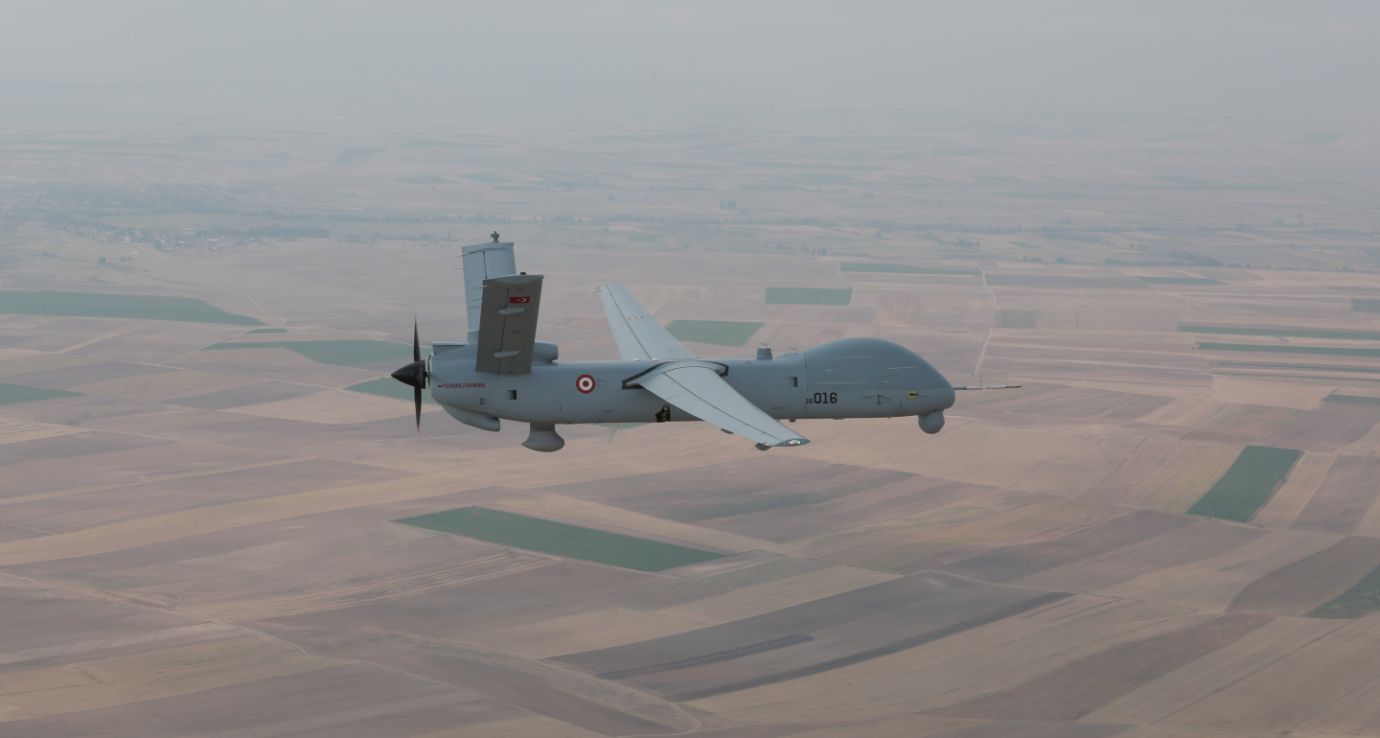
At the center of the effort is the ANKA unmanned aerial vehicle developed by Turkish Aerospace Industries (TAI, or TUSAŞ in Turkish). Ankara and Astana recently agreed to jointly produce and maintain the ANKA platform in Kazakhstan, marking the first overseas production initiative for the aircraft.
The cooperation stems from a military agreement signed between Turkey and Kazakhstan in May 2021 that included provisions for collaboration on reconnaissance and armed unmanned aerial vehicles, tactical coordination and operational experience-sharing.
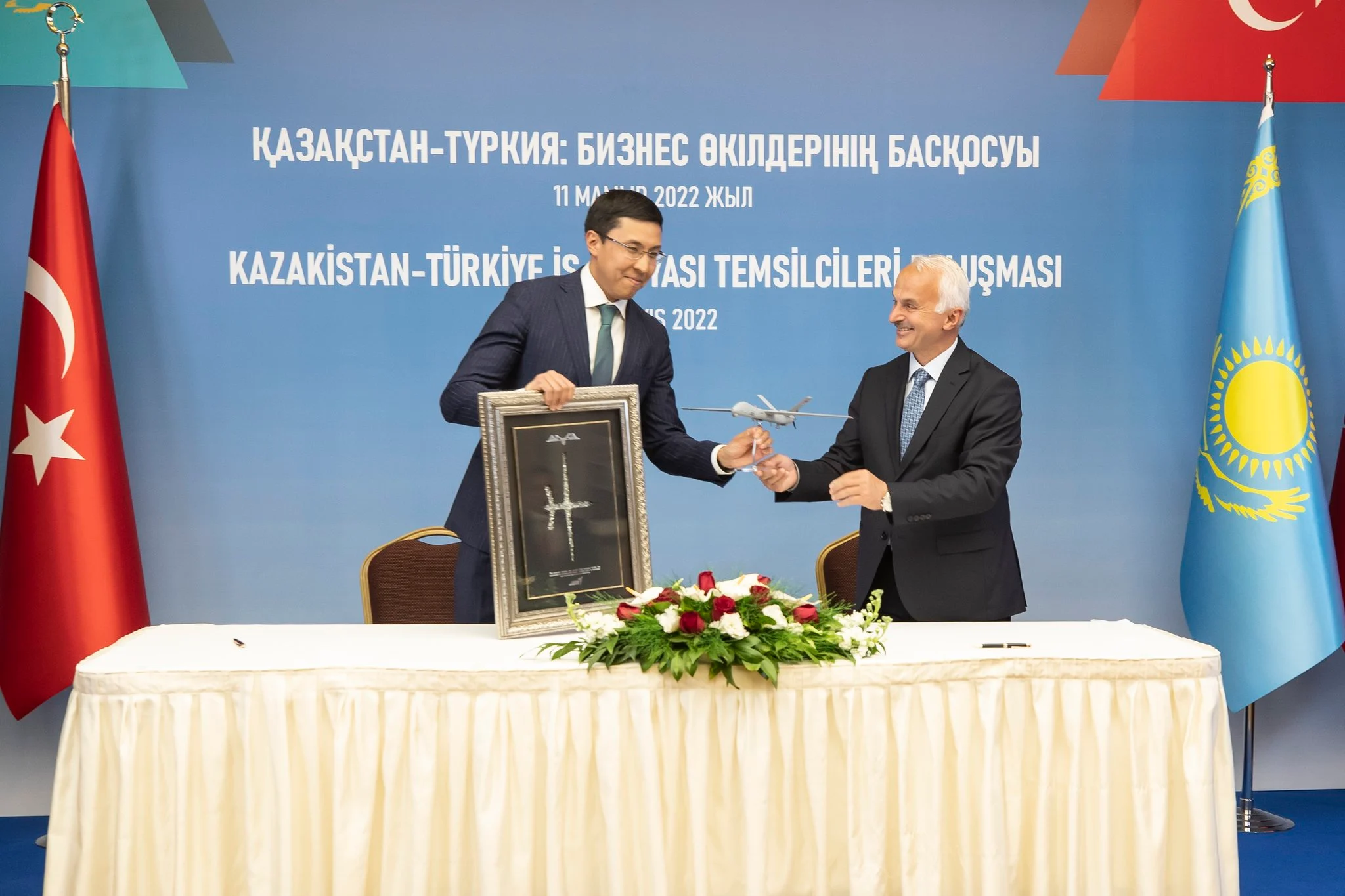
Negotiations between Kazakhstan and TAI later evolved from a procurement process into a broader industrial partnership. In 2022 TAI and Kazakhstan Engineering signed a memorandum of understanding covering joint production of ANKA drones, maintenance, repair capabilities and technology transfer.

The project received renewed political backing during Turkish President Recep Tayyip Erdogan’s last week visit to Astana, where Erdogan and Kazakh President Kassym-Jomart Tokayev presided over the signing of 13 bilateral agreements covering defense, transportation, energy, finance and education. One agreement established the framework for a joint venture to produce and service ANKA drones in Kazakhstan.
The arrangement reflects a broader shift in Turkey’s defense export policy away from direct hardware sales toward long-term industrial partnerships designed to create local sustainment and operational ecosystems around Turkish-made platforms.
Under the agreement Kazakhstan is expected to participate not only in assembly activities but also in maintenance, logistics and operational support. The project includes technical cooperation between Turkish and Kazakh defense contractors, personnel training and infrastructure intended to support domestic servicing capability.
The ANKA is a medium-altitude, long-endurance unmanned aerial vehicle designed for intelligence, surveillance, reconnaissance and strike missions. Development began in the mid-2000s after Turkey sought to reduce dependence on Israeli and American reconnaissance systems following disputes over foreign drone procurement and operational restrictions.
The aircraft entered service with the Turkish Armed Forces in the 2010s and has since been deployed extensively in operations in Syria and Iraq. Variants of the platform are used by the Turkish Air Force, Navy and intelligence services for border surveillance, target acquisition and counterterrorism operations.
ANKA has a wingspan of approximately 17.5 meters, a maximum takeoff weight of about 1,700 kilograms and endurance exceeding 30 hours. The platform can operate at altitudes of around 30,000 feet and carries a payload capacity of roughly 350 kilograms.
The drone is equipped with electro-optical and infrared cameras, synthetic aperture radar, moving-target indication radar, satellite communication systems and signals intelligence payloads. Satellite-controlled variants allow beyond-line-of-sight operations, giving the aircraft strategic reconnaissance capability over long distances.
Armed versions of ANKA can deploy Turkish-made smart munitions including the MAM-L and MAM-C precision-guided bombs produced by Turkey’s Roketsan. The ANKA-S variant incorporates satellite communication capability, while newer configurations integrate electronic warfare and maritime surveillance systems.

The ANKA program remained largely overshadowed by drones produced by Baykar, whose Bayraktar TB2 platform gained international prominence through conflicts in Libya, Syria, Nagorno-Karabakh and Ukraine. Baykar’s rapid rise coincided with strong political backing under the government of President Recep Tayyip Erdogan, with the company being led by Selçuk Bayraktar, Erdogan’s son-in-law. Although ANKA offered more advanced features in areas such as satellite-controlled operations and payload capacity, the platform received less public visibility and export promotion than Baykar’s systems.
Despite operating in Baykar’s shadow, the ANKA program is regarded by many Turkish aerospace specialists as one of the country’s most technologically advanced indigenous UAV projects. Analysts say that with greater political support and export prioritization, ANKA could have achieved global recognition comparable to Bayraktar systems, particularly given its larger payload capacity, satellite-control capability and broader mission profile.
Turkey’s expanding defense ties with Central Asia have developed along with broader growth in unmanned aviation exports. Turkmenistan publicly displayed Bayraktar TB2 drones during military parades, while Kyrgyzstan also acquired Turkish-made unmanned systems amid rising regional demand for surveillance and strike aircraft.
The expansion has strengthened Turkey’s defense industry presence in a region historically dominated by Russian military equipment and increasingly targeted by Chinese defense manufacturers.
Ankara has increasingly pursued export models built around local production, maintenance and financing partnerships rather than standalone drone sales.
A similar approach emerged in Turkey’s defense cooperation with Saudi Arabia. During Erdogan’s 2023 visit to the kingdom, Baykar signed export and industrial cooperation agreements with the Saudi Ministry of Defense involving the Akıncı unmanned combat aerial vehicle. The deal included provisions for local production infrastructure and munitions manufacturing in Saudi Arabia.
Turkish officials later outlined plans to use Gulf-based financing and manufacturing partnerships to support drone exports to lower-income countries, particularly in Africa. Under the proposed structure, drones would be partially manufactured in Gulf countries using Turkish systems and components, while regional financing mechanisms would facilitate exports to third countries.
The Kazakhstan ANKA project follows the same strategic model but puts greater emphasis on regional industrial integration and long-term sustainment capability.
Drone systems have become one of Turkey’s most internationally visible defense products over the past decade, transforming the country from a major importer of unmanned aircraft into one of the world’s important UAV exporters.