
Abdullah Bozkurt/Stockholm
Turkey’s government has officially acknowledged providing military support to Syria’s new Islamist-dominated administration while simultaneously rejecting any plan to withdraw Turkish troops and military outposts entrenched in northern Iraq and Syria, according to two letters by Defense Minister Yaşar Güler.
The disclosures, contained in formal responses to parliamentary inquiries dated February 16, 2026, offer rare, on-the-record confirmation of Ankara’s dual-track Syria policy: active backing of Damascus’s new rulers in their military campaign against the Syrian Democratic Forces (SDF), and the indefinite continuation of Turkey’s cross-border military footprint in Iraq and Syria under the banner of counterterrorism.
In his first letter Güler said the Turkish Armed Forces (TSK) would not withdraw from military outposts and bases established across northern Iraq and Syria, stressing that Ankara considers its deployments permanent for the foreseeable future as part of national security policy.
Güler framed Turkey’s military presence as being conducted under the “right of self-defense arising from international law,” claiming Turkish troops operate beyond the border to neutralize threats directed at Turkey and to “support regional stability.”
He said Turkey’s military bases in Iraq and Syria were established following “comprehensive risk analyses” focused on national survival (beka), a narrative frequently invoked by Turkish officials in public remarks to justify military and intelligence operations abroad. He added that technological capabilities and field dynamics on the ground shape the scope of Turkish involvement, implying that Ankara has deployed increasingly sophisticated weapons systems to Syrian and Iraqi territory to bolster and entrench its military footprint.
The defense minister explicitly ruled out any drawdown, stating that no decision has been taken to pull troops back and that withdrawal would only be reconsidered if Turkey’s border security were “fully ensured” and the terrorist threat “entirely eliminated.” In effect, Ankara is conditioning any future withdrawal on an open-ended security benchmark it alone defines, paving the way for a long-term, possibly permanent, military presence on foreign soil.
Turkey currently maintains dozens of military bases, forward operating posts and observation points inside Iraq and Syria, many of which have expanded into fortified compounds with permanent infrastructure. The deployments have drawn repeated protests from Baghdad and criticism from international legal experts who argue that Ankara’s presence lacks host-country consent and stretches the doctrine of self-defense beyond internationally accepted limits.
In the second letter, the defense minister openly endorsed the Syrian government’s military campaign against the Kurdish-led SDF, following the collapse of a March 10, 2025, agreement between Damascus and the SDF on integrating SDF forces into Syria’s state security structures.
Güler said the Syrian government had exhausted political and negotiating channels and was left with “only the military option,” launching operations starting in Aleppo and expanding into other regions. He welcomed Damascus’s seizure of control in Aleppo, saying the outcome was received “with satisfaction” by Ankara.
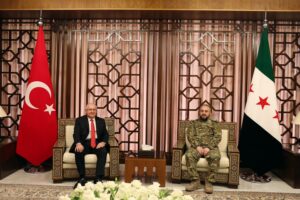
The letter exposes Turkey’s deep military involvement in clashes with SDF forces, going beyond the public remarks that stated Turkey stands ready to offer its military support if Damascus asks for it.
During a press briefing in early January, Turkey’s defense ministry said Ankara stood ready to “support” Syria in its counterterrorism operation against Kurdish fighters in Aleppo if requested, while simultaneously insisting that the Aleppo operation was “carried out entirely by the Syrian army,” implying no direct Turkish involvement.
The ministry said Turkey was “closely monitoring” developments and would provide “necessary support” should Damascus ask for assistance. The defense minister’s letter reveals that Turkey was in fact involved in military operations
Deadly clashes erupted after the Syrian government and the SDF failed to meet a year-end deadline to integrate Kurdish forces into Syria’s military, triggering fighting that forced thousands of civilians to flee Kurdish neighborhoods in Aleppo following Syrian army shelling of residential areas.
Turkish officials consider the SDF to be a terrorist-linked force, reiterating Ankara’s longstanding position that the group is an extension of the outlawed Kurdistan Workers’ Party (PKK), despite the SDF’s central role in the US-led coalition against ISIS.
The renewed clashes have also exposed Ankara’s role in pressing for full implementation of the March 2025 deal, which the Kurds have resisted amid demands for decentralized governance — a political model rejected by Syria’s new Islamist authorities and viewed in Ankara as a threat to centralized control and territorial unity.
Güler also rejected allegations that the new Syrian government used jihadist terrorist groups in its campaign against the SDF, saying the armed groups used in the operations were “hierarchically subordinate armed elements” of the Syrian state.
The letters expose a fundamental contradiction in Turkey’s regional posture: Turkey claims to support both Iraq and Syria’s unity and territorial integrity while entrenching its own military footprint inside both countries with no timeline for withdrawal.
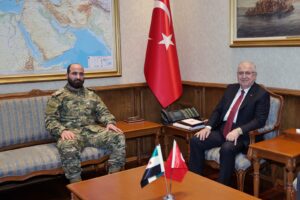
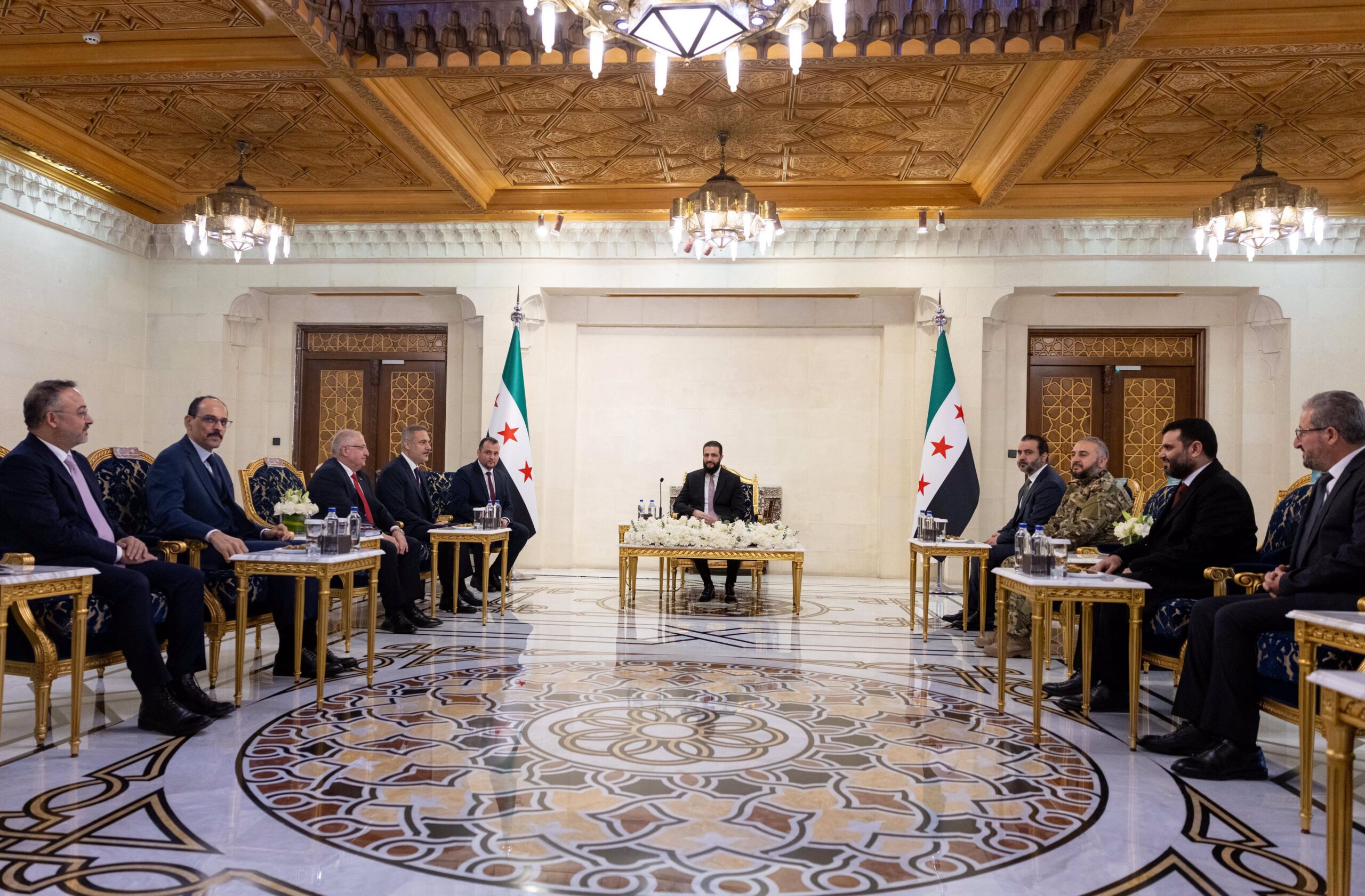
Güler’s acknowledgment that Damascus’s operations relied on armed groups under its hierarchical control is also likely to reignite scrutiny of the ideological character and human rights records of the forces Turkey is backing. The new Syrian government, led by Ahmed al-Sharaa, has for years received support from Turkish intelligence during the conflict in Syria, including during the period when al-Sharaa led the designated terrorist organization Hayat Tahrir al-Sham, previously known as Jabhat al-Nusra, al-Qaeda’s former branch in Syria.
Taken together, the two letters by Turkey’s defense minister leave no room for ambiguity: Ankara is closely aligned with Syria’s new Islamist-led rulers, providing military support, transforming what was once tacit coordination into an overt policy choice, and entrenching its own military presence in Iraq and Syria under an elastic definition of counterterrorism and self-defense.
By putting these positions on the record, the Turkish government has effectively formalized a strategy that risks deepening Turkey’s entanglement in Syria’s internal conflicts, complicating relations with Iraq and inviting renewed international scrutiny over the legality and long-term consequences of its cross-border military operations.