
Abdullah Bozkurt/Stockholm
A secret Turkish intelligence operation to unlawfully snatch critics of President Recep Tayyip Erdogan in Moldova triggered years of legal and political fallout, leaving the former head of Moldova’s intelligence service convicted of abuse of office, other senior security and migration officials facing criminal accusations and Moldova condemned by Europe’s top human rights court for participating in what judges described as an unlawful “extra-legal transfer.”
The controversy, far from being over, has recently returned to the Moldovan courts. In June 2026 a court in Chișinău ordered prosecutors to reopen parts of the investigation into the September 2018 operation, specifically authorizing them to revisit individuals who had previously been removed from criminal prosecution and to identify other participants in the rendition.
The June 15 ruling by the Chișinău Court’s Buiucani seat came after a prosecutor asked that the criminal file be returned for further investigation. According to court reporting based on the ruling, the prosecutor sought renewed proceedings against previously cleared individuals and the identification of additional people who may have participated in the Turkish intelligence operation on Moldavian soil. The existing finding of guilt of former Moldovan intelligence chief Vasile Botnari is final and was not reopened.
The decision gives Moldovan prosecutors another opportunity to examine an operation that the European Court of Human Rights (ECtHR) found had been jointly conducted by Moldovan and Turkish security services and planned in advance to prevent the Turkish nationals from invoking legal protections available to them.
The operation targeted teachers and administrators working for the Orizont network of schools in Moldova, which were associated with the Gülen movement, a global civic network inspired by the late Turkish cleric Fethullah Gülen, Erdogan’s most vocal critic.
Erdogan branded the Gülen movement, a group that has never been associated any sort of violence since it was established by Gulen in the 1960s, as a terrorist organization following major corruption investigations in 2013 that incriminated the then-prime minister and now president Erdogan, members of his family and several of his political and business associates on multiple charges. The investigations also involved Iranian sanctions-buster Reza Zarrab and Yasin al-Qadi, a Saudi businessman who had previously been designated by the United Nations and the United States over alleged al-Qaeda financing. Both men had gained unusual access to Erdogan and his office in commissioning multiple crimes.
The European Court of Human Rights’ June 11, 2019, judgment in Ozdil and Others v. the Republic of Moldova, which found that Moldovan authorities violated the rights of five Turkish teachers by secretly detaining them and transferring them to Turkey in a joint operation involving Moldovan and Turkish intelligence services:
Erdogan blamed the corruption investigations on the Gülen movement, an allegation Gülen himself denied, and subsequently launched a sweeping crackdown on individuals and institutions associated with the group, including schools operating abroad. Turkey’s designation of the Gülen movement as a terrorist organization is not shared by the United States or the European Union and has not been adopted internationally.
The five men who were working in Orizont schools were also viciously targeted by the Erdogan government. They were identified as Yasin Özdil, Müjdat Çelebi, Rıza Doğan, Sedat Hasan Karacaoğlu and Mehmet Feridun Tüfekçi, all Turkish nationals.
The Strasbourg court established that the pressure from Ankara preceded the rendition by years. Under directives from Ankara, Turkey’s ambassador to Moldova publicly accused teachers there of terrorism with no evidence to back up serious charges. Under pressure from Turkey, in March 2018 the principal of an Orizont school in Chișinău was detained and questioned by Moldovan intelligence officers.
The teachers sought asylum in Moldova in April 2018, telling authorities they feared prosecution and reprisal if returned to Turkey. Moldovan prosecutors informed them in June that there were no criminal investigations pending against them.
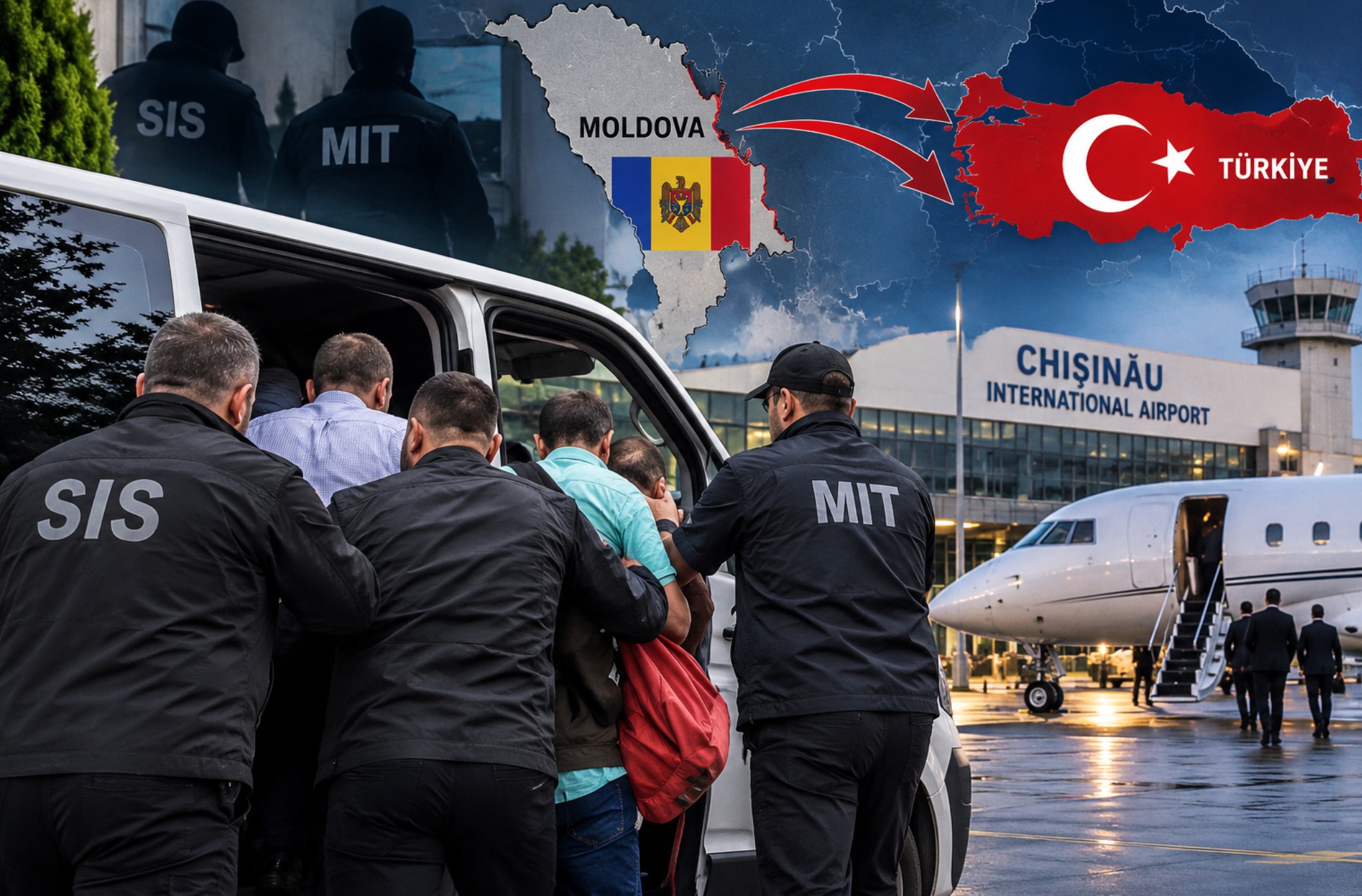
Despite those circumstances, seven Orizont employees were seized on September 6, 2018, in what the ECtHR later explicitly described as a joint operation conducted by Moldovan and Turkish intelligence services.
They were transported directly to Chișinău International Airport, where a specially chartered aircraft was waiting. They were flown immediately to Turkey. Their families were left without information about their whereabouts for weeks.
The Strasbourg court found that the use of a chartered aircraft demonstrated that the Moldovan-Turkish operation had been prepared in advance. According to the court, the operation was organized in a manner designed to take the men by surprise and deprive them of any realistic opportunity to defend themselves through the Moldovan judicial system.
Moldovan authorities, the court said, “deliberately transferred them directly into the hands of the Turkish authorities.” The judges concluded that the operation amounted to an “extra-legal transfer” that circumvented the protections guaranteed by Moldovan and international law.
The finding provided unusually strong judicial confirmation of direct cooperation between Turkish intelligence and the security service of a European country in Ankara’s campaign against alleged Gülen supporters abroad.
The operation was made more controversial by the manner in which Moldovan migration authorities handled the teachers’ asylum requests. The Bureau for Migration and Asylum rejected the applications based on a classified intelligence note from Moldova’s Security and Intelligence Service (SIS), which claimed the men represented a national security threat.
Yet according to the ECtHR record, the asylum authorities concluded that the applicants otherwise met the legal requirements for asylum. The adverse determination was based on the secret security assessment. Crucially, the decisions were not communicated to the men before they were seized and put aboard the flight to Turkey.

Their families received the relevant documents afterward. When lawyers subsequently challenged the decisions, the cases were dismissed in part because powers of attorney had not been personally signed by the men, something they could scarcely accomplish after having already been forcibly transported to Turkey.
The Strasbourg court found that no criminal proceedings had been brought against them in Moldova and that they had not been given the minimum procedural protection required against arbitrary state action.
In its June 11, 2019, judgment in Özdil and Others v. Republic of Moldova, the ECtHR unanimously found violations of Article 5, protecting liberty and security, and Article 8, protecting private and family life. Moldova was ordered to pay each of the five applicants €25,000 in non-pecuniary damages.
Two other Turkish nationals caught up in the same operation, Hüseyin Bayraktar and Sertif Ayrı, subsequently reached friendly settlements with Moldova before the ECtHR, under which each was also awarded €25,000.
The domestic criminal proceedings revealed considerably more about how the rendition was organized. A November 19, 2024, decision by Moldova’s Supreme Court of Justice reconstructs the investigation in unusual detail.
A November 2024 ruling by Moldova’s Supreme Court in the case against former intelligence chief Vasile Botnari over the 2018 rendition of Turkish nationals to Turkey:
According to the court record, prosecutors eventually opened criminal proceedings over the actions of Moldovan migration and intelligence officials in the unlawful expulsion of the seven Turkish nationals. Vasile Botnari, who headed the SIS at the time, was formally accused of abuse of office.
During proceedings on July 13, 2020, Botnari admitted his guilt and acknowledged that he had coordinated the operation to remove the Turkish nationals from Moldova. The Supreme Court record states that the SIS paid for the charter aircraft that transported the men to Turkey. The flight cost 348,432 Moldovan lei.
On July 15, 2020, the Chișinău Court found him guilty of abuse of office. He was fined 88,000 Moldovan lei and prohibited from holding public office for five years. Prosecutors had initially sought three years in prison, according to the Supreme Court record, although the trial court ultimately imposed the financial penalty after considering Botnari’s admission of guilt, reimbursement of damages and other mitigating circumstances.
The trial was conducted behind closed doors because the case materials had been classified. The judgment itself was initially secret and was not made publicly available.
The ECtHR judgment required Moldova to pay €125,000 to the five applicants in the Özdil case, an amount Moldovan authorities calculated at approximately 2.4 million lei. The domestic court records show that Botnari’s wife, Natalia Botnari, paid that amount to compensate the state. She also reimbursed the SIS for the 348,432 lei charter flight to Turkey.
Moldovan prosecutors calculated the total financial damage arising from Botnari’s actions at approximately 2.75 million lei. The fact that the charter aircraft itself was included in the damages calculation further established that the Moldovan intelligence service had not merely handed the men over to Turkish officers at the border. It financed the aircraft used to transport them to Turkey.
The Supreme Court record reveals that Botnari was not originally the only senior Moldovan official targeted by investigators. Three other officials were formally accused in criminal case No. 2019898086: Olga Poalelungi, then head of the Bureau for Migration and Asylum; Alexandru Baltaga, deputy director of the SIS; and Alexandru Balan, also a deputy director of the SIS.
They were investigated under Article 328 of Moldova’s Criminal Code for excess or abuse of official authority. The case covered alleged acts by personnel from the Migration and Asylum Bureau, Interior Ministry and SIS in connection with the removal of the Turkish nationals. But on January 21, 2020, prosecutor Victor Plugaru dropped the accusations against the three officials.
In Poalelungi’s case, prosecutors concluded that the migration bureau’s decisions had not been unlawful and that her institution had not participated directly in physically removing the men from Moldova. Baltaga and Balan were cleared on the grounds that the operation had been personally managed by Botnari. That left the SIS chief as the central defendant.
It is precisely this aspect of the earlier investigation that has acquired new significance with the June 2026 order. The prosecutor asked the court for permission to resume proceedings involving persons who had previously been removed from prosecution and to identify additional participants and possible co-authors of the operation.
The court granted the request in part, returning the investigative materials to the Chișinău prosecutor’s office. As a result, it potentially breaks open a case that for years had left Botnari as essentially the sole Moldovan official held criminally responsible for an operation involving several state agencies and a foreign intelligence service.
The judicial record also reveals that the first attempt to investigate the operation went nowhere. A complaint concerning allegedly illegal SIS conduct was filed with the Prosecutor General’s Office in October 2018. Prosecutor Oleg Afanasii initially declined to open a criminal case. That position changed after the political situation in Moldova shifted.
On August 2, 2019, criminal proceedings were opened concerning alleged unlawful actions by officials from the migration bureau and SIS during the removal of the seven Turkish citizens. The materials were classified because prosecutors said inter-agency communications and the reasons underlying the operation contained state secrets. As a result, Botnari’s trial was conducted in closed session.

The secrecy generated additional controversy because relatives of the rendered men had limited ability to follow the prosecution or challenge decisions made by investigators. Among those challenging the handling of the case was Galina Tufekci, wife of Mehmet Feridun Tufekci. She had initially been recognized as an injured party in proceedings concerning the seizure and removal of her husband.
Prosecutor Victor Plugaru subsequently terminated her participation as a victim, citing, among other factors, the fact that Moldova had already paid damages ordered by the ECtHR. That decision ultimately came under scrutiny in later litigation.
The Supreme Court proceedings established that the Strasbourg damages had been paid to Mehmet Tufekci for violations of his rights and did not automatically extinguish his wife’s separate procedural rights in Moldova.
The treatment of Galina Tufekci became one of the reasons the domestic case continued long after Botnari’s conviction.
The Moldovan operation unfolded amid a much broader campaign launched by the Erdogan government in 2014. Turkish authorities embarked on sweeping arrests, dismissals, prosecutions and asset seizures targeting hundreds of thousands of people accused of ties to the Gülen movement. Ankara also pressed governments abroad to close Gülen-linked schools, foundations and businesses and to transfer alleged movement members to Turkey. In Moldova, diplomatic pressure was visible before the teachers were taken.
The mechanics described by the ECtHR leave little doubt that the transfer had been organized beforehand. The men were seized on the same day, moved rapidly to the airport and placed aboard a charter aircraft. They were given no effective opportunity to challenge their national-security designations or asylum rejections before being put in Turkish custody. The court specifically pointed to the chartered aircraft as evidence that the joint operation had been planned well in advance.

It also rejected Moldova’s argument that authorities were unaware that the men feared being returned to Turkey, noting that they had explicitly raised precisely that fear in their asylum applications. The ECtHR said the manner of the operation demonstrated that authorities intended to take the men by surprise and leave them without the time or possibility to defend themselves. The court consequently concluded that their detention was neither lawful nor necessary and was arbitrary.
Eight years after the September 2018 operation, Moldova is still dealing with its consequences. Botnari’s guilt has been judicially established. His punishment and related procedural questions continued to generate appellate litigation, while the criminal investigation into the greater operation has now been returned to prosecutors.
On April 22, 2026, the prosecutor handling the renewed case asked that proceedings be postponed and the file sent back for further investigation. The June 15, 2026, order granted that request in part. The court said its decision was designed to permit renewed investigation of people previously removed from prosecution and to identify other participants while avoiding any violation of Botnari’s protection against being tried twice for the same conduct.
The renewed investigation leaves unanswered perhaps the most consequential question that remained largely untouched in the original prosecution: how broadly responsibility for the rendition extended through the Moldovan state apparatus and how operational coordination with the Turkish side was arranged.
The existing court record already shows participation by Moldova’s intelligence service, actions by its migration authorities, the use of Interior Ministry structures, a charter aircraft financed by the SIS and direct cooperation with the Turkish intelligence agency.
What remains unresolved in the public record is the identity of the Turkish intelligence officers involved, the communications through which the operation was coordinated and whether other Moldovan officials authorized or facilitated the mission beyond Botnari. The June 2026 ruling has now given prosecutors a legal avenue to pursue at least some of those unanswered questions.
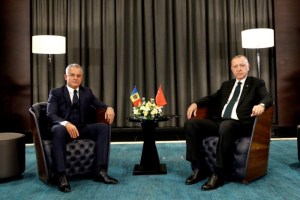
It has been widely reported that Vladimir (Vlad) Plahotniuc, the de facto leader of Moldova at the time of the 2018 rendition operation, exercised significant influence over the country’s law enforcement and intelligence apparatus and was involved in close cooperation with Turkish intelligence. He maintained close contacts with President Erdogan and later acquired Turkish citizenship, according to a 2020 confirmation by Moldova’s then-prosecutor general, Alexandr Stoianoglo.
Plahotniuc went from being Moldova’s dominant political figure in 2018 to fleeing the country after his political system collapsed in 2019. He spent roughly six years abroad before being arrested in Greece in 2025, extradited to Moldova and, in 2026, sentenced to 19 years in prison in connection with the country’s massive banking-fraud case.
The Moldova operation was not an isolated episode. Similar Turkish intelligence operations targeting alleged Gülen movement members have triggered criminal proceedings and diplomatic disputes elsewhere in Europe.
In Kosovo, six Turkish nationals associated with Gülen-linked schools and institutions were detained and transferred to Turkey on March 29, 2018, in an operation involving Kosovar authorities and Turkey’s intelligence agency. The expulsions caused a major political scandal after then-prime minister Ramush Haradinaj said he had not been informed in advance and dismissed then-interior minister Flamur Sefaj and Kosovo Intelligence Agency (KIA) director Driton Gashi. Kosovo’s parliament later investigated the operation and identified numerous alleged legal and procedural violations.
Kosovar prosecutors subsequently brought criminal charges against Gashi and other officials over their roles in the rendition. Prosecutors alleged that Gashi improperly used intelligence assessments to facilitate the revocation of the Turkish nationals’ residence permits and their removal from Kosovo. Two other officials were ultimately acquitted, but Gashi was convicted. In a retrial concluded on February 24, 2026, the Basic Court in Pristina again found the former intelligence chief guilty of abuse of official position and sentenced him to more than four years in prison, together with a four-year ban on holding public administrative office after completing his sentence.

Switzerland also opened a criminal investigation into a Turkish intelligence operation against a Gülen-linked opponent. Swiss federal prosecutors investigated two Turkish intelligence officers who had worked at the Turkish Embassy in Bern under diplomatic cover over allegations that they collected political intelligence and participated in a plan to abduct a Swiss businessman of Turkish origin believed to be sympathetic to the Gülen movement. In 2018 Switzerland issued national arrest warrants for both men, saying they could be arrested if they returned to the country. Swiss authorities also determined that diplomatic immunity did not shield them from prosecution because the alleged acts fell outside legitimate diplomatic functions.
The Kosovo and Swiss cases, together with the Moldovan proceedings, illustrate the legal fallout generated in several European jurisdictions by Ankara’s intelligence operations against alleged Gülen movement members. In each case allegations of Turkish intelligence activity extended beyond conventional surveillance to attempted or completed cross-border transfers, prompting criminal investigations, court proceedings or government action in the countries concerned.