
Abdullah Bozkurt/Stockholm
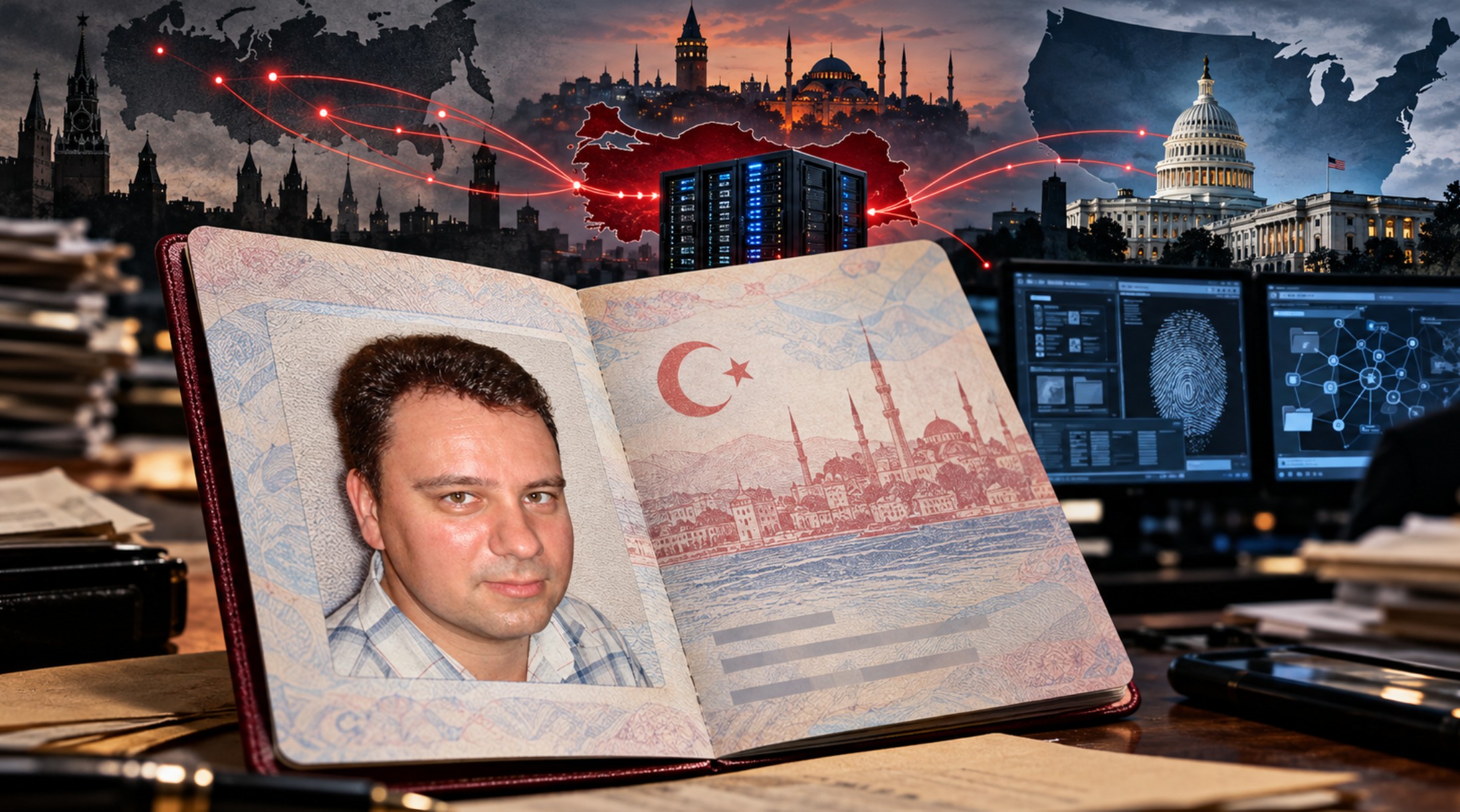
A secret scheme allowing individuals to enter Turkey without passing through immigration or leaving any trace of their arrival in official records has been exposed in a little-known legal battle that revealed how a corrupt police officer, apparently operating as part of a larger network, manipulated the country’s border security system in exchange for bribes while stationed at Istanbul’s main international airport.
The case raises troubling questions about the vulnerability of Turkish immigration controls to criminal infiltration, the exploitation of a loophole by organized crime networks and the extent to which corrupt officials could facilitate the clandestine movement of people including international wanted criminals across Turkey’s borders.
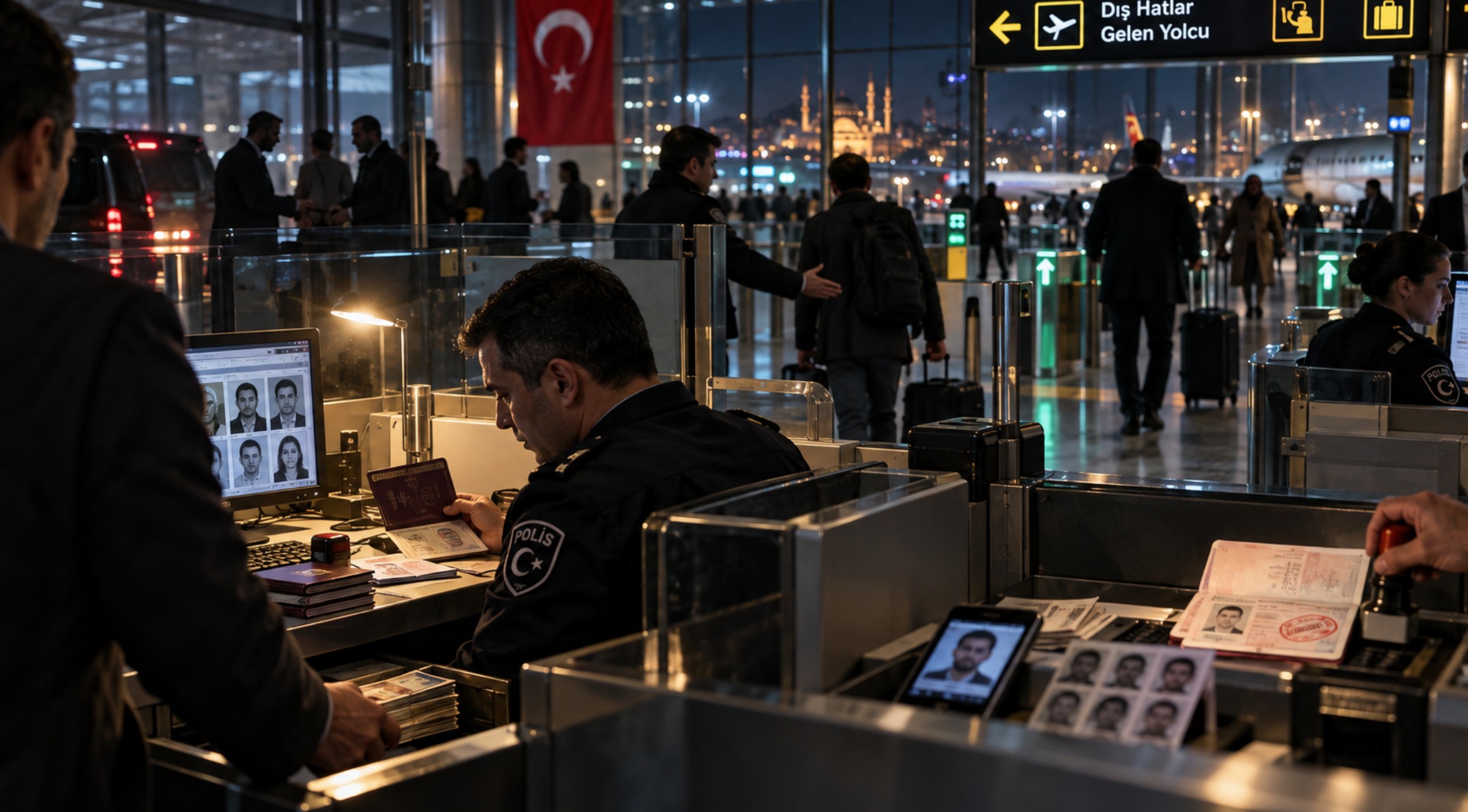
The scheme, documented in an April 29, 2025, ruling by Turkey’s Supreme Court of Appeals (Yargıtay), involved a police officer assigned to the passport bureau at Istanbul Atatürk Airport who used his position to facilitate the entry of individuals through two distinct methods: recording fictitious entries for people who had already crossed into Turkey without passing through official border checkpoints, and deliberately failing to register the arrival of foreign passengers who entered through the airport.
The court proceedings revealed a mechanism through which individuals could effectively establish their presence in Turkey without undergoing regular immigration procedures or, alternatively, enter the country while remaining invisible to the official border-entry database.
Such practices could certainly benefit fugitives, internationally wanted suspects, organized crime figures or individuals seeking to evade immigration monitoring.
Although the published ruling does not identify the beneficiaries or establish their connections to organized crime, the advance coordination required by the scheme strongly suggests the involvement of intermediaries beyond the officer himself.
The case was examined by the Supreme Court of Appeals’ 5th Criminal Chamber under file number 2022/4243 and decision number 2025/5793. The judgment provides an unusually detailed account of the techniques used to circumvent border controls and the subsequent legal proceedings against the police officer and another defendant accused of providing a bribe.
According to the ruling the police officer worked at the passport bureau of the International Arrivals Terminal at Atatürk Airport, which served as Istanbul’s principal international aviation gateway during the period relevant to the allegations.
The Supreme Court of Appeals’ ruling exposed a secret passport-control scheme that allowed foreigners to enter Turkey without undergoing immigration checks or having their arrivals recorded in official records:
The officer was accused of exploiting his access to official passport-processing procedures in exchange for financial benefit. One method involved people who had already entered Turkey without passing through an authorized border crossing. Instead of requiring these individuals to appear physically before an immigration officer, the policeman processed their passports as though they had properly entered the country.
This mechanism had significant implications for the integrity of Turkey’s immigration system. An individual who entered Turkey clandestinely could potentially obtain a formal entry record without having undergone the inspection normally required at a border crossing.
The second method worked in the opposite direction. Foreign nationals arriving on international flights could pass through passport control without having their entry recorded in the official immigration system.
The ruling states that photographs of selected passengers were transmitted to the corrupt officer in advance. When those individuals subsequently approached his passport-control counter, he allegedly allowed them into Turkey without registering their arrivals in official records.
The arrangement meant that the officer could identify the intended beneficiaries before they reached his counter. By using photographs to recognize specific passengers, the participants avoided the need for an overt exchange at the airport that might have attracted attention from other officers or passengers.
Strangely enough, the Turkish investigation did not pursue the matter further to determine who collected the photographs, how they were transmitted to the police officer or whether additional intermediaries were involved. The failure to follow these leads raises serious suspicions that influential figures within law enforcement and the judiciary may have sought to limit the investigation and prevent it from exposing other participants, potentially including the politically connected masterminds behind the scheme.

What is more, the ruling does not identify how many individuals benefited from the scheme, their nationalities, the amount paid for each transaction or the period over which the activities occurred. It also does not establish whether passengers admitted without an entry record subsequently left Turkey using similar arrangements or whether the irregularities were discovered through internal auditing, intelligence gathering or a separate criminal investigation.
The revelation is particularly significant because international airports constitute a critical component of the security infrastructure used to identify travelers, enforce immigration restrictions and maintain records of cross-border movement. An immigration officer with authorized access to passport-processing systems could undermine these safeguards from within, rather than attempting to defeat them through forged travel documents or unauthorized access to airport facilities.
The distinction is important. An ordinary traveler attempting to evade border controls would face multiple potential barriers, including passport checks and inspection by immigration and passport police. In this case, the alleged facilitator was an official responsible for enforcing those barriers.
The case originally began in the criminal courts of Istanbul. On December 21, 2017, the Bakırköy 11th High Criminal Court acquitted both defendants of bribery charges under case number 2017/98, decision number 2017/373 despite the overwhelming evidence that included a confession of the crime from the officer himself. That suggests the network that set up this massive scheme at the Istanbul airport bought judges and paid them off.
Those behind the scheme may have assumed that the initial acquittals would withstand appellate scrutiny, eliminating any perceived need to intervene further in the judicial process. However, on January 31, 2019, the Istanbul Regional Court of Appeals’ 13th Criminal Chamber overturned the lower court’s rulings and convicted both defendants. The police officer was sentenced to three years, four months in prison for accepting a bribe under Article 252 of the Turkish Penal Code. The other defendant received the same sentence for paying a bribe.
That was a wakeup call for the network. They mobilized their associates to lobby at the Supreme Court of Appeals, the highest criminal court in the appeals process, challenging the evaluation of the evidence and arguing that the statutory elements of the offenses had not been established.

When the case reached the Supreme Court of Appeals’ 5th Criminal Chamber, questions surrounding the police officer’s apparent protection became even more pressing. According to the April 29, 2025, ruling, the judges unanimously overturned his conviction and returned that part of the case to the Istanbul Regional Court of Appeals for reconsideration.
The decision opened an avenue for the officer to escape criminal punishment despite the findings of bribery, seized cash and manipulation of immigration records. The outcome suggests that the officer benefited from influential connections while sending a troubling message to other compromised officials within Turkey’s passport-control system that they, too, will escape accountability for serious misconduct if they get exposed.
More broadly, the proceedings unmask a structural vulnerability in Turkey’s immigration and passport controls: An official entrusted with operating the system could make selected individuals appear to have entered the country legally when they had not, or enable actual arrivals to pass through without being registered.
Atatürk Airport, where the corrupt police officer was stationed, was Turkey’s busiest international aviation gateway and one of Europe’s major air transportation hubs at the time of the scandal. According to the Turkish State Airports Authority (DHMİ), the airport handled 64.1 million passengers in 2017, including 44.5 million international passengers. Traffic increased to 68.3 million in 2018, of whom 49.1 million were traveling on international routes.
Regular commercial passenger operations were transferred to the new Istanbul Airport in April 2019. The new airport handled 84.5 million passengers in 2025, including 66.7 million international passengers, making it one of the busiest airports in Europe and the world. The enormous volume of passenger traffic, both historically and today, underscores the significance of vulnerabilities in Turkey’s immigration controls and the potential security consequences when corrupt officials manipulate border-entry records to facilitate the clandestine movement of individuals.
The case offers a rare judicial account of how the integrity of a country’s border-control records can be compromised by an insider with legitimate access to immigration procedures.

The larger security question remains: How many people were able to enter Turkey, acquire irregular documentation or avoid official registration through the compromised passport-control procedures?
Over the past decade, dozens of notorious international organized crime figures, including drug traffickers and mafia bosses, have settled in Turkey, with some reportedly obtaining long-term residence permits and even Turkish citizenship under assumed identities. Only in select cases, often following mounting international pressure on the government of President Recep Tayyip Erdogan, have some of these underworld figures been detained and deported.
Yet the involvement of their local accomplices and alleged connections within Turkish law enforcement, the judiciary and other government agencies has largely escaped public scrutiny, raising serious questions about the extent of official complicity and the protection afforded to international criminal networks operating on Turkish soil.
Turkish organized crime networks and notorious mafia figures have benefited from political patronage and controversial judicial decisions, raising serious questions about their connections to the government of President Erdogan and his key political ally, Devlet Bahçeli, leader of the far-right Nationalist Movement Party (MHP). Several prominent underworld figures have been released from prison despite convictions for serious crimes and lengthy sentences amid allegations of political interference. One notable example is convicted mafia leader Alaattin Çakıcı, whose release in April 2020 followed years of public lobbying by Bahçeli.
At the same time, successive government purges have removed thousands of experienced police officers, prosecutors and judges, including personnel who had investigated organized crime and corruption. Critics argue that these sweeping dismissals weakened institutional safeguards against criminal infiltration and facilitated the rise of officials with political connections. Allegations have also surfaced that individuals previously implicated in improper dealings with organized crime were subsequently reinstated or promoted, further fueling concerns about the growing influence of criminal networks within Turkey’s law enforcement and judicial institutions.