
Levent Kenez/Stockholm
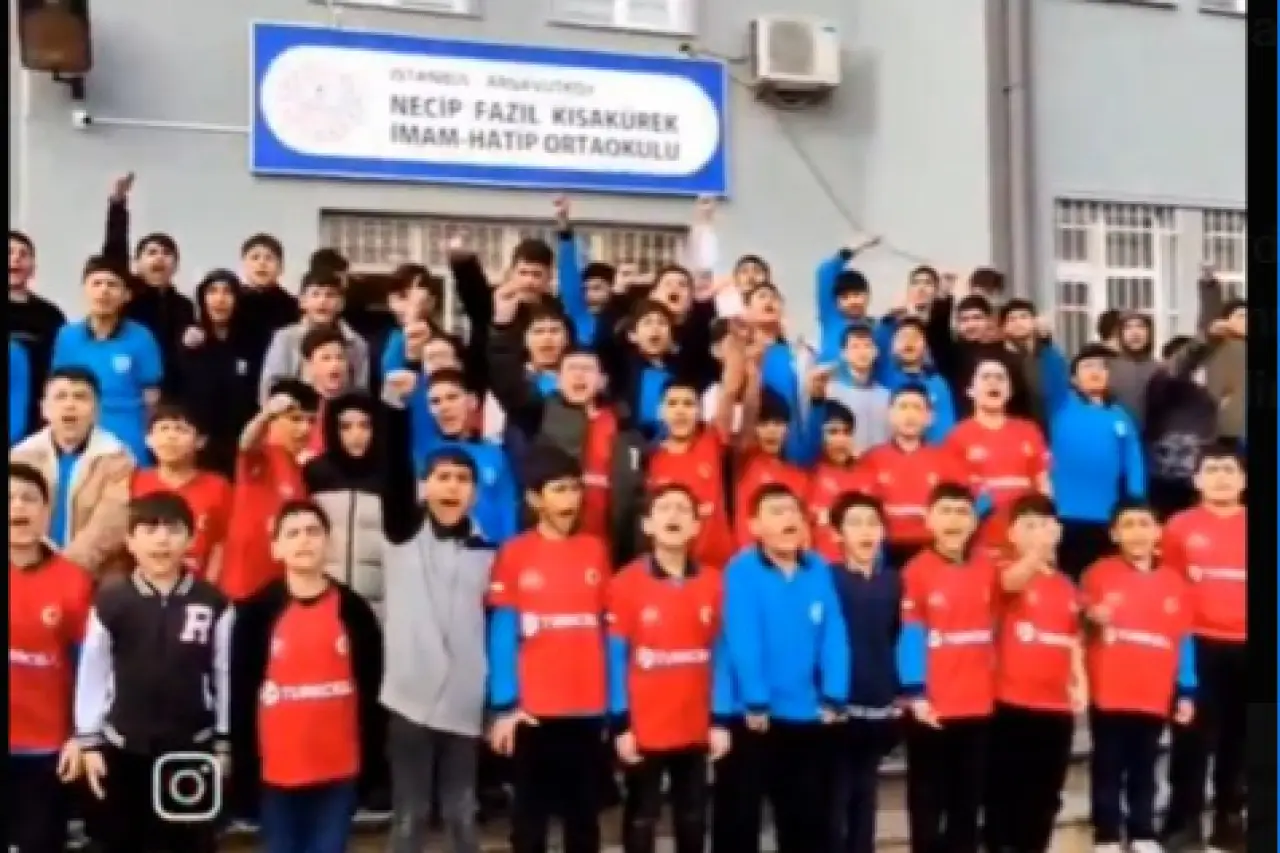
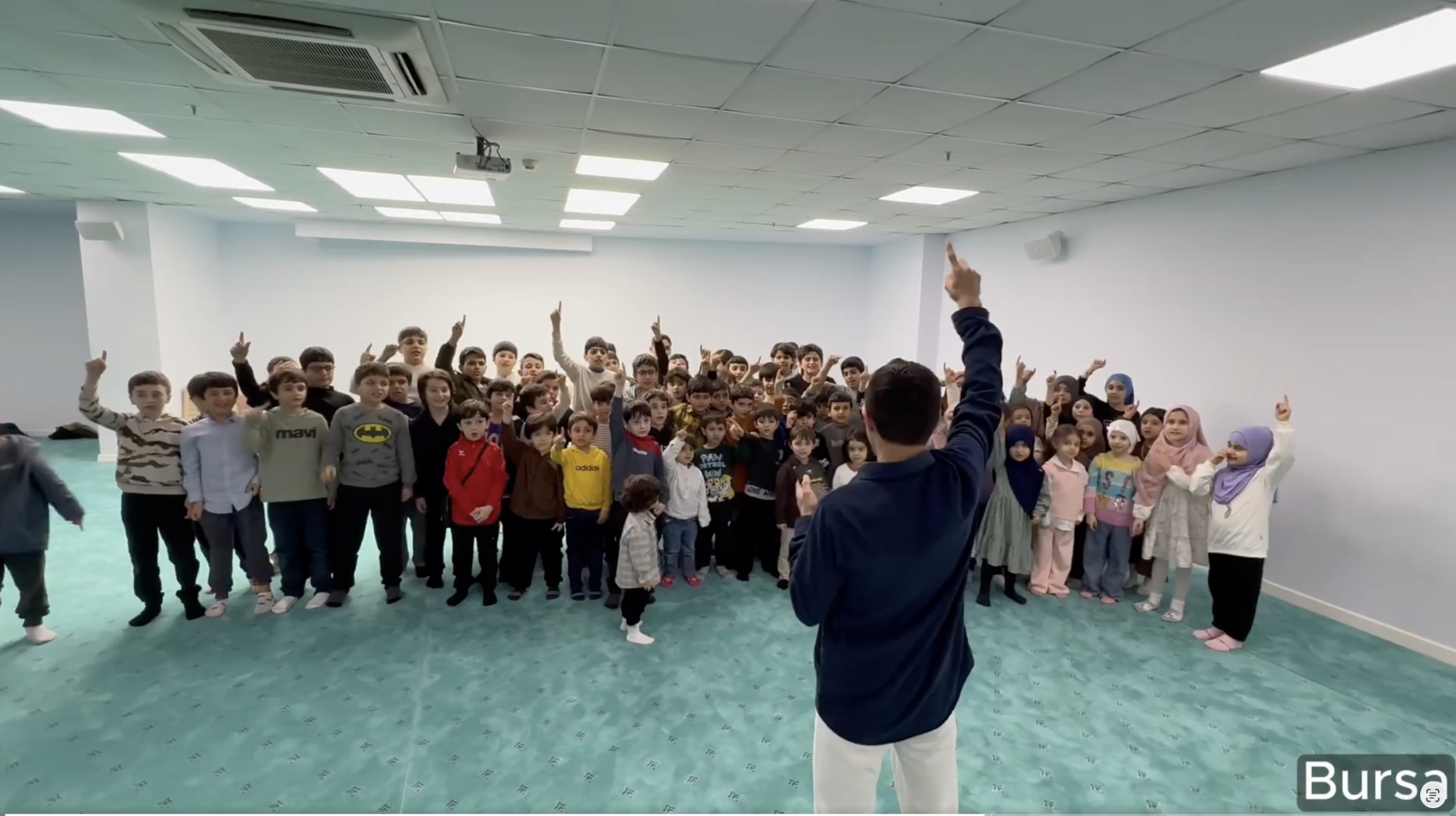
A video filmed at a state-run religious middle school in İstanbul showing students reciting in unison an oath linked to a jihadist Salafi network has renewed scrutiny over how extremist groups have embedded themselves within Turkey’s educational institutions.
The footage was recorded at the Necip Fazıl Kısakürek İmam Hatip Ortaokulu, a government-run religious middle school in Istanbul’s Arnavutköy district. The video shows dozens of uniformed students assembled in the schoolyard repeating a pledge identified by Turkish media and court records as belonging to the Tevhid and Sunnah religious community associated with preacher Halis Bayancuk.
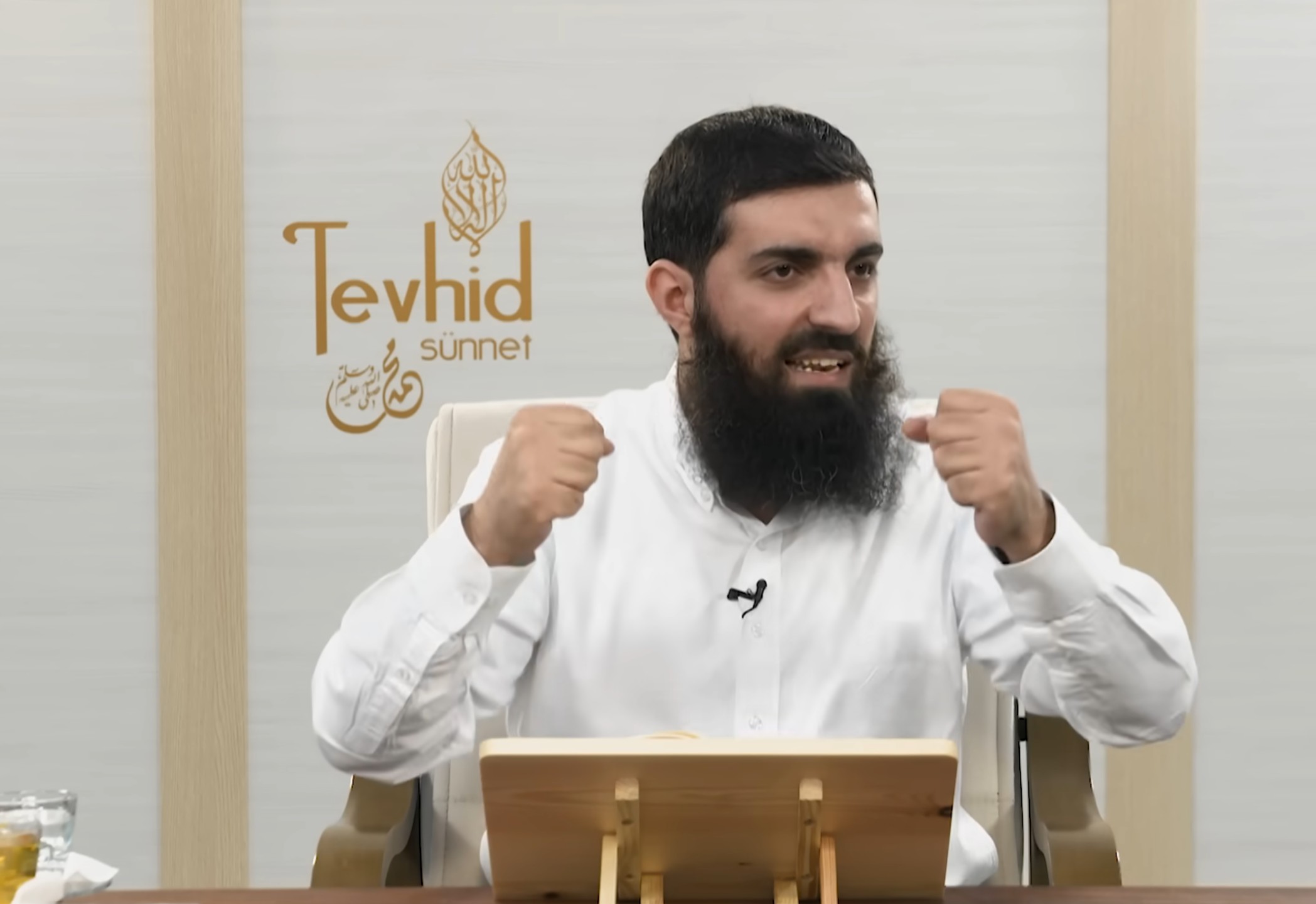
Bayancuk, widely known by the alias Abu Hanzala, has for years been one of the most prominent radical Islamist figures operating in Turkey. Turkish courts previously sentenced him to 12-and-a-half years in prison for establishing or managing an armed terrorist organization in connection with activities tied to the Islamic State in Iraq and Syria (ISIS). Prosecutors have also linked his ideological network to individuals who joined ISIS and al-Qaeda in Syria and Iraq.
Despite multiple prosecutions, Bayancuk was released from prison in 2023 following merged court proceedings. Since then, he continues preaching through religious publications and affiliated organizations operating legally across Turkey.
The recording was first published through social media accounts affiliated with the group itself. In the accompanying message, the organization described the scene as proof that years of religious outreach efforts had reached “the finest capillaries of society,” language that appeared to frame the presence of children in the ceremony as evidence of expanding grassroots influence.
The Istanbul Provincial Directorate of Education confirmed that the recording had been made with the knowledge of school administrators and briefly shared on the institution’s official social media account before being removed following public backlash. Authorities said inspectors had been assigned and an administrative investigation launched. However, observers note that under the Islamist government of President Recep Tayyip Erdogan, similar investigations rarely lead to meaningful accountability. Critics argue that while inquiries are often initiated in response to public outrage, activities linked to religious networks frequently take place with the awareness and sometimes tacit approval of school administrations and local authorities, raising doubts about whether the probe will produce substantive consequences.
The ministry statement did not explain how a pledge linked to a figure convicted on terrorism-related charges was introduced within a public school environment.
The oath seen in the Istanbul video reflects themes commonly associated with Salafi takfiri ideology, a rigid interpretation of Islam that rejects secular governance and has frequently appeared in terrorism indictments involving ISIS-linked recruitment networks. Turkish counterterrorism files have previously warned that such movements seek to build long-term influence by targeting youth through educational and religious environments rather than relying solely on clandestine militant structures.
Public reaction quickly spread across social media platforms, with critics questioning how ideological material linked to a convicted jihadist figure could be presented to minors during school activities.
Bayancuk responded to the controversy in posts shared on X, defending the gathering and accusing secular critics of hostility toward religious expression. He did not address references to his previous convictions or allegations concerning recruitment networks connected to his sermons. Bayancuk also shared an additional video claiming that the same oath had been recited at another location in Turkey, including in a school setting, presenting the footage as evidence that similar activities were taking place more broadly across the country.
Court documents and intelligence assessments cited in earlier terrorism investigations describe how ISIS-linked ideological circles in Turkey organized themselves around publications, religious lessons and community outreach programs aimed at young audiences. Authorities identified bookstores, associations, informal religious schools and charity organizations as key platforms used to disseminate ideology while operating within legal frameworks.
Those findings gained renewed attention following a deadly counterterrorism operation in Turkey’s northwestern Yalova province in December 2025, where three police officers were killed during a raid on an ISIS-linked safe house. Prosecutors’ files later showed that several suspects involved in the network had previously faced investigations but were released pending trial or acquitted despite extensive monitoring.
The documents concluded that radical groups increasingly emphasized domestic social organization after ISIS lost territorial control in Syria and Iraq, shifting focus toward ideological consolidation in civilian life.
Bayancuk, whose speeches were cited in investigations involving foreign fighter recruitment, was among those released. Media reports said videos containing his earlier radical sermons were removed from online platforms by supporters prior to his release.
Networks linked to Abu Hanzala have continued operating through legally registered associations and publishing houses following his return to public life. Records reviewed in prior investigations showed that affiliated charities received official licensing and maintained fundraising activities across multiple Turkish provinces, while related publishing outlets continued distributing sermons and ideological writings.
Bayancuk has been under police monitoring since 2007 for preaching aligned with al-Qaeda ideology. His influence has surfaced in several high-profile investigations, including forensic findings showing that the police officer who assassinated Russian Ambassador Andrei Karlov in 2016 had searched for Bayancuk’s sermons shortly before carrying out the attack.
Government decisions reducing sentences or releasing individuals connected to Turkish Hizbullah have also attracted scrutiny. In recent years convicted militants were freed through judicial rulings or executive decisions, including sentence commutations justified on legal or humanitarian grounds. Critics say these releases followed political cooperation agreements linked to electoral alliances.