

Abdullah Bozkurt/Stockholm
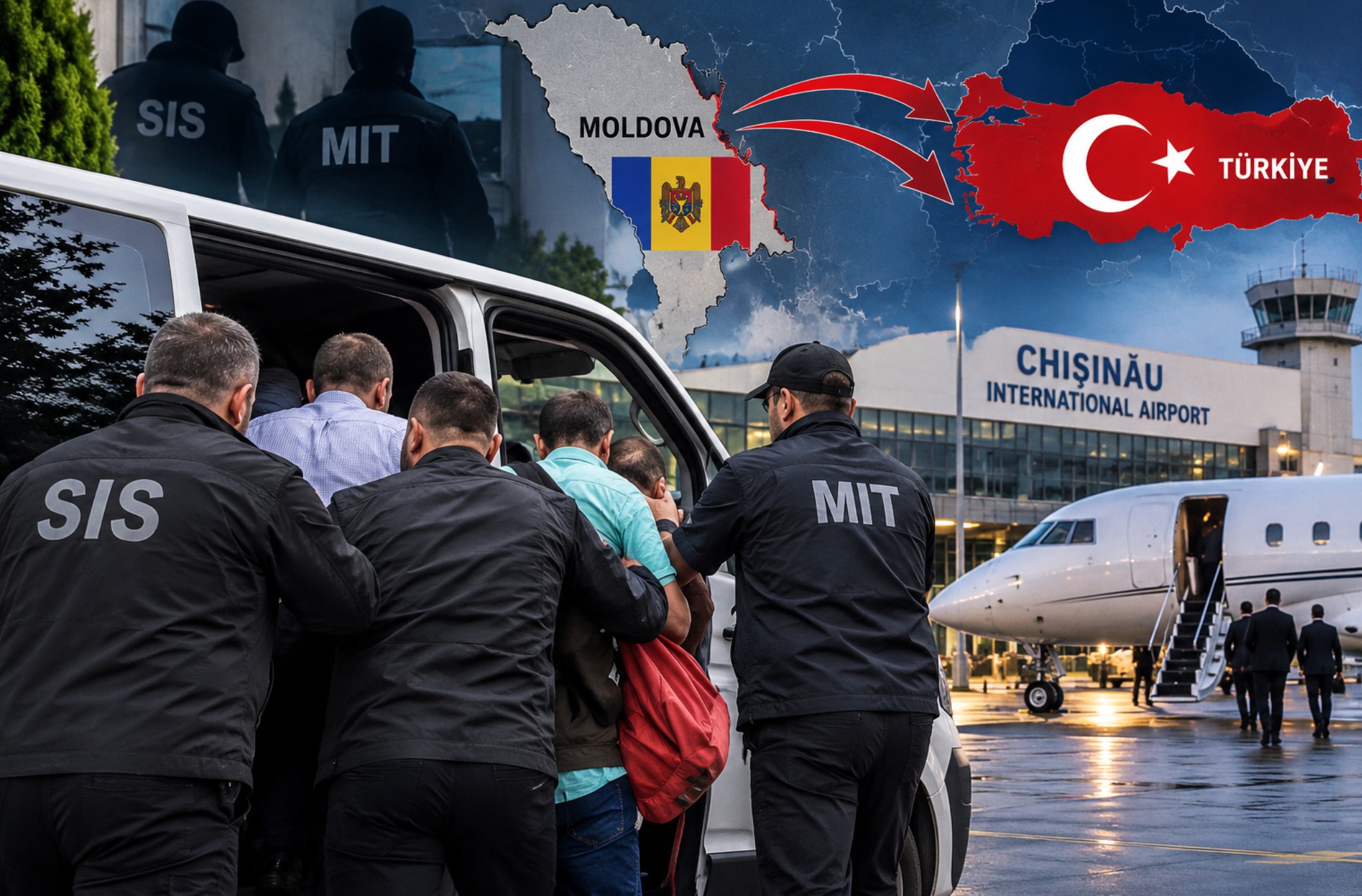
A growing series of weapons seizures across Europe, along with Turkey-linked Glock cases extending into the Americas, has raised concerns that an industrial-scale trade in counterfeit Glock-style pistols may be part of a clandestine operation overseen by Turkey’s intelligence apparatus, designed to give the government of President Recep Tayyip Erdogan leverage abroad and arm criminal proxies that could be tapped for violent assignments, intimidation or attacks on dissidents.
As the issue has become an increasingly contentious point in talks between Turkey and its European partners in recent years, with such pistols appearing on European streets, threatening public safety, law and order and putting additional pressure on governments, Turkey’s powerful intelligence service, the National Intelligence Organization (Milli İstihbarat Teşkilatı, MIT), has taken no visible action against the alleged masterminds behind the sophisticated manufacturing network producing counterfeit Glock-style pistols.
Experts with years of experience combating organized crime in Turkey believe the emerging pattern points to a calculated and strategic operation conceived within elements of the Turkish state rather than simply the work of Turkish gangs and mafia networks that have been empowered and expanded under Erdogan’s government over the past decade.
One such expert is former Turkish police chief Mustafa Okumuş, who says the scale, uniformity and international reach of the trafficking operation indicate a centralized structure that could not survive inside Turkey without the knowledge, protection and direct involvement of the Turkish spy agency MIT.
Okumuş, who had spent years hunting organized crime figures in Turkey, alleges that Turkish intelligence is using a new generation of Turkish mafia groups operating across Europe as armed proxy networks, allowing them to pursue ordinary criminal business while retaining the ability to use them as a means of pressure against foreign governments or against Erdogan opponents abroad.
He described the armed criminal networks as effectively developing into a transnational “paramilitary army” and said they could be used as leverage against other countries or as a threat to unwanted opponents overseas.
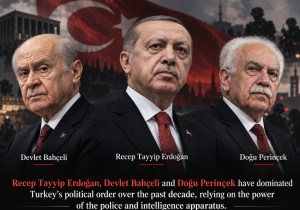
The seizure of illegal Glock-style pistols across Europe and the Americas in recent years has increasingly put the spotlight on the Erdogan government, which has ruled Turkey over the past decade in alliance with far-right nationalists (milliyetçiler) and neo-nationalists (ulusalcılar). Both currents are deeply embedded in Turkey’s security establishment, including the intelligence apparatus, and have longstanding ties to mafia groups and organized crime figures. Individuals associated with these networks have repeatedly been implicated in criminal enterprises, murders and assassinations carried out in pursuit of political, financial or institutional interests.
German federal investigators have explicitly confirmed that seized pistols made to resemble Austrian Glock handguns were being manufactured in illegal weapons workshops in Turkey and supplied to traffickers in Germany through Turkish intermediaries.
A German Federal Police investigation originating in Wuppertal uncovered what authorities described as a flourishing illegal firearms business. According to the Federal Police Directorate Hannover, the traffickers obtained firearms and ammunition through intermediaries in Turkey. Most of the weapons were pistols made to look like Glock handguns but actually manufactured in illegal weapons workshops in Turkey.
Investigators concluded that at least 100 firearms had already been brought into Germany and that approximately 70 more had been ordered. Several defendants were ultimately convicted and given lengthy prison sentences.
That investigation became even more significant after another massive German seizure on September 4, 2026, when customs investigators searched premises in Cologne and Wuppertal and seized 165 semiautomatic 9mm pistols. German authorities said all 165 were counterfeits of Glock firearms. Six suspects were arrested. The larger investigation involved seven suspects — five Turkish nationals, one Syrian and one German.
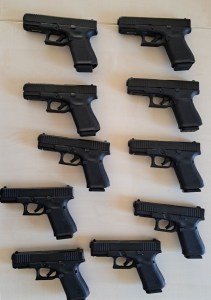
France has meanwhile become one of the principal destinations uncovered in the expanding network. On September 10 French organized-crime investigators intercepted a shipment containing approximately 150 counterfeit Glock pistols after suspects returned from Hanover, Germany. Seven Turkish nationals between the ages of 19 and 37 were charged with arms trafficking and criminal conspiracy and remanded in custody.
French investigators suspect the men were connected to Daltonlar, a Turkish organized crime network that has expanded operations across Europe. Police had reportedly been following the organization for around a year.
The seized weapons were not genuine Glocks diverted from legitimate dealerships. French reporting described them as counterfeit copies being sold on the criminal market for roughly €1,300 to €2,800 each.
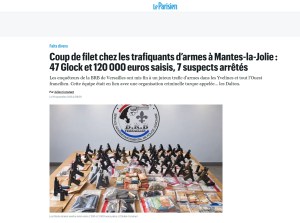
Only days later investigators working in the Versailles region broke up another network. Police seized 47 counterfeit Glock pistols and €120,000 in cash in the Mantes-la-Jolie area. Seven Turkish nationals aged 25 to 35 were charged. Six were remanded in custody, while the seventh was put under judicial supervision. Investigators again identified links to Daltonlar and said the organization had been trafficking counterfeit Glocks since at least November 2025.
The two cases alone accounted for almost 200 Glock-style pistols within days. They followed another August seizure in which a Turkish national was caught in Paris carrying dozens of similar pistols.
The scale and repetition are central to Okumuş’s argument. He says the weapons appearing in different European countries display such similar construction that they point to centrally coordinated industrial production rather than unrelated criminals independently making pistols in scattered workshops. According to Okumuş, somebody must provide standardized technical specifications, arrange production of barrels, frames and slides, bring the components together, organize couriers, establish smuggling routes and connect manufacturers with buyers.

He adds that the consistency of the pistols seized across different countries would be extremely difficult to explain without centralized management.
The Greek-Turkish border offers another striking example for similar trafficking allegedly coordinated by Turkish intelligence. In October 2025 Greek police arrested 13 Turkish nationals near Soufli after they crossed the Evros region from Turkey carrying bags loaded with firearms. Police seized 147 pistols,190 magazines and numerous firearm parts. The suspects faced felony firearms-trafficking proceedings.
Subsequent Greek investigations have uncovered additional unmarked Glock-style handguns entering through the Turkish border, reinforcing concerns that Greece is being used both as a destination and as a transit corridor toward Western Europe.
Okumuş says Turkish criminal organizations including the Daltonlar and Baygaralar repeatedly appear as suspected recipients of the weapons intercepted in Europe. In his account, European investigations have increasingly exposed Turkish organized-crime groups as the customer base for firearms originating from the same broader supply network.
On March 13, 2026, Romanian authorities stopped a Turkish-registered truck traveling from Turkey toward Germany. The driver was Turkish. Inside the truck authorities discovered 106 pistols and 131 magazines, in addition to contraband cigarettes. The firearms had crossed multiple borders hidden in commercial freight.

Similar interceptions followed in Bulgaria. In May Bulgarian customs officers stopped another truck entering from Turkey. The Turkish driver said he was carrying legitimate commercial goods to Norway. Authorities found 198 pistols concealed with the cargo.
In June another truck travelling from Turkey to the Netherlands was found carrying 73 pistols hidden inside furniture and mattresses. Then on August 15 Bulgarian customs officers at Kapitan Andreevo inspected a Turkish-registered truck loaded with figs bound for Germany. The driver was again a Turkish citizen. Customs officers found 45 pistols concealed in seven locations around the cab and trailer.
The Bulgarian Customs Agency disclosed an extraordinary statistic after the seizure: Over only three months officers at Kapitan Andreevo had confiscated 1,640 firearms and firearm components — five times the total seized during the entire six-year period from 2020 through 2025.
Sweden has emerged as one of the European countries confronting the influx of counterfeit Glock-style pistols, with Swedish police and customs authorities seizing such weapons and finding them at multiple crime scenes. Swedish investigations have linked the growing market for industrially manufactured Glock and other branded pistol copies to supply channels originating in Turkey.
The Svenska Dagbladet newspaper’s 2026 investigation found that counterfeit pistols bearing brands such as Glock had been flowing into Sweden since at least 2022 and had appeared in cases involving murders, attempted murders and terrorism-related offenses. One major customs interception involved 15 counterfeit pistols found in a car arriving from Belgium. The investigation linked this emerging supply chain to trafficking routes involving Turkey.
The seizures demonstrate a large and recurring logistics route for moving handguns from Turkey through the Balkans toward Western and Northern Europe.
While seizures have been mounting across Europe, a striking pattern of events inside Turkey has fueled further suspicions that the manufacture and distribution of counterfeit Glock-style pistols are in fact a part of a larger intelligence-linked operation rather than an ordinary criminal enterprise. Okumuş raises one of his most serious claims in this context, focusing on what he says repeatedly happens inside Turkey in the days immediately following major European interceptions.
Turkish police and gendarmerie have themselves confiscated hundreds of illegal pistols in Istanbul and elsewhere. Okumuş says that is precisely what makes the pattern suspicious. He identified a series of cases in which major Turkish firearms seizures allegedly occurred only days after similar shipments had been intercepted abroad.
Among the examples he cited were a Romanian seizure of 106 pistols on March 13 followed two days later by the seizure of 122 pistols in Istanbul’s Kartal district; an August Bulgarian interception followed several days later by a 100-pistol operation in Zeytinburnu; and major French Glock seizures followed shortly thereafter by large handgun seizures in Istanbul.
Okumuş, who says he spent years conducting and coordinating international smuggling investigations, disputes the idea that the timing could simply reflect foreign police passing intelligence to Turkish authorities. He argues that international evidence-sharing, suspect identification and preparation of operational intelligence normally take longer than the few days separating some of the raids.
Instead he alleges that the organization controlling the larger supply chain also knows where reserve weapons are stored inside Turkey and can tip off police about selected shipments after seizures abroad. He explicitly says rank-and-file police officers and gendarmes conducting such raids have no idea about who tipped them off. They simply receive information identifying a vehicle, route or shipment and legitimately carry out the seizure, unaware of who supplied the tip or why that particular batch was sacrificed.
It is clear that the timing of the Turkish seizures is not incidental but part of a deliberate countermeasure designed to shield the Erdogan government from growing pressure abroad. These domestic raids serve a dual purpose: sacrificing selected shipments or low-level couriers while creating a ready-made defense for Ankara. If questioned by European governments about the growing number of Turkey-linked firearms appearing abroad, Turkish authorities can point to their own operations and argue that Turkey is facing the same criminal problem and is actively combating it. This allows Turkish spy agency MIT to preserve plausible deniability while the larger manufacturing and trafficking structure remains untouched.

Okumuş argues that the real test is what happens afterward. He says investigators should follow telephone communications, funds transfers, common contacts, production sites and ultimate destinations. Yet investigations involving this particular firearms pipeline repeatedly stop with drivers or low-level couriers instead of moving upward toward manufacturers and coordinators.
From that pattern Okumuş draws his most serious conclusion: that Turkey’s intelligence service is actively controlling the arms network and deliberately allowing it to operate. It simply would have been impossible for MIT to be genuinely unaware of an operation producing and exporting such quantities of illegal firearms over such an extended period of time.
The question then becomes why Turkish intelligence is shipping arms abroad with Turkish criminal gangs and tolerating an armed Turkish mafia presence. The answer lies in strategic planning by the Erdogan government to create a proxy groups and networks in Germany, France, Sweden, the Netherlands, Belgium, Greece, Spain and other European countries.
A MIT capable of supplying or protecting those networks could easily gain considerable leverage over such criminal networks and use them to send messages to European capitals. A criminal group dependent on a protected weapons pipeline, safe passage or protection from prosecution could be asked to provide favors in return — surveillance, intimidation, violent contract work or operations against individuals considered enemies by Ankara.
Law and order, immigration and public security have become highly sensitive issues in European domestic politics, putting governments under intense electoral pressure and, in some cases, contributing to major political upheaval. That sensitivity creates an obvious vulnerability that a foreign government could seek to exploit by aggravating social tensions through criminal activity, gang violence, intimidation or targeted attacks.
Critics of the Erdogan government argue that Ankara has already demonstrated a willingness to instrumentalize migration for political leverage, pointing in particular to Turkey’s role in directing and facilitating the movement of thousands of migrants toward the Greek border during earlier confrontations with the European Union. Against that background, they warn that Ankara could employ similar coercive tactics through criminal networks or co-opted gangs operating inside Europe, using violence and disorder to deepen political polarization and increase pressure on European governments.
Turkish gang groups have already demonstrated a capacity for lethal violence on European soil, including assassinations and retaliatory shootings against rival criminals. That existing capability is what makes Okumuş’s allegation particularly serious: if Ankara were to ever seek deniable violent action against a political opponent abroad or stir and influence domestic political debate, such networks would already possess the weapons, manpower, logistics and operational experience needed to carry it out. The capability, in other words, would not have to be created from scratch. What is more, such an arrangement would offer plausible deniability for Turkey.
Erdogan government has a proven and documented history of transnational operations against critics. MIT has publicly acknowledged overseas operations that resulted in political opponents of the Erdogan regime being returned to Turkey, while a number of European investigations have scrutinized Turkish intelligence surveillance or targeting of critics abroad. In several high-profile cases in Germany and Switzerland, Turkish intelligence officers and alleged assets have faced criminal investigations, prosecutions and trials, with convictions secured in a small number of cases.
That history makes the question of whether criminal networks could serve as auxiliary tools particularly sensitive.
The problem is not limited to Europe, either. The Turkey-linked firearms trail has also reached Mexico. In January 2026 Mexican federal authorities seized 24 new 9mm pistols and 70 magazines near the Guatemalan border in Tabasco. Local reporting citing police information said the weapons had been manufactured in Turkey and were still packed in boxes.
Greek investigators reported that Mexican authorities sought information after 147 Turkish-made pistols seized on the Turkish-Greek border appeared strikingly similar to weapons recovered in Mexico, possibly originating from the same production batch. The development is particularly significant because US authorities have separately documented efforts by a Sinaloa cartel weapons specialist to procure hundreds of handguns and military-grade weapons in Europe.
An industrially produced counterfeit can reproduce characteristics of genuine Glock pistols while eliminating one of law enforcement’s most valuable investigative tools: a legitimate manufacturing trail. Counterfeit pistols can contain no meaningful serial number, duplicated numbers or markings designed merely to resemble those of a genuine manufacturer.
That can make traditional firearm tracing — from manufacturer to distributor to purchaser — effectively impossible. If the same supply system can manufacture hundreds of mechanically similar weapons and distribute them through commercial trucks, private vehicles and criminal couriers, the result is a standardized firearm market designed specifically for the underworld.
Europe-wide investigations have not publicly established who ultimately sits above the manufacturers and traffickers. Okumuş says the answer is MİT. He argues that a network capable of coordinating clandestine manufacturing, standardized components, bulk distribution, international couriers and organized-crime customers for years inside an increasingly centralized Turkish security state could not plausibly remain invisible to the intelligence agency.
He goes further, alleging that the mafia groups being armed through the pipeline provide the Erdogan government with a reservoir of deniable manpower abroad — an instrument that could potentially be used for coercion, blackmail, influence operations, the deliberate sowing of social and political divisions in other countries, contract crimes or violence against dissidents.