
Levent Kenez/Stockholm
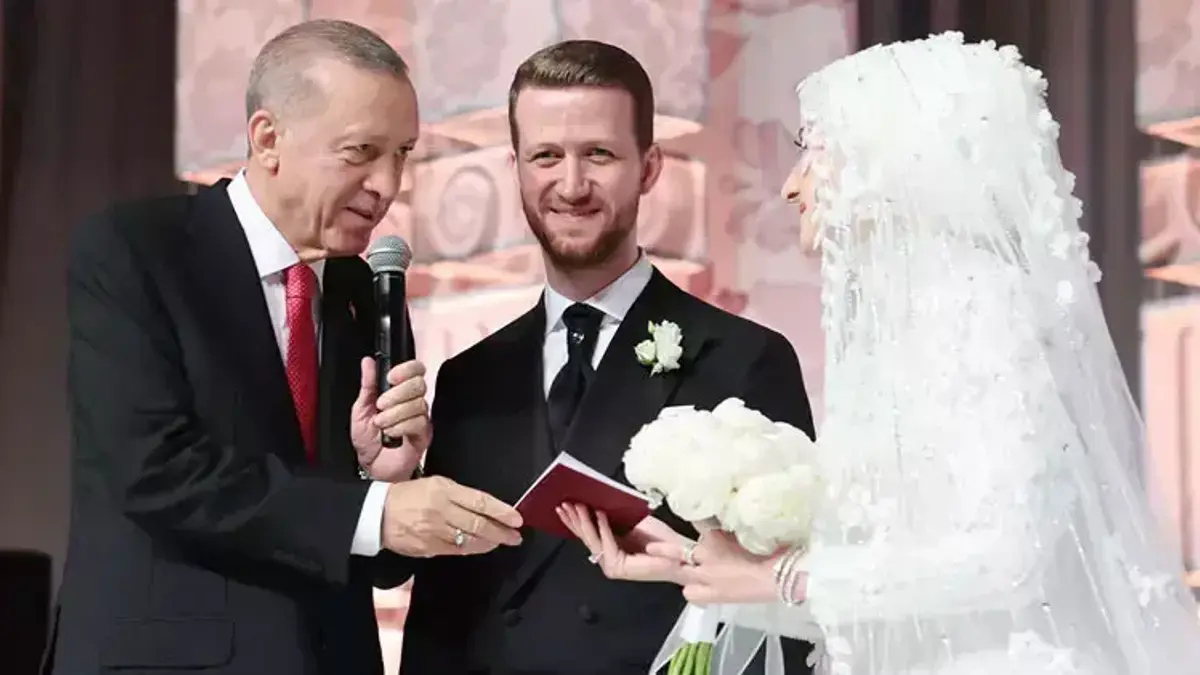
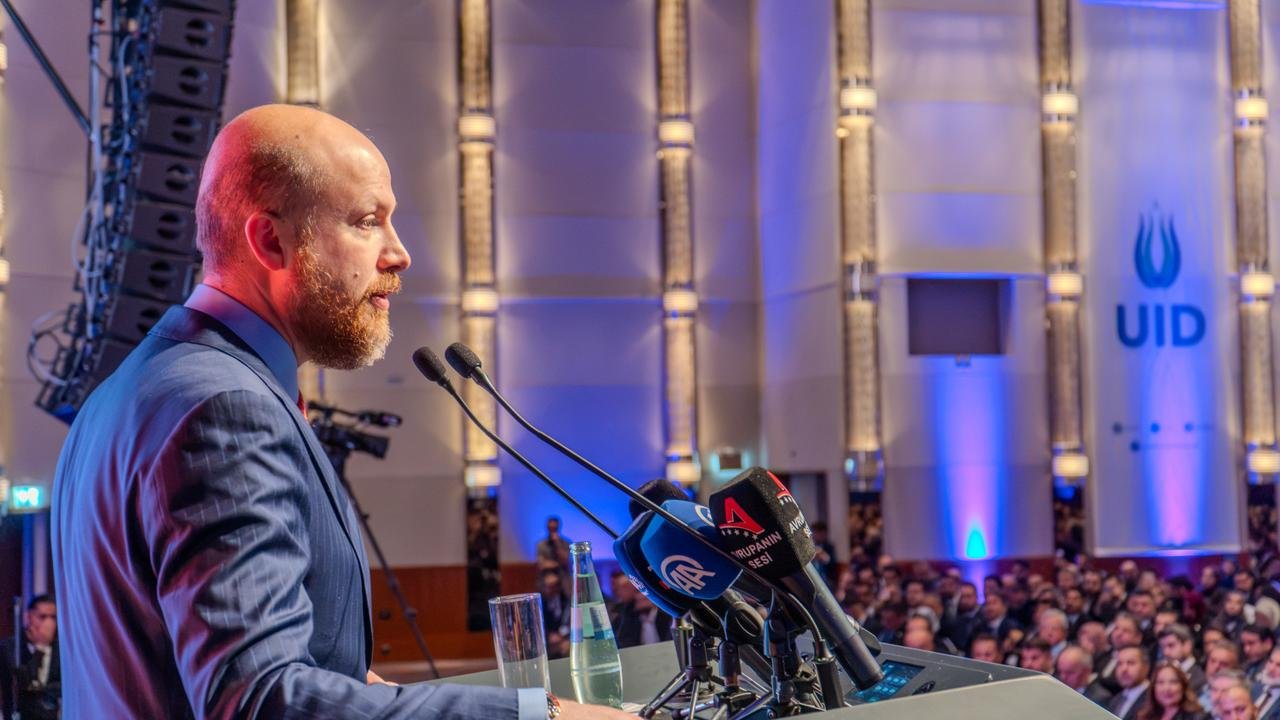
Turkish President Recep Tayyip Erdogan’s son called for stronger Muslim identity, religious solidarity and closer coordination between Turkish government institutions and a pro-government diaspora network during a gathering in Germany on October 10. The speech marked another step in Necmettin Bilal Erdogan’s growing involvement in the ruling Justice and Development Party’s (AKP) overseas political operations, despite having no formal government or party position.
Bilal Erdogan addressed the ninth general assembly of the Union of International Democrats (UID) in Düsseldorf-Neuss, attended by approximately 700 participants. Kenan Hasan Aslan was re-elected chairman, while President Erdogan addressed delegates by video. Among those present were AKP Deputy Chairman Zafer Sirakaya, Turkish Ambassador to Germany Gökhan Turan and Abdulhadi Turus, head of the Presidency for Turks Abroad and Related Communities (YTB).
Bilal Erdogan attended the gathering instead of a major anniversary celebration in Istanbul held by the Ilim Yayma Society, the organization that established the Ilim Yayma Foundation, whose board of trustees he chairs. His father attended the society’s 75th anniversary ceremony along with senior government officials. Bilal Erdogan chose the UID congress in Germany over the event organized by the religious education network with which he is closely associated.
Founded in Cologne in 2004, the UID operates as the AKP’s principal overseas political network, organizing political gatherings, mobilizing expatriate voters and maintaining close relations with Turkish government officials. Although formally registered as a nongovernmental organization, its activities closely follow the ruling party’s political priorities, particularly during elections.
In his speech, Bilal Erdogan repeatedly invoked Islam as a foundation for political and social solidarity. He urged younger generations to preserve their religious beliefs and cultural identity while becoming influential citizens of European countries. He called for raising Muslim Turkish Europeans who would not experience an identity crisis and encouraged the UID to strengthen relations with other Muslim communities.
He also described the organization as a potential model for Muslim diaspora groups across Europe, arguing that such communities should cooperate more closely to secure political representation and a greater share of national economic resources. His remarks placed religious identity alongside political participation and organized community influence.
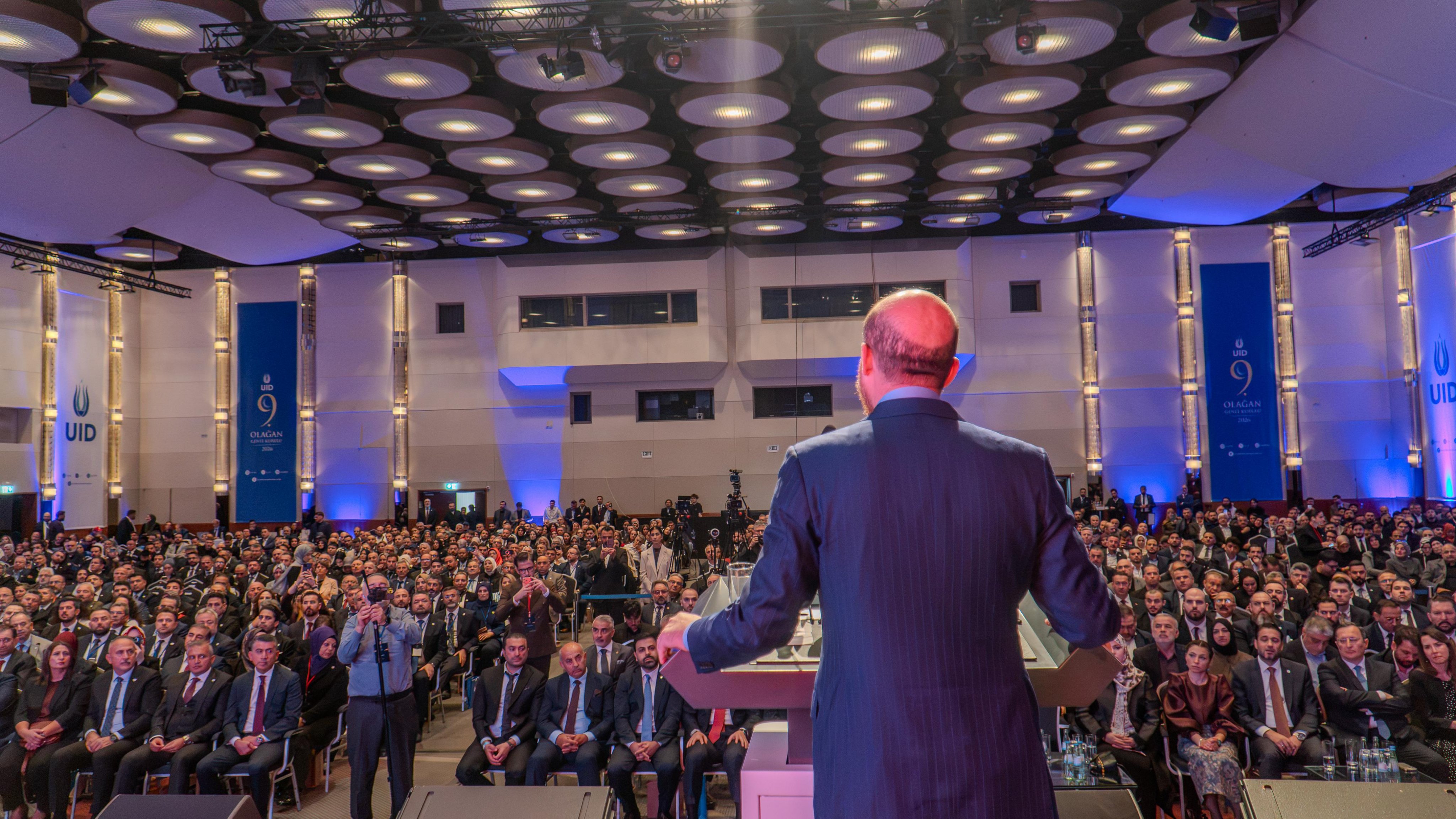
Toward the end of his speech, Bilal Erdogan adopted a confrontational tone, invoking religious imagery and portraying his movement as facing attacks from enemies. He declared that whatever their enemies do, his supporters will stand firm and with Allah’s help, overcome their attacks. He also recalled his father’s defiant challenge to his opponents, “Come at us, all of you,” before citing a Turkish saying to convey his determination: “If we were afraid of iron, we would not board a train.”
He then introduced a comparison involving the devil. “The devil will do the devil’s work. We can hardly complain about why the devil acts like the devil,” he said. Erdogan urged his supporters to remain committed to sirat al-mustaqim, the Islamic concept of the straight path and to strengthen their solidarity through mutual counsel and unity.
“By standing shoulder to shoulder, strengthening the bonds of affection and solidarity among us, we will, with Allah’s permission, ensure that all these enemies’ attacks are extinguished against our faith-filled chests,” he declared. He also called for removing individuals who had become a burden on the movement, saying those who failed to contribute to its cause should be purged.
Beyond the religious messaging, Erdogan proposed closer coordination between diaspora organizations and a network of institutions established, funded or controlled by the Turkish government. He specifically named the YTB, the Turkish Cooperation and Coordination Agency (TIKA), the Yunus Emre Institute, the Türkiye Maarif Foundation and the Türkiye Diyanet Foundation.
These institutions operate in education, cultural diplomacy, religious affairs and international development under the Erdogan government’s broader foreign policy framework. Although their official missions are presented as public service and cultural cooperation, they also provide Ankara with extensive overseas networks, institutional resources and direct access to communities that the ruling party considers politically important.
The YTB operates under the Turkish government and maintains institutional relationships with Turkish communities abroad. TIKA carries out development and assistance projects, while the Yunus Emre Institute promotes Turkish language and culture. The Türkiye Maarif Foundation, established by legislation in 2016, operates an international education network, while the Türkiye Diyanet Foundation supports religious and educational activities linked to Turkey’s state religious establishment.
Bringing these government-directed and publicly supported institutions into closer coordination with the UID would further connect Ankara’s state-sponsored overseas programs with an organization actively involved in the AKP’s political mobilization. Bilal Erdogan specifically proposed expanding educational cooperation, scholarships, postgraduate programs and youth activities through these institutional relationships.
The UID’s importance to the ruling party extends directly to elections. In Turkey’s 2023 presidential election, Recep Tayyip Erdogan secured 59.57 percent of nearly 2 million votes cast abroad, receiving in excess of 360,000 votes more than opposition candidate Kemal Kilicdaroglu. In Germany, home to the largest Turkish expatriate electorate, Erdogan received approximately 65 percent of the overseas vote.
The organization’s outreach also extends to Turkish border crossings. UID volunteers operate a 24-hour information stand at the Kapikule border crossing, distributing materials, conducting surveys and engaging Turkish expatriates traveling home.
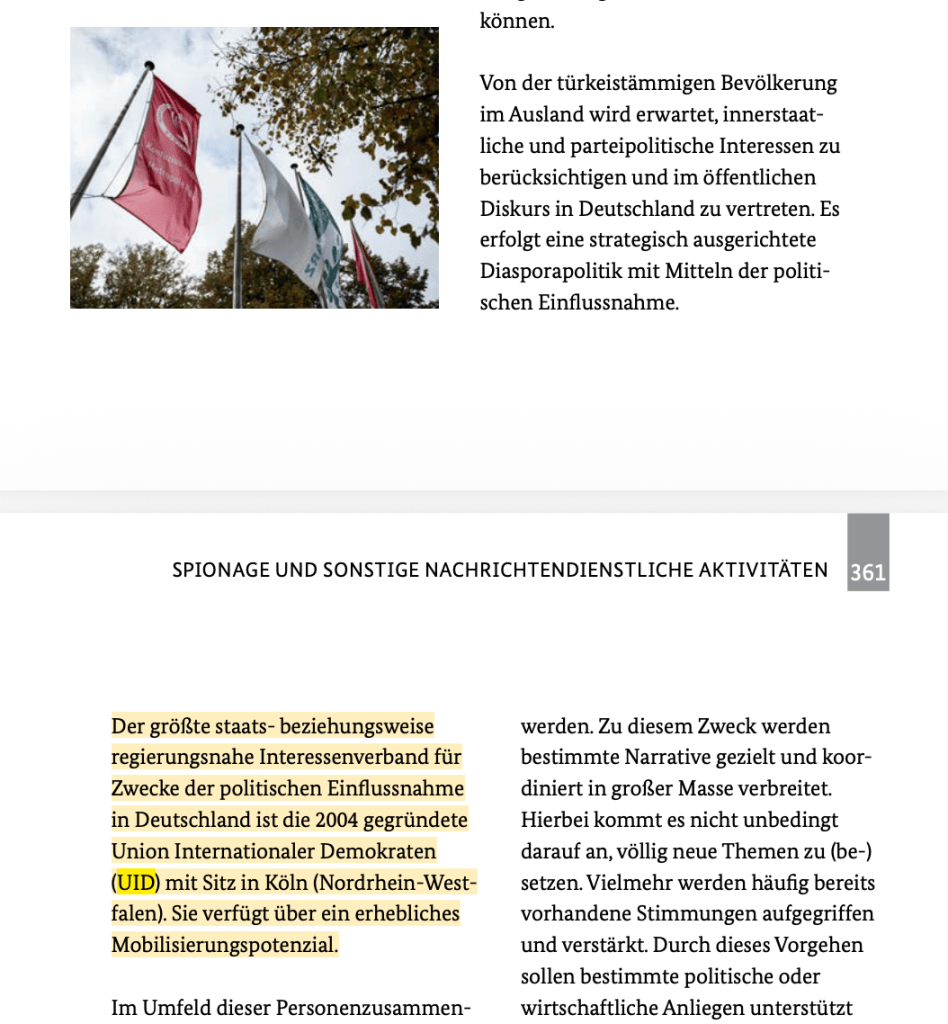
German intelligence authorities have repeatedly identified the UID as a major vehicle for Ankara’s political influence. The Federal Office for the Protection of the Constitution (BfV) described the organization in its 2024 report as Germany’s largest state or government-aligned interest group engaged in influence activities, noting its substantial voter mobilization capacity and regular meetings with AKP officials and Turkish government representatives.
The BfV’s 2025 security report, released on June 30, 2026, again examined Turkish government-linked influence activities and intelligence operations in Germany. The report addressed Turkish intelligence efforts targeting dissidents and government critics. Those intelligence activities are distinct from the UID’s documented political lobbying and mobilization work.

Bilal Erdogan’s expanding involvement follows a major restructuring of the UID leadership in January 2024, when former chairman Koksal Kus and members of his team were removed and Aslan assumed control. The changes triggered internal disputes, particularly between factions in Germany and the Netherlands.
Sirakaya, a former UID chairman and the AKP official responsible for international affairs, played a central role in the restructuring. Some UID members criticized him for allegedly assembling a leadership team loyal to his own political circle. President Erdogan subsequently defended the changes, describing the new leadership as a strengthened organization.
Since then, Bilal Erdogan has increasingly appeared at the center of UID activities. On December 25, 2025, he attended the organization’s annual education gathering as its principal guest and participated in a closed-door discussion. He appeared at several UID events across Europe in 2026, before attending the general assembly in Neuss.
His growing involvement has put him in a position of influence over an organization traditionally coordinated through senior AKP officials, including Sirakaya. No formal party decision transferring diaspora responsibilities to Bilal Erdogan has been publicly announced, but his repeated appearances and elevated treatment within the organization point to an expanding informal role.
The developments also carry implications for the Erdogan family’s political future. Bilal Erdogan has never held elected office, yet his growing visibility across religious foundations, youth organizations and overseas political networks has brought him into discussions surrounding an eventual succession to his father.