
Abdullah Bozkurt/Stockholm
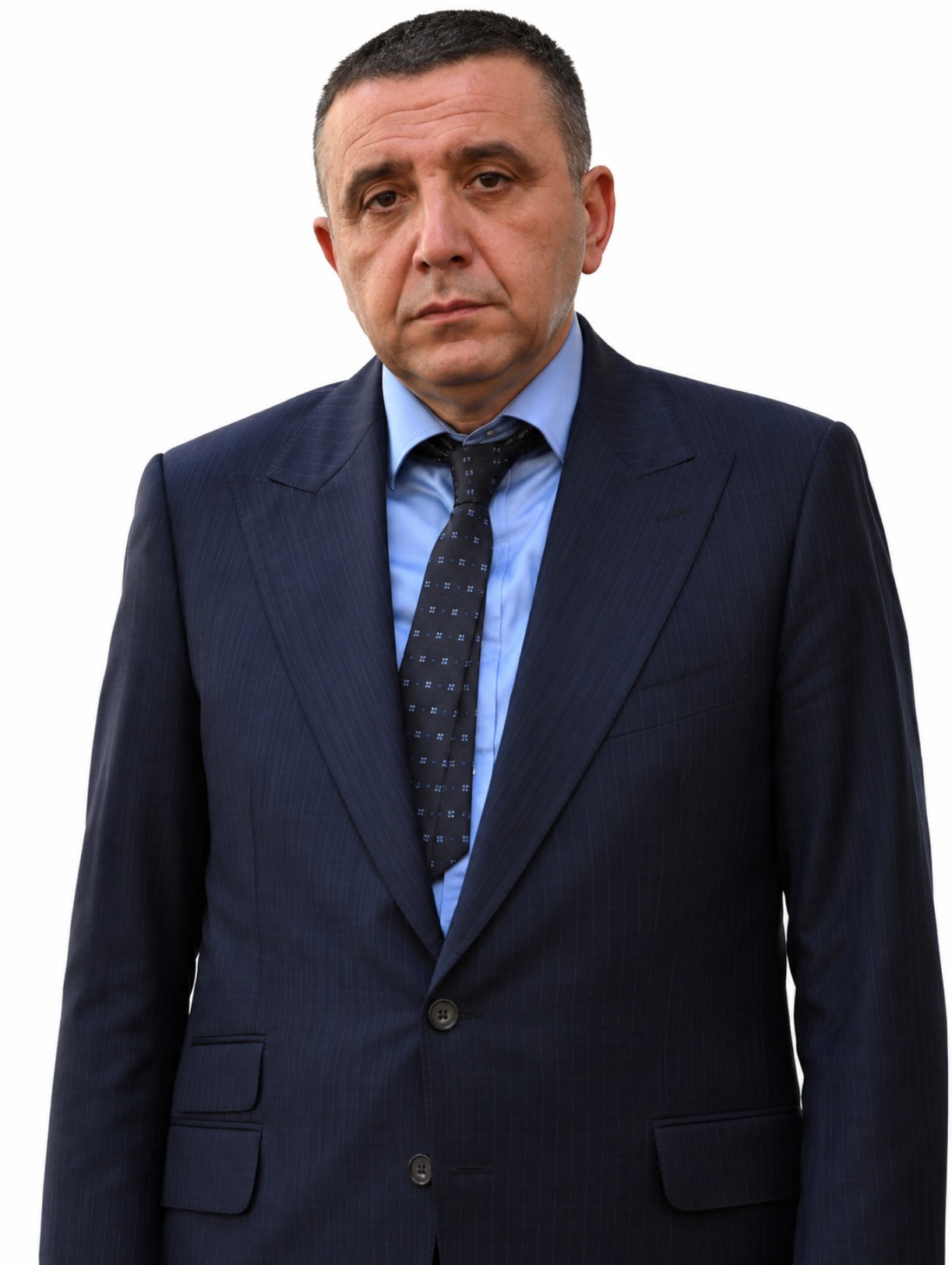
The government of President Recep Tayyip Erdogan, already under international scrutiny over documented contacts between senior political figures and Turkey’s criminal underworld, appears to have enabled the rise of a new alleged mafia powerbroker, Ali Uğur Uzun, an organized crime figure whose name has surfaced in criminal cases involving money laundering, extortion, kidnapping, assault, armed intimidation and the forcible seizure of businessmen’s assets.
Despite a lengthy record of organized crime allegations, Uzun has maintained access to influential figures in Erdogan’s political orbit, law enforcement and the judiciary, while surviving investigations that would ordinarily pose an existential threat to a man accused by Turkish police of managing an armed criminal organization.
Information obtained from multiple sources by Nordic Monitor indicates that Uzun maintained close contacts with President Erdogan’s son Necmettin Bilal Erdogan, who was groomed to replace his father to rule the nation of 86 million people and worked closely with Akın Gürlek, the former Istanbul chief public prosecutor whom Erdogan promoted to justice minister in February 2026.
Those relationships, combined with Uzun’s unusually brief incarceration, allegations that police refused to register complaints against him, claims that prosecutors were invoked to intimidate his adversaries and his subsequent appearance alongside prominent underworld figures at the headquarters of Erdogan’s ally, gives more credence to allegations he has in fact benefited from protection inside the Turkish state.
Police records, indictments, financial intelligence reports and testimony from victims reviewed by Nordic Monitor portray Uzun as a figure operating at the convergence of organized crime, business, judicial influence and political power.
Uzun reportedly travels in armored vehicles fitted with emergency-style flashing lights, a privilege that can allow a motorcade to move through traffic and police checkpoints with far less scrutiny than ordinary vehicles. The use of such warning lights on civilian vehicles in Turkey is tightly regulated and requires authorization from the Interior Ministry. He is also said to maintain a security detail of as many as 40 people, many of them retired police officers, further underscoring the unusual level of protection surrounding him.
At he same time, however, in Turkish police records, he was identified as an “organization manager” in the Sarallar criminal network, a longstanding, family-run criminal enterprise that has survived successive governments over decades, in part because of its deep entrenchment in political circles. One member of the extended Saral family, Oktay Saral, currently serves as a chief advisor to President Erdogan.
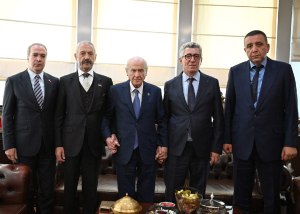
Yet by September 2026, Uzun — a publicity-shy figure who was rarely seen in public and for whom only a handful of photographs were publicly available — was present at the Ankara headquarters of the far-right Nationalist Movement Party (MHP), Erdogan’s key ally, when MHP leader Devlet Bahçeli hosted representatives of the rival Saral and Şahin underworld families.
That trajectory — from an organized crime suspect pursued by police to a figure appearing inside the headquarters of the MHP — illustrates the extraordinary resilience Uzun has displayed despite increasingly serious allegations.
The pattern also mirrors a broader phenomenon Nordic Monitor has previously documented concerning Turkey’s relationship with organized crime networks, in which underworld figures have increasingly appeared alongside intelligence operatives, politicians, officials and the security apparatus under Erdogan.
Nordic Monitor reported in April that businessman Öncü Sönmez, who was forced to flee to the United States out of concern for his safety, accused Uzun in a series of self-produced videos posted on social media of operating within an extensive extortion network linking organized crime figures with judicial officials, intelligence-linked operatives and pro-government journalists.
According to Sönmez, the network targeted wealthy businessmen with the threat of criminal investigations, arrest warrants, negative media coverage and eventual imprisonment. The method, he alleged, was straightforward: identify a wealthy target, demand money and then demonstrate that refusal could trigger criminal violence, false charges or state pressure.
Sönmez said Uzun initially demanded 10 million Turkish lira from him. He agreed to hand over the money after it was presented as a loan but later concluded there was never any intention to repay it. That payment, however, allegedly marked only the beginning.
Sönmez said Uzun subsequently summoned him to an office in unit 204 of building A1 at Zorlu Center, one of Istanbul’s most prestigious addresses, where he was asked to pay $5 million. When he refused, Sönmez alleged, men accompanying Uzun assaulted him, leaving him with multiple fractures and permanent damage to his fingers.
He claimed he was then given several days to deliver the money and threatened with death. Sönmez said he went twice to the Istanbul Police Department’s organized crime division seeking to lodge a complaint. According to his account, police officers initially listened to him but their attitude changed when he identified Uzun as the person he wanted to report.
He added that police refused even to formally record the complaint. For Sönmez, the episode became the first indication that the threat he faced extended beyond an ordinary criminal group.
His subsequent claims focused increasingly on the judiciary. Sönmez alleged that Uzun regularly invoked Akın Gürlek’s name and portrayed himself as someone operating with protection from one of the most powerful prosecutors in Turkey.
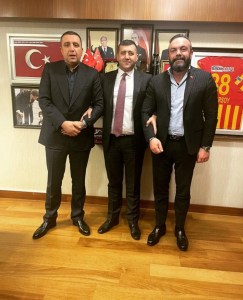
Gürlek had risen rapidly within Erdogan’s judicial establishment after he was willing to fabricate charges against Erdogan’s critics and go after the president’s opponents by weaponizing the criminal justice system. He served as deputy justice minister beginning in 2022 and was appointed Istanbul chief public prosecutor in October 2024 before Erdogan elevated him to justice minister in February 2026. Gürlek is still justice minister as of October 2026.
His tenure as Istanbul chief prosecutor overlapped directly with the period during which Uzun was investigated, detained and prosecuted in major organized crime cases, yet ultimately avoided meaningful accountability, an outcome that was facilitated by Gürlek’s intervention.
Sönmez alleged that the pressure intensified when he refused to meet the financial demands. On April 9, 2025, his vehicle came under gunfire while he was driving on Istanbul’s Kilyos road. He later released an image showing bullet damage to the windshield and alleged that police showed little interest in identifying the perpetrators.
The date was significant. That same day, Uzun returned to Turkey aboard a private aircraft after having left the country only days before the sweeping December 2024 police operation targeting the Sarallar network. His departure fueled suspicions that he had been tipped off about the impending raids. According to allegations surrounding the case, Uzun returned only after receiving assurances from protectors within the government that he would not be put behind bars.
Flight-tracking records reviewed by Nordic Monitor identify the private aircraft that brought Uzun back to Turkey as TC-ISK, a Turkish-registered Cessna Citation XLS+ business jet based at Istanbul’s Atatürk Airport. Records show that the aircraft was dispatched from Atatürk Airport at 8:12 a.m. on April 9, 2025, landed in Sofia at 9:06 a.m. and remained there for more than four hours before departing for Istanbul at 1:23 p.m. It landed back at Atatürk Airport at 2:19 p.m.
The aircraft is associated in public aviation records with Vizyon Aviation/Vizyon Air, while the business-aviation database Central Jets lists Perajet Turizm Ltd. Şti. as the operator.
According to investigative journalist Cevheri Güven, Uzun’s departure from Bulgaria despite allegedly being flagged in INTERPOL databases as a wanted person triggered an internal investigation by Bulgarian authorities. Investigators reportedly examined why Uzun was neither detained nor formally escorted onto a commercial flight for transfer to Turkey but was instead allowed to board a private jet at Sofia Airport. Güven said the episode raised suspicions that airport personnel may have facilitated his departure, prompting scrutiny of a possible corruption network operating inside or around the airport.
Uzun was arrested when he returned to Istanbul’s Atatürk Airport on multiple charges including managing an armed criminal organization, aggravated robbery, deprivation of liberty, threats, intentional injury, endangering public safety and unlawful possession and use of firearms. Police explicitly described Uzun as one of the ring leaders in the crime syndicate.
He was brought before the Istanbul 39th High Criminal Court and ordered jailed pending trial. What followed was highly unusual. His lawyers challenged the detention order, but their initial appeal was rejected. The prosecutor involved in the proceedings then took the unusual step of also challenging Uzun’s continued detention and asked the court to release him. Prosecutors handling criminal investigations would ordinarily be expected to argue for continued detention when they believe a suspect poses a flight risk, could tamper with evidence or remains implicated in serious offenses.
In Uzun’s case, however, the prosecutor moved in the opposite direction. Uzun was ultimately released after spending approximately one day behind bars. It was rumored that he had distributed $1.5 million in bribes for his release.
But the extraordinarily brief detention later assumed greater significance in light of allegations from Sönmez that Uzun repeatedly claimed he enjoyed protection from the judiciary.
The pressure on Sönmez allegedly continued. On June 20, 2025, he said he was called to a meeting at a football facility in Istanbul’s Etiler district. The original demand for $5 million was reduced to $2 million.
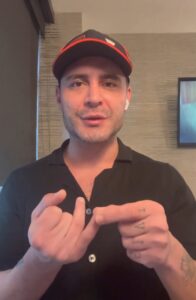
Sönmez said those present included Abdurrahman Şimşek, an intelligence-linked operative working under journalistic cover at the pro-government Sabah daily, part of a media group owned by President Erdogan’s family; an intelligence officer identified only as Ümit; and a man named Mehmet, whom Sönmez described as both a relative of Gürlek and a member of his security entourage.
According to Sönmez, Şimşek told him explicitly that Uzun was acting as part of the same network. Sönmez alleged that he was told his legal problems and negative media coverage could disappear if he paid. If he refused, damaging stories would appear, criminal proceedings would intensify and he could be jailed.
One of Sönmez’s most serious allegations involved Gürlek personally. He said Gürlek telephoned people participating in the Etiler meeting and urged them to resolve the dispute rather than prolong the negotiations. Sönmez subsequently claimed he was shown what appeared to be an arrest warrant dated June 25, 2025, only five days after the Etiler meeting.
He regarded the document as evidence that judicial action was being prepared as leverage against him. He ultimately fled Turkey, traveling first to Switzerland and later to the United States.
The allegations dovetail with Uzun’s already extensive record in organized crime investigations. His name had appeared several years earlier in a 2020 indictment of 39 suspects in a Sarallar criminal case. A later prosecution provided more detailed accusations.
A 248-page indictment involving 62 defendants portrayed the Sarallar network as an organization that used violence, threats, abduction and coercion to take control of businessmen’s properties and other assets.
Among the complainants was businessman Abdullah Taşkın. According to the indictment, Taşkın was taken to a private room at Fiko Ocakbaşı, a restaurant owned by Fikret Aydoğdu. Uzun and several associates entered the room, assaulted Taşkın and threatened him at gunpoint. Taşkın alleged that he was ordered to leave Istanbul.
The broader prosecution concerned claims that approximately 500 million Turkish lira worth of real estate belonging to Taşkın had been transferred through arrangements involving members of the criminal network.

Another businessman, Erkan Güdücü, made similarly serious allegations. Güdücü claimed that 73 apartments and commercial properties belonging to his family were taken through pressure exerted by members of the organization. Court reporting based on the indictment showed that one of the disputed properties was transferred to Uzun’s wife, Oya Uzun.
Güdücü also alleged that men acting on Uzun’s behalf assaulted him and held him against his will at a warehouse in Istanbul’s Avcılar district.
Uzun’s financial affairs subsequently became the subject of a separate money-laundering investigation. In July 2025 prosecutors indicted 52 suspects, including Uzun and alleged Sarallar leader İlyas Saral, on charges of laundering proceeds of crime. Financial records compiled by Turkey’s Financial Crimes Investigation Board (MASAK) revealed a substantial volume of property activity involving Uzun. Land registry records revealed 73 property transactions between 2009 and 2016.
Investigators also found that Uzun transferred the deeds of 23 apartments to a single individual identified only by the initials H.K.A. Prosecutors argued that the disparities between documented income, financing and asset transactions raised suspicions of efforts to disguise or legitimize the origins of the property.
His name surfaced again in an attempted murder investigation at the end of 2025. İbrahim Gümüştekin, a figure associated with a Fenerbahçe football team supporters group, was seriously wounded when gunmen armed with an assault rifle and handgun attacked him outside his hotel. After recovering sufficiently to give a detailed statement, Gümüştekin accused Uzun of ordering the attack.
Gümüştekin’s former wife, Tuğba Ökçesiz, had publicly accused Uzun soon after the attack. Ökçesiz was subsequently taken into custody on the instructions of prosecutor Hasan Ceyhun after posting accusations against Uzun on Instagram. She alleged that the prosecutor warned her that continued posts about Uzun could land her in Silivri Prison. Ökçesiz said she deleted her earlier posts after the warning.
Her account adds to claims by other individuals who say attempts to challenge Uzun were met with pressure from law enforcement or judicial authorities.
Another shooting victim subsequently accused Uzun. On December 23, 2025, Şeyhmuz Muhittinoğlu was attacked while sitting in his vehicle in Dubai and suffered serious injuries. After his release from intensive care, he provided a statement and complained about Uzun.
The attack reportedly contributed to increased scrutiny of Turkish organized crime groups operating in the United Arab Emirates. Around 80 Turkish nationals were detained in subsequent UAE operations, with some deported and other individuals with criminal records prevented from entering the country. A number of Turkish underworld figures in Dubai blamed Uzun for drawing unwanted attention to their activities.
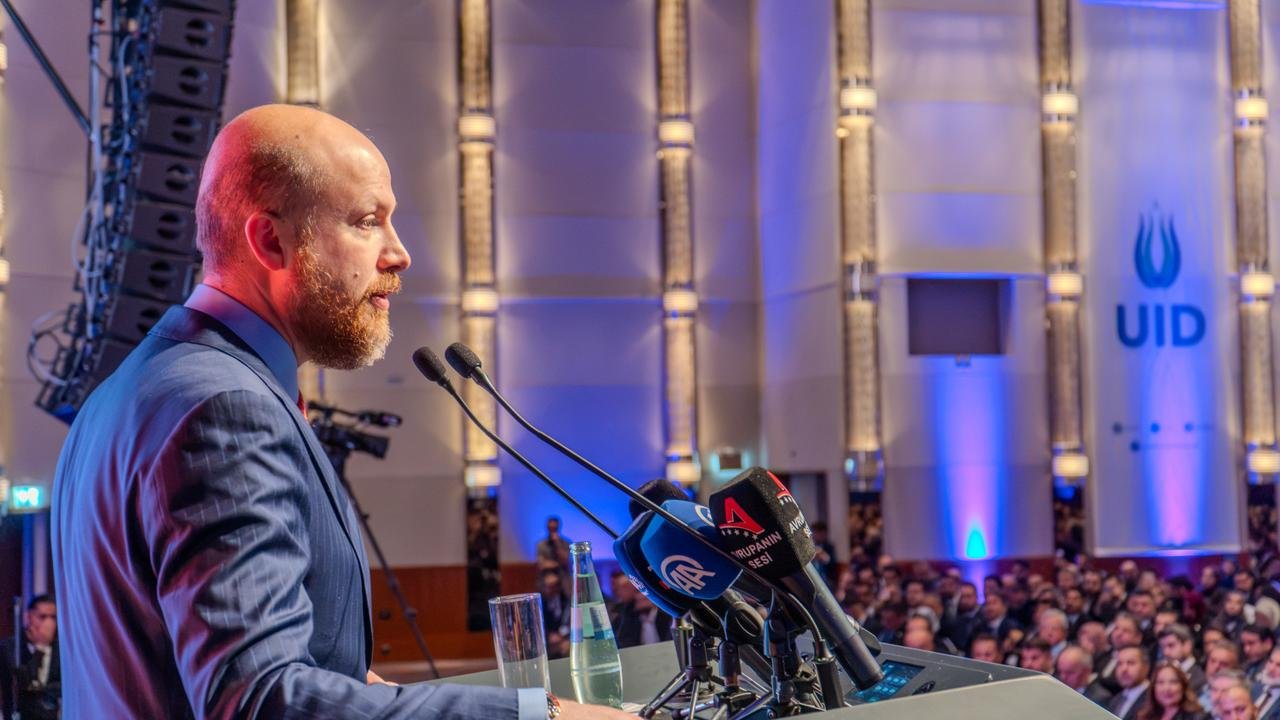
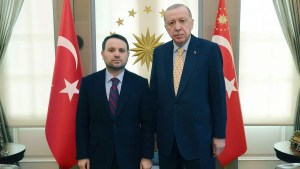
According to information obtained by Nordic Monitor, Uzun maintained close ties to Bilal Erdogan, President Erdogan’s son. Bilal Erdogan holds no formal government position but occupies prominent roles in foundations and organizations closely associated with Turkey’s ruling establishment. The relationship potentially gave Uzun direct access to the president’s immediate family circle.
That access was complemented by his relationship with Gürlek, who rose under Erdogan from deputy justice minister to Istanbul chief public prosecutor and ultimately justice minister. Gürlek continues to occupy a central role in Turkey’s criminal justice system, which critics say has increasingly been weaponized under Erdogan not only to suppress political opponents but also to protect favored business interests and facilitate the transfer of economic opportunities and assets to politically connected circles.
Uzun’s proximity to the political establishment became even more visible on September 26, 2026. Representatives of the rival Saral and Şahin mafia families were invited to the headquarters of Erdogan’s ally, the MHP, where party leader Devlet Bahçeli hosted a reconciliation meeting. The MHP made no effort to conceal the gathering, publicly celebrating it as a historic rapprochement between the two families. Uzun was also present at the meeting. The highly publicized display carried an unmistakable political message to law enforcement and judicial circles: Uzun was operating with access to, and apparent protection from, the president’s key ally, making action against him potentially fraught with political consequences.
The repeated convergence is difficult to ignore: Allegations of serious organized crime activity coexist with reported access to the president’s son, links to the country’s most powerful prosecutor-turned-justice minister, relationships with police personnel and visibility inside Erdogan’s governing coalition. His approximately one-day imprisonment is especially striking in that context. So are the claims by alleged victims that police refused to accept their complaints, prosecutors were used to threaten them and unfavorable legal and media action followed when they rejected financial demands.
Taken together, the evidence and allegations portray Uzun not simply as another member of a long-established criminal family but as a figure whose power appears to depend on his ability to move between the underworld and institutions of the state. That has fueled the perception that Uzun is being positioned as an increasingly powerful broker, effectively a new underworld godfather.
His rise therefore provides another illustration of the increasingly blurred boundary between the state and the criminal underworld under Erdogan, a relationship that has drawn mounting international scrutiny as violence, contract killings, illicit firearms, narcotics, money laundering and other forms of organized crime linked to Turkish networks have increasingly spilled beyond the country’s borders.