
Abdullah Bozkurt/Stockholm
US federal authorities put a group of Muslim Americans represented by the Council on American-Islamic Relations (CAIR) on terrorism watchlists and subjected several of them to intensive questioning over travel to Turkey and possible contacts there, according to federal court filings reviewed by Nordic Monitor.
The documents show that one Muslim American was specifically questioned by US Customs and Border Protection officers about whether he had any affiliation with terrorists in Turkey, while another was questioned at an airport about why he was traveling to Turkey, where he would stay and whom he was going to meet with.
Other records describe US watchlist information triggering action by Turkish border and airline personnel, including Turkish officials contacting US authorities before allowing a passenger to continue his journey.
The disclosures appear in Mohamed Khairullah et al. v. Garland et al., case No. 3:23-cv-30095-MGM, pending before the US District Court for the District of Massachusetts.
The case was brought by a group of Muslim US citizens, permanent residents and asylum holders challenging their inclusion in the US government’s Terrorist Screening Dataset (TSDS), the consolidated federal terrorism watchlist.
CAIR is representing the plaintiffs, who allege that they were put on the federal terrorist watchlist despite never having been charged with or convicted of terrorism-related crimes. They say their watchlist status led to repeated interrogations, electronic-device searches, travel restrictions and other adverse consequences.
The records provide a rare glimpse into how US counterterrorism screening intersected with Turkey, a country that has been run by hard-line Islamist President Recep Tayyip Erdogan, whose government aids and abets radical groups including Hamas and Islamic Jihad.
One of the plaintiffs, Mohamed Khairullah, is a Syrian-American citizen who was serving as mayor of Prospect Park, New Jersey. The complaint says he was put on the federal terrorism watchlist in 2019 and remained on it until August 2022.
On July 3, 2019, Khairullah attempted to travel with his wife and five children from Newark to Istanbul via Barcelona. According to the complaint, his watchlist status resulted in additional screening, delays, device searches and interrogations.
The complaint filed in the US District Court for the District of Massachusetts on September 18, 2023, contains multiple references to Turkey:
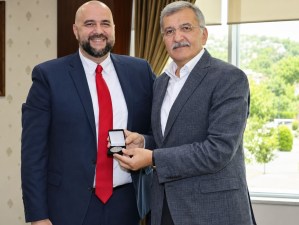
A Nordic Monitor investigation found that Khairullah’s 2019 trip to Turkey, which was publicly described as a family vacation, also included official meetings with Turkish municipal leaders, including Beykoz Mayor Murat Aydın in Istanbul. Khairullah was accompanied during the visit by Derya Taşkın, a deputy mayor of Turkish origin from Passaic County. Aydın is a longtime politician from President Recep Tayyip Erdogan’s ruling Islamist Justice and Development Party (AKP), having served as mayor of Istanbul’s Zeytinburnu district from 1999 to 2019 and of Beykoz from 2019 to 2024.
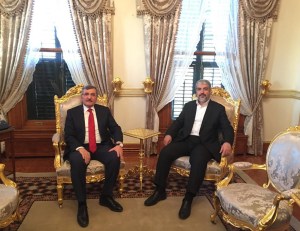
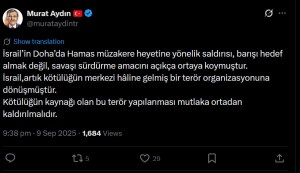
Aydın has publicly aligned himself with strongly pro-Hamas positions associated with Erdogan’s political movement and has taken part in initiatives supporting Palestinian institutions. He repeatedly met with Hamas officials, including Khaled Mashal in 2015, and explicitly called for Israel’s destruction in a post he published on X in 2025.
Another incident occurred when the Khairullah family returned to the United States. According to the filing CBP officers separated Khairullah from his wife and children during secondary inspection and questioned him alone. The officers specifically asked whether he associated with terrorists in Turkey. They also demanded access to his telephone and obtained his password.
Khairullah’s case later attracted additional attention after the US Secret Service barred him from attending an Eid al-Fitr event at the White House despite his removal from the active watchlist. The lawsuit alleges that federal agencies continued to retain and use records of his historical watchlist status.
Another plaintiff, Moneeb Elhady, a US citizen of Yemeni origin, was also questioned specifically about Turkey. Elhady traveled from Chicago to Istanbul on July 2, 2021. As he prepared to board the plane, officers approached him at the gate and questioned him for approximately 15 minutes about his relatives, his brother, his wife and his destination.
The officers asked why he was traveling to Turkey. After Elhady said he planned to meet his wife there for a vacation, they demanded the address of the resort where the couple would be staying. He returned from Istanbul to Chicago on July 10. His boarding pass bore the “SSSS” designation, indicating that he had been selected for enhanced security screening. The plaintiffs characterize the designation as revealing their treatment as “known or suspected terrorists.”
The lawsuit also provides evidence that US watchlisting information was acted on inside Turkey. Ahmad Mirzay, an Afghan citizen and permanent US resident, traveled through Istanbul on his way to Kabul in 2015. His boarding pass issued at New York’s JFK Airport was marked “SSSS.” When Mirzay arrived at Istanbul’s Atatürk Airport, according to the complaint, Turkish customs officials stopped him and made several telephone calls to US authorities to obtain clearance before allowing him to continue to Afghanistan.
Another plaintiff, Ihab Rashad, encountered a similar situation while traveling through Turkey. The filing says that during a return journey through Istanbul, a Turkish airline employee contacted US authorities to obtain permission to issue boarding passes for Rashad’s family. The boarding passes were then marked “SSSS.”
CAIR had repeated contacts with the Erdogan government and Turkish institutions. The Turkey-related questioning disclosed in the lawsuit is particularly noteworthy against the separate background of years of documented contacts between senior CAIR leadership and Turkish government officials and institutions.
They provide important context because CAIR Executive Director Nihad Awad has repeatedly met with senior representatives of President Erdogan’s government, Turkey’s Directorate of Religious Affairs, known as the Diyanet, Turkish diplomats and organizations close to Ankara.
As early as November 2014, CAIR hosted a delegation from Turkey’s Independent Industrialists’ and Businessmen’s Association (MÜSİAD), a pro-Erdogan Islamist business group, at its Washington headquarters. CAIR’s own announcement said Awad personally hosted the delegation and welcomed efforts to strengthen economic ties between American Muslims and Turkey. The Turkish delegation invited American Muslims to attend a MÜSİAD trade fair and International Business Forum meeting in Istanbul that Erdogan and then-prime minister Ahmet Davutoğlu were scheduled to attend.
The relationship expanded to direct contact with the Turkish state’s religious establishment. On April 6, 2016, then-Diyanet president Mehmet Görmez visited CAIR’s Washington headquarters during a US trip for the opening of the Turkish government’s massive Diyanet Center of America complex in Maryland.
An official Diyanet account says Görmez was briefed about CAIR’s activities, was presented with a plaque and told Muslim community leaders that CAIR had assumed an important mission not only for Muslims in the United States but internationally.
The contacts intensified following Turkey’s false-flag coup attempt on July 15, 2016, when Erdogan’s government launched an extensive campaign seeking the extradition from the United States of Islamic cleric Fethullah Gülen, a Turkish Muslim scholar who had opposed the Erdogan regime and was highly critical of the government over a range of issues, including pervasive corruption and Turkey’s aiding and abetting of radical Islamist groups.
In September of that year an AKP parliamentary delegation traveled to Washington specifically to lobby on Gülen’s extradition in the aftermath of the Turkish intelligence-orchestrated coup attempt.
One of the delegation’s meetings was with CAIR executives and Nihad Awad, with Turkish Ambassador Serdar Kılıç also participating. The delegation included lawmakers Ali Sarıkaya, Ahmet Berat Çonkar, Ravza Kavakçı Kan, Sena Nur Çelik and Emine Nur Günay, all pro-Hamas Islamist politicians. The US Justice Department rejected Turkish extradition demands, saying there was no solid evidence linking Gülen to coup attempt in Turkey.
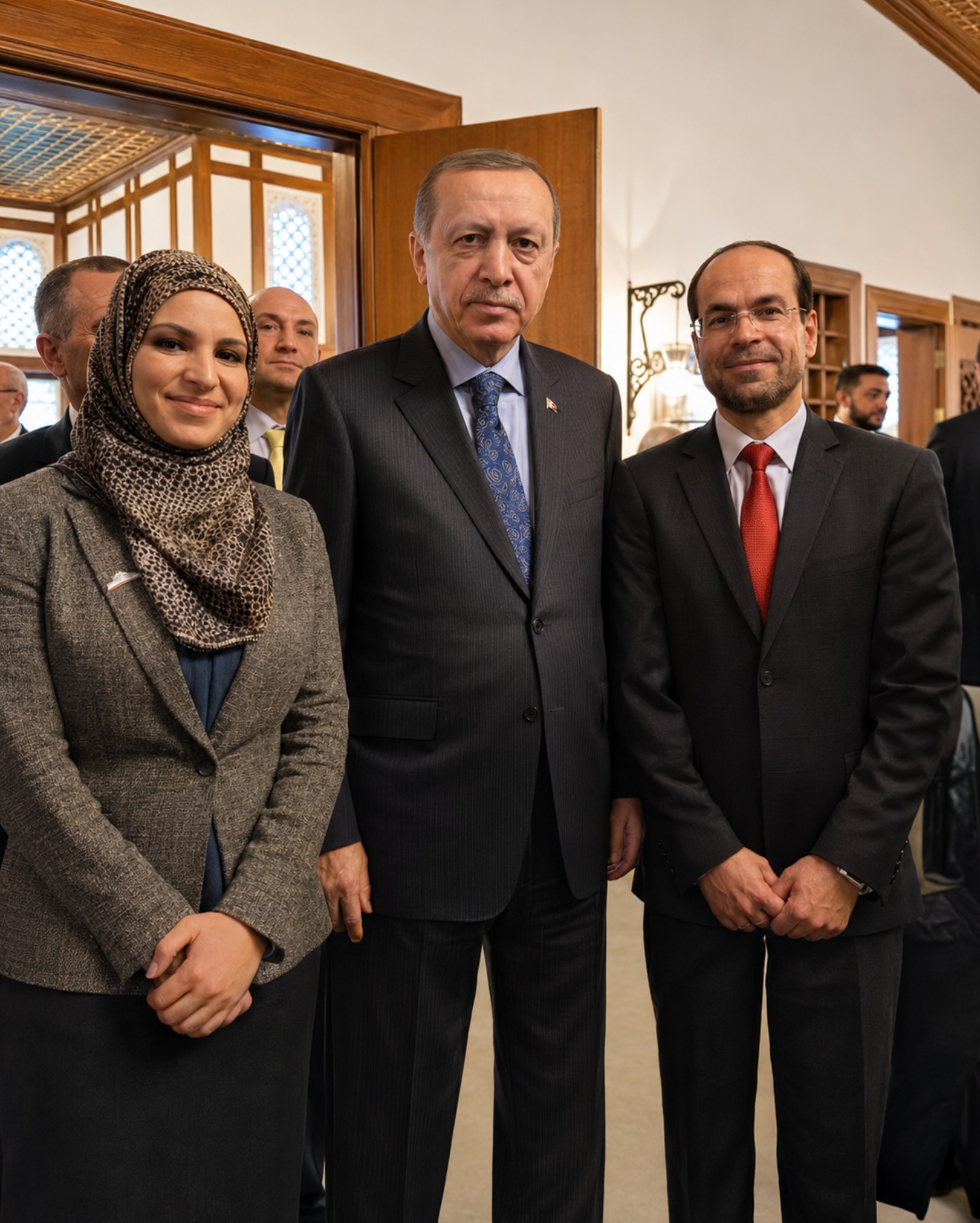
Only weeks later Awad obtained direct access to Erdogan. On September 23, 2016, Awad joined American Muslim community representatives in a meeting with Erdogan in New York during the United Nations General Assembly. The Turkish delegation at the meeting included Foreign Minister Mevlüt Çavuşoğlu, Justice Minister Bekir Bozdağ, Energy Minister Berat Albayrak, Family and Social Policies Minister Fatma Betül Sayan Kaya, Ambassador Kılıç, AKP deputy chair Yasin Aktay, lawmaker Ravza Kavakçı Kan and presidential spokesman İbrahim Kalın, who is now the head of Turkish intelligence agency MIT.
The relationship with Diyanet continued under Görmez’s successor, Ali Erbaş. On January 11, 2018, Erbaş received Awad at the Diyanet Center of America in Maryland. An official Diyanet account records an especially significant statement by Awad: He said CAIR and numerous other Muslim American civil society organizations wanted to conduct joint activities with the Diyanet.
The statement represents one of the clearest official records of CAIR leadership expressing an intention to develop institutional cooperation with a Turkish state body that is known to have been working with Turkish intelligence in order to advance interests of the Erdogan government abroad.
During the same US visit Erbaş also met with Turkish diplomatic officials and American Muslim community leaders. He later said Turkish religious officials in the United States had discussed efforts to reach people whom Ankara considered influenced by the Gülen movement.
Awad also repeatedly appeared at gatherings organized by Turkish government-related institutions. In June 2017 he attended an iftar hosted by Ambassador Kılıç at the Diyanet Center of America along with representatives of MÜSİAD USA, the Turkish-American National Steering Committee (TASC), Turkish Airlines and the Yunus Emre Institute, as well as other Muslim organizations.
Days later Awad attended another Washington iftar organized by MÜSİAD USA, where guests included Ambassador Kılıç and Turkey’s then-undersecretary for the defense industry İsmail Demir, a Turkish official who was later sanctioned by the United States.
In May 2019 Awad again attended an iftar organized by the Turkish Embassy at the Diyanet Center of America. He also attended a separate 2019 event there organized by the Washington office of Turkish Airlines, along with Ambassador Kılıç and members of the Turkish and American Muslim communities.
Taken together, the records show a sustained pattern of access and engagement extending from Turkish business organizations to the country’s religious bureaucracy, diplomatic mission, governing party and Erdogan himself.
The March 2024 amended complaint lists CAIR Legal Defense Fund and its Massachusetts, New Jersey and Michigan affiliates as lawyers representing the plaintiffs in the US lawsuit. The litigation reveals that federal authorities possess considerably more information about at least some of the plaintiffs than is publicly available.
In subsequent proceedings the Justice Department submitted materials to the judge in camera and ex parte, meaning they were provided secretly to the court without being disclosed to the plaintiffs.
In a February 14, 2025 filing the government described watchlist information as highly sensitive and said disclosure could compromise ongoing counterterrorism investigations by allowing a person to determine whether he or she was the subject of counterterrorism, intelligence or investigative interest.
The Justice Department said its secret submission included both information specific to individual plaintiffs and broader information about the terrorist watchlisting system.
Federal lawyers fought a court order that would have required some of the material to be disclosed to plaintiffs’ attorneys under protective conditions, arguing that portions were protected by law-enforcement privilege and that disclosure could harm national security.
The government cited previous watchlist litigation in which courts permitted plaintiff-specific information to remain secret because releasing it could reveal whether an individual was or had been a target of federal terrorism screening.
The Justice Department stressed that forcing disclosure could reveal highly sensitive material before the court had even ruled on the government’s preliminary motions. It described the material as critical to national security and said even disclosure limited to attorneys could create irreversible risks.
For Turkey the case raises a separate set of questions. The documents indicate that US authorities showed particular interest in the plaintiffs’ travel to or through Turkey, as well as in whom they met with and what they did while they were there.
At the same time, separate official Turkish records document a sustained relationship between CAIR’s national leadership and senior Turkish political, diplomatic and religious figures, including direct meetings with Erdogan, Diyanet presidents, Turkey’s Washington ambassador and an AKP delegation engaged in lobbying in Washington, D.C.