
Levent Kenez/Stockholm
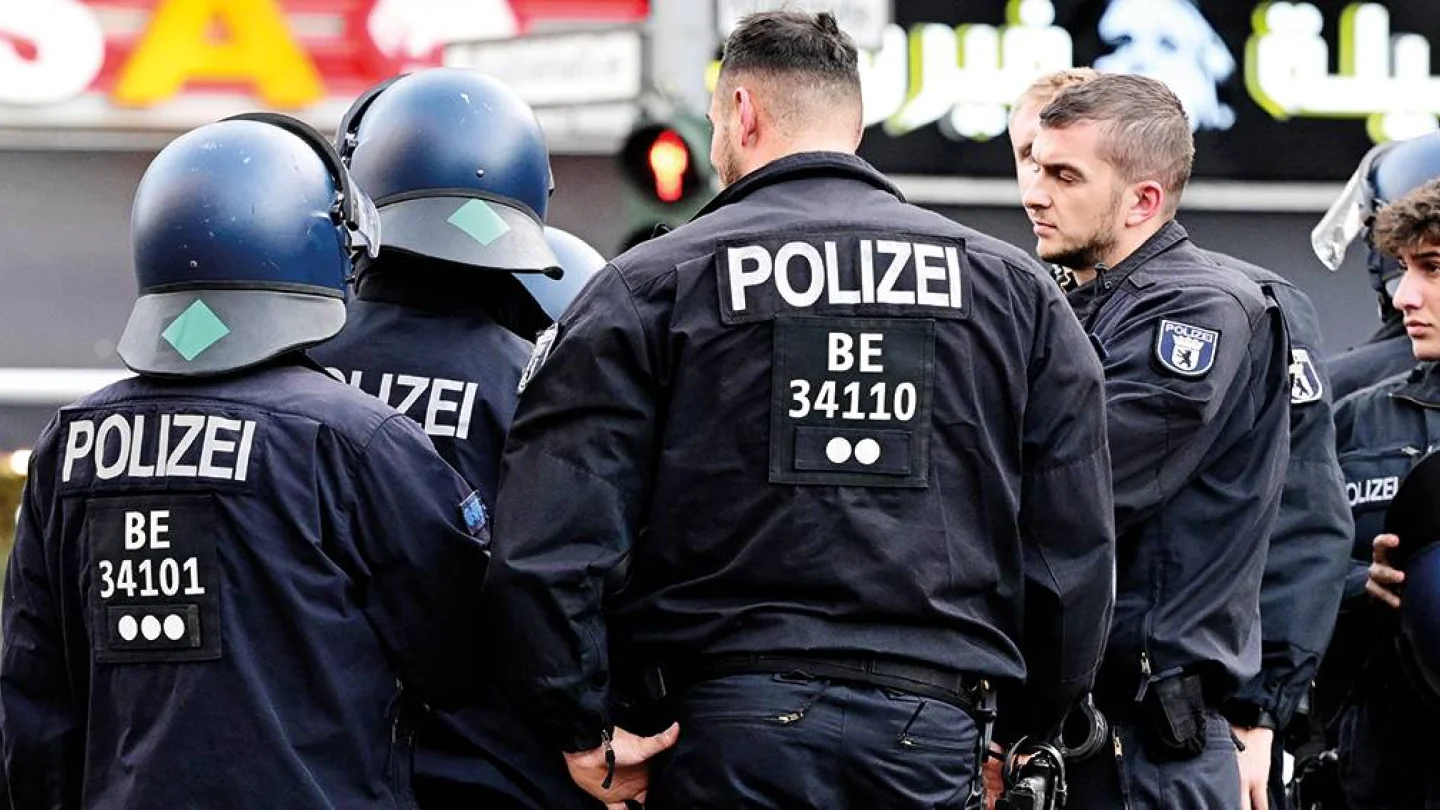
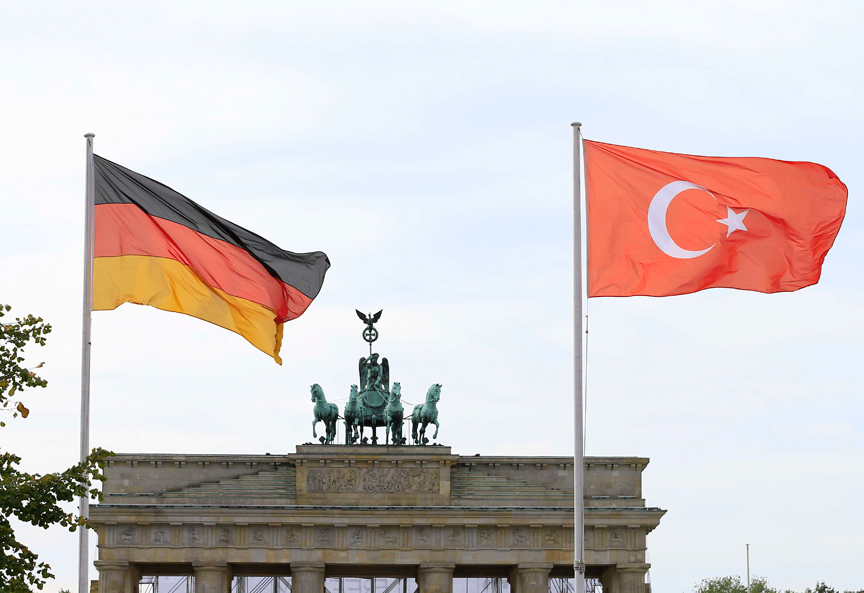
The long arm of Turkish President Recep Tayyip Erdogan has once again been caught in the crosshairs of German domestic intelligence as Berlin sounded the alarm over intensifying covert state operations, diaspora surveillance and an expanding web of foreign-backed extremist networks operating on German soil.
The Federal Office for the Protection of the Constitution (BfV), Germany’s domestic intelligence agency, laid bare the scale of the covert threat in its comprehensive 2025 annual security report released on Monday. The state security document explicitly classifies Turkey along with geopolitical adversaries like Russia, China and Iran as a primary state actor actively conducting espionage, unlawful influence campaigns and transnational repression inside Germany.
The findings point to an increasingly volatile security landscape where foreign capitals use local diaspora communities, religious networks and political front organizations to project power directly into the heart of Europe’s largest economy.
German Federal Minister of the Interior Alexander Dobrindt issued a stark assessment of the current security climate in the report’s official preface, warning that the overall situation in Germany and Europe remains highly strained. The interior minister noted that foreign states are attempting to exert influence on politics, the economy and society in an impermissible manner while simultaneously noting that dissidents from other states and members of various diaspora communities living in Germany are increasingly falling into the focus of foreign intelligence services, a phenomenon the government officially defines as transnational repression.
The domestic intelligence report simultaneously tracks a complex matrix of Turkey-linked religious and political organizations operating under the banner of Islamic ideology and foreign-related extremism. Among the primary Turkish-backed and Turkey-origin networks scrutinized by state security is the Milli Görüş movement and its various affiliated associations, which German authorities continue to monitor. The role of religious extremism is also evident in the continued monitoring of Turkish Hizbullah, a radical Islamist group distinct from Lebanon’s Hezbollah, as well as in executive actions taken against other fundamentalist networks such as Muslim Interaktiv, which was officially banned by the federal government in November 2025.
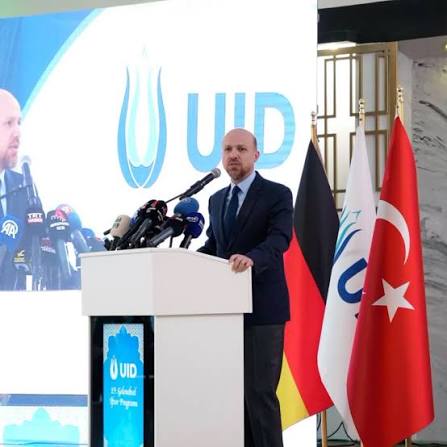
A central focal point of German intelligence surveillance within this geopolitical friction is the Union of International Democrats (UID), an organization functioning as the primary Turkish government-backed lobby and diaspora group in Western Europe. The UID, which operates extensively across Germany, has come under the radar of German Intelligence due to its direct role as an instrument of political influence for Erdogan’s ruling Justice and Development Party (AKP). German state security monitors the group as a vehicle designed to police the political alignment of the Turkish diaspora, marginalize critics of the Turkish presidency and manipulate local political discourse to align with Ankara’s state interests. The formal inclusion of the UID in the intelligence radar signifies that German authorities no longer view the group as a standard cultural or political association but rather as an active threat to domestic cohesion and an apparatus for foreign state-directed subversion that actively undermines German democratic integration.
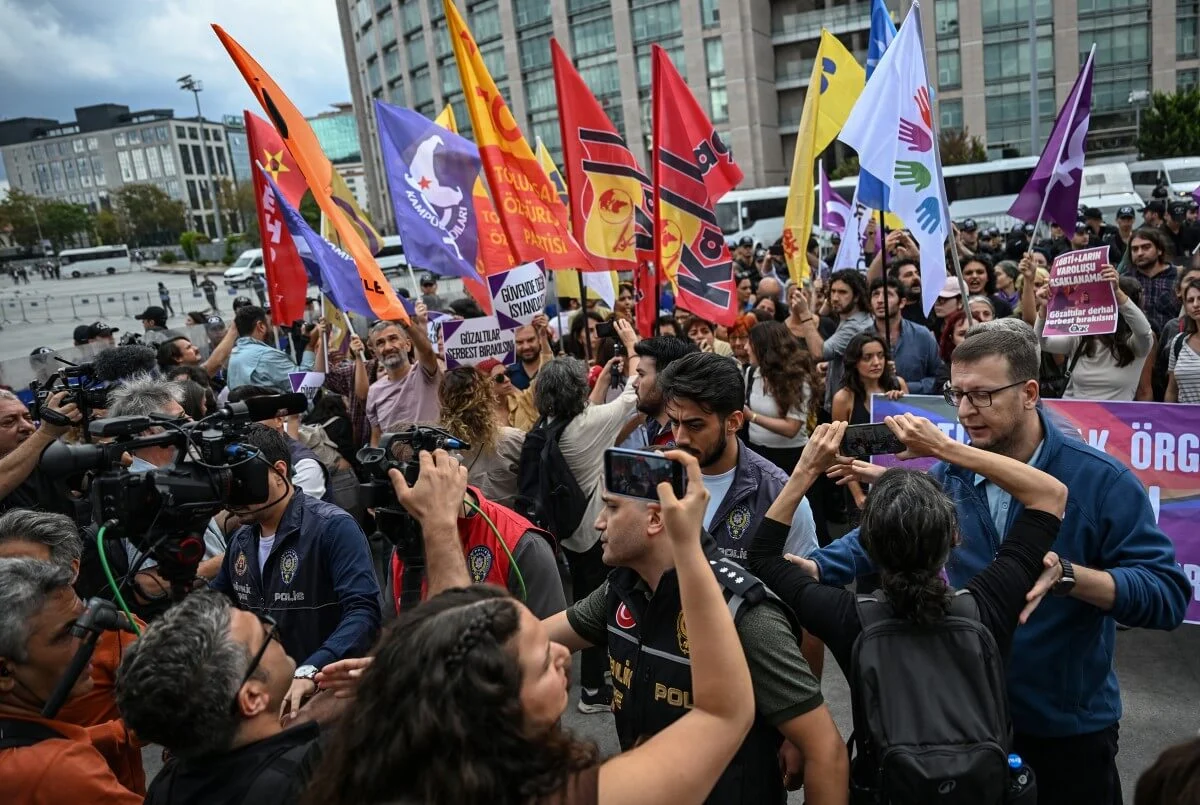
The security ledger also documents an alarming rise in threats emanating from Turkish left-wing extremist organizations that operate in Germany but direct their violent ambitions primarily toward the political structure in Ankara. German intelligence continues to maintain strict surveillance of the Revolutionary People’s Liberation Party-Front (DHKP-C) as well as the Marxist-Leninist Communist Party (MLKP) and the Communist Party of Turkey/Marxist-Leninist (TKP/ML). These heavily structured ideological groups utilize their European networks to generate illicit financing, manage safe houses, publish propaganda and recruit operatives to carry out militant operations and logistics targeting Turkish state installations, presenting a dual security challenge for German law enforcement tasked with preventing foreign blood feuds from spilling onto German streets. Beyond Islamist organizations and left-wing militancy, the intelligence agency devoted substantial sections of its annual report to the entrenched threat posed by the Kurdistan Workers’ Party (PKK), which is designated as a terrorist organization in Germany. The report outlines how the group uses Germany as a vital logistical hub to collect millions of euros in annual extortion and donations, manage extensive recruitment pipelines and organize mass demonstrations that frequently trigger violent clashes with ultranationalist Turkish right-wing extremists.
The Turkish right-wing extremist scene in Germany is dominated by the Ülkücü movement, commonly referred to as the Grey Wolves, which operates through major umbrella organizations including the Federation of Turkish Democratic Idealist Associations in Germany, the Union of Turkish-Islamic Cultural Associations in Europe and the World Order Federation in Europe. These ultranationalist entities are monitored by the BfV for spreading deeply antisemitic narratives, promoting racist sentiments against ethnic minorities such as Kurds and Armenians and fostering a hyper-nationalistic environment that enforces absolute loyalty to the Turkish state while violently rejecting Western democratic values.
Text of Germany’s domestic intelligence agency’s report on national security (2025):
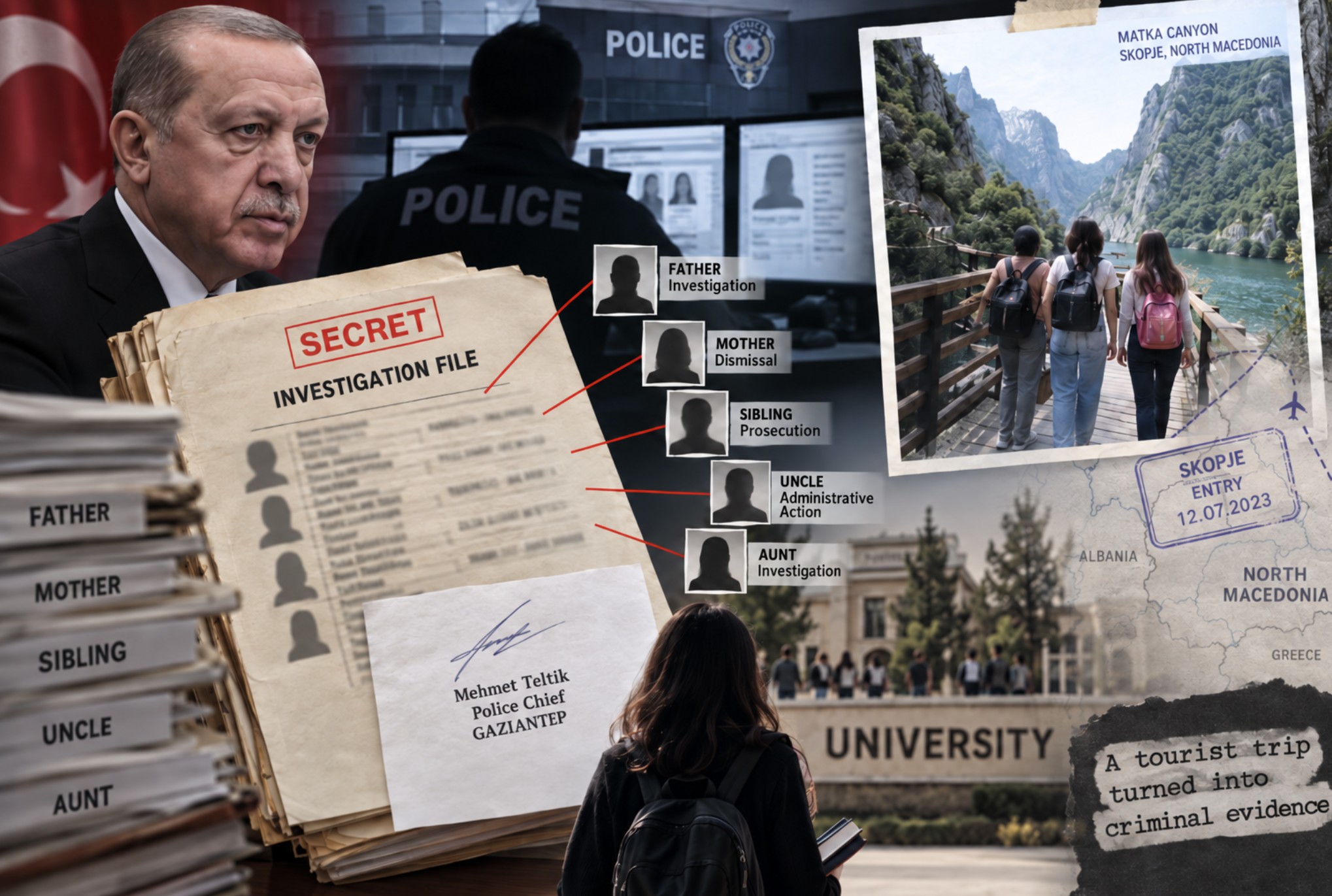
Another intelligence assessment is the systematic monitoring of dissidents and members of the Turkish diaspora living in Germany, a phenomenon the federal government formally defines as transnational repression. Turkish intelligence services, primarily Turkey’s National Intelligence Organization (MİT), are documented as maintaining an extensive infrastructure of informants and operatives across German federal states. The primary operational objective of this clandestine apparatus is the collection of actionable intelligence on individuals and groups that the Turkish government classifies as national security threats, with particular emphasis placed on suspected members of the outlawed PKK.
The report also states that members of the Gülen movement, a group critical of President Erdogan, are among the targets of Turkish intelligence.
By using diplomatic cover, digital surveillance tools and coordinated social media campaigns, foreign intelligence services are reported to be extending domestic political conflicts onto German territory, including those linked to Ankara, prompting Berlin to reassess aspects of its security framework.