
Levent Kenez/Stockholm
Turkey’s sharp improvement in international education rankings has prompted questions in parliament about student selection, possible exam preparation and persistent inequalities between schools, with the country recording substantial gains, while most members of the Organisation for Economic Co-operation and Development (OECD) saw their scores decline.
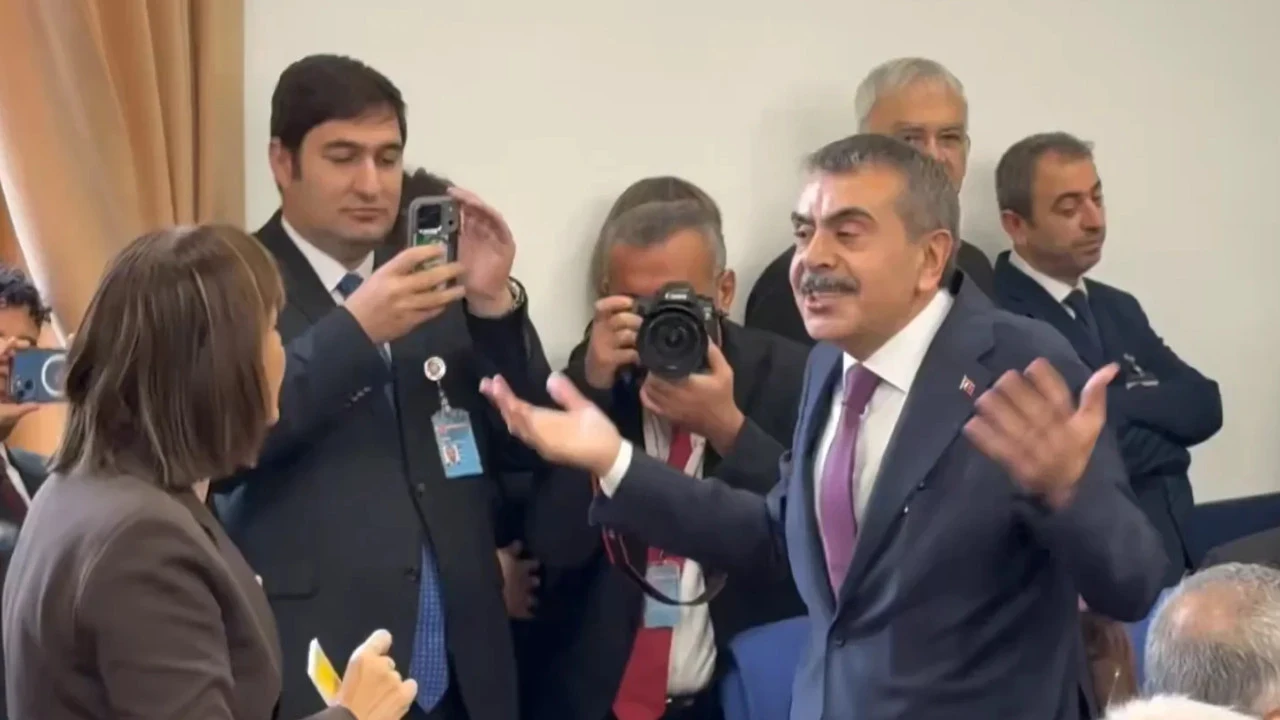
The debate intensified during a November 12 budget hearing, when opposition lawmakers challenged Education Minister Yusuf Tekin over the country’s performance in the 2025 Programme for International Student Assessment (PISA), which evaluates the knowledge and skills of 15-year-old students worldwide.
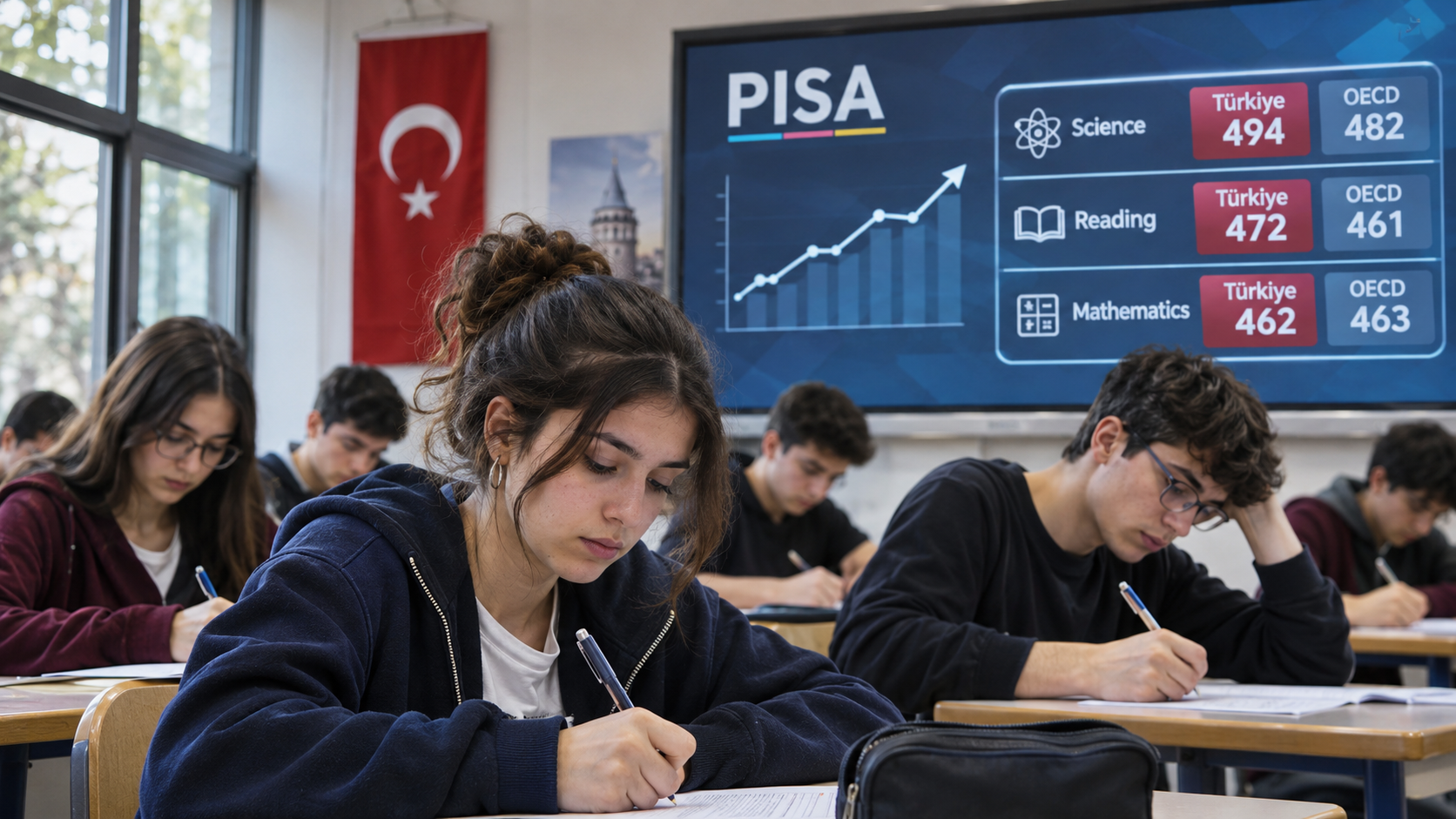
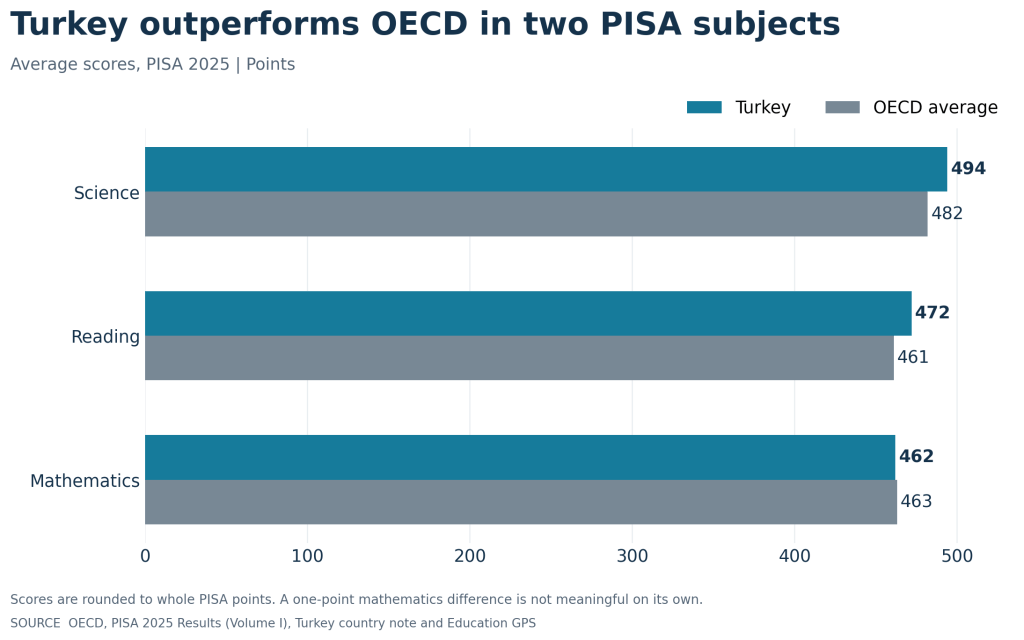
Turkey’s science score rose 18 points from 2022 to 494, exceeding the OECD average of 482. Reading increased 16 points to 472, compared with an OECD average of 461. Mathematics improved eight points to 462, broadly matching the OECD average of 463.
The results moved Turkey from 29th to 14th place among OECD members in science and from 30th to 13th in reading. Its mathematics ranking climbed from 32nd to 23rd, marking a considerable improvement over a single three-year assessment cycle.
The scale of the increase attracted attention because it ran counter to international trends. Among 37 OECD countries with comparable results from 2022 and 2025, science scores fell in 24 countries and improved in 13. Reading performance declined in 34 countries, while only three recorded increases. Mathematics scores dropped in 33 countries and rose in four.
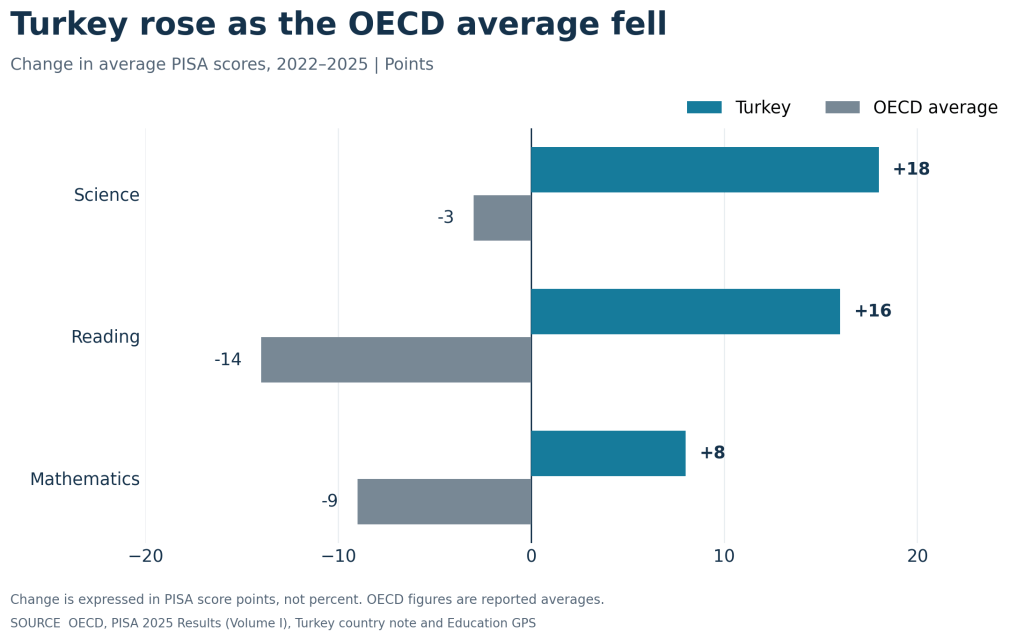
Luxembourg, the OECD’s 38th member, was excluded from the comparison because it did not participate in PISA 2022, making a direct assessment of its performance over the period impossible. Across the OECD, average scores declined by three points in science, 14 in reading and nine in mathematics between 2022 and 2025.
Turkey’s contrasting performance raised questions about whether changes in assessment methodology or factors beyond domestic education policy had contributed to the improvement.
Although rankings can improve when other countries’ scores decline, Turkey also recorded substantial gains in its own scores across all three subjects. The 18-point science increase was particularly striking against an OECD average decline of three points.
 The parliamentary scrutiny also extended to whether selected schools had received special attention before the examination. Lawmakers sought details of meetings with school administrators and activities conducted at participating institutions, including whether students had been given instruction or practice specifically intended to improve PISA results.
PISA is designed to assess students’ ability to apply knowledge in unfamiliar situations rather than their mastery of a national curriculum. Preparation directed at participating students could affect how the results are interpreted as a measure of achievement across the greater school system.
The 2025 assessment took place between April 14 and May 16, involving 7,702 students from 203 schools across 56 Turkish provinces. The computer-based examination was organized under OECD procedures with the Turkish Education Ministry responsible for domestic coordination.
Tekin denied government interference in the selection of students or their preparation. He maintained that the OECD determined the sample using information about school enrollment and regional development, including indicators supplied by the Turkish Statistical Institute (TurkStat), the country’s official statistics agency.
The distribution of students across school categories became a central part of the government’s defense. Turkey’s secondary education system includes Anatolian high schools, academically oriented institutions that generally prepare students for university, and vocational schools offering technical and occupational training.
It also includes Imam Hatip schools, state institutions that teach the national curriculum along with Islamic religious subjects. Other secondary school categories, including specialized academic institutions, account for the remainder of the student population.
According to figures presented by Tekin, Anatolian high schools enrolled approximately 46 percent of students in the relevant population, vocational schools accounted for 32 percent and Imam Hatip schools for 9.5 percent. Their shares of the PISA sample were approximately 47 percent, 30 percent and 10 percent, respectively.
The minister said the ministry received lists of participating schools to arrange technical preparations but did not have access to the names of individual students selected for testing. Meetings with principals were intended to check computer laboratories, internet connections and electricity supplies, with international assessment officials overseeing the arrangements, according to Tekin.
The OECD’s published country report states that Turkey’s assessment data met the program’s quality standards and were suitable for reporting. Its sampling framework covers students within a defined age range who have completed at least six years of formal schooling, subject to eligibility and exclusion rules applied across participating education systems.
That framework became another point of parliamentary scrutiny. The 7,702 students represented an estimated 920,900 students in Turkey’s eligible assessment population, equivalent to approximately 72 percent of the country’s total population of 15-year-olds.
The coverage figure was among the lowest in the OECD. It establishes the proportion of the age group represented by the results, although it does not identify the educational circumstances of every teenager outside that population. Turkey’s substantial distance education and alternative training systems add importance to understanding those boundaries.
Differences between schools present a further challenge to interpreting the national improvement. Turkey was among 10 education systems where differences between schools accounted for at least half the total variation in science performance, according to OECD research.
The country ranked fifth in the comparison cited during the hearing, reflecting a high proportion of overall achievement differences occurring between institutions rather than among students attending the same school.
The measure points to substantial segmentation within the education system. Schools enrolling academically stronger students can coexist with institutions serving large concentrations of weaker performers, leaving national averages unable to convey the full extent of differences in educational outcomes.
Socioeconomic disparities remain pronounced. The OECD recorded an 81-point science gap between students from the most advantaged quarter of the socioeconomic distribution and those from the least advantaged quarter. The gap between Turkey’s highest and lowest performing students also widened in mathematics and science between 2022 and 2025.
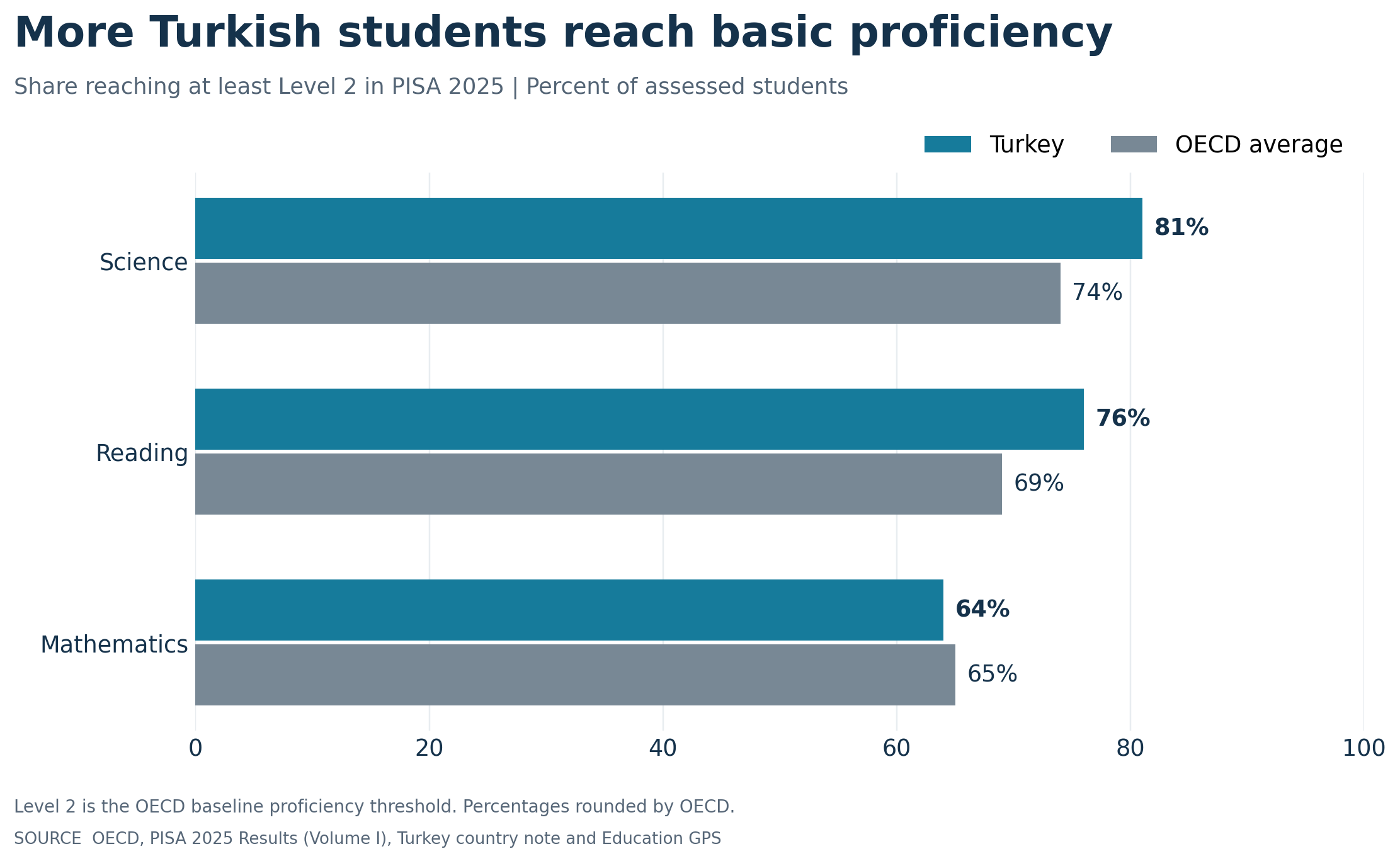
At the same time, improvement extended beyond the national mean. In science 81 percent of Turkish students reached at least the OECD’s basic proficiency threshold, compared with an international average of 74 percent. The corresponding figures were 76 percent against 69 percent in reading and 64 percent against 65 percent in mathematics.
Compared with 2015, the proportion of Turkish students performing below the minimum proficiency threshold fell by 25 percentage points in science and 16 points in both reading and mathematics. Those longer-term developments indicate that the latest gains continued an established improvement in measured achievement.
Yet the results remained uneven across skills. Only 4 percent of Turkish students reached the highest reading proficiency levels, compared with an OECD average of 6 percent. In computational problem solving, Turkey scored 473 against the OECD average of 500.
The parliamentary debate also exposed concerns about investment in early childhood education. OECD figures cited in discussions placed preschool participation among Turkish children aged 3 to 5 at approximately half of the age group. A separate OECD profile reported a participation rate of 53.7 percent for Turkey in 2023.
An OECD figure of 89 percent cited during the hearing concerns participation among 4-year-olds across member countries, a different age measure that cannot be directly compared with Turkey’s rate for children ages 3 to 5. The available figures nevertheless point to limited preschool access in Turkey.
The issue has broader implications for spending priorities. Lawmakers criticized the comparatively greater resources directed toward universities than earlier stages of education and argued that nursery and preschool provision deserve increased investment.
The criticism extended to the rapid expansion of universities after 2002. According to figures presented during the parliamentary hearing, universities established during that period, excluding institutions created by dividing existing universities, were allocated approximately 228 billion Turkish lira in the proposed 2027 budget.
The figure formed part of an argument for redirecting future education spending toward childcare and early learning rather than continuing to expand higher education capacity. The shortage of affordable childcare facilities also affects women’s employment opportunities and has become an issue in Turkey’s debate over declining birthrates.
Tekin, meanwhile, attributed the country’s stronger international performance to expanded enrollment, increased teacher recruitment, additional classrooms, free textbooks and sustained public investment. Turkey has made substantial gains since its first PISA assessment in 2003, when it scored 434 in science, 441 in reading and 423 in mathematics.