

Abdullah Bozkurt/Stockholm
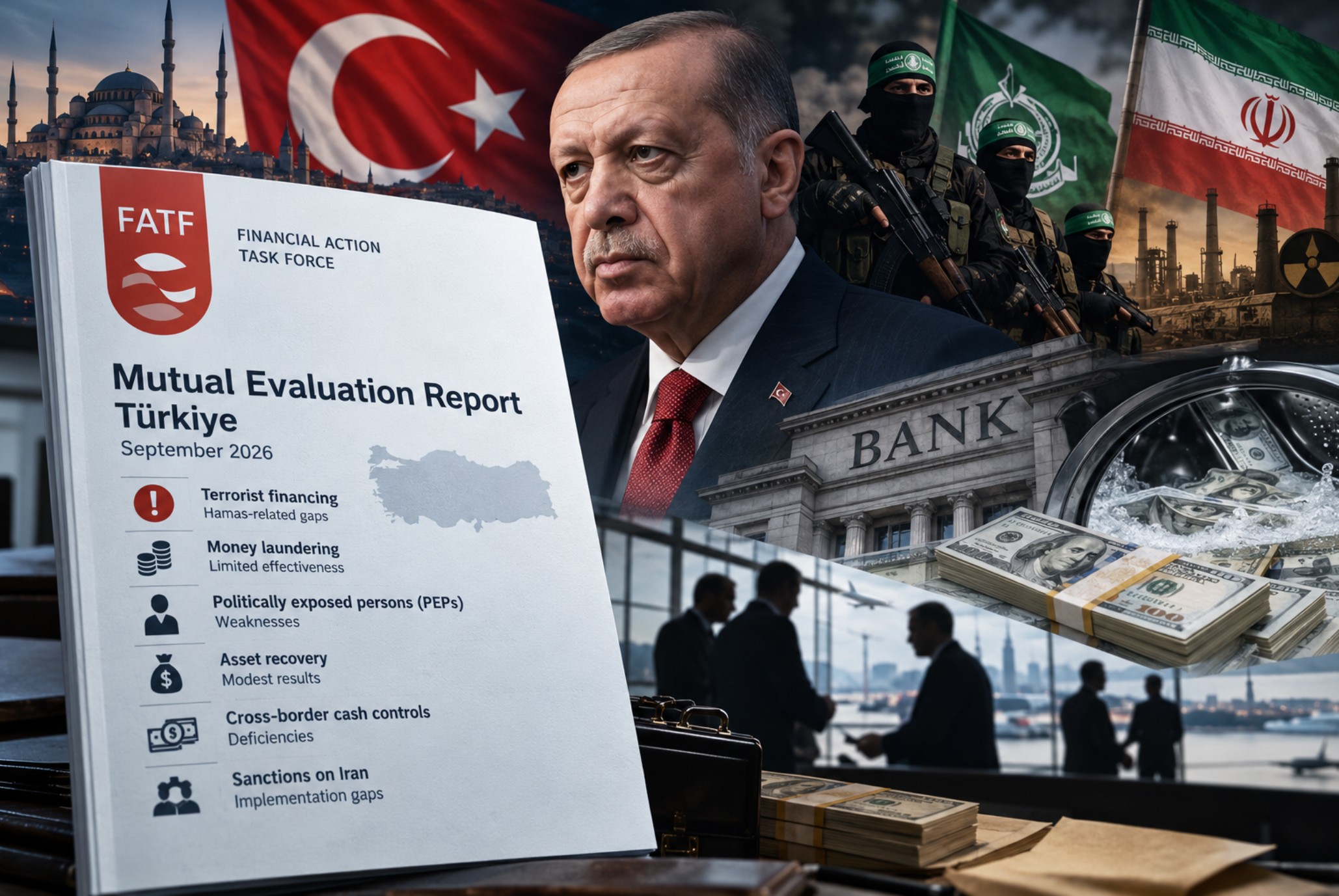
A Hamas leader’s son was given a prominent platform inside Turkey’s government-backed religious education ecosystem, a nationwide network serving some 10 million alumni and directly catering to more than 1.2 million pupils, providing fertile ground for militant jihadist messaging with the political blessing of President Recep Tayyip Erdogan.
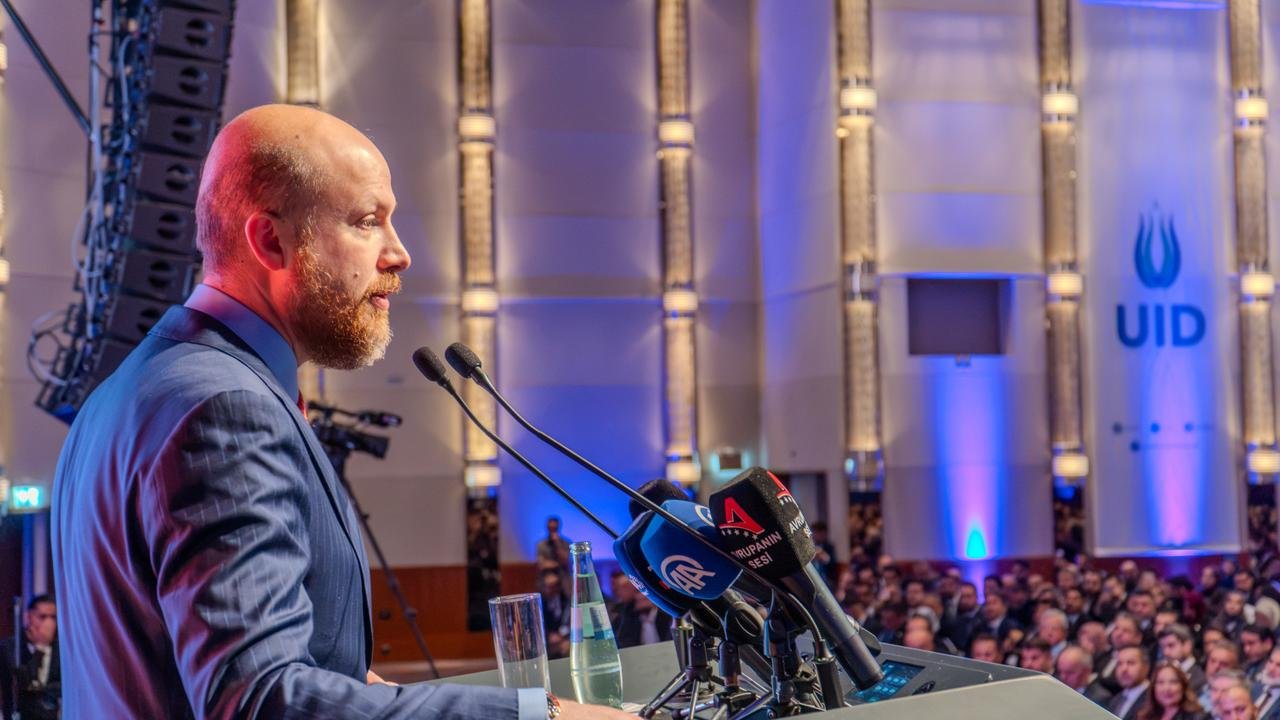
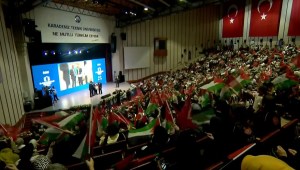
The extraordinary access afforded to Abdusselam Haniye, son of slain Hamas political bureau chief Ismail Haniye, was on display in Turkey’s northeastern province of Trabzon on September 5, when he addressed a meeting organized by the ÖNDER Association of İmam Hatip Graduates (ÖNDER İmam Hatipliler Derneği), a powerful, state-backed organization representing alumni of religious institutions known as imam hatip schools that are funded by taxpayers’ money.
The organization behind the event is far from a marginal religious group. ÖNDER says the imam-hatip alumni community encompasses nearly 10 million graduates and operates through roughly 600 affiliated associations across all 81 provinces of Turkey, giving it an extensive nationwide network linking students, alumni, educators, religious institutions and civil society organizations.
Its immediate reach into Turkey’s school-age population is also substantial. Official Education Ministry figures show that imam-hatip middle and high schools collectively educate more than 1.2 million students.
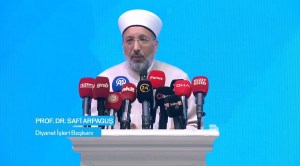
At the same congress, senior religious officials openly stated that their mission should not be confined to pupils enrolled at imam-hatip schools but should encompass Turkey’s entire younger generation. Speaking at the gathering, Safi Arpaguş, the president of the Diyanet, the government’s religious arm, said the imam-hatip community should design its projects, activities and services to encompass “all our youth.”
“Our target audience cannot be limited only to imam-hatip schools,” Arpaguş said, adding that the movement was obliged to introduce “our faith, culture, values and history” to all the children of this country and guide them accordingly.
He said the Diyanet itself plans youth activities to reach young people through mosques and youth centers across the country. Funded by billions of Turkish lira from taxpayers, the Diyanet controls some 90,000 mosques across Turkey and abroad and employs nearly 150,000 staff.
Against that backdrop Haniye’s appearance takes on broader significance. He was not simply addressing a closed meeting of Hamas sympathizers. He was speaking from the stage of an education-centered movement embedded in state institutions, linked to millions of alumni and openly aspiring to influence children far beyond the imam-hatip school system.
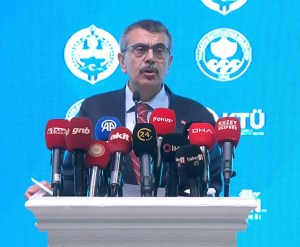
Education Minister Yusuf Tekin, Diyanet chief Arpaguş, university rectors, senior bureaucrats, lawmakers and local government officials participated in the congress. President Erdogan sent a special video message praising ÖNDER and the imam-hatip movement.
The gathering was held at Karadeniz Technical University, a public university, while government officials repeatedly praised the imam-hatip network as a strategic vehicle for shaping future generations.

Education Minister Tekin credited Erdogan during the congress with reviving the imam-hatip system after restrictions imposed in the late 1990s and effectively portrayed him as the schools’ “second founder.”
ÖNDER chairman Abdullah Ceylan likewise credited Erdogan with removing barriers facing imam-hatip schools and depicted his presidency as the culmination of a decades-long Islamist struggle over education.
The institutional environment therefore provided Haniye with something Hamas figures would find difficult to obtain in many Western countries: a high-profile stage situated inside an education network closely intertwined with the state and backed by Turkey’s most powerful political and religious officials.
The organizers made no effort to conceal their sympathy for Hamas, with Haniye’s appearance marked by overt expressions of sympathy for the group. Immediately before inviting him to the stage, the master of ceremonies praised his father and other Hamas figures and urged the crowd to raise their flags.
“Hamas’a selam, direnişe devam” (Salute Hamas, continue the resistance), the presenter called out as Haniye was brought onstage.
Earlier, the organizers had paid tribute to Hamas founder Sheikh Ahmed Yassin, the group’s late Gaza leader Yahya Sinwar and former political bureau chief Ismail Haniye, before leading the audience in the same pro-Hamas chant.
The militant character of the presentation was reinforced immediately before Haniye began speaking when organizers played video footage of Abu Obeida (Ebu Ubeyde), the masked spokesman for Hamas’s armed wing, the Izz ad-Din al-Qassam Brigades, for the audience.
In the Turkish-subtitled footage Abu Obeida issued an explicit threat to Israel:
“Come with as big a crowd as you want! With your vehicles or on foot, it makes no difference. By land, sea, or air, it makes no difference. We will make you choose from among the worst of deaths, and you will curse yourselves in regret.”
The sequence is significant. The audience at an event centered on religious education and the formation of future generations was shown a threatening propaganda message from the spokesman of Hamas’s military wing immediately before the son of the organization’s former political leader took the stage. The recording captures the Arabic-language footage just before Haniye begins his address.
Rather than separating support for Palestinian civilians from Hamas’s armed struggle, the program blended religious education, political solidarity with Hamas and the rhetoric of its military wing into the same event.
Haniye began by conveying greetings to Turkey’s political leadership and singled out Erdogan for praise, offering what the Turkish interpreter rendered as his heartfelt greetings to the president. He then moved directly into an ideological discussion of education, youth and the cultivation of future generations.
Haniye described Turkey’s imam-hatip system as an institution that produces generations capable of raising still more generations, saying the schools had produced politicians, Islamic scholars, intellectuals and other influential figures. He then drew an explicit comparison between Turkey’s imam-hatip schools and the religious and educational infrastructure of Gaza.
What imam-hatip schools represent in Turkey, he said, mosques and religious institutions in Gaza and Palestine actually perform there, producing faithful generations with defined goals and projects. He cited Hamas founder Ahmed Yassin and his father, Ismail Haniye, as products of that environment.
The comparison was particularly significant because Haniye did not limit his discussion to religious devotion or academic achievement. He portrayed education as a mechanism for producing militant generations.
According to the Turkish interpretation, Haniye accused the West of working “day and night” to undermine the youth of the Muslim world. He said the imam-hatip generation was cultivating a new group of people for politics, defense and other strategic sectors. He then explicitly tied those goals to Erdogan.
“Especially under the leadership of our President Recep Tayyip Erdogan, it is realizing these great goals,” he noted. The most revealing section of the speech came when Haniye described what he considered the successful results of Gaza’s own educational system.
Mosques, kindergartens and schools in Gaza, he said, had raised “faithful youth, mujahid youth [and] scholarly youth” as well as young people who became leaders in politics, economics, science and technology. He argued that Israel had been unable to eliminate the Palestinian cause for decades because generations raised by these institutions continued to resist it.
“The greatest obstacle” facing Israel, according to the Turkish interpretation of his remarks, was precisely the faithful generation raised by Gaza’s mosques and schools. The language amounted to an endorsement of an educational model in which religious instruction, political mobilization and militant struggle were treated as complementary elements in shaping young people.
He said imam-hatip graduates in Turkey had once been stereotyped as people concerned mainly with reading the Quran, praying and studying the hadith. Instead, he said, the imam-hatip system had produced groups who “raised the state.” The same pattern existed in Gaza, according to Haniye.
Mosques there, he said, had produced ministers, defense officials and commanders as well as people who subsequently became “martyrs” and “great heroes” in the Palestinian cause. Military commanders, militants and “martyrs” were presented not as unrelated products of wartime circumstances but as successful outcomes of the same religious education model Haniye was praising before his Turkish audience.
Haniye also directly called on his Turkish listeners to remain mobilized on behalf of Gaza. He encouraged young people to provide financial assistance, supplies and social media support to Palestinians.
The significance of the speech lies not merely in who delivered it but in the infrastructure through which the message was amplified. With nearly 10 million imam-hatip alumni, roughly 600 affiliated associations in all 81 provinces and formal links with Turkey’s education establishment, ÖNDER constitutes one of the country’s most extensive Islamist networks.
Its reach links current pupils to graduates, teachers, school administrators, parents, religious officials, politicians and local organizations. That structure dramatically expands the potential audience for ideas circulated at gatherings such as the Trabzon congress.
The network is also institutionally connected to the Education Ministry. The result is an ecosystem in which political and religious activism is not confined to isolated Islamist groups but operates through organizations with institutional access to schools and government agencies.
Arpaguş made that broader ambition explicit when he told the congress that the imam-hatip community could not limit its target audience to imam-hatip students and was obliged to reach “all the children of this country.”
Perhaps the most revealing indication of how Haniye’s speech was understood by the organizers came after he left the stage. ÖNDER chairman Ceylan later returned to Haniye’s remarks and told the congress that the Hamas leader’s son had put the legacy of Gaza’s young fighters on the shoulders of the imam-hatip movement.
Ceylan referred to young Palestinians who, he said, confronted Israeli tanks with their bare hands and feet and emphasized that they were the same age as students sitting in imam-hatip classrooms in Turkey. He then drew the connection to Turkey’s own youth.
“God willing, from this society, from these lands and from this geography, the conquerors of Gaza will also be raised,” Ceylan said.
The rhetoric underscored how comfortably Haniye’s militant concept of religious education fit with the ideological vocabulary employed by his Turkish hosts.
That environment has developed under Erdogan’s rule. The Turkish president, himself an imam-hatip graduate, has spent years expanding the political and institutional influence of religious schools while cultivating close relations with Hamas figures.
At the Trabzon congress the imam-hatip leadership repeatedly portrayed Erdogan as the movement’s political champion. Ceylan credited him with removing barriers facing religious schools and even predicted that Erdogan would ultimately become the “conqueror of Jerusalem.”
Education Minister Tekin similarly credited Erdogan with reviving the imam-hatip system, telling participants that schools that had effectively been shuttered or marginalized in the late 1990s had been rebuilt under Erdogan’s leadership.
The congress offered yet another revealing picture of the environment Erdogan’s government has created: a Hamas-friendly political narrative circulating through an education and civil society network that directly teaches more than 1.2 million pupils, maintains connections with nearly 10 million graduates and operates through hundreds of organizations across every province of Turkey.
In Erdogan’s Turkey, Hamas does not need to operate clandestinely to transmit its worldview to younger audiences. The son of one of its most prominent leaders was given a prestigious platform inside a movement serving millions of students and graduates, praised Erdogan from the stage, presented Gaza’s production of “mujahid youth” and commanders as an educational success story and left to applause from organizers who subsequently expressed hope that similar “conquerors of Gaza” would emerge from Turkey’s own classrooms.