
Abdullah Bozkurt/Stockholm
A Turkish national who was expelled from the Netherlands after being convicted of preparing a terrorist attack was able to reconnect with the jihadist ecosystem after settling in Turkey and ultimately make his way to Somalia, where he joined the local branch of the Islamic State in Iraq and Syria (ISIS) and was captured carrying an assault rifle.
The case of Hasan Rafet Atar, a Dutch-born man of Turkish origin, offers a striking example of how militants with well-documented extremist histories have been able to re-enter transnational jihadist networks from Turkish territory despite Ankara’s stated commitment to crack down on ISIS and repeated public claims that it has dismantled ISIS recruitment, financing and logistical structures.
The documentary record shows that Atar was well known by Turkish authorities when the Netherlands deported him to Turkey on May 3, 2022. Dutch authorities had stripped him of his citizenship after he was convicted of preparing a terrorist attack, gathering information on potential targets and studying firearms and knife attacks while immersed in ISIS propaganda. The Netherlands considered him a serious threat to public order and national security and imposed a 20-year entry ban.
Yet within roughly two-and-a-half years of his arrival in Turkey, Atar was again inside the ISIS network, this time thousands of kilometers away in Somalia’s Puntland region.
His trajectory is especially troubling because later Dutch court records indicate that when he arrived in Turkey, Turkish authorities questioned him but did not take any action and failed to monitor him. In litigation challenging his deportation, Atar submitted a statement claiming Turkish officials who questioned him upon arrival were unaware that he had been removed after a terrorism conviction.
Yet a Turkish police counterterrorism report, covered partially in the local media in Turkey, put him on a list of names associated with ISIS and even recorded his alleged travel to Syria.
According to Atar’s subsequent account from prison in Puntland, revealed in an interview he gave to The Times British daily, after settling in Turkey he worked at a textile factory but gradually returned to consuming ISIS propaganda. He said he found an email address in an ISIS video and began corresponding with a recruiter he knew as Abu Khalid.
The recruiter told him that ISIS was rebuilding in Puntland and urged him to travel to Somalia, promising money, accommodation, marriage, medical care, friends and a new family. Atar said he was depressed and angry while living in Turkey and accepted the offer because he believed the organization would take care of him.
In other words, by his own account, a convicted jihadist who had been expelled from Europe to Turkey was able to establish direct contact with an ISIS recruiter while living on Turkish soil and arrange his entry into another of the terrorist organization’s overseas branches.
The April 2018 Hague Court of Appeals ruling convicted Hasan Rafet Atar of preparing a terrorist attack inspired by ISIS, sentencing him to 30 months in prison and compulsory psychiatric treatment after finding that he had researched potential targets, weapons and jihadist travel to Syria:
Atar reached Somalia in the autumn of 2024, according to his account. Once there, ISIS members confiscated his telephone, watch, passport and approximately $800. Instead of receiving the comfortable home he claimed had been promised, he found himself living with a large number of militants in caves in the Cal Miskaad mountains of Puntland.
He later claimed that he asked to leave the organization and return to Turkey but was refused.
His military training was interrupted in December 2024 when Puntland forces launched a major offensive against ISIS positions. Because he lacked sufficient battlefield experience, he was assigned to a roughly 10-man logistics unit tasked with supplying militants fighting on the front. Puntland intelligence subsequently confirmed his logistics role.
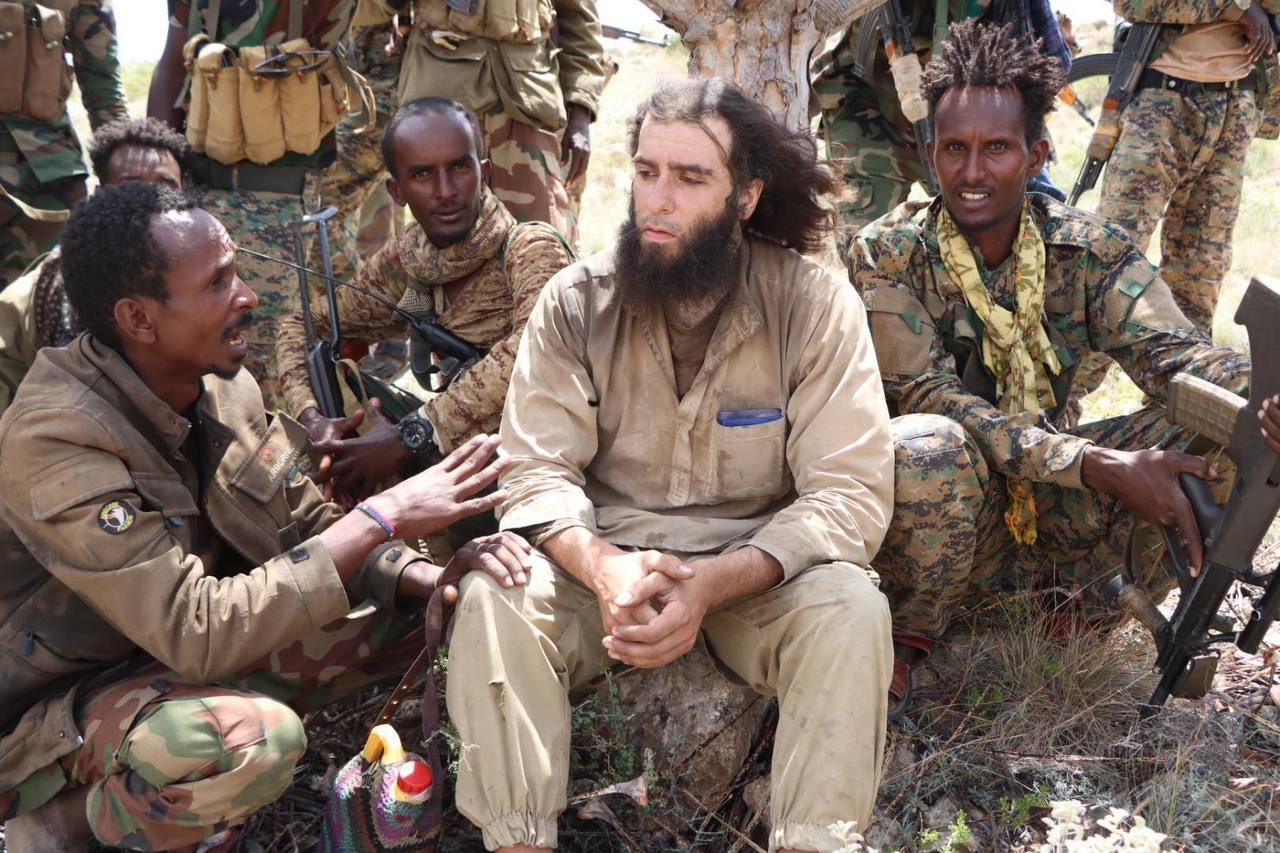
Puntland forces captured Atar in the mountainous Bari region while he was alone collecting water from a well. Brig. Gen. Ahmed Abdullahi Sheikh, one of the senior commanders overseeing the counterterrorism campaign, said Atar was carrying an AK-47 when soldiers from the Puntland Defense Forces’ 3rd Battalion took him into custody.
By December 2025 Atar was still imprisoned in Puntland awaiting trial and could face the death penalty if convicted.
Atar’s later portrayal of himself as a vulnerable man manipulated by extremists after being sent to prison is difficult to reconcile with the official Dutch record.
The Hague Court of Appeals established that his terrorist activity took place between October 1, 2014, and August 19, 2016, before the imprisonment during which he later claimed other inmates radicalized him.
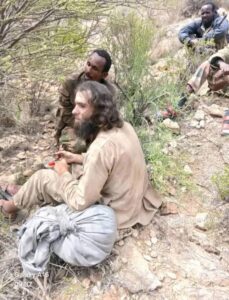
The appeals court found that Atar had immersed himself in radical jihadist ideology, particularly that of ISIS, and had contemplated carrying out a terrorist attack inside the Netherlands. Investigators found evidence that he had moved beyond merely consuming extremist propaganda and had begun selecting possible targets.
Among material discovered on an external hard drive were maps of the Leeuwarden and Volkel military air bases and information concerning several prominent Dutch figures, including the prime minister, a politician, a comedian and a lieutenant general in the Royal Netherlands Air Force.
Files concerning the military officer included a notation accusing him of committing war crimes against Muslims worldwide, while material concerning the prime minister accused him of war crimes against Muslims in Mali, Syria, Iraq and Afghanistan. Information on another politician accused him of insulting the Prophet Muhammad and inciting hatred.
Atar admitted during the appeals hearing that he was particularly focused on the lieutenant general because the officer had issued orders for Dutch air support and bombing operations in Syria in which women and children had died. Atar said he therefore regarded the officer as a war criminal.
Investigators also found folders carrying such names as “plan 1” and “plan 2.”
His research extended to automatic weapons, knives and methods of violence. The evidence described by the court included searches concerning AK-47 and Glock firearms, weapons dealers, combat knives, knife attacks, strangulation and disarmament techniques, defending oneself against police and even methods for dealing with a police dog.
The April 2025 Dutch Council of State ruling upheld the revocation of Hasan Rafet Atar’s Dutch citizenship over his final terrorism conviction, noting that the Turkish-Dutch dual national had been convicted of preparing a terrorist attack in the Netherlands and was deported to Turkey in May 2022:
He had also researched travel to Syria and how to join Jabhat al-Nusra and ISIS and possessed ISIS flags and material concerning participation in jihadist warfare and preparations for traveling to Syria or Iraq.
The court concluded that Atar had acquired knowledge and skills for carrying out a terrorist crime through self-study and had sympathized with ISIS while considering an attack in the Netherlands. He was also convicted of possessing an electroshock weapon.
On April 18, 2018, the Hague Court of Appeals sentenced him to 30 months in prison and imposed a TBS forensic hospital order, a Dutch court measure requiring a dangerous offender with a psychiatric disorder to undergo treatment, often in a secure forensic hospital, with compulsory treatment. The court considered the risk of violent recidivism high and concluded that without stringent supervision he would pose a serious danger to society.
The ruling formally convicted him of intentionally obtaining information and acquiring knowledge for a terrorist offense and preparing terrorist crimes involving possible arson, explosions, murder or manslaughter committed with a terrorist objective.
The 2021 Supreme Court proceedings connected to the case concerned the legal question of the maximum duration of his TBS measure. Experts from the Netherlands Institute for Forensic Psychiatry and Psychology observed him at the Pieter Baan Centre and diagnosed longstanding intellectual limitations and an autism-spectrum disorder. His mental health difficulties had been recognized since childhood.
The experts described him as naïve, gullible and susceptible to influence, particularly when trying to understand complex social situations. But they also found another characteristic that would prove significant: Once Atar chose a path, he could become extremely rigid and persistent.
His fixation on religion, they concluded, gave structure to a world he otherwise found difficult to understand. The combination of his disabilities, interest in violence and Salafist ideology contributed to his belief that he needed to do something.
The experts recommended intensive supervision, deradicalization assistance, suitable employment and eventual placement in a protected residential environment.
Yet the appeals court concluded that the arrangements proposed outside detention were inadequate. Given his radicalization, his fascination with aggression and violence and the high risk of recidivism, the judges determined that compulsory state treatment was necessary to protect society.
Atar was born in the Netherlands in 1993 to Turkish parents. He acquired Turkish nationality through his parents at birth and became a Dutch citizen together with his father on January 17, 1995, retaining his Turkish citizenship.
Because he possessed another nationality, Dutch authorities could remove his Dutch citizenship without rendering him stateless.

On August 24, 2020, the Dutch government revoked his nationality because of his terrorism conviction. The government simultaneously ordered him to leave the European Union and imposed a 20-year entry ban, saying he constituted a danger to public order and national security.
Atar fought the decision for years. He argued that he had effectively spent his entire life in the Netherlands and had very limited ties to Turkey. He said he barely knew his Turkish relatives, was familiar with Turkey mainly from childhood holidays and had last visited the country while attending secondary school.
The Dutch authorities acknowledged that he did not have close ties to Turkey but concluded that, as an adult Turkish citizen, he could establish himself there with assistance from relatives if necessary. Atar was deported to Turkey on May 3, 2022.
His legal challenges continued even after his removal. On April 16, 2025, the Dutch Council of State upheld the revocation of his citizenship, concluding that his terrorist conviction justified severing his legal bond with the Netherlands.
A July 24, 2026, article by the small Kısa Dalga news outlet in Turkey cited a Turkish police counterterrorism report identifying Atar as ISIS militant who had previously been in the ranks of ISIS in Syria before later moving to Somalia. The police report described a Turkish national named Sinan Doğanalp, a wanted ISIS suspect, as operating within ISIS-Somalia and communicating with members of the organization in Turkey.
According to the report, Doğanalp instructed ISIS members inside Turkey to leave the country and travel to Somalia to join the organization. The same report identified another Turkish national, Feyzul Haşim Süleyman, as having moved from the ISIS structure in Syria to ISIS-Somalia before his capture in Puntland in October 2025.
ISIS has apparently used humanitarian assistance and charity work as cover to move fighters, funding and logistical support to Somalia, with Turkish territory serving as a springboard for these operations. Despite indications that Turkish authorities were aware of the actors involved and the methods ISIS was using to advance its activities, there has been no sustained crackdown on the broader network.
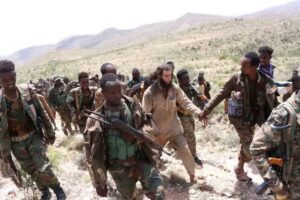
Apart from periodic roundups and highly publicized detentions of ISIS suspects — many of whom were subsequently released — Turkey has not demonstrated a consistent record of dismantling jihadist networks at their roots. Critics of President Recep Tayyip Erdoğan’s Islamist government argue that this reflects a broader reluctance to confront jihadist structures forcefully, pointing to what they describe as the government’s longstanding ideological sympathy toward certain Islamist and jihadist groups.
ISIS-Somalia has become an important node in the organization’s global structure, drawing foreign fighters into the mountainous Puntland region and providing logistical and operational support extending beyond Somalia. The US State Department’s 2024 terrorism report said ISIS-Somalia’s foreign terrorist fighters were facilitating terrorist activity outside the region.
Atar’s experience raises new questions as to the Erdogan government’s stated commitment to battle ISIS. He did not arrive in Turkey as an unidentified young radical looking for his first jihadist contact. He arrived as a convicted terrorist whose Dutch nationality had been revoked because authorities considered him a threat to national security.
The Dutch judiciary had already documented his Islamic State sympathies, his selection of possible targets, his research into weapons and attacks, his interest in traveling to Syria and his high risk of violent recidivism. All this must have been reported back to Turkey by the Turkish Embassy.
Yet after his deportation he was apparently able to live in Turkey, consume ISIS propaganda, establish direct contact with a recruiter and arrange travel to one of the terrorist organization’s most important emerging overseas branches. That raises serious questions about the response of Turkish authorities.
Either he was not adequately monitored despite the obvious security concerns surrounding his record, or, if he was under some form of surveillance as would ordinarily be expected in a counterterrorism case of this kind, authorities failed to intervene as he re-established ties with ISIS and prepared to leave the country. The available evidence does not establish that Turkish officials facilitated his journey, but the sequence of events leaves open the question of whether warning signs were ignored or if enforcement was deliberately lax.