
Levent Kenez/Stockholm
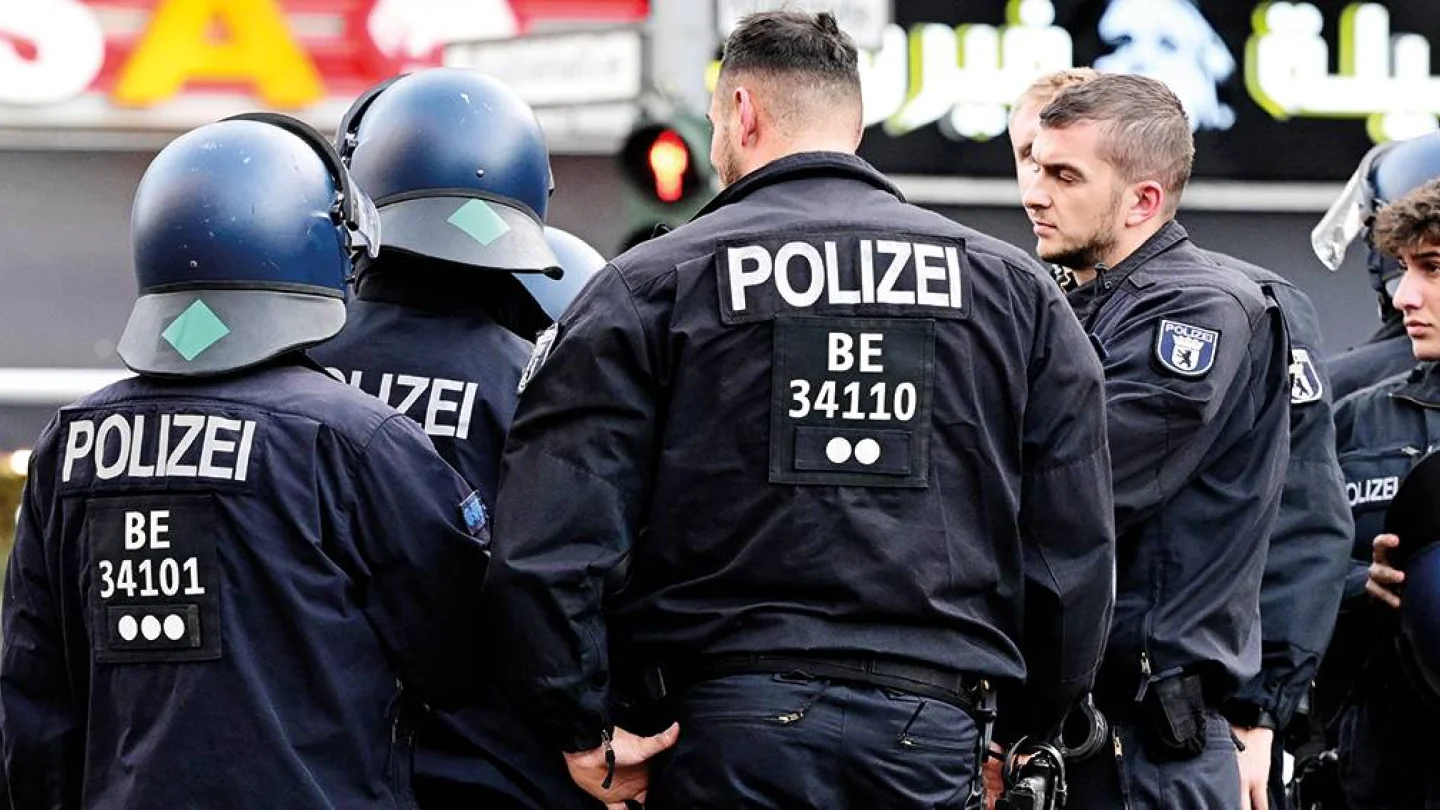
Germany’s Federal Criminal Police Office (BKA) singled out Turkish organized crime networks for the first time in its annual national crime report, describing a fast growing and increasingly violent criminal landscape tied to Turkey that officials say now includes a so called “Gen-Z Mafia” operating openly on social media.
The BKA’s 2025 National Situation Report on Organized Crime released this week in Wiesbaden, documented 683 organized crime investigations nationwide, up 5.6 percent from 647 the previous year and the highest total in five years. Nearly 8,000 suspects were registered, also a five year high, and 69 percent of the cases involved a cross border element.
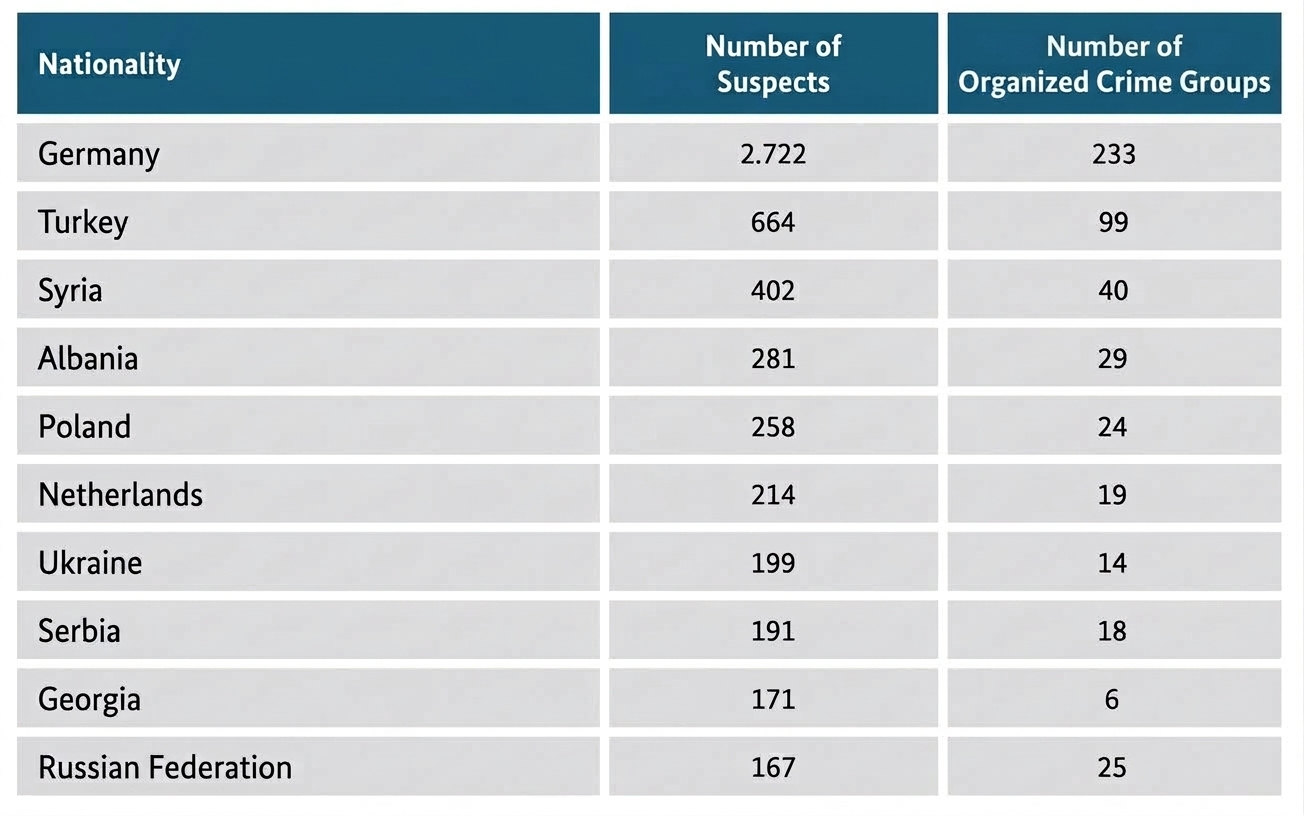
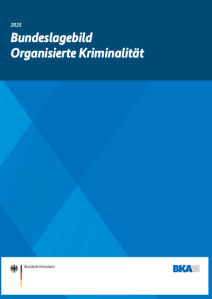 Within that broader surge, Turkish nationals emerged as the second largest suspect group after Germans. Investigators counted 664 Turkish suspects in 2025, up from 611 a year earlier, and identified 99 organized crime groups dominated by Turkish citizens, compared with 89 in 2024. Only German suspects, at 2,722, outnumbered them.
For the first time, the report broke out a distinct category called “Türkeistämmige Organisierte Kriminalität” (Organized Crime of Turkish Origin) along with two other newly defined categories, organized crime groups of Albanian origin and Western Balkan organized crime. Investigators tied 139 suspects across 18 groups to this new Turkish-origin category. Those groups were most active in money laundering and violent crime with five investigations each.
The BKA defined organized crime of Turkish origin as networks that are often active across multiple types of offenses, internationally connected and financially strong, led by individuals who have Turkish citizenship and who operate from Turkey or remain rooted and networked there. The agency described two distinct groups within this category. The first consists of what it called classic groups of Turkish origin, which it said are frequently intertwined with political officeholders as part of what is described in the report as Turkey’s “deep state” and which largely operate in secret to advance their goals.
The second group is the Gen-Z Mafia, younger groups that the BKA said stage power, status and violence increasingly on social media, becoming known for public and often violent disputes, extortion and assassination attempts that risk harming bystanders. These groups also market their criminal services to other networks for payment, a practice the report calls “crime as a service.”
The report also flagged a broader phenomenon of younger criminal actors staging displays of power and violence online as a defining shift in how organized crime presents itself in Germany, moving away from the secrecy that long characterized such groups.
Weapons trafficking tied to Turkey also featured prominently. The BKA said it has observed a growing presence in Germany of what it called fully counterfeit firearms, weapons manufactured outside legal production facilities that are made to closely resemble original models. According to the report these weapons are smuggled overland from Turkey into Europe and then distributed within Germany by criminal groups, contributing to what investigators described as a growing danger from gun violence in public spaces.
Turkey also appeared as a country of origin in migrant smuggling cases. The report recorded 19 cases in which Turkey was the primary country of origin for smuggled migrants in 2025, down from 22 the year before, putting it second behind Syria, which accounted for 26 cases. The number of Turkish suspects in smuggling cases fell to 47 from 56, and the number of smuggling groups dominated by Turkish nationals dropped to seven from eight.
Turkey also surfaced in the report’s account of an international crackdown on contract violence. The BKA said an Operational Task Force (GRIMM) established at Europol in April 2025 with participation from 11 European countries arrested more than 280 people within its first year in connection with the phenomenon of crime as a service, in which gang-related attacks are carried out by hired perpetrators or recruited minors. Among those arrested were eight so-called high value targets, including individuals detained in Iraq and in Turkey.

The Turkish-related findings appeared in the BKA’s broader 2025 organized crime report, which also documented the highest financial damage from organized crime in five years. The agency recorded 2.78 billion euros in damages and 2.16 billion euros in criminal proceeds for 2025, along with 106.1 million euros in provisional asset seizures and a money laundering volume of 1.39 billion euros. Drug trafficking remained the dominant field of organized crime overall, accounting for about 37 percent of all investigations.
German Interior Minister Alexander Dobrindt said organized crime represents a growing danger to domestic security as criminal gangs become more professional, brutal and ruthless. BKA President Holger Münch said organized crime is changing shape, with criminal networks operating in a far more digitally connected, international and specialized manner and noted that geopolitical conflicts can also be exploited by such groups. He said law enforcement must not only pursue individual offenders but also work through national and international cooperation to expose the structures behind them, cut off their financial resources and limit their room to operate.

Germany’s federal drug commissioner, Henrik Streek, addressed the human toll of drug trafficking tied to organized crime, saying the 2,150 people who died from drugs in the country last year are also victims of organized crime, since narcotics are its most important business in Germany.
The BKA’s findings point to a greater European law enforcement concern over criminal networks of Turkish origin. Recent police operations in France provide another example of authorities targeting groups linked to Turkish organized crime.
On September 14, 2026, French law enforcement authorities carried out an operation targeting the criminal network known as the “Daltonlar.” Specialized tactical units conducted simultaneous dawn raids across multiple French departments, arresting several suspects, including two high-ranking figures suspected of directing the group’s local extortion and trafficking operations.
Searches in the operation uncovered 150 handguns, including Glock-type pistols that investigators said had been brought from Germany into France and sold for between 1,300 and 2,800 euros each. Agence France-Presse reported that at least eight Turkish nationals were arrested in the investigation. Investigators said the group was involved in arms trafficking, violent racketeering, narcotics distribution, money laundering and targeted acts of intimidation.
French police said the operation was aimed at disrupting a transnational criminal network with links between Turkey and Western European hubs.