
Levent Kenez/Stockholm
Turkey’s expanding crackdown on LGBTQ+ organizations has moved beyond arrests, raids and online restrictions to scrutiny of millions of dollars in foreign funding, with government-aligned media and officials portraying grants from foreign governments, diplomatic missions and international organizations as a potential national security threat.
The operation, known as “My Family Is Safe,” has targeted LGBTQ+ rights groups, activists, businesses and venues across the country. Justice Minister Akın Gürlek said on September 13 that prosecutors in five cities were coordinating investigations covering 15 provinces, 162 suspects, nine associations and 13 businesses. The allegations include obscenity, facilitating prostitution, drug offenses and exposing children to obscene content.
The operation has been linked by the government to President Recep Tayyip Erdogan’s “Decade of Family and Population,” formally established in May 2026 to address Turkey’s declining birth rate and promote what the government describes as the protection of the family.
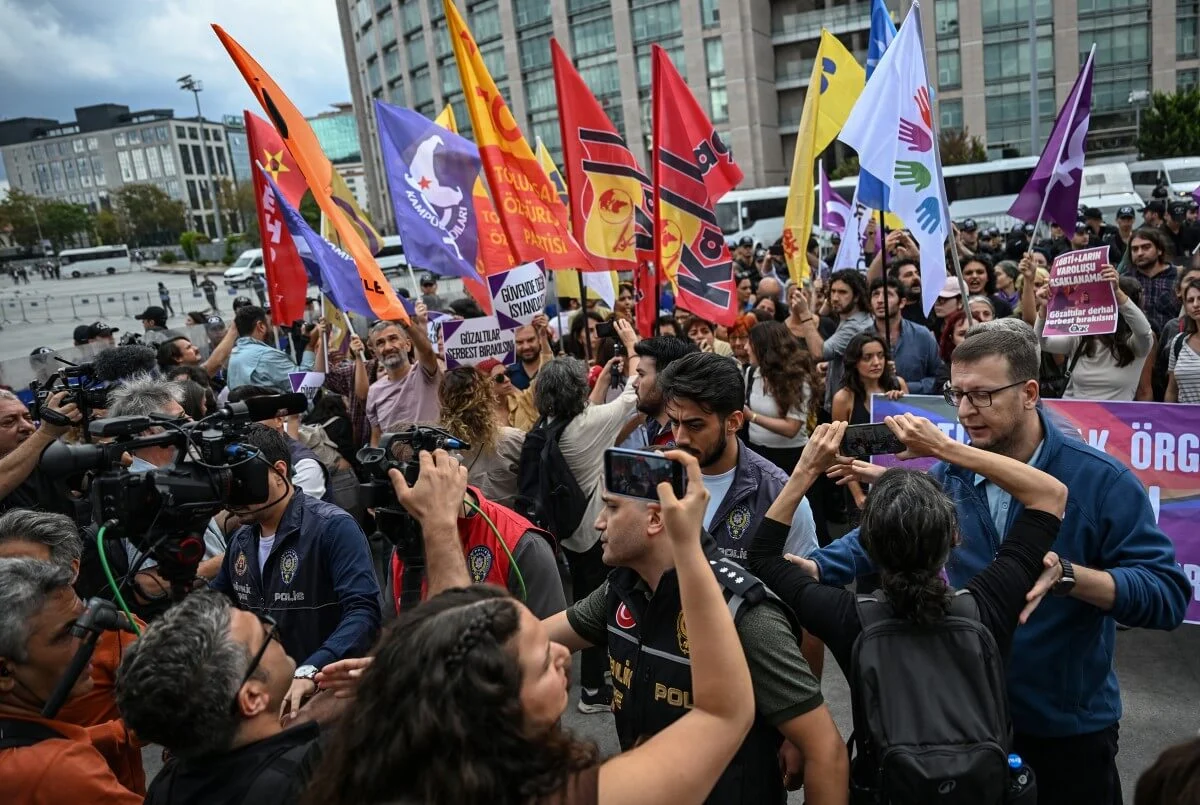
Police raided LGBTQ+ organizations, homes and venues in Istanbul, Ankara, İzmir, Aydın and Mersin from September 12 to 14. At least 112 people were arrested including activists, executives and journalist Tuğba Tekerek.
The crackdown also led to court orders restricting websites and social media accounts. More than 180 accounts belonging to organizations, activists, journalists and media outlets were blocked or restricted. Human Rights Watch said courts issued orders between September 12 and 16 blocking dozens of websites and social media accounts belonging to LGBTQ+ and other rights groups, activists and individuals.
Foreign funding quickly became a central part of the investigation. The Financial Crimes Investigation Board (MASAK) examined financial records of LGBTQ+ organizations and identified transfers from foreign governments, diplomatic missions and international organizations. Investigators are examining the sources of the money and whether any transfers were connected to activities under investigation.
Government-aligned newspapers subsequently published financial figures they said were contained in a MASAK report in the Istanbul prosecutor’s case file. According to those reports, 209 funds transfers from 37 foreign or international sources were made to LGBTQ+ associations between 2021 and 2026, totaling about 67.4 million lira. A Haber reported that bank and SWIFT records showed more than $3.36 million had been sent to six associations, including SPoD, HEVİ and Pozitif Yaşam.
The reported sources of funding included the US State Department, the Dutch Foreign Ministry, the French Embassy and the German Consulate General as well as international and nongovernmental organizations including the European Endowment for Democracy, the German Marshall Fund, Civil Rights Defenders, RFSL, Rainbow Railroad, ILGA Europe, Transgender Europe, OutRight Action International, New Venture Fund, Women Win, Regnbågsfonden, the King Baudouin Foundation, the UK Online Giving Foundation, the International AIDS Society and the Council of Europe. Some of the organizations listed as funding sources also receive public funding from governments or the European Union.
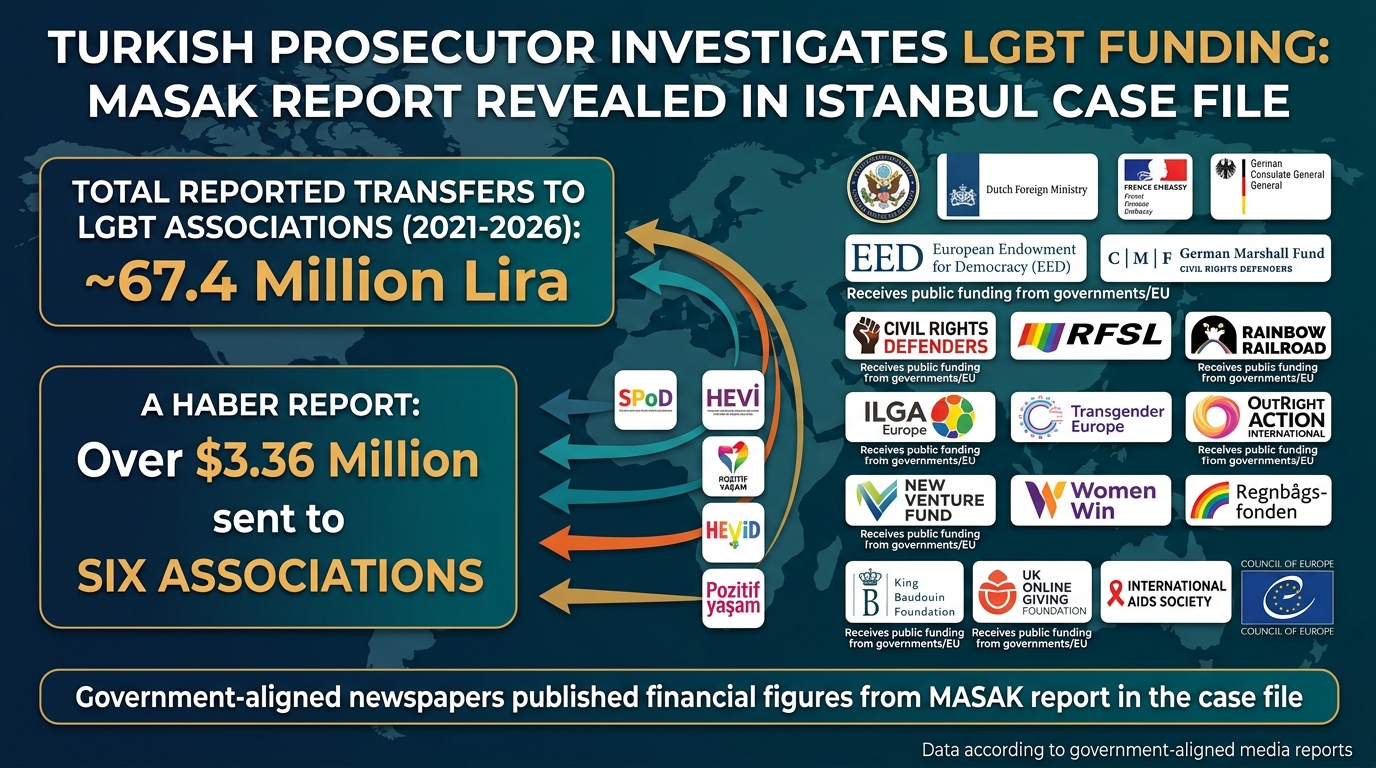
The European Endowment for Democracy, for example, is funded by European governments and the European Commission, while the German Marshall Fund receives public funding from the US and European governments. Civil Rights Defenders and RFSL receive public funding from Sweden, Rainbow Railroad from the Canadian government and ILGA Europe and Transgender Europe receive European Union funding. Takvim reported that SPoD received about $1.57 million between 2012 and 2026.
Government-aligned media have used the figures to portray foreign funding as evidence of an extensive international network rather than grants to individual civil society organizations. Sabah reported, citing audit records attributed to the Istanbul Governor’s Office, that SPoD received more than 11.1 million lira of its 12.7 million lira income from abroad in 2025, while HEVİ received 7.4 million lira of its 10.9 million lira income from foreign sources.
Foreign funding itself is not illegal under Turkish law. Article 21 of the Associations Law allows Turkish associations to receive cash or in kind assistance from people, institutions and organizations abroad provided they notify the relevant civil administration authority in advance. Cash assistance must be received through banks. The Interior Ministry’s Directorate General of Civil Society Relations also says foreign assistance can be accepted through this notification system.
Human Rights Watch said on September 18 that foreign funding from European Union-related sources, foreign governments and private foundations is legal in Turkey when recipients comply with the notification requirement. The organization said there was no evidence that the targeted groups had failed to comply and noted that groups aligned with the Erdogan government, as well as the Turkish government itself, benefit from EU funding.
The focus on foreign funding has also fed a broader debate over foreign influence and national security.
Ali Burak Darıcılı, a former spy and government propagandist who recently established a private intelligence company registered in London, wrote on X on September 13 that the issue should not be viewed simply as foreign nongovernmental organizations supporting Turkish nongovernmental organizations. Darıcılı argued that the investigation should go beyond examining individual grants and be expanded from a counterintelligence perspective. He said the involvement of multiple foreign governments and international organizations in funding Turkish groups warranted taking the investigation one layer deeper from a counterintelligence standpoint.
Pro-government media have adopted a similar approach. Takvim reported on September 13 that the involvement of diplomatic missions as major sources of funding turned the issue into a national security matter and portrayed the organizations as operating under the direction of foreign governments. On September 17 the newspaper accused seven European embassies of attempting to protect LGBTQ+ organizations and interfering in Turkey’s internal affairs.
The governments of France, Sweden, Finland, Germany, the Netherlands, Iceland and Denmark issued a joint statement expressing concern over measures taken against LGBTQ+people, rights defenders and organizations since September 12. They called for freedom of assembly, association and expression to be respected.
The Türkiye daily published claims that intelligence organizations were supporting LGBTQ+ groups, while Sabah cited a law professor who argued that LGBTQ+ activism and related content should be treated as a national security issue. The debate has also included calls for authorities responsible for civil society organizations to examine grants from foreign governments, embassies and the European Union.
The focus on European and American funding has created an additional issue for the government’s argument because foundations closely linked to Erdogan’s family have also received European money. The Turkey Youth Foundation, known(TÜGVA) and the Turkey Youth and Education Service Foundation (TÜRGEV), qualified for a combined 2.28 million euros in European Union grants through the Erasmus+ and European Solidarity Corps programs between 2020 and 2025. TÜGVA qualified for up to 1.27 million euros while TÜRGEV qualified for about 1.01 million euros.
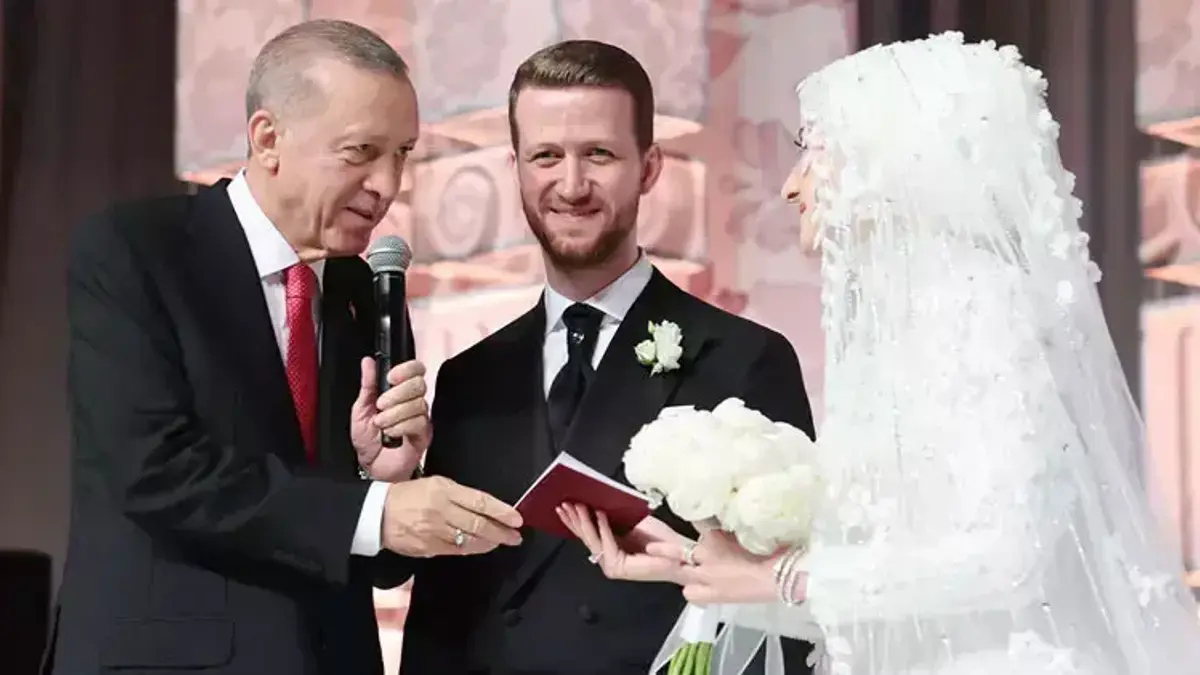
The two foundations have longstanding ties to Erdogan’s family. His son Bilal Erdogan serves on TÜGVA’s High Advisory Board, while his daughter Esra Albayrak has served on TÜRGEV’s executive board.
Other organizations linked to the government have also received European funding. The World Ethnosport Confederation, chaired by Bilal Erdogan, received 272,616 euros between 2021 and 2024, while the Foundation for Political, Economic and Social Research, known as SETA, received 291,020 euros during the same period. Ibn Haldun University, founded by TÜRGEV, received 400,000 euros in 2022 and 60,000 euros in 2023.
The funding scrutiny comes as authorities have expanded the investigation to online content and instructed prosecutors’ offices across the country to pursue related cases. The Justice Ministry issued a circular on September 14 instructing chief prosecutor’s offices throughout Turkey to investigate what authorities described as activities encouraging the erasure of gender distinctions among children and young people, collect digital evidence and seek orders to block or remove online content. The circular also said investigations could be handled as organized crime and financial crime cases.
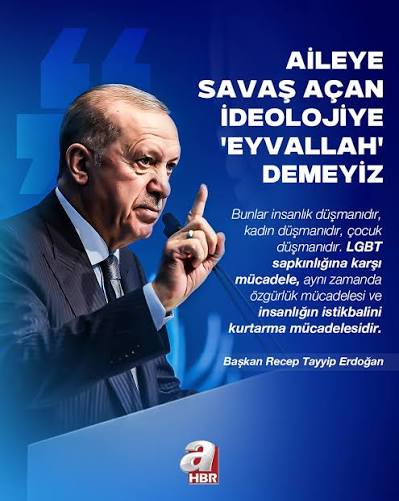
Erdogan has for years linked LGBTQ+ issues to his government’s family and population policies, portraying the decline in Turkey’s fertility rate as a demographic problem and promoting measures aimed at increasing births and strengthening the family.
He also made LGBTQ+ issues part of his 2023 election campaign, accusing opposition parties of supporting LGBTQ+ groups. In October 2022 he said a proposed constitutional amendment on the family would show the public who supported these groups.
Other European governments have also adopted measures targeting LGBTQ+organizations or content. Russia’s Supreme Court designated the international LGBTQ+ movement as extremist in 2023. In Hungary former prime minister Viktor Orbán’s government restricted content concerning homosexuality for minors in a 2021 law and banned Pride events in 2025.
Erdogan has also continued to advocate a constitutional definition of the family as the union of a man and a woman. The ruling Justice and Development Party (AKP) and its nationalist coalition partner, the Nationalist Movement Party (MHP), submitted a constitutional amendment in December 2022 that included such a definition, but the proposal stalled after the 2023 earthquakes and elections. In 2025 Erdogan appointed 10 constitutional lawyers to prepare a new charter to replace the 1982 constitution.
With the government now tying foreign funding to the LGBTQ+ crackdown and national security, the issue is also likely to remain a political tool for Erdogan as Turkey moves toward its next elections, allowing him to connect LGBTQ+ rights, family values and foreign influence in a single campaign narrative.