
Abdullah Bozkurt/Stockholm
Turkey has steadily expanded its overseas intelligence machinery far beyond the formal ranks of its national spy agency, recruiting foreign nationals, cultivating retired Western intelligence and security officials and enlisting politically connected businesspeople and private companies to collect sensitive information, shape foreign-government policies, run influence operations and track exiled critics of the country’s repressive ruler President Recep Tayyip Erdogan across multiple countries.
Court records, criminal proceedings and sworn testimony from Turkey and the United States reveal a multilayered overseas intelligence architecture in which Turkey’s National Intelligence Organization (Milli İstihbarat Teşkilatı, MIT) has relied not only on professional intelligence officers operating under diplomatic cover but also on politically connected businesspeople, private intelligence consultants, retirees, expatriate loyalists and former Western national security officials whose access, expertise and local networks can provide capabilities unavailable to conventional informants.
A remarkable new account of how this system operated came from Hüseyin Gün, a Germany-born Turkish-British national who, according to his own recorded statements, spent decades building an extensive network of political, intelligence and corporate contacts and later put that network at the service of his native Turkey. Gün’s account echoes and reinforces evidence from other Erdogan government operations involving Turkish intermediaries, including Kamil Ekim Alptekin, a businessman indicted in the United States who sought to enlist former US intelligence and law-enforcement officials in clandestine activities on American soil, including surveillance of Erdogan critics and efforts to manufacture damaging material against them.
Had Gün not made the apparent mistake of engaging with Erdogan’s most formidable political rival, jailed İstanbul Mayor Ekrem İmamoğlu, possibly to generate much-needed cash for his machinery, much of what he now says about his covert relationship with the Turkish state might never have surfaced. The very prosecution intended to portray Gün as a foreign spy instead opened a window onto Ankara’s own clandestine operations abroad.
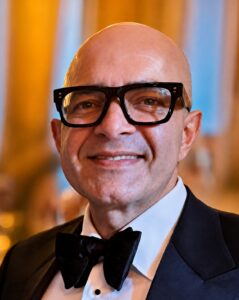
After the Erdogan government turned on him and charged him with political and military espionage over his ties to the jailed İmamoğlu, Gün responded by disclosing previously secret arrangements with Turkish authorities and describing overseas intelligence, lobbying and influence activities that he says he conducted on the state’s behalf. In effect the government’s effort to criminalize his relationship with İmamoğlu appears to have prompted one of its former intermediaries to expose the machinery he claims Ankara had relied on for years.
While prosecutors have portrayed Gün as an operative who worked for Israeli, American and British intelligence, in his testimony before an İstanbul court on May 11, 2026, Gün offered a radically different account: He said he had actually worked in coordination with the Turkish state and its intelligence establishment for years, including collecting sensitive information on Erdogan opponents in Europe and the United States.
If he had really served foreign intelligence agencies for decades, he told the court, it was implausible that Turkey’s intelligence and counterintelligence institutions could have remained unaware of his extensive international activities, particularly given his longstanding interaction with senior Turkish state officials.
His testimony offered one of the rare insider descriptions of how Ankara allegedly outsourced intelligence-related work to nominally private actors.
When Gün was detained by police on July 3, 2025, he initially kept his most sensitive ties to the Turkish state out of his account and sought to downplay the significance of his extensive network of foreign officials and intelligence-linked contacts. In a 128-page statement, he portrayed his activities largely as commercial ventures, arguing that his dealings with foreign governments and his contacts with serving and retired officials were simply part of his international business activities.
His apparent strategy was to buy time and avoid disclosing what he later described as state secrets, seemingly in the expectation that Ankara would step in before prosecutors secured his formal arrest. That intervention never came. Once it became clear that the government was prepared to leave him exposed to prosecution, Gün changed course.
On October 25, 2025, Gün informed prosecutors that he was ready to give a new statement and disclose everything he knew in what amounted to a voluntary confession. He was apparently seeking to benefit from Turkey’s repentance provisions, which are designed to encourage suspects accused of organized crime or terrorism-related offenses to cooperate with authorities, admit wrongdoing and provide information in return for more favorable treatment, including reduced sentences and, in some circumstances, release.
This time Gün gave a 262-page statement, focusing far more heavily on his contacts with İmamoğlu’s office — material he apparently believed prosecutors were particularly eager to obtain. His strategy seemed aimed at shifting responsibility onto the jailed mayor and presenting himself as a cooperative witness rather than a principal target of the investigation. Yet even in this extensive second statement, Gün still withheld what he later described as his secret ties to the Turkish government and the intelligence-related work he claimed to have carried out on its behalf.
By the time Gün was formally indicted on allegations that information belonging to millions of users of an İstanbul Metropolitan Municipality digital services platform had been transferred abroad, along with claims of improper processing and leaking of election-related voter data connected to municipal systems, he had apparently concluded that none of his earlier tactics had succeeded in securing his release.
He then changed course dramatically, dropping a bombshell during a court hearing on May 11, 2026. For the first time Gün testified that he had carried out overseas operations in line with Turkish government objectives targeting members of the Gülen movement, a group fiercely opposed to Erdogan’s repressive rule in Turkey.
Gün told the court that he had collected information in Europe and the United States on individuals believed to be affiliated with the movement, including their names, residential addresses, financial holdings, personal relationships and organizational networks. He said the intelligence was subsequently passed to Turkish authorities, effectively acknowledging that activities he had previously portrayed as commercial work were, in fact, conducted on behalf of the Turkish state.
Even more significantly, Gün said two companies associated with him, Trident and GPlus, had been granted broad authority to represent Turkish state interests overseas. He even submitted what he described as an official authorization document, dated October 2016 and valid until May 2017, which he said empowered the companies to coordinate international relationships and promotional activities on behalf of the Turkish government.
The document was signed by Fuat Oktay, the then-undersecretary to the prime minister and later Erdogan’s vice president, who worked closely with Turkey’s intelligence establishment. Oktay now chairs the Turkish Parliament’s Foreign Affairs Committee. Significantly, the Erdogan government has neither denied the authenticity of the document nor publicly challenged Gün’s claim in court that the authorization was genuine and issued on behalf of the Turkish state.
Gün said he initially concealed the true nature of his overseas activities from investigators after his detention, portraying them merely as commercial ventures because, he claimed, disclosing their real purpose would have meant revealing state secrets. His downfall appears to have begun after investigators uncovered a photograph showing him alongside jailed İstanbul Mayor İmamoğlu, Erdogan’s principal political rival.
At that point Gün was effectively burned as an intelligence asset and cast aside despite what he says were years of service to the Turkish state and its intelligence apparatus. Once associated with İmamoğlu, he was no longer treated as a protected intermediary but instead became a target of the very system he claimed to have served.
Whatever the domestic political ramifications of the case, the details that have emerged offer a revealing picture of the modus operandi developed by Turkish intelligence to extend its reach abroad: cultivating and recruiting foreign intelligence, security and law-enforcement veterans, tapping their expertise and networks for intelligence collection and using private intermediaries to advance the Erdogan government’s political and strategic objectives overseas.
According to the Turkish indictment, Gün had built an unusually extensive network of contacts spanning serving and former intelligence, defense and national security figures in the United Kingdom, the United States and Israel. Prosecutors pointed not only to telephone numbers found on Gün’s seized phone but, in some cases, to emails and text-message exchanges as part of their argument that he had operated under the cover of an international businessman while cultivating relationships deeply embedded in intelligence and security circles.
The indictment identified a striking roster of intelligence, defense and national security figures in Gün’s phone directory. They included Sir Mark John Spurgeon Allen, a former senior MI6 officer who held several posts in Britain’s foreign intelligence service, including roles connected to counterterrorism; Christopher Charles James Sturgess, described as a former senior figure at GCHQ, Britain’s signals intelligence agency, and later chief technology officer of the UK-based cybersecurity company Clearwater Dynamics; and Martin Howard, who served as GCHQ’s director of Cyber Policy and International Relations from 2011 to 2014 before becoming deputy chief of Defence Intelligence at the UK Ministry of Defence.
Also listed were David John Charters, described in the indictment as having links to MI6 and saved on Gün’s phone as a “very close friend of former MI6 chief Richard Moore”; David Richmond, a former senior Foreign, Commonwealth and Development Office official who served as director general for Defence and Intelligence; Air Marshal Sir Joseph Charles French, who headed Britain’s Defence Intelligence between 2000 and 2003; and John Taylor Holmes, a former British special forces commander who served in that role from 1999 to 2001.
The US-linked contacts included Brian Scott, whose LinkedIn profile describes him as having worked as a CIA intelligence officer from 1997 to 2007 before joining private intelligence and security companies including the Patriot Defense Group and The Ascendancy Group, and Fiona Hill, identified in the indictment as a former intelligence analyst at the US National Intelligence Council who later served in a senior government role dealing with foreign-state leadership issues between 2017 and 2019.
The list also included David Meidan, a former senior Mossad official responsible for foreign relations and operational cooperation.
The indictment does not, however, establish the nature or extent of Gün’s relationships with most of the intelligence and security figures listed in his contact directory. In many cases the only evidence cited is a telephone number stored on his phone, supplemented occasionally by Gün’s own explanations about how he knew the individual. On that basis alone it is difficult to determine whether the contacts reflected active professional relationships, occasional interactions or merely names accumulated over years of networking.
The indictment provides substantially more detail on two individuals. One is Christopher Paul McGrath, whom Turkish prosecutors describe as having spent more than 11 years in Britain’s military and intelligence community, working on counterintelligence, counterterrorism and counternarcotics operations and directing collection involving GCHQ elements in support of operations in Pakistan, Afghanistan and Colombia. Prosecutors identified approximately seven hours of communications between Gün and McGrath. In his own statement while in detention, Gün described McGrath as a friend and a defense-industry consultant.
The second is Aaron Barr, whom Gün described as a business partner responsible for the technical side of another company and for preparing analytical reports. Turkish prosecutors characterize Barr as a former CIA officer. Publicly available material, however, more clearly establishes a background in cybersecurity work rather than confirmed CIA employment. Leaked HBGary correspondence from from US cybersecurity firm HBGary Federal that was stolen by the hacktivist group Anonymous in 2011 and subsequently published online, for example, described Barr as having TS/SCI clearance and as having briefed officials at the National Security Agency.
In a statement to Turkish prosecutors Gün said he owned a company called PiiQ Media & Risk and worked closely with Barr. Open-source corporate and professional records indicate that the company was based in Cambridge, Massachusetts, with Gün listed as co-founder and chief executive officer and Barr as co-founder and chief technology officer. Its senior team also included Darren Millar, a former law-enforcement specialist in cyber special operations and open-source intelligence; Brian Monheiser, a former US Marine geospatial intelligence analyst with experience supporting defense and intelligence-community projects; and Eddie Svirsky, who served as chief engineer.
Through Barr, Gün also sought to tap other US-based figures with current or former government experience, particularly in intelligence and law enforcement. In an email to Barr dated March 20, 2021, Gün expressed frustration that Barr’s intelligence network had so far produced nothing tangible and urged him to reach out to David Cohen, a retired CIA officer and another man who served as deputy commissioner for intelligence at the New York Police Department.

Gün also described involvement in a clandestine network known as “Black Cell,” which he portrayed as an unofficial structure conducting intelligence collection, lobbying and influence operations in Europe and the United States. According to accounts based on documents attributed to the network, its activities went well beyond conventional public relations.
Gün said he served as the project manager of the cell, an assignment he described as a Turkish state secret and one that prosecutors themselves acknowledged involved classified state matters. He said the secret mission required him to cultivate contacts abroad with a wide range of figures, including politicians, government officials, intelligence veterans and retired military officers, as part of work assigned to him by the Turkish state.
The structure allegedly sought both to counter the overseas activities of the Gülen movement, a group fiercely critical of Erdogan, and to expand the Turkish government’s access to political, financial and security institutions in Western capitals. Reported activities included cultivating British politicians and government officials, lobbying institutions in London, encouraging scrutiny of Gülen-linked charities and associations and mapping financial networks associated with Erdogan critics.
The network also reportedly sought to persuade banks and other financial institutions to scrutinize, restrict or disrupt accounts and funds transfers linked to organizations Ankara considered part of the Gülen movement. That financial dimension is particularly significant because it suggests that overseas surveillance was intended not merely to identify and monitor opponents but also to expose them to economic pressure.
By establishing where targeted individuals banked, who financed particular associations, who controlled accounts and how funds moved across borders, such intelligence could enable Ankara to move from passive collection to active disruption, potentially affecting an organization’s access to banking services, funding streams and broader financial infrastructure.
He said he had worked through the London-based Global Strategy Forum and helped organize meetings between Turkish officials and British policymakers at the House of Lords. He described himself in court as the Turkish figure who had opened the doors of the House of Lords to Ankara and pointed to a February 10, 2010, event titled “Rising Turkey.” The gathering was attended by senior Turkish officials, according to Gün. Among them was İbrahim Kalın, who today heads MIT and is one of Erdogan’s most trusted national security officials.
The significance of Gün’s testimony lies not merely in whether every element of his account can ultimately be substantiated. It illustrates the degree to which Ankara’s overseas influence, lobbying and intelligence activities can overlap.
A striking example of Ankara trying to make use of former American national security personnel emerged from a separate US federal prosecution involving Turkish operative Kamil Ekim Alptekin and the Flynn Intel Group (FIG), the intelligence consultancy founded by retired US Army lieutenant general Michael Flynn, former head of the US Defense Intelligence Agency, and businessman Bijan Rafiekian.
The operation targeted Fethullah Gülen, the Pennsylvania-based Islamic scholar who became one of Erdogan’s fiercest critics and remained in the United States until his death in 2024. According to testimony in US federal court, one of the people recruited to work on the Turkish project was Brian McCauley, a former deputy assistant director of the FBI.
McCauley had been introduced to Alptekin through Rafiekian and was tasked with research concerning Gülen and his followers. But Alptekin wanted considerably more.
Testifying as a government witness at Rafiekian’s July 2019 trial in the US District Court for the Eastern District of Virginia, McCauley said Alptekin was dissatisfied with recommendations his team had prepared and asked whether he could manufacture damaging evidence against Gülen.
“Can’t you plant dirt?” Alptekin asked him, according to McCauley’s testimony. McCauley refused. According to McCauley’s testimony Alptekin was not seeking to document genuine terrorist activity but to manufacture a narrative that would portray Gülen as a terrorist. That effort stood in sharp contrast to Gülen’s public record: He consistently rejected violence and terrorism, criticized jihadist movements and was himself targeted by extremist Turkish groups aligned with al-Qaeda because of those positions. The episode therefore suggests an attempt to fabricate a terrorism case around a political opponent rather than uncover evidence of actual terrorist conduct.
Alptekin also wanted McCauley’s team to conduct surveillance of Gülen movement supporters in the Washington, D.C., area. The requested activity included audio surveillance.
Again McCauley refused, telling Alptekin in substance that his team did not conduct that kind of operation.
The exchange is particularly revealing because it shows an Erdogan-linked intermediary attempting to push a former senior FBI official from conventional research toward clandestine collection and potentially the fabrication of evidence against a political opponent residing in the United States.
The Turkish project was conducted through Flynn’s consultancy and involved hundreds of thousands of dollars in payments.
According to the US Justice Department, the Flynn Intel Group was hired for a $600,000 project intended to influence American public and political opinion concerning Gülen and Turkey’s demands for his extradition. Prosecutors maintained that Alptekin acted on behalf of Turkish government interests and that senior officials in Ankara were involved in discussions concerning the project.
Rafiekian was initially convicted in 2019 of acting and conspiring to act as an undisclosed agent of Turkey. The case subsequently went through years of appeals and litigation, including orders overturning the verdict and granting a new trial, with prosecutors eventually abandoning the prosecution.
The procedural outcome did not erase the testimony presented in federal court concerning what Alptekin asked McCauley to do.
The evidence remains an unusual documented example of an Erdogan-linked operative attempting to obtain surveillance services from a former high-ranking American counterintelligence professional.
Another example of how politically connected Turkish operatives cultivated former Western intelligence officials involves Sezgin Baran Korkmaz, a Turkish swindler prosecuted in the United States in connection with the laundering of proceeds from a massive biodiesel tax-credit fraud.
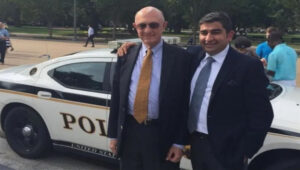
Korkmaz developed a personal relationship with James Woolsey, who served as director of the CIA from 1993 to 1995. According to Korkmaz’s own account, the two first met in İstanbul and subsequently dined and traveled together, while Korkmaz visited Woolsey in the United States and stayed as his guest. Woolsey also proposed that Korkmaz participate in a business venture involving compliance in the energy sector.
Korkmaz made considerable use of the relationship in dealings with his American associates. Evidence introduced in a Utah federal court showed that he repeatedly invoked Woolsey’s name, referring to the former CIA director as “Grandpa” and Woolsey’s late wife, Nancye, as “Grandma.” Jacob Kingston, one of Korkmaz’s convicted American associates, testified that he sent millions of dollars to Korkmaz believing his connections, including his relationship with Woolsey, could provide access and assistance as a federal investigation closed in.
Korkmaz later sought to put those high-level American contacts to use in an issue of direct importance to the Erdogan government. In 2018 he arranged a trip to Turkey involving Woolsey and prominent Trump fundraiser Tommy Hicks Jr. as part of an effort concerning the release of American pastor Andrew Brunson, who was being held by the Turkish government on terrorism and espionage charges. Woolsey’s wife, Nancye Miller, then a registered lobbyist for Turkey, remained in communication with Erdogan’s office during the initiative.
There is no evidence that Woolsey was recruited by MIT or knowingly served Turkish intelligence. But it appears an attempt was made, According to Wall Street Journal interview in March 2017, Woolsey disclosed that he had attended a September 2016 meeting in New York involving Flynn, then a national security adviser to Donald Trump’s presidential campaign, then-Turkish foreign minister Mevlüt Çavuşoğlu and Erdogan’s son-in-law Berat Albayrak.
According to Woolsey, the discussion turned to possible ways of getting Gülen out of the United States outside the conventional extradition process. Woolsey characterized what he heard as serious and troubling and said the ideas being discussed appeared to stray beyond normal legal procedures. He stopped short, however, of saying that a concrete kidnapping operation had been agreed upon, noting that he arrived late and that the discussion he witnessed had not developed into a specific operational plan.
Former intelligence and law enforcement officers are particularly attractive to the Erdogan government because retirement does not erase their institutional knowledge. They understand how surveillance works. They know how intelligence agencies assess targets. They often retain extensive professional networks. They understand bureaucratic structures and security procedures and may be able to introduce foreign clients to serving officials, politicians or defense contractors.