
Levent Kenez/Stockholm
Somalia has for the first time sent an entire brigade of its elite Gorgor commandos to Turkey for training, expanding a military program that has already produced thousands of Turkish-trained troops and whose graduates have been used against both Al-Shabaab militants and in Somalia’s increasingly militarized political disputes. The move points to how central Turkey has become to Somalia’s security architecture, even as questions grow at home about whether that partnership is reinforcing one side of a growing domestic political conflict.
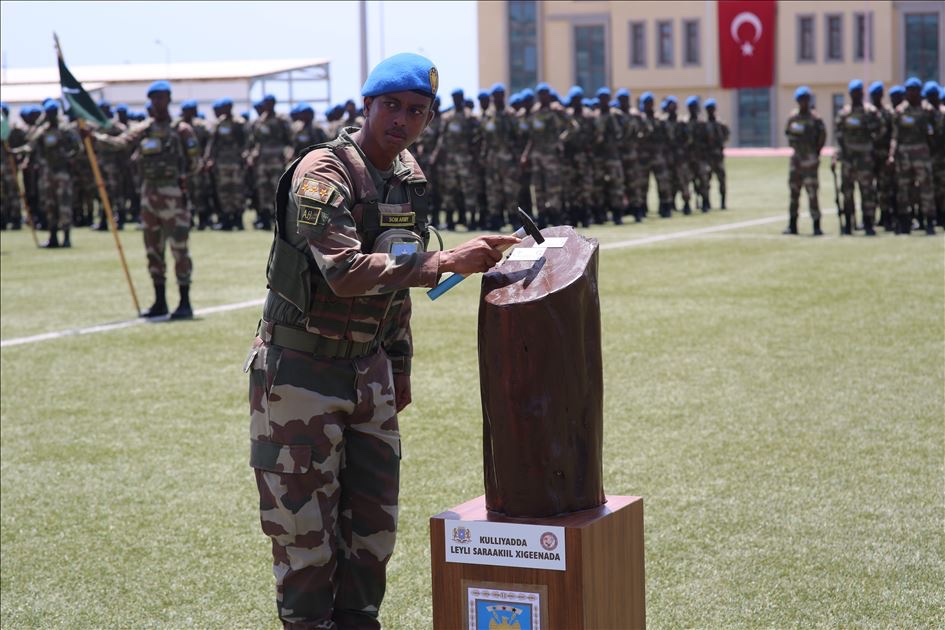
Gorgor, which means Eagle in Somali, was established in 2017 as an elite component of the Somali National Army with Turkish assistance, with a formal mission of counterterrorism, rapid response and combat operations. That same year Ankara opened the TURKSOM military training facility in Mogadishu, where Turkey has since trained more than 6,000 Gorgor soldiers, according to Turkish state broadcaster TRT. Turkey has also supplied military equipment and expanded cooperation into armored vehicles, helicopters and other capabilities. A 2024 defense agreement further deepened the partnership, adding cooperation on maritime security along with continued Turkish investments in infrastructure, energy and natural resources.
Gorgor units have fought Al-Shabaab in central and southern Somalia, taking part in raids and front line operations against the militant group, which has carried out attacks on civilians, government facilities and security forces nationwide. But the commandos have repeatedly been drawn into domestic political confrontations as well. During Somalia’s 2021 dispute over the presidential mandate of Mohamed Abdullahi Mohamed Farmaajo, protesters accused Turkish-trained special forces of attacking civilians and killing demonstrators. US State Department human rights reports for 2021 and 2022 documented allegations of arbitrary or unlawful killings by Somali government forces but did not specifically attribute those incidents to Gorgor.
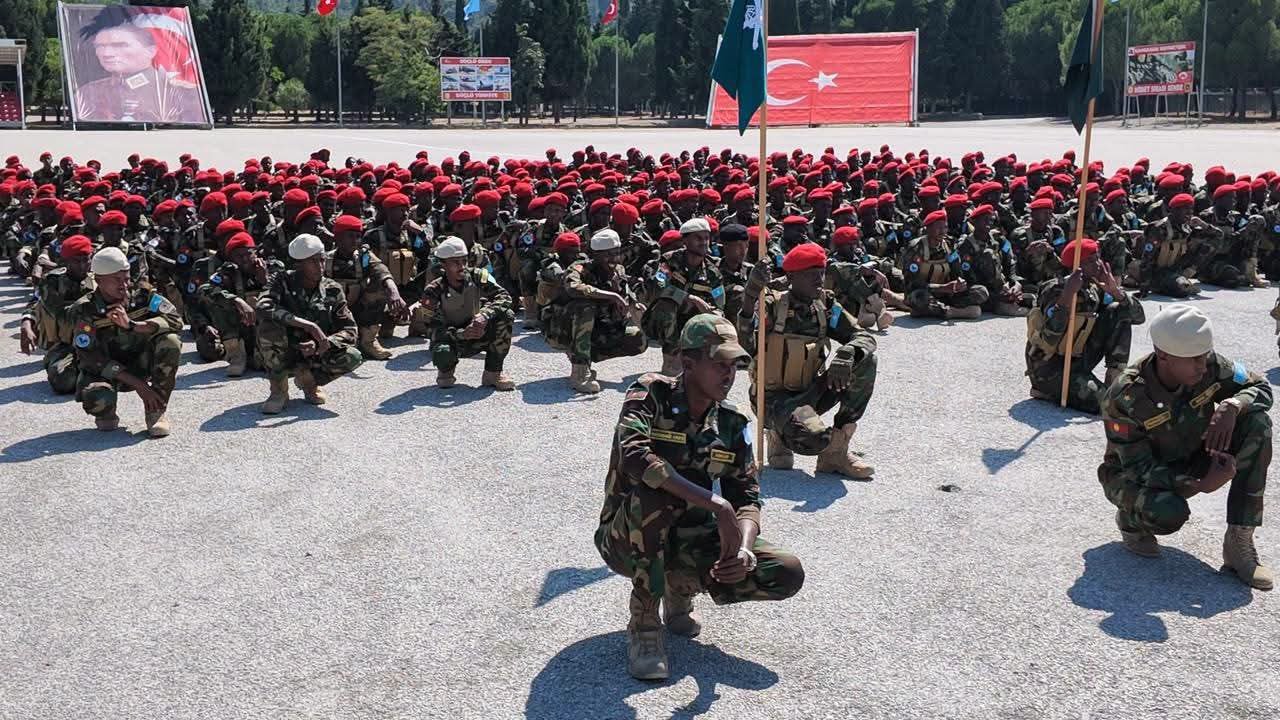
Turkish Ministry of Defense-released video showing Somalia’s 21st Gorgor Brigade completing advanced commando training at the 8th Commando Training Brigade Command in Manisa, with the graduation ceremony attended by Gen. Metin Tokel, commander of the Turkish Land Forces, and Brig. Gen. Sahal Abdullahi Omar, commander of the Somali Land Forces.
That pattern resurfaced in 2026 as President Hassan Sheikh Mohamud’s government confronted opposition to constitutional amendments that extended its mandate, a dispute that pitted the federal government against opposition politicians and regional authorities and repeatedly drew military forces into political conflict. In March the administration of South West State President Abdiaziz Hassan Mohamed Laftagareen accused the federal government of using Turkish-trained Gorgor commandos and Turkish-supplied drones against the regional government, with South West State officials calling on Ankara not to let its military assistance be used in Somalia’s internal conflicts. Somali Senator Abdi Ismail Samatar later accused Turkey of playing a key role in Laftagareen’s removal and of seeking to establish what he called a client state in Somalia.
In April Somali authorities deployed heavily armed Gorgor commandos around a military camp in Mogadishu commanded by an officer aligned with the opposition, as the government sought to head off an armed challenge tied to the mandate dispute. That same month members of the Somali Future Council opposition alliance raised concerns with Turkish Ambassador Alper Aktaş about Ankara’s growing involvement in Somali politics, urging Turkey not to let its investments and strategic agreements be used to back one political faction, according to Somali media reports.
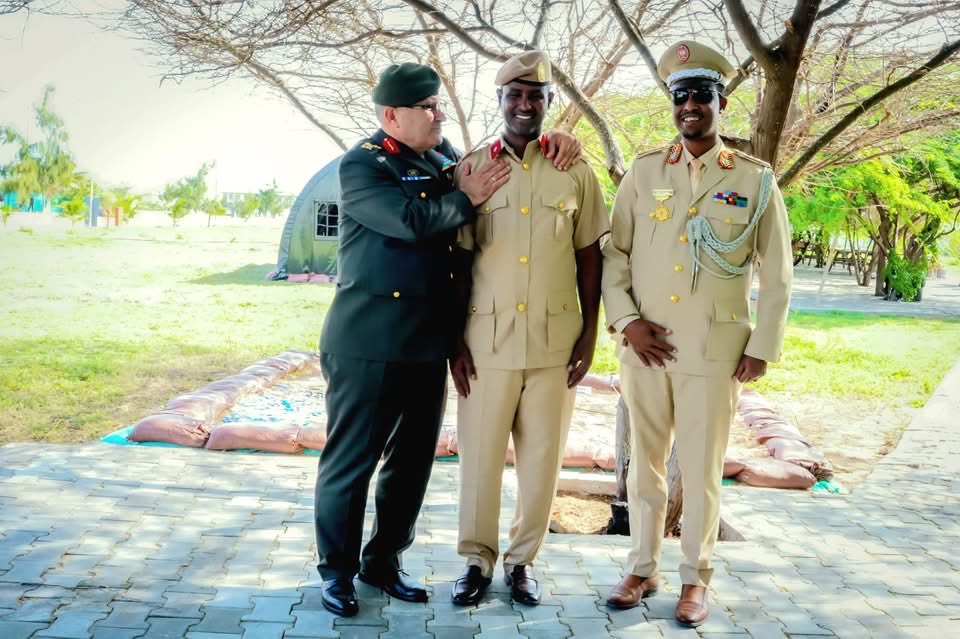
In May Ankara expanded Gorgor training to include tanks and heavy armored vehicles, adding conventional battlefield capabilities to a force originally built around commando and counterterrorism operations.
The political confrontation escalated in early June, when government forces including Gorgor commandos, police and presidential guards were deployed ahead of planned opposition demonstrations and an operation targeting former Prime Minister Hassan Ali Khaire, one of Mohamud’s most prominent opponents. Khaire said government forces had tried to kill him, with police describing the deployment as a large-scale security operation. Fighting spread through several Mogadishu neighborhoods on June 3 and 4, producing conflicting casualty figures. The UN Refugee Agency reported at least 13 deaths and 189 injuries and estimated that roughly 12,500 households were displaced.
In July forces aligned with Laftagareen attacked a Gorgor base in South West State, while Puntland and Jubaland, two main regional administrations, refused to take part in Turkey-backed political talks in Mogadishu, questioning Ankara’s neutrality and accusing it of siding with the federal government.
On July 22, 2026, Turkey’s parliament approved a further two-year extension of the mandate allowing Turkish forces to keep providing training, advisory support and counterterrorism assistance in Somalia.
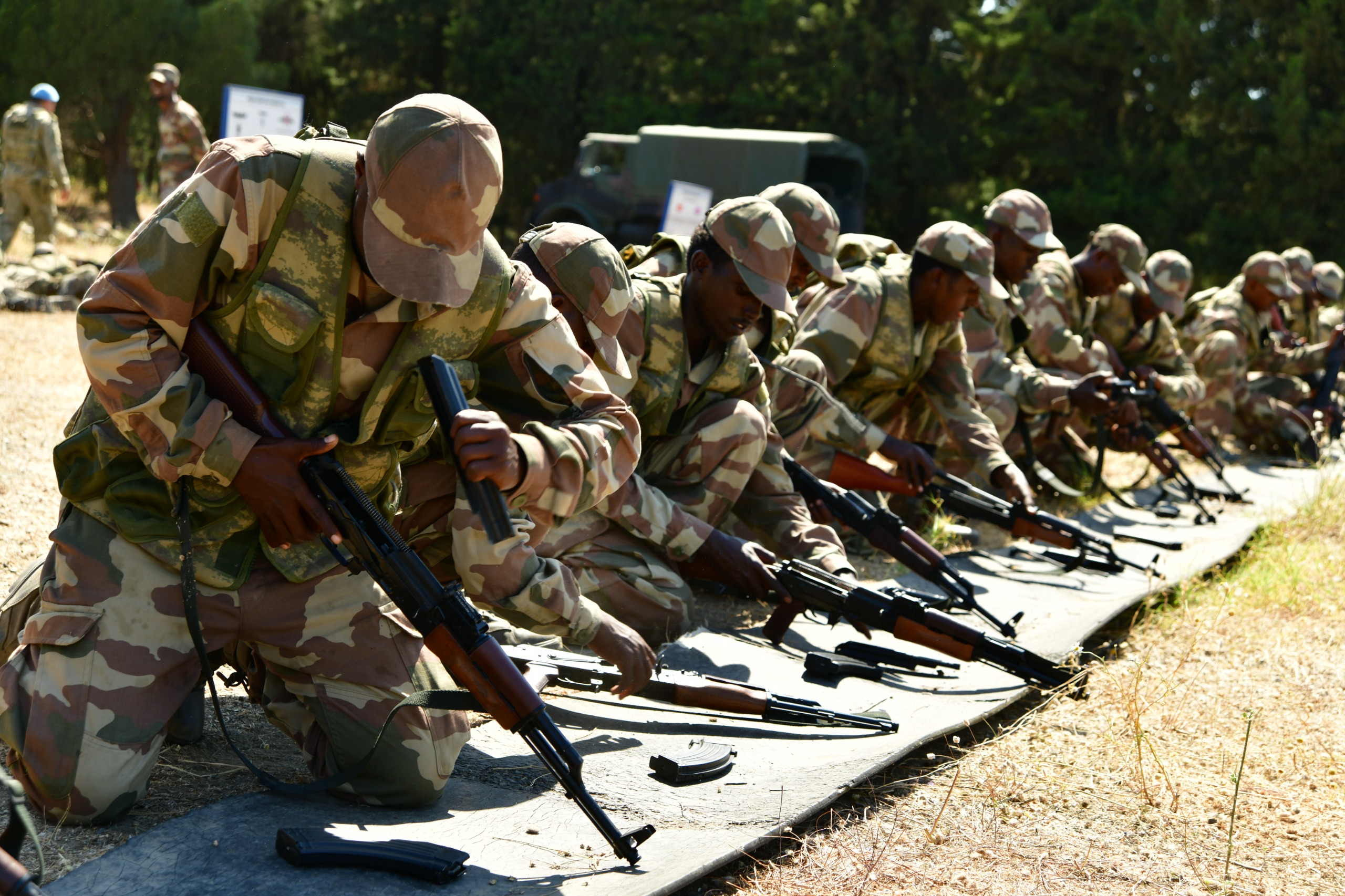
That expanding program reached a new milestone on last Saturday, when the 21st Gorgor Brigade completed advanced training at Turkey’s 8th Commando Training Brigade in Manisa. Somalia’s SONNA state news agency described it as the first time a complete Gorgor brigade, rather than smaller groups or individual battalions, had trained jointly at the same time and location. Gen. Metin Tokel, commander of the Turkish Land Forces, and Brig. Gen. Sahal Abdullahi Omar, commander of the Somali Land Forces, attended the graduation ceremony. SONNA said the arrangement was meant to boost the Somali army’s operational capacity and coordination as it prepares for larger-scale operations against Al-Shabaab. Along with the brigade trained in Manisa, other Gorgor units have received training in Isparta province, where Turkish commando units are also based.
The brigade-level training marks a shift from producing individually trained commando units toward fielding larger formations able to operate together, a capability Mogadishu says it needs for expanded counterterrorism operations. For the federal government, Gorgor offers a relatively cohesive, capable force at a moment when it is planning bigger operations against Al-Shabaab.
But the same expansion is unfolding as Somalia’s political divisions deepen and opposition leaders increasingly question Turkey’s role. Gorgor is not formally designated as a presidential guard or regime protection unit, and its stated mission remains counterterrorism and combat against armed groups. Its deployment record over the past year, however, shows the force has also been used when the federal government faced armed challenges from opposition politicians and regional authorities. That has left the line between Somalia’s counterterrorism campaign and its internal political conflicts increasingly blurred just as a larger, better-trained Gorgor takes shape.
Somalia’s fragility had already been flagged in Ankara well before the events of 2026. A study by Turkey’s National Intelligence Academy examining Turkish-Somali relations December 2025 concluded that Somalia was entering a period of heightened fragility driven by militant activity, political fragmentation, weak institutions, external pressure and economic strain. The assessment noted that although joint offensives against Al-Shabaab in 2022 had produced gains, federal forces failed to sustain that momentum and the group regained ground in 2023, and it separately flagged Somalia’s unresolved federal system, including recurring disputes between Mogadishu and states such as Puntland and Jubaland, as a persistent source of instability.
The same report pointed to external geopolitical pressure and information warfare as a further risk, citing the diplomatic fallout from a 2024 memorandum between Ethiopia and Somaliland as an example of how regional rivalries touching Somalia can escalate without warning.