

Levent Kenez/Stockholm
Turkey’s National Intelligence Academy says that unresolved security concerns and restrictions imposed by NATO allies have pushed Ankara to expand its strategic autonomy, arguing that sanctions, defense export limitations and political conditions attached to military cooperation agreements are not only creating tensions between allies but also weakening NATO’s ability to build common defense capabilities.
The 58-page report, titled “The Ankara Summit, NATO 3.0 Debates and Turkey,” argues that when countries such as Turkey believe their security expectations are not adequately addressed or that they are indirectly targeted by policies adopted by other allies, they are encouraged to rely more heavily on their own capabilities rather than depending exclusively on alliance mechanisms.
The document argues that NATO is entering a new phase, described as “NATO 3.0,” in which military strength alone is no longer enough to guarantee deterrence. According to the report resilience, defense production, technological capacity, intelligence cooperation and the ability to withstand hybrid threats have become essential elements of modern collective defense.
The academy says conflicts are increasingly shaped by cyberattacks, artificial intelligence, attacks on critical infrastructure and information operations, requiring NATO members to develop not only military forces but also industrial and technological independence.
A central argument of the report is that strategic autonomy should complement NATO membership rather than compete with it. It argues that allies with stronger domestic defense industries and technological capabilities can contribute more effectively to collective security by reducing vulnerabilities and increasing the alliance’s overall capacity.
The report specifically focuses on Turkey’s concerns that some of its security priorities have not received sufficient attention from NATO partners. Although the report does not identify specific countries or incidents, its references appear to reflect several long-running disputes between Turkey and other NATO members, including disagreements over Syria policy, defense industry restrictions and Western support for Kurdish armed groups that Ankara considers terrorist organizations.
The academy also criticizes defense-related restrictions, arguing that embargoes, export controls and political conditions attached to military cooperation agreements have consequences beyond bilateral disagreements.
“Embargoes, export restrictions and political conditionalities create problems in bilateral relations while also weakening NATO’s objective of developing joint capabilities,” the report says.
Turkey has repeatedly argued that restrictions affecting its defense industry limit cooperation between allies and reduce interoperability within NATO. Ankara maintains that countries within the alliance should be able to develop and acquire defense technologies without political obstacles that could prevent joint projects or limit operational cooperation.
The report presents Turkey’s expanding defense industry as a potential contribution to NATO rather than a challenge to alliance unity. It mentions Turkish developments in unmanned aerial systems, electronic warfare, radar technologies, command-and-control systems and ammunition production as examples of capabilities that could strengthen NATO’s deterrence.
The report emphasizes that NATO members do not share identical threat perceptions. While eastern allies primarily focus on Russia following Moscow’s invasion of Ukraine, Turkey and other southern members place greater importance on terrorism, instability in the Middle East, irregular migration and energy security.
Turkey has long argued that threats emerging from its southern borders deserve the same level of collective attention that NATO gives to security concerns on the alliance’s eastern flank.
The report portrays Turkey as uniquely positioned in NATO because of its geography and military experience. However, the argument presented by the Turkish state-backed institution presents only one side of a deeply complicated geopolitical ledger. While the report focuses heavily on the ways in which external restrictions have hindered the common goals of the alliance, it largely ignores the actions taken by Ankara that have historically triggered these very restrictions and caused substantial instability within the organization.
Text of Turkey’s National Intelligence Academy report on NATO:
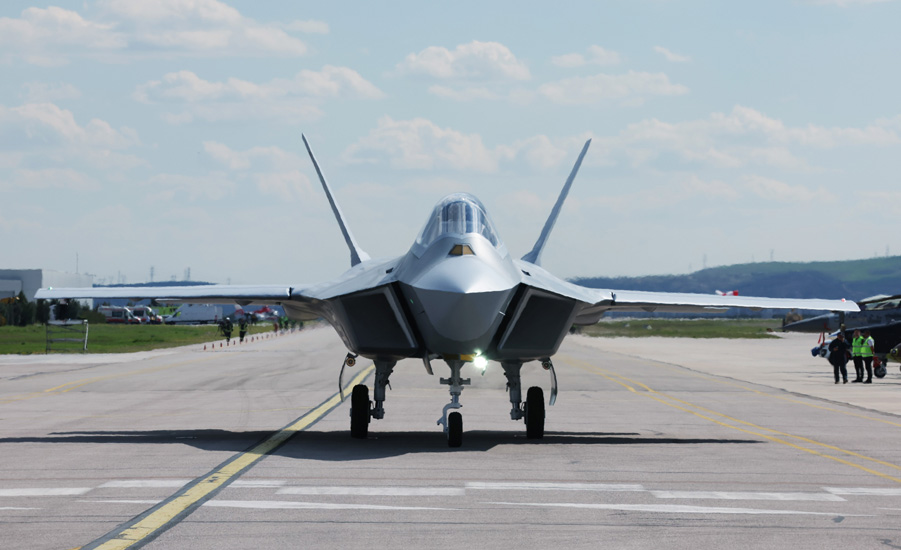
One of the most serious disputes involved Turkey’s purchase of the Russian-made S-400 air defense system. Ankara defended the acquisition as a sovereign security decision after unsuccessful negotiations with Western suppliers. The move led the United States to remove Turkey from the F-35 Joint Strike Fighter program and impose sanctions under the Countering America’s Adversaries Through Sanctions Act (CAATSA).
The S-400 purchase also raised concerns among NATO members about compatibility with alliance systems and the potential exposure of sensitive military technologies.
Turkey’s delay in approving Sweden’s NATO membership created another major dispute. Ankara argued that Stockholm needed to take stronger action against groups Turkey identifies as terrorist organizations before receiving Turkish approval. Sweden eventually joined NATO, but the prolonged process showed the political challenges created by the alliance’s consensus-based decision-making system.
Relations between Turkey and Greece have also periodically tested NATO unity. Disputes over maritime boundaries, energy exploration and military activities in the eastern Mediterranean have created tensions between two members of NATO’s southeastern flank.
These disputes illustrate that disagreements in NATO have multiple causes. Turkey argues that its security concerns have not always received equal recognition, while other allies have questioned Ankara’s defense decisions, regional policies and use of political leverage within alliance institutions.
The academy describes the Ankara summit as an opportunity to redefine NATO’s future by combining strategic autonomy with collective defense. It argues that stronger national capabilities can reinforce the alliance if they remain compatible with common planning and interoperability.
The broader question facing NATO is whether accommodating increasingly diverse national security priorities will strengthen collective defense or expose deeper political divisions. As the alliance faces challenges from Russia, instability along its southern borders, technological competition and hybrid warfare, the balance between national autonomy and alliance unity is likely to remain one of NATO’s defining debates.