
Abdullah Bozkurt/Stockholm
More than 1,100 victims and surviving relatives of people killed and wounded in Iranian-sponsored terrorist attacks have accused the Trump administration’s Justice Department (DOJ) of shutting them out of negotiations that allowed Turkey’s state-owned Halkbank to escape criminal prosecution without paying a fine, admitting wrongdoing or compensating victims having more than $10 billion in unsatisfied court judgments against Iran.
The victims say the DOJ negotiated a deferred prosecution agreement (DPA) with Halkbank behind closed doors, transforming a major sanctions-evasion prosecution into a diplomatic bargaining chip and sacrificing the interests of terrorism victims in exchange for Turkey’s assistance in negotiations involving Hamas, Israeli hostages and a ceasefire in Gaza.
Their objections, however, failed to prevent US District Judge Richard M. Berman from approving the deal on June 17, 2026, and dismissing the indictment with prejudice, effectively ending a seven-year prosecution that accused Halkbank of helping Iran evade US sanctions through a multibillion-dollar money laundering and bank fraud scheme.
In objections filed with the US District Court for the Southern District of New York, attorneys representing 1,121 victims and family members said the DOJ ignored repeated requests over five years to participate in discussions over any plea agreement or settlement and only informed them after the deal had already been finalized and put on the public docket.
“We respectfully request that this Court afford our clients an opportunity to be heard before acting on the government’s application,” attorneys from Gibson, Dunn & Crutcher LLP wrote, arguing that the Crime Victims’ Rights Act (CVRA) entitled victims to be informed of and consulted on any deferred prosecution agreement negotiated by the government.
A letter submitted to US Judge Richard M. Berman on behalf of victims of the Iranian regime’s terrorist activities:
The victims first asserted their rights under the CVRA in May 2021 and repeatedly contacted prosecutors over the following years seeking notice of plea discussions or settlement negotiations. According to their attorneys, those requests were ignored, while federal prosecutors worked out an arrangement that ultimately allowed Halkbank to walk away without judicial or administrative penalties.
The objections came only a day after federal prosecutors publicly disclosed why they had decided to abandon one of the most consequential sanctions prosecutions ever brought against a foreign state-owned bank.
According to Assistant US Attorney Michael Lockard, the deferred prosecution agreement arose from “significant diplomatic and national security considerations” and was negotiated along with discussions between Washington and Ankara aimed at ending the war in Gaza, securing a ceasefire between Israel and Hamas and obtaining the release of Israeli hostages held by Hamas.
Prosecutors revealed that President Donald Trump, Secretary of State Marco Rubio and senior State Department officials personally participated in diplomatic efforts involving Turkey and that, in the State Department’s view, resolving the Halkbank matter on mutually agreeable terms constituted “an important component” of those negotiations.
A letter from US Attorney Jay Clayton urging the court to dismiss the Halkbank prosecution based on foreign policy and national security considerations:
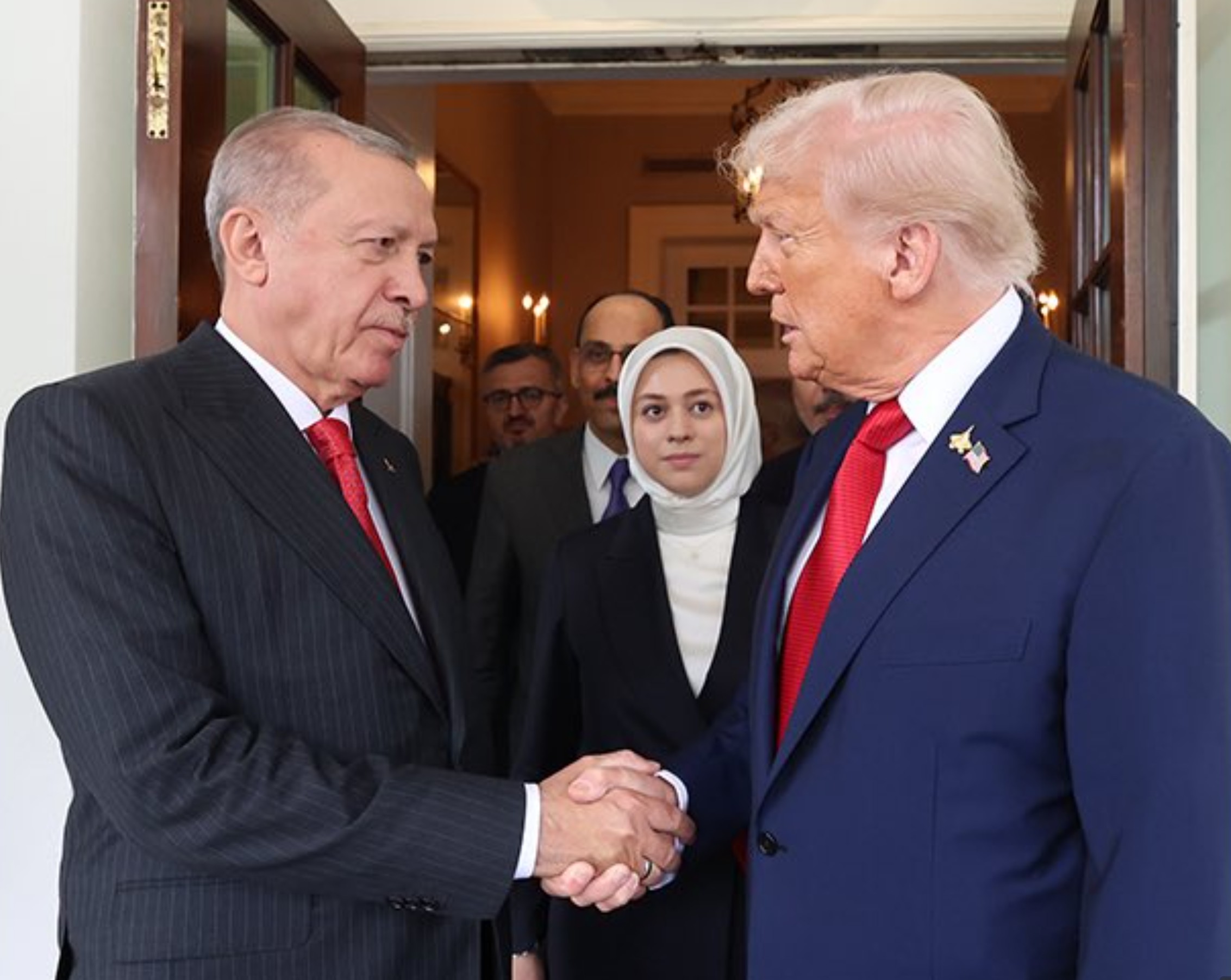
The filing states that Turkey’s assistance proved “instrumental” in securing Hamas’s commitment to release remaining hostages and in reaching a ceasefire agreement announced on October 13, 2025, by President Trump and other world leaders, including Turkish President Recep Tayyip Erdogan.
Erdogan has a personal stake in the Halkbank case, as the sanctions-evasion scheme was allegedly carried out with his knowledge and approval, enabling him and his associates to benefit from kickbacks generated by the multibillion-dollar money-laundering operation. For years the Turkish president lobbied successive US administrations to have the case dismissed, but those efforts proved unsuccessful until the Trump administration agreed to a settlement this year.
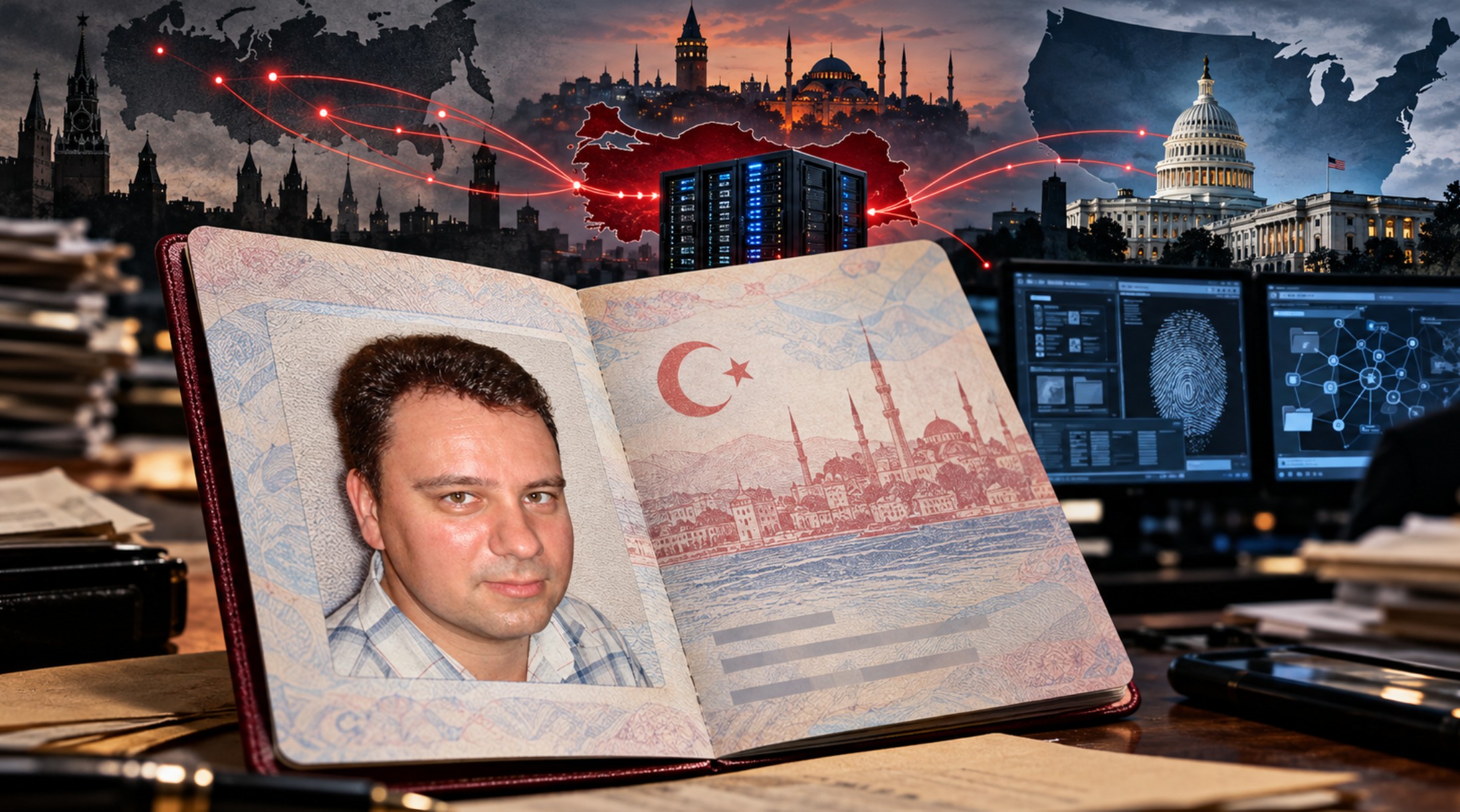
Iranian-Turkish gold trader Reza Zarrab (aka Aaron Goldsmith) was arrested in Turkey on multiple charges, including bribing government officials as part of the illicit scheme. Erdogan intervened in the investigation, publicly defended Zarrab and helped orchestrate the removal of judges, prosecutors and police chiefs involved in uncovering what became Turkey’s largest-ever corruption scandal, exposed in December 2013.
Zarrab was later arrested in the United States, indicted and eventually became a government witness, detailing the illicit transactions he conducted with senior figures in Erdogan’s government. Had the Halkbank case proceeded to trial, some legal observers believe that both Erdogan — who is widely thought to have been identified in court documents by the codename “Abi” (“elder brother”) — and his wife, Emine Erdogan, who reportedly maintained ties with Zarrab and received expensive gifts, including a Hermès handbag, could have faced allegations related to facilitating Iran’s sanctions-evasion and money-laundering activities through Turkish banks.
Erdogan ultimately succeeded in persuading the Trump administration to terminate the prosecution, reportedly in exchange for concessions that many observers believe extended well beyond Turkey’s assistance in brokering a Gaza ceasefire agreement.
For the victims, these disclosures confirmed longstanding suspicions that their interests had been subordinated to broader geopolitical objectives.
They argue that the Justice Department transformed a criminal prosecution into a bargaining chip in Middle East diplomacy, trading away the possibility of accountability for a state-owned Turkish bank in exchange for Ankara’s help in negotiations with Hamas.
The decision also appears to validate remarks made by Erdogan in October 2025, when he disclosed that Trump had told him after a White House meeting and a subsequent telephone conversation that “the Halkbank problem is finished for us.”
Victims and stakeholders in the United States Victims of State Sponsored Terrorism Fund had warned months earlier that a settlement lacking any financial penalty would undermine the integrity of the American sanctions regime and weaken national security interests.
In a March 10 letter to Judge Berman, they argued that allowing a financial institution accused of facilitating the transfer of approximately $20 billion for a state sponsor of terrorism to escape monetary punishment would signal to other global actors that sanctions violations can be resolved through diplomatic maneuvering rather than legal accountability.
They cautioned that such an outcome creates a “moral hazard” that diminishes the deterrent effect of American sanctions laws.
“A core component of U.S. national security is the integrity of our sanctions regime,” the victims wrote. “Failing to hold such an entity financially accountable signals to other global actors that sanctions evasion may be resolved through diplomatic maneuvering rather than strict legal consequences.”
The case against Halkbank dates back to October 2019, when federal prosecutors charged the bank with six criminal counts, including conspiracy to violate US sanctions against Iran, bank fraud and money laundering.
The indictment alleged that between 2012 and 2016 Halkbank participated in a scheme designed to funnel Iranian oil revenue through the international financial system by disguising them as payments for humanitarian goods and fictitious food purchases.
Prosecutors accused the bank of helping Iran secretly transfer billions of dollars while deceiving US regulators and financial institutions.
The Justice Department had already secured a conviction stemming from the same sanctions-evasion network. Mehmet Hakan Atilla, Halkbank’s former deputy general manager for international banking, was convicted in 2018 for his role in the operation, with his conviction later upheld on appeal.
Federal prosecutors spent years defeating Halkbank’s claims that it enjoyed sovereign immunity as a state-owned enterprise, eventually prevailing before the US Supreme Court, which ruled in 2023 that foreign state-owned companies are not immune from criminal prosecution in American courts.
For terrorism victims, the prosecution represented more than a sanctions case.
In a March 10 letter to Judge Berman, the American Victims of State-Sponsored Terrorism United warned that allowing a bank accused of moving $20 billion for Iran to avoid financial penalties would signal that sanctions violations can be resolved through diplomacy rather than accountability:
Their attorneys say Halkbank’s actions prevented them from collecting more than $10 billion in judgments that US courts awarded against Iran for sponsoring terrorism.
The victims include survivors and relatives of those killed in some of the deadliest Iranian-backed attacks in modern history, including the 1983 bombing of the US Marine barracks in Beirut that killed 241 American servicemen, the 1998 bombings of US embassies in Kenya and Tanzania, the murder and torture of US Army officers in Lebanon and the 2001 suicide bombing at Jerusalem’s Sbarro restaurant.
According to the filing, Iran transferred approximately $20 billion to Halkbank while litigation against Tehran was pending in US courts, including at least $1 billion that allegedly passed through accounts in New York.
The victims contend that had Halkbank complied with US sanctions laws and properly disclosed the Iranian origin of the funds, the assets could have been frozen and attached by judgment creditors.
Instead, they say, Halkbank helped move Iranian assets beyond the reach of American courts, depriving them of compensation judges had already determined they were entitled to receive.

The deferred prosecution agreement signed on March 6, 2026, requires Halkbank to pay no criminal fine, forfeit no assets and provide no restitution to victims. The bank also does not have to admit criminal wrongdoing.
Public reports in 2025 suggested Halkbank had considered a settlement involving a payment of approximately $100 million. Yet under the final agreement, the bank escaped all financial penalties.
Victims argue that Congress intended criminal fines in terrorism-related sanctions prosecutions to serve two purposes: punishing wrongdoers and providing restitution for victims.
Citing federal law, they told the court that by waiving financial penalties against Halkbank, the executive branch was effectively redirecting resources away from individuals harmed by the very acts of terrorism the sanctions regime was designed to combat.
They further emphasized that banks and corporations involved in comparable sanctions and money laundering cases have historically paid penalties amounting to billions of dollars.
In their view a “no-fine” resolution for a bank that spent years challenging the jurisdiction of US courts represented an extraordinary departure from established enforcement practices.
Victims urged Judge Berman to demand a more rigorous explanation from prosecutors as to why financial accountability was deemed unnecessary and questioned whether an agreement lacking monetary penalties could truly be said to serve “the best interests of the United States.”

Rather than imposing sanctions, prosecutors merely required Halkbank to retain an anti-money laundering and sanctions compliance expert. The expert chosen was Ernst & Young Kurumsal Finansman Danışmanlık A.Ş., Ernst & Young’s Turkish affiliate, which was approved by the US government and hired by Halkbank itself.
After the expert completed a review and submitted a compliance report to the Treasury Department in May 2026, prosecutors moved to dismiss the indictment with prejudice, permanently foreclosing any future prosecution arising from the same conduct.
Judge Berman ultimately approved the agreement on June 17, concluding that courts possess only limited authority to second-guess prosecutorial decisions rooted in foreign policy considerations.
For the victims, however, the decision represented the loss of what they regarded as their final realistic opportunity to obtain compensation from assets allegedly concealed through Halkbank’s operations.
Their frustrations extend beyond the United States.
Attorneys representing the victims disclosed that they explored filing claims against Halkbank in Turkey but were advised by Turkish lawyers and legal experts that no qualified attorney in the country would be willing to pursue litigation against the politically connected lender.
“Unfortunately, but not surprisingly, we have been advised both by Turkish lawyers and legal experts that it is not possible to retain qualified counsel in Türkiye willing to bring a claim as complicated, and as politically charged, as our clients’ claims against Halkbank,” the attorneys wrote.
The statement amounts to a striking acknowledgement in a US court filing that victims seeking accountability from a Turkish state institution have little prospect of obtaining justice in Turkey.
Halkbank is controlled by Turkey’s sovereign wealth fund, whose board is chaired by Erdogan himself.
The bank has long been considered politically untouchable in Turkey, particularly after corruption investigations in 2013 uncovered a gold-for-oil scheme benefiting Iran and implicated cabinet ministers, senior bureaucrats and businessmen close to Erdogan.
Rather than prosecuting those implicated, the Turkish government dismantled the investigations and later prosecuted many of the police officers, judges and prosecutors involved in the probes.
Following a false flag coup attempt in 2016, which was orchestrated by the Turkish intelligence to empower Erdogan, nearly one-third of Turkey’s judges and prosecutors were dismissed and replaced with individuals regarded as loyal to Erdogan’s administration. Tens of thousands of police officers and public officials were also purged.
Against that backdrop the inability of more than a thousand terrorism victims to find a single lawyer willing to sue Halkbank in Turkey serves as further evidence that politically protected institutions in the country operate beyond the reach of meaningful judicial scrutiny.
For the victims and their families, the outcome leaves a bitter conclusion to years of litigation.
After waiting decades for compensation and spending five years seeking recognition as victims in the Halkbank prosecution, they say the Trump administration negotiated away their last chance for redress, allowing Turkey’s state-owned bank to leave the courtroom without admitting guilt, paying restitution or facing trial.