
Levent Kenez/Stockholm
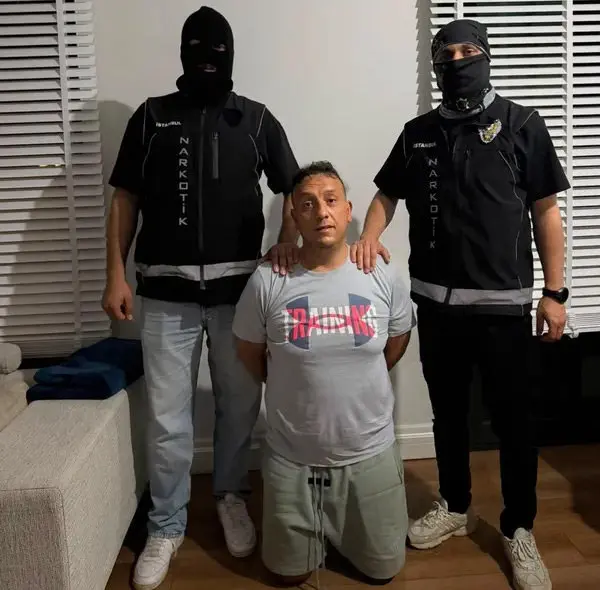
The arrest of an Afghan national wanted through an INTERPOL Red Notice in the western Turkish province of Kütahya on June 21, 2026, has once again shown a pattern that has increasingly defined Turkey’s place in global organized crime networks, with internationally wanted suspects being found inside the country, sometimes after earlier encounters with Turkish law enforcement.
Police said 29-year-old Nazar Mohammad Nazari was detained during a routine inspection in Kütahya while using a false identity. Database checks later showed that he had been wanted worldwide under an INTERPOL Red Notice since November 2023. It further emerged that the a local court in Konya had sentenced him in absentia to 12 years, six months in prison, since he was not in custody during the proceedings and was never later arrested.
Court-linked information in the case adds a key detail. Nazari had already been detained in Turkey in earlier proceedings related to the same offense, convicted and later released during judicial processes before disappearing. His reappearance under a false identity turned his latest arrest into a repeat encounter with the system rather than a first interception.
That sequence of detention, conviction, release, disappearance and re-detention has become a recurring feature in several recent Turkish cases involving internationally wanted suspects.

Turkey ranked 10th among 193 countries in the 2025 Global Organized Crime Index compiled by the Geneva-based Global Initiative Against Transnational Organized Crime. It also ranked first in Europe for overall levels of organized crime. The report put Turkey among the world’s leading hubs for criminal markets including drug trafficking, arms smuggling and human trafficking. It also described the country’s institutional resilience against organized crime as weak and linked the expansion of illicit economies to economic instability and regulatory vulnerabilities in financial oversight.
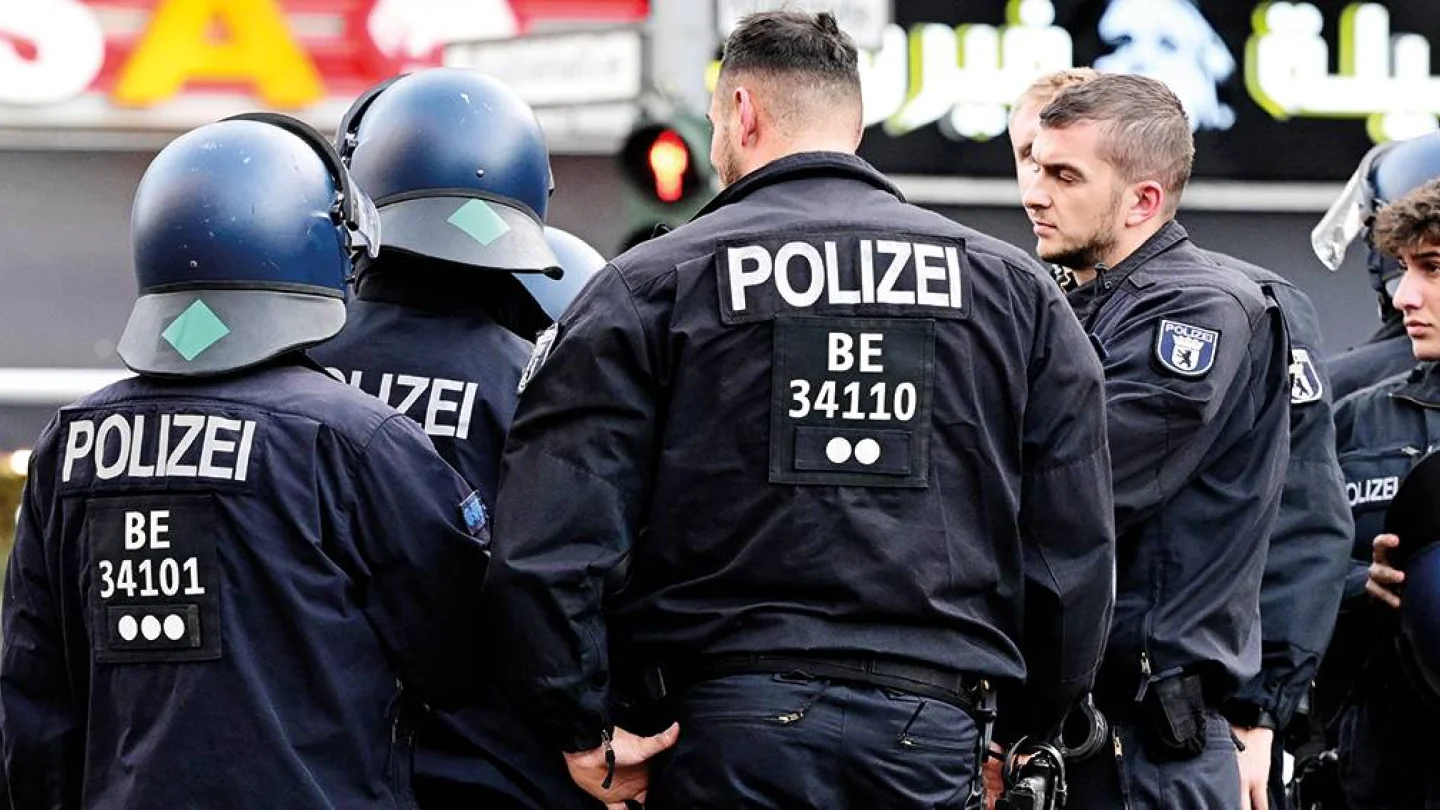
These findings are reflected in a growing number of arrests announced by Turkish authorities. In June police detained Iranian national R.A. at Istanbul Airport after identifying him as wanted by Iranian authorities on drug trafficking and smuggling charges. In May Turkish police and intelligence units detained 14 suspects across multiple cities under INTERPOL Red Notices and diffusion alerts. The charges included murder, theft, fraud and participation in criminal organizations.
Earlier this month Turkish authorities detained Dutch national Sezgin Kement in Istanbul’s Şişli district, identified in official statements as a narcotics trafficker wanted through an INTERPOL Red Notice. On the same day, Swedish national Nawar Atheer, also wanted internationally on drug trafficking allegations, was detained in the coastal district of Çeşme.

These arrests reflect an expanded operational tempo by Turkish security forces targeting transnational criminal networks. They also show that many of the individuals detained had been living in Turkey for extended periods, using residential addresses, commercial links or property holdings while subject to foreign investigations.
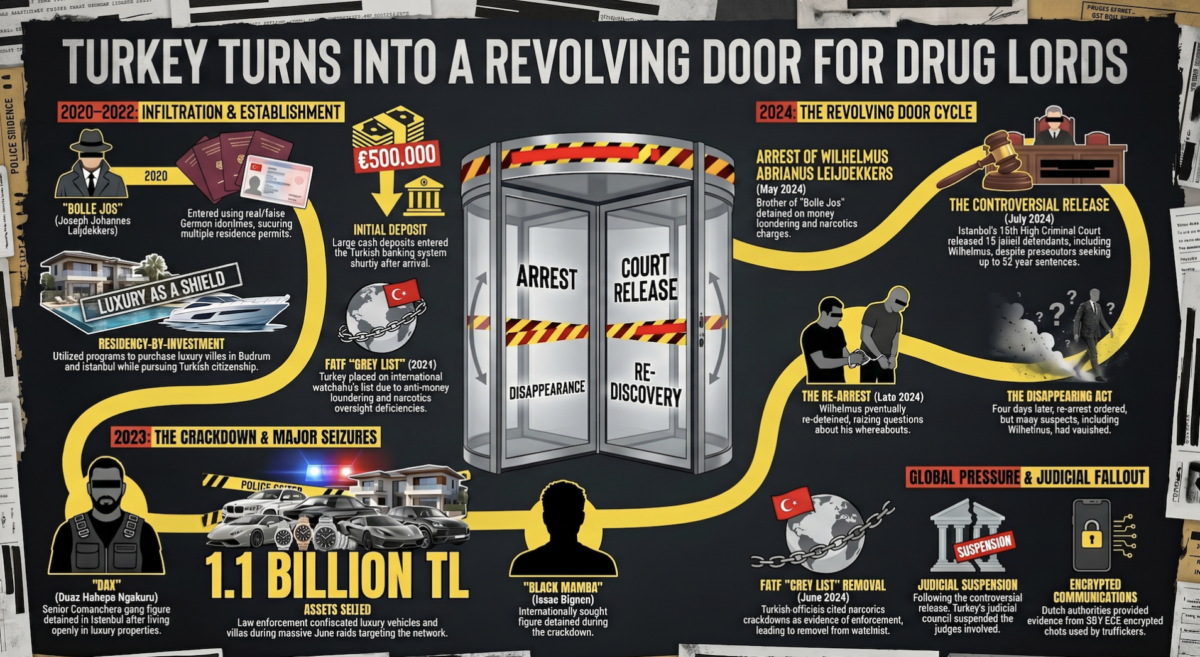
One of the most widely documented examples comes from investigations into Dutch cocaine trafficking networks connected to the Leijdekkers organization. Court files and investigative records show that members of the network obtained residence permits, acquired luxury real estate in Istanbul and Bodrum and moved significant financial assets through Turkish banking channels.
In one documented sequence, a suspect linked to the organization was detained in Turkey, released during judicial proceedings and later disappeared before being re-arrested in a subsequent operation. Prosecutors later issued renewed warrants, but several individuals connected to the case disappeared.
The chronology of arrests, releases and renewed detentions has reinforced concerns among foreign judicial authorities that Turkey has become a repeated operational environment for transnational crime groups rather than a transit point.
Further cases underline the same trend. Serbian organized crime figure Jovan Vukotić, leader of the Skaljari clan, was killed in Istanbul in 2022 after reportedly living in Turkey under false documentation. Australian-linked suspect Duax Hohepa Ngakuru was detained in Istanbul in 2023 after allegedly residing openly in luxury properties while being associated with global narcotics trafficking networks.
Turkey’s position in global organized crime assessments provides context for these cases. The 2025 Global Organized Crime Index places the country high in exposure to illicit markets operating across borders, particularly drug trafficking routes linking Latin America, Europe and the Middle East.
Beyond enforcement operations, Turkey’s residency and citizenship by investment frameworks have also come under scrutiny in multiple investigations. These systems allow foreign nationals to obtain residence permits or citizenship through property acquisition, a mechanism that in several cases has intersected with individuals later identified in international criminal files.
Financial amnesty programs allowing the entry of foreign currency and undeclared assets into the banking system with limited scrutiny over their origin have further contributed to concerns that illicit financial flows can be integrated into legitimate economic channels.
Combined with Turkey’s geographic position among Europe, Asia and the Middle East, these conditions have contributed to its attractiveness for internationally mobile criminal actors seeking logistical access, financial infrastructure and operational concealment.
Turkish officials have long rejected claims that the country functions as a safe haven for international criminal organizations. At the same time enforcement operations have intensified in recent years, with coordinated actions involving police, intelligence services and border security agencies targeting INTERPOL-listed suspects across multiple provinces.
Yet each new arrest also points to a persistent contradiction. While enforcement capacity has increased, the continued identification of fugitives in apartments, airport terminals, resort towns and residential safe houses suggests that Turkey remains a recurring location for individuals wanted abroad.
For Turkish security officials, the repeated ability to locate and detain internationally wanted suspects reflects a system in which access to intelligence and enforcement capacity allows authorities to reach targets across major cities, border crossings and transit hubs. At the same time, the pattern of arrests following periods of prolonged presence suggests that some suspects are able to remain in the country for extended periods before enforcement actions are taken.
The timing of operations, often coinciding with shifts in political and security priorities, has led to a perception among foreign investigative files that certain individuals may operate with varying levels of scrutiny over time. In several cases, suspects later detained in high-profile operations were previously known to authorities and had already appeared in earlier investigations or court proceedings.
Taken together, these cases point to an enforcement environment in which internationally wanted individuals can remain in Turkey for long periods and are later detained once political focus intensifies, particularly in cases involving transnational organized crime networks.