
Levent Kenez/Stockholm
A parliamentary meeting in Ankara has provided detailed insight into the overseas operations of Turkey’s Directorate of Religious Affairs (Diyanet), as European governments continue to impose financial and regulatory restrictions on the institution and its affiliated networks.
The briefing took place at the Turkish Parliament’s Subcommittee on Turks Abroad and Related Communities on April 2. During the session the Diyanet’s director general for foreign relations, Ensari Yentürk, delivered a presentation on the institution’s international activities, personnel structure and funding model. Deputy President of the Diyanet, Fatih Mehmet Karaca, also addressed internal institutional matters during the meeting.
According to the data presented, the Diyanet currently operates abroad with 2,430 personnel engaged in religious services, education and humanitarian activities. Yentürk said these programs are largely financed through affiliated foundations rather than direct allocations from the Turkish state budget, mainly by the Turkey Diyanet Foundation (Türkiye Diyanet Vakfı, TDV).
In addition to its budget the Diyanet earns vast sums of money through its operations for the Hajj and Umrah pilgrimages and the funds transferred to the TDV and through various undisclosed investments.
The TDV was initially established as a small charity organization in 1975 by the Diyanet. Today the foundation operates a vast number of businesses and has some 1,000 branches across Turkey. The TDV is also in charge of the government’s mosque projects outside the country.

The meeting comes amid increasing scrutiny by European governments, particularly in Germany, France, Austria, the Netherlands and Belgium, where the Diyanet maintains an extensive presence through mosque federations and religious foundations.
A central issue discussed was the growing number of financial restrictions imposed on Diyanet-linked entities. In several European countries, bank accounts belonging to affiliated foundations have been frozen or subjected to lengthy compliance procedures. These measures have directly affected operational continuity, including delays in salary payments, disruptions in mosque services and limitations on educational activities.
Participants reported that in some cases, even locally collected donations could not be accessed, leaving institutions unable to maintain routine operations. Legal challenges and diplomatic contacts have been initiated, but account blocks have remained unresolved for extended periods.
The presentation also outlined the Diyanet’s personnel pipeline. According to figures shared at the meeting, Turkey’s imam-hatip religious high schools graduate approximately 70,000 to 80,000 students annually, while theology (ilahiyat) faculties produce between 8,000 and 10,000 graduates each year.
These graduates form the recruitment base for the Diyanet. A portion of them are incorporated into the institution and assigned to roles both domestically and internationally. Thousands of religious officials are currently deployed abroad with a significant concentration in Europe.
Before being sent overseas, these people undergo standardized training in Turkey. Their duties include leading prayers, delivering sermons, providing religious education and organizing community activities within mosque networks.
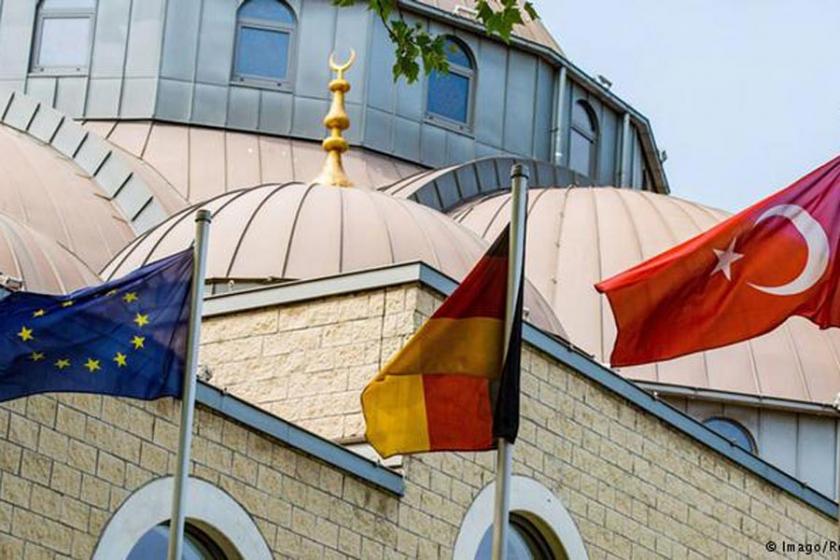
Country-specific discussions highlighted a consistent trend across Europe: increased regulatory control over the Diyanet’s operations. In Germany, the institution operates mainly through the Turkish-Islamic Union for Religious Affairs (DITIB), one of the largest Muslim umbrella organizations in the country. In France and Austria, legal reforms have targeted foreign state influence in religious institutions, introducing stricter financial transparency rules and encouraging the training of locally based clergy. Similar oversight measures have been expanded in the Netherlands and Belgium.
European governments have increasingly justified these measures by pointing to the Diyanet’s role as the “long arm” of President Recep Tayyip Erdogan. In several countries, authorities treat the institution not as an independent religious body but as a vehicle for projecting Ankara’s political influence into diaspora communities. This assessment has shaped concrete policy responses, including the freezing of bank accounts, expanded oversight of mosque activities and stricter visa rules for religious personnel sent from Turkey. The resulting erosion of trust has become a central factor affecting the Diyanet’s ability to operate across Europe.
The meeting also addressed long-term engagement strategies targeting diaspora communities. A proposal was presented by Zafer Sırakaya, the ruling Justice and Development Party (AKP) lawmaker in charge of the party’s foreign relations and a figure known for his role in orchestrating PR campaigns and polishing the international image of Bilal Erdogan, a son of President Erdogan. Sırakaya’s proposal included plans to bring youngsters living abroad to the Turkish Parliament to meet with political figures as part of programs organized in coordination with Diyanet-affiliated institutions. The proposal also emphasized informing participating youths about groups critical of President Erdogan, including the Gülen movement, a religious group inspired by the late cleric Fethullah Gülen, whose supporters have been subject to extensive legal and political pressure in Turkey.
In addition, these youngters would be systematically incorporated into religious education programs, cultural activities and community events conducted through mosque networks, with the aim of integrating younger generations into these institutional structures at an early stage.
Graduates from imam-hatip schools and theology faculties are expected to play a central role in implementing these programs, serving as educators and coordinators within local communities.
In addition to youth engagement, the meeting reviewed coordination between the Diyanet and other Turkish state-linked entities abroad, including consulates and cultural organizations. These structures operate in parallel and maintain regular contact in organizing activities in diaspora communities.
In response to growing concerns across Europe over the role of Diyanet-linked institutions, Germany also intensified its scrutiny of DITIB. The German Interior Ministry last September urged the organization to clearly distance itself from extremist rhetoric following an Istanbul conference attended by then-Diyanet president Ali Erbaş, where statements perceived as supportive of Hamas and references to “global jihad” triggered political concern in Berlin.
Minutes of the parliamentary meeting on April 2:
This development is part of a broader pattern in which German authorities have increasingly questioned DITIB’s institutional dependence on Ankara and its alignment with Turkish state policies. Previous investigations, including a 2017 probe into allegations that DITIB imams gathered intelligence on critics of the Turkish government, have contributed to a longstanding climate of mistrust. In parallel, Berlin has expanded efforts to reduce reliance on foreign-appointed clergy by funding domestic imam training initiatives, including cooperation with the Islamkolleg Deutschland, as part of a policy shift aimed at replacing the traditional system of imams dispatched and financed by the Diyanet.
Meanwhile, the Diyanet has continued to expand its international training and deployment networks despite mounting regulatory pressure in Europe. More than 1,000 students from Europe and North America have participated in Diyanet-sponsored theological education programs in Turkey, forming part of a wider institutional pipeline designed to sustain its overseas religious presence.
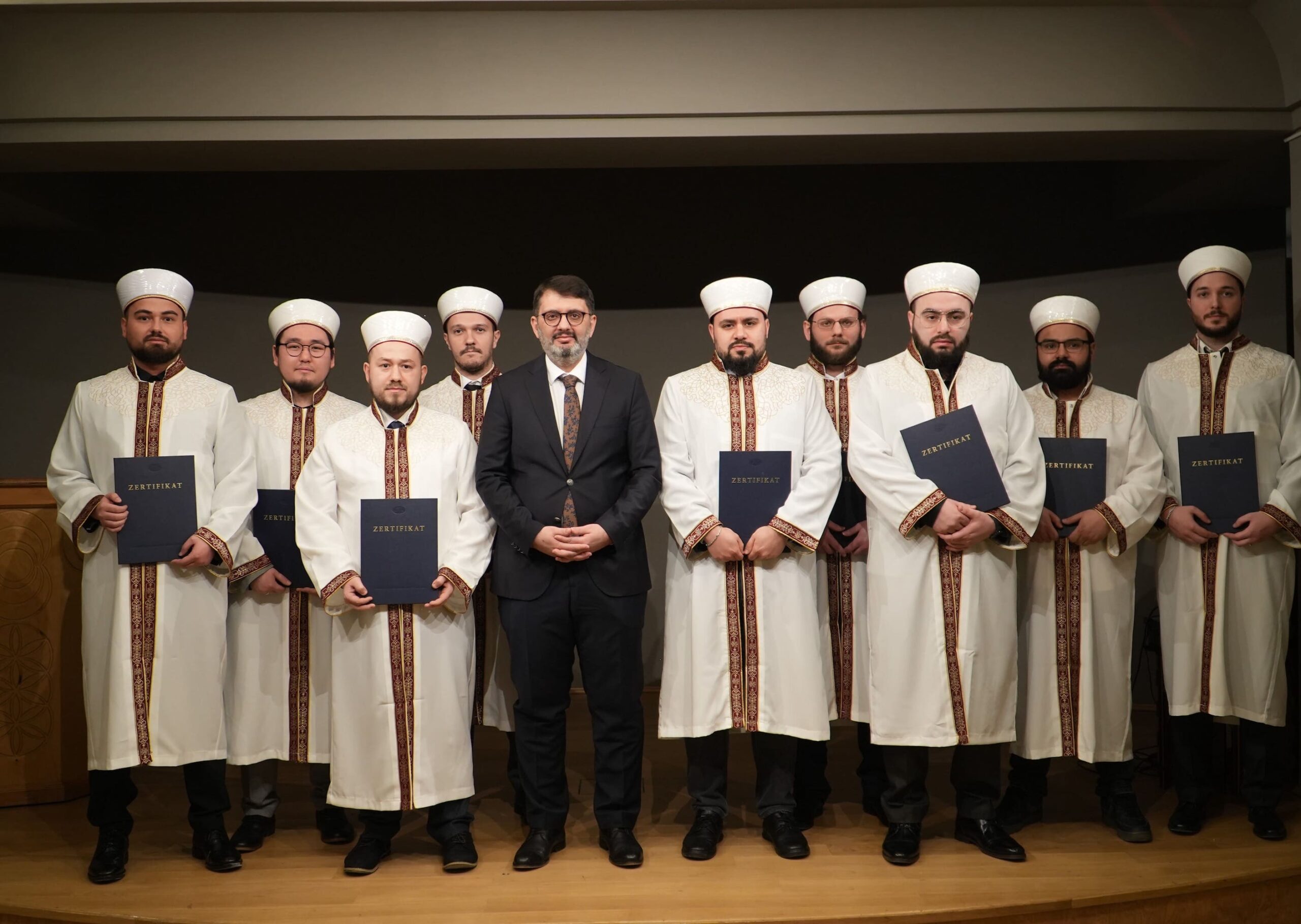
DITIB has implemented a structured recruitment and deployment program involving theology graduates from Turkey. Under a scheme launched in 2025, 75 graduates annually are sent to Germany to complete a two-year training at the DITIB Academy in Dahlem. After completion, they are appointed as imams in DITIB-affiliated mosques under a contractual obligation to serve for at least 10 years, with financial repayment conditions imposed for early termination.
According to DITIB officials, approximately 1,200 clergy of Turkish origin are currently active in Germany, including around 250 who have undergone local training and acquired German language proficiency. Since its establishment in 2020, the academy has graduated 53 imams, forming part of a broader institutional framework that includes the International Theology Program, which brings scholarship-funded students from Europe to Turkey for religious education.
German authorities continue to raise concerns regarding the integration of foreign-trained imams, particularly in relation to language proficiency, socio-cultural adaptation and the perceived influence of foreign governments over religious services in diaspora communities.