

Levent Kenez/Stockholm
A wide-ranging renewable energy agreement between Turkey and Saudi Arabia, recently submitted to the Turkish Parliament for approval, is drawing scrutiny for the scale of incentives offered to Saudi investors and for differences between official statements and the contract’s detailed terms.
The agreement sets out a framework for large-scale solar energy investments led by a Saudi-backed developer, beginning with a 2,000-megawatt phase and expanding toward a larger 5,000-megawatt target. The deal has emerged as part of Ankara’s broader effort to rebuild and deepen ties with Riyadh, particularly following a period of strained relations earlier in the decade.
At the signing ceremony in Riyadh on February 3, Turkish Energy Minister Alparslan Bayraktar described the project as a landmark for affordable energy and foreign investment. He said Turkey would purchase electricity at “1.99 euro cents per kilowatt-hour” for “approximately 25 years,” calling it the lowest price the country has seen and emphasizing that the project would bring around $2 billion in investment through a mix of domestic and international financing.
However, the agreement submitted to parliament outlines a broader set of obligations and incentives that go beyond those public remarks.
According to the contract and the explanatory note submitted to parliament by President Recep Tayyip Erdogan, the state-run Electricity Generation Corporation (Elektrik Üretim Anonim Şirketi or EÜAŞ) undertakes to purchase electricity generated under the project for a period of 30 years, thereby extending the commitment beyond the 25-year timeframe cited by the minister. The deal also specifies that all payments will be made in Euros, putting long-term currency risk on the Turkish side in a country that has experienced significant exchange rate volatility in recent years.
The pricing structure is also more complex than initially presented. The agreement sets a tariff of “47.5 EUR/MWh for the first five years,” equivalent to approximately 4.75 euro cents per kilowatt-hour, more than double the rate mentioned by Bayraktar, before declining in later years. The lower figure cited publicly appears to reflect either a later-stage tariff or an averaged price over the project’s lifespan.
Beyond pricing, the agreement includes provisions that significantly reduce risk for the Saudi-backed developer. It states that in cases such as force majeure, grid constraints or system operator instructions, “the relevant energy amount shall be deemed as generated,” indicating that payments may continue under certain circumstances even if electricity is not physically produced.

The contract also establishes a wide-ranging system of tax exemptions. It provides that imported equipment “shall be exempt from customs duties, VAT and other import taxes,” while domestic purchases “shall be subject to VAT exemption.” In addition, documents executed under the agreement “shall be exempt from stamp duty,” creating a largely tax-free operating environment for the project.
Land and infrastructure arrangements further tilt the cost structure. The agreement specifies that “land acquisition and required expropriation procedures shall be carried out by EÜAŞ,” and grants the project company “the right to use the project site free of charge for a period of 49 years.” This effectively removes land acquisition costs and administrative burdens for the developer.
Grid connection responsibilities are also assigned to the public sector. “Connection to the transmission system and capacity allocation shall be provided by the relevant system operator,” the agreement states, with transmission-related costs borne by the buyer.
Legal safeguards are embedded in the agreement as well. Disputes “shall be resolved through international arbitration,” including mechanisms such as the International Centre for Settlement of Investment Disputes, an international arbitration institution, placing potential conflicts outside Turkey’s domestic court system and within internationally recognized arbitration frameworks.
The ownership structure gives the Saudi developer significant flexibility. The agreement states that the project company “shall initially be wholly owned by the Developer,” with the possibility of reducing its shareholding to 35 percent over time while retaining certain rights.
Taken together, these provisions create a framework that limits financial, operational and legal risks for the investor while ensuring predictable, long-term revenue supported by a state-backed buyer.
Analysts say such arrangements are often used by governments seeking to attract large-scale foreign capital, particularly in capital-intensive sectors such as energy. In Turkey’s case, the agreement is widely seen as part of a broader strategy to strengthen economic ties with Gulf countries, especially Saudi Arabia.
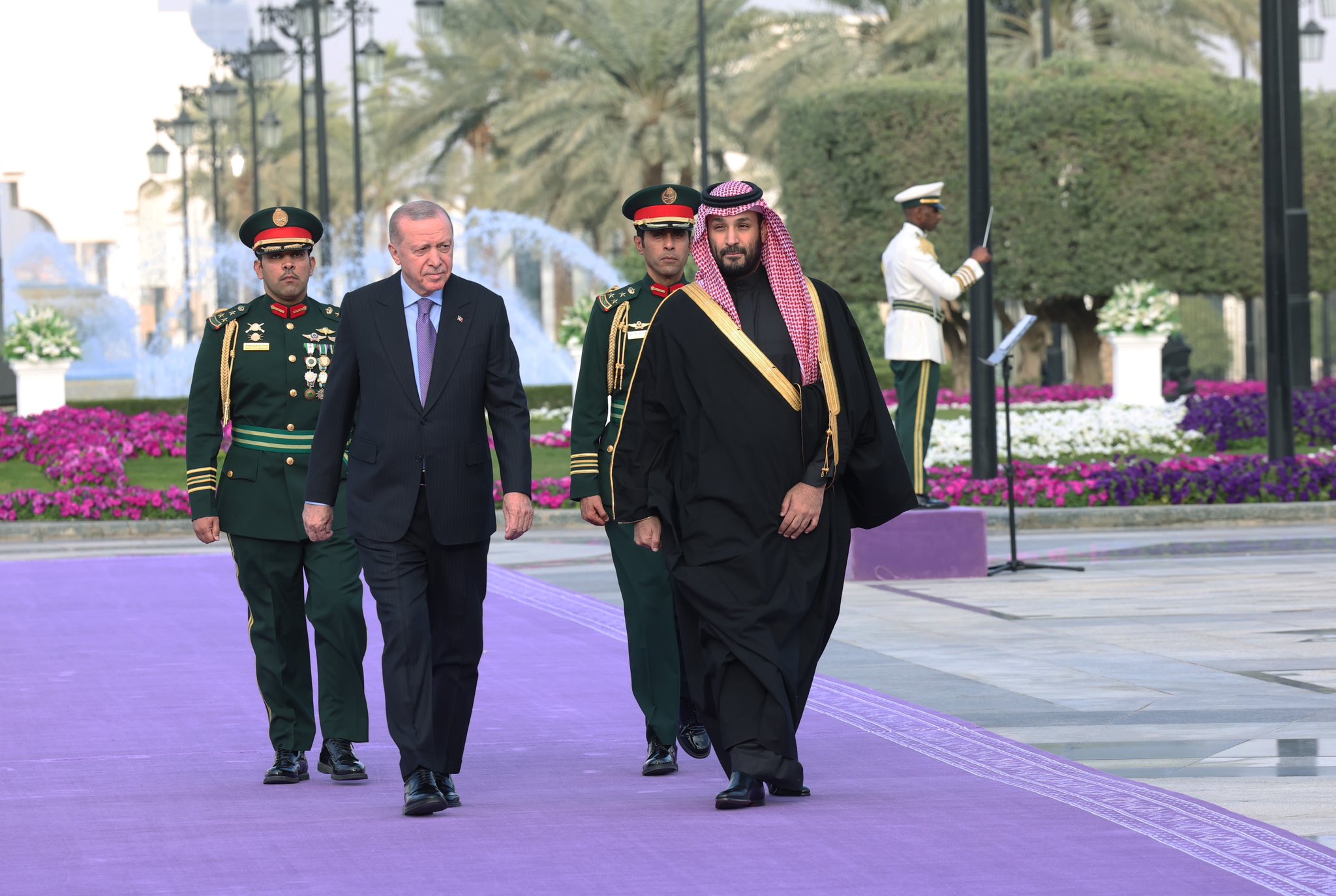
Relations between Ankara and Riyadh have improved markedly in recent years after a period of political tension. President Recep Tayyip Erdogan has made multiple visits to Saudi Arabia, focusing on economic cooperation, investment and trade. Turkish officials have increasingly emphasized the importance of Gulf capital in supporting economic growth, stabilizing financial markets and funding large infrastructure projects.
Within this context, the energy agreement appears to function not only as a commercial contract but also as a tool of economic diplomacy, offering incentives and guarantees to attract Saudi investment and reinforce bilateral ties.
For Turkey, the project is expected to contribute to renewable energy capacity, reduce reliance on imported fossil fuels and bring in external financing without immediate direct public spending. The agreement also states that “at the end of the contract period, the facilities shall be transferred to EÜAŞ free of charge,” ensuring eventual public ownership of the assets.
Official text of the agreement in English:
At the same time, the scale of incentives and guarantees has prompted debate over long-term fiscal exposure. Euro-denominated payments could increase costs if the Turkish lira weakens, while tax exemptions and state-backed infrastructure responsibilities may result in indirect public costs over the life of the project.
The absence of explicit references to a competitive bidding process in the agreement has also attracted attention. The text states that it “has been executed by mutual agreement between the Parties,” without detailing an open bidding mechanism.
Turkey’s reliance on international partnerships in the energy sector extends beyond renewables. The country previously commissioned a nuclear power plant built by Russia in the south of Turkey and is in discussions with companies from the United States and South Korea for additional nuclear projects, reflecting a diversified approach to meeting long-term energy demand.