
Abdullah Bozkurt/Stockholm
Documents obtained from a confidential terrorism investigation into an Islamic Revolutionary Guard Corps (IRGC) Quds Force network in Turkey have revealed that a man who currently serves as an economic advisor to President Recep Tayyip Erdogan previously worked for several years at the World Bank, operating out of Washington, D.C., with responsibilities spanning multiple countries.
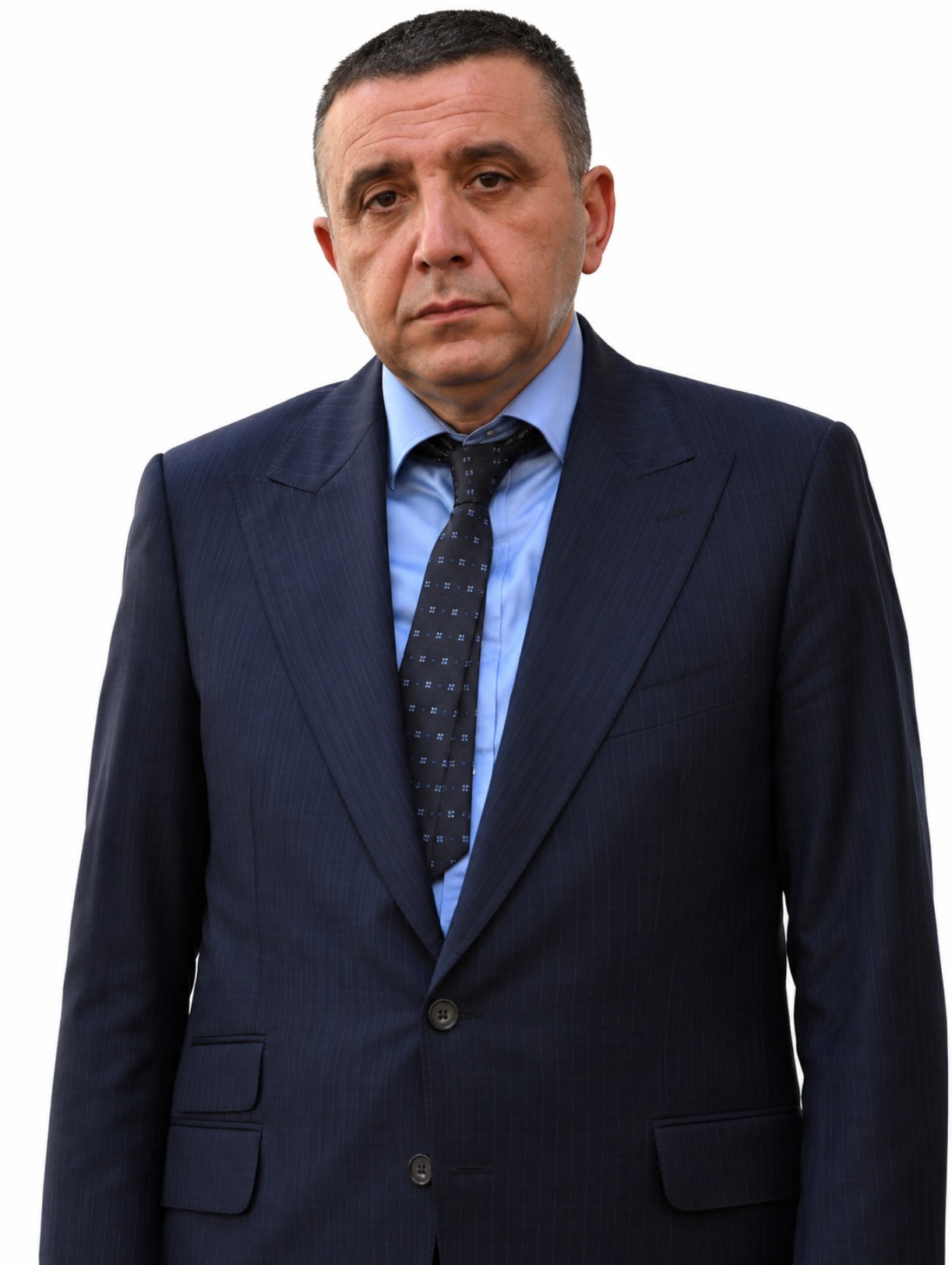
Hayrettin Demircan, identified as one of the key suspects in the Quds Force’s Turkish network known as Selam Tevhid, had been formally designated a suspect by public prosecutors investigating clandestine Iranian intelligence activities on Turkish soil as part of a terrorism probe.
Demircan first came under scrutiny by a counterterrorism police unit after critical evidence was uncovered in a private cache of documents belonging to Hüseyin Avni Yazıcıoğlu, a known Iranian intelligence asset. Yazıcıoğlu had been convicted in the early 2000s, fled to Iran after his ties to Iranian intelligence were exposed. He returned to Turkey after Erdogan came to power, served brief prison time before he was released and reactivated by the Quds Force after lying low for some time.
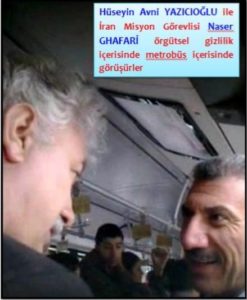
The evidence against Demircan emerged from documents compiled by Yazıcıoğlu, who had prepared a list of Turkish government officials viewed favorably by the IRGC as potential or active assets. These individuals were described as having sympathetic views toward Iran’s clerical regime. Yazıcıoğlu had acted under instructions from his handler, Quds Force general Naser Ghafari, who operated in Turkey under diplomatic cover.
The police surveillance request was conveyed to the Istanbul prosecutor’s office overseeing the confidential probe into the IRGC Quds Force network in Turkey:
According to the documents, Ghafari tasked Yazıcıoğlu with cultivating ties within the Turkish bureaucracy and reporting back on individuals who could be co-opted. Following a series of meetings, travel and communications, Yazıcıoğlu compiled a list in which certain officials were marked with plus signs, indicating their perceived willingness to advance the strategic objectives of Iran’s ruling regime abroad.
At the time, Demircan was serving as head of the European Union department at the Directorate General of Banking and Foreign Exchange within Turkey’s Undersecretariat of the Treasury. In the intercepted IRGC-linked document, his name was marked with a plus sign. Others receiving similar marks included Hakan Fidan, then head of Turkey’s National Intelligence Organization (MIT) and currently foreign minister, as well as Musa Kulaklıkaya, then head of the Turkish Cooperation and Coordination Agency (TİKA) and now deputy foreign minister.
Following these findings, Turkish investigators began closely examining Demircan. Phone records recovered from Yazıcıoğlu’s contacts revealed that Demircan’s personal mobile number was listed in his directory.
Based on the initial evidence, prosecutors secured court warrants to wiretap Demircan’s phone, put him under surveillance and monitor his movements. On December 12, 2011, the Istanbul 14th High Criminal Court authorized the interception of his communications upon a request submitted by prosecutors based on an application from the Istanbul Police Department’s counterterrorism branch.
Demircan was also placed under a covert surveillance program after police argued that physical monitoring was necessary to uncover the operational structure of the Quds Force network, establish links among its members, gather evidence of criminal activity and better understand the organization’s methods.
The warrants were renewed multiple times as prosecutors sought to map Demircan’s network of associates. The evidence collected was later incorporated into the broader terrorism investigation into the Quds Force’s Turkish operations.
A police surveillance report, which included photographs, documented Hayrettin Demircan meeting with Quds Force operatives at a teahouse called Somuncubaba Çay Ocağı in Istanbul’s conservative Fatih district, where they exchanged information:
Wiretap recordings and surveillance findings indicated that Demircan maintained extensive contacts with multiple Quds Force operatives. In one intercepted conversation dated February 3, 2012, he spoke with Ali Gümüş, who was known to organize trips to Iran at the request of the Quds Force in order to cultivate new Turkish assets.
During the call, the two discussed fast-tracking a bureaucratic process within the government and commented on a newly appointed treasury official. Demircan noted that although the official had studied at the same university during the same years, he did not personally know him. He added that if the individual had belonged to their “inner circle,” he would have been aware of him — remarks that investigators interpreted as suggesting Demircan’s longstanding association with Iranian-linked networks dating back to his university years.
Police assessments concluded that Demircan played a key role in developing assets in the Turkish bureaucracy on behalf of the Quds Force. Investigators noted that he employed operational security measures to conceal his activities, took precautions to avoid surveillance during meetings with other operatives and actively attempted to obscure his tracks.
The intercepted IRGC intelligence note lists the names of Turkish officials identified as actual or potential assets by a Quds Force operative in Turkey:
One surveillance report indicated that Quds Force operatives frequently met at a teahouse called Somuncubaba Çay Ocağı, located in the conservative Fatih district of Istanbul, where they exchanged information. Demircan was identified as a regular participant in these meetings, with police documenting his presence along with other suspects through photographic evidence.
At a meeting in March 2012, Demircan was observed with Cemalettin Yılmaz Alban, another Quds Force operative tasked with gathering intelligence on Turkish government officials and relaying it to Yazıcıoğlu. Mahmut Aydın and Ali Gümüş were also present at the gathering.
In a separate phone conversation on February 13, 2012, Demircan instructed an individual identified only as Ahmet to organize discreet evening meetings in Ankara with a select group. The contact assured him that the arrangements would be handled carefully to avoid exposure.
During a police interview conducted on September 29, 2014, Demircan acknowledged that he personally knew Yazıcıoğlu and had met with him several times. He described Yazıcıoğlu as a close associate of his uncle, Mahmut Aydın, but denied any involvement in Quds Force activities.
The confidential judicial investigation was effectively shut down by the Erdogan government after it became aware of the probe in February 2014. Judges, prosecutors and police officials involved in the case since 2011 were removed from their positions and later purged or imprisoned on politically motivated charges.
İrfan Fidan, a staunch Erdogan loyalist who was appointed to take over the case, dropped the investigation into the Quds Force network. He was subsequently rewarded with a seat on Turkey’s Constitutional Court.
Shielded from what could have resulted in serious criminal charges had the investigation proceeded, Demircan continued to rise within the Turkish state apparatus. In August 2016 he was appointed deputy undersecretary at the Ministry of Finance and Treasury. In 2018 Erdogan named him director of the board of the Turkey Development and Investment Bank (Türkiye Kalkınma ve Yatırım Bankası).
At the request of the Turkish government, Demircan served at the World Bank in Washington, D.C., from November 2020 to November 2024 as one of 25 executive directors on the institution’s board. In that role he participated in overseeing the bank’s general operations and took part in decisions on loans, credits, grants, policy and financial matters. He represented a constituency that included Austria, Belarus, Belgium, the Czech Republic, Hungary, Kosovo, Luxembourg, the Slovak Republic, Slovenia and Turkey.
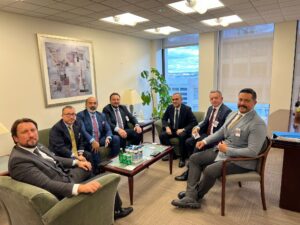
During his tenure at the World Bank, Demircan maintained frequent contacts with Islamist networks, including the pro-Iran Turkish business association MÜSİAD.
Since April 2025, he has been serving as a member of the Presidential Board of Economic Policies, advising President Erdogan on economic and financial matters.