
Abdullah Bozkurt/Stockholm
Fresh sanctions unveiled by the US Treasury on February 10 have exposed how Turkey has once again emerged as a logistical and commercial hub for Hezbollah’s efforts to evade international sanctions, generate revenue and sustain its militant operations across the Middle East, emphasizing Ankara’s persistent failure to curb illegal networks operating on its territory.
The Office of Foreign Assets Control (OFAC) said the measures target two core financial lifelines that Hezbollah relies on to survive mounting international pressure: a gold-for-cash operation run through a front company controlled by the group’s shadow banking arm, al-Qard al-Hassan (AQAH), and an international procurement and shipping network that exploits regional trade routes, including through Turkey, to move Iranian goods and generate millions of dollars in revenue for the Iran-backed organization.
US officials described Hezbollah as a continuing threat to regional stability, warning that the group has adapted to financial isolation by embedding itself in informal economies, commodity trade and opaque shipping networks that span Iran, Lebanon, Turkey, Syria and Russia. The latest sanctions show how Turkish-registered companies and Turkey-based logistics channels have become part of this infrastructure.
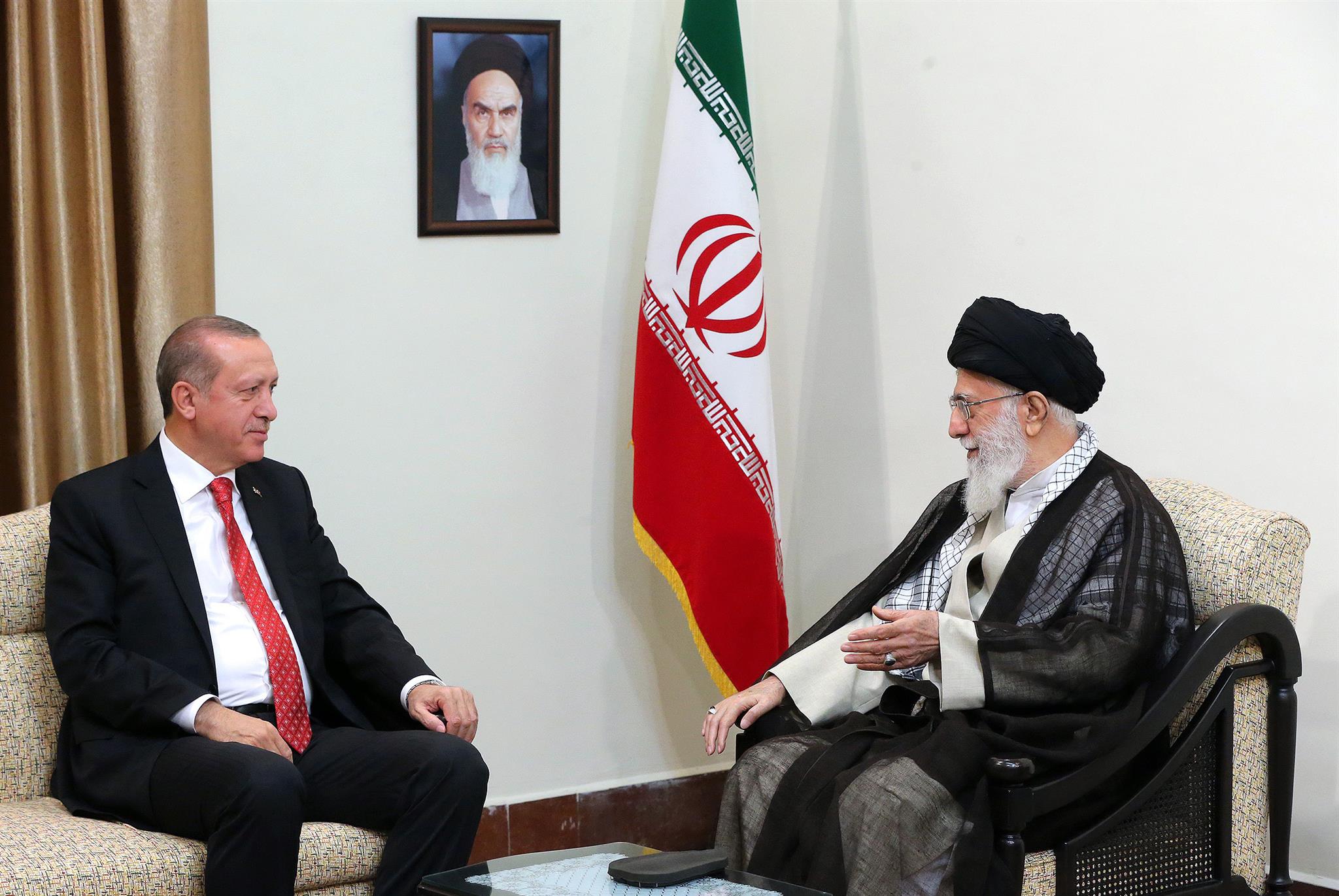
The current Islamist government of Turkey, led by the anti-Israel President Recep Tayyip Erdogan, has never taken any action to curb this illegal funding for Hezbollah. On the contrary, it has allowed the militant organization to tap into Turkey’s business infrastructure, including the financial, banking and logistics sectors. The fact that US-sanctioned companies continue to operate in Turkey tells the tale.
According to the Treasury, Hezbollah financiers used Turkey-based trading company Platinum Group International Dış Ticaret Limited Şirketi to facilitate the export of millions of dollars’ worth of Iranian fertilizer to Turkey in late 2025 by falsifying shipping documents and misrepresenting the origin of the cargo as Oman. The scheme was designed to bypass sanctions on Iranian exports while generating cash for Hezbollah’s operations.
Platinum Group was established in August 2024 by Turkish national Murat Aslan with capital of 30 million Turkish lira.
Official trade registry record of Platinum Group International Dış Ticaretb Limited Şirketi:
The network also relied on Turkey-based Sea Surf Shipping Limited, which owned the Saint Kitts and Nevis-flagged cargo vessel LARA, to move sanctioned goods as part of a broader shipping chain linked to the Islamic Revolutionary Guard Corps-Quds Force and Hezbollah-affiliated Syrian businessman Abdul Jalil Mallah. The fertilizer cargo was loaded onto the Panama-flagged BRILLIANCE, owned by Panama-based Brilliance Maritime Ventures S.A., a company the Treasury said was part of a fleet previously managed by the IRGC-QF and Hezbollah-linked interests.
US authorities said the operation was coordinated by Hezbollah’s Iran-based finance team member Ali Qasir, working alongside a web of sanctioned facilitators across the region. These included Samer Kasbar, the director of Hezbollah front company Hokoul SAL Offshore; Syrian businessman Yaser Husayn Ibrahim; and Russian national Andrey Viktorovich Borisov, who has been working from Moscow with Hezbollah-linked Turkish trading company Mira İhracat İthalat Petrol to procure weapons and move commodities.
According to trade registry data reviewed by Nordic Monitor, Mira İhracat İthalat Petrol Ürünleri Sanayi Ticaret Limited Şirketi (Mira) was established in December 2018 in Istanbul by Ibrahim Talal al-Uwayr, who later assumed the Turkish name İbrahim Ağaoğlu after becoming a Turkish citizen, with initial capital of 500,000 Turkish lira.
Mira’s activities are overseen by Iran-based, US-designated Hizballah finance facilitator Ali Qasir. In March 2021 the company was transferred to Syrian national Rana Alwarea. In September 2024 the capital was increased to 7.5 million Turkish lira.
By designating the Turkish firms and shipping companies involved, Washington signaled that Turkey’s territory and corporate registry are again being exploited by sanctioned networks to launder trade flows, move restricted goods and disguise the origin of Iranian exports.
The case adds to a growing body of evidence showing that Hezbollah and Iranian networks have used Turkey as a transit point and commercial platform, often benefiting from a lack of enforcement by the Erdogan government, lax corporate oversight and limited scrutiny of shipping and trade intermediaries.
This isn’t the first time Ankara’s territory and commercial infrastructure have appeared in Hezbollah-linked money movements. In May 2025 Nordic Monitor reported that Israel lodged a formal complaint to the United Nations Security Council accusing Turkey of acting as a financial conduit for Hezbollah, including specific flights that originated in Turkey and allegedly carried cash destined for the militant organization in February 2025.
Israel’s complaint cited two commercial flights that landed in Beirut in early February 2025 with suitcases allegedly filled with cash intended for Hezbollah, a transaction that appears to prefigure the Treasury’s findings about Turkey’s involvement in sanctions-busting financial channels.
Along with the Turkey-linked network, OFAC sanctioned Lebanese gold exchange company Jood SARL, which operates under the supervision of AQAH, Hezbollah’s financial arm that masquerades as a licensed NGO while providing banking-like services to the group. US officials said AQAH established a chain of gold trading companies to convert Hezbollah’s reserves into usable cash to offset liquidity pressures in 2025, with Jood functioning as a key node in that system.
Senior AQAH officials, including Mohamed Nayef Maged and Ali Karnib, were identified as co-owners and managers of Jood, which operates branches in Hezbollah strongholds in Beirut, the Bekaa Valley and Nabatiyeh. The Treasury said the arrangement was designed to conceal Hezbollah’s financial flows and maintain access to cash despite international sanctions.
The trade registry of Mira İhracat İthalat Petrol Ürünleri Sanayi Ticaret Limited Şirketi reveals that Ibrahim Talal al-Uwayr acquired Turkish citizenship and assumed the Turkish name of İbrahim Ağaoğlu:
The sanctions package freezes any US-linked assets of the designated individuals and companies and exposes foreign banks and intermediaries to secondary sanctions if they continue doing business with them. Treasury officials warned that financial institutions facilitating transactions for the sanctioned entities could face severe penalties, including restrictions on access to the US financial system.
The revelations underscore how Hezbollah, backed by Iran, has diversified its revenue streams beyond traditional donations and criminal activity, embedding itself in commodity trading, shipping and informal finance networks that cut across multiple jurisdictions. Turkey’s appearance in this network highlights Ankara’s chronic unwillingness to dismantle sanction-busting operations that operate openly through Turkish-registered companies and ports.
Despite being a NATO member and a US ally on paper, Turkey has repeatedly surfaced in US and European investigations into Iranian and Hezbollah-linked sanctions evasion, illegal trade and financial crime. The latest designations add to growing international scrutiny of Turkey’s role as a permissive environment for networks tied to sanctioned actors, militant groups and organized crime figures operating at the intersection of geopolitics and illicit finance.
For Washington, the sanctions are intended not only to punish Hezbollah and its facilitators but also to pressure countries whose corporate and shipping infrastructure is being exploited by sanctioned networks. Whether Ankara will move to investigate and dismantle the Turkish companies named in the Treasury’s action remains an open question, given Turkey’s long record of turning a blind eye to illegal trade tied to Iranian and Islamist militant networks.