

Levent Kenez/Stockholm
Turkey has linked the future of northern Cyprus to a widening arc of geopolitical crises stretching from Gaza and Iran to the eastern Mediterranean and Central Asia, using a new cooperation agreement with the breakaway territory to articulate Ankara’s new strategic vision.
The 2026 Economic and Financial Cooperation Agreement between Turkey and the self-declared Turkish Republic of Northern Cyprus (KKTC), published in the Official Gazette following approval by President Recep Tayyip Erdogan, presents far more than a framework for economic assistance. Running through the document is a broader argument that Cyprus can no longer be viewed as an isolated territorial dispute but must instead be understood within a rapidly shifting regional security landscape shaped by war, energy competition and great power rivalry.
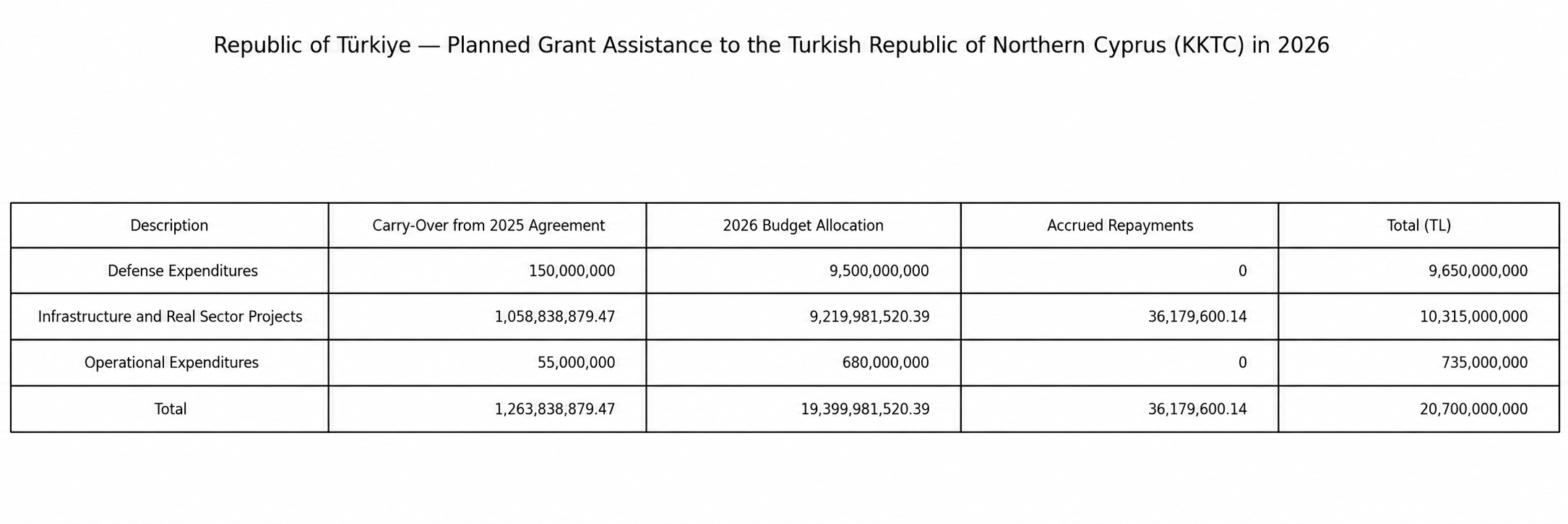
The agreement, which was signed on April 9, 2026, in Ankara, commits Turkey to provide 20.7 billion Turkish lira (about $453 million) in grant assistance to northern Cyprus in 2026. The attached budget tables show that 9.65 billion lira ($211 million) — nearly half of the total package — has been earmarked for defense spending, showing the extent to which security considerations now underpin Ankara’s approach to the island.
The allocation comes as Turkey portrays the eastern Mediterranean as a region undergoing profound strategic change. The document opens with a sweeping assessment of what it describes as an international order under strain from armed conflict, economic fragmentation and intensifying geopolitical competition. It cites the ongoing Russia-Ukraine war, the conflict in Gaza, tensions involving Iran, Israel and the United States, divisions within NATO, rising protectionism in Western economies and the continued shift of global economic weight toward the Asia-Pacific region.
Text of the financial agreement between Turkey and the KKTC:
According to the agreement, these developments are reshaping international power balances and creating new security risks across Turkey’s neighborhood.
The strongest language is reserved for Gaza. In a passage reflecting Ankara’s increasingly confrontational rhetoric toward Israel, the document accuses Israel of pursuing “the deliberate and systematic destruction” of Palestinians and argues that the international community’s failure to halt the humanitarian crisis exposed the limits of existing global institutions.
Turkey contends that the war reinforced the strategic relevance of its role as a guarantor power in Cyprus, drawing a direct connection between the perceived shortcomings of the international response in Gaza and Turkish Cypriot demands for sovereign equality and equal international status.
Rather than treating Cyprus as a frozen conflict awaiting a diplomatic settlement, the agreement repeatedly puts the island within the broader security architecture of the Middle East. It argues that instability across the region has heightened the strategic significance of northern Cyprus at a time when global and regional powers are competing for influence over maritime routes, energy resources and military positioning in the eastern Mediterranean.
The document points specifically to heightened uncertainty following the recent Iran-Israel/US confrontation and notes the deployment of major US military assets to the region amid fears of a wider escalation. It also mentions developments in Syria and the growing strategic importance of energy security, transportation corridors and supply-chain resilience.
Against that backdrop, Ankara presents northern Cyprus as an increasingly important strategic partner whose future is intertwined with Turkey’s own regional ambitions. The agreement states that the two sides must deepen political, military, economic and social cooperation in response to changing regional dynamics and asserts that their interests and security cannot be considered separately.
The language reflects the continued evolution of Turkey’s Cyprus policy away from the federal reunification model that dominated UN-sponsored negotiations for decades. While previous peace efforts focused on establishing a bi-zonal, bi-communal federation shared by the Greek Cypriots and the Turkish Cypriots, Ankara and Turkish Cypriot leaders have increasingly championed a two-state solution based on sovereign equality.
That position is woven throughout the agreement. References to Turkish Cypriots’ “inherent rights,” “sovereign equality” and “equal international status” appear repeatedly, while the document argues that Turkish diplomatic efforts are beginning to yield tangible results internationally.
As evidence, Ankara points to northern Cyprus obtaining observer status in the Organization of Turkic States in 2022 and mentions the participation of Turkish Cypriot leaders in regional summits. The agreement also references support expressed by several Turkic states for a settlement reflecting what it describes as the “existing realities” on the island.
Turkey says efforts to expand northern Cyprus’s international visibility will continue. The document also contains unusually direct criticism of the European Union. Ankara accuses Brussels of abandoning neutrality in eastern Mediterranean disputes by consistently siding with the internationally recognized Republic of Cyprus under the principle of EU solidarity.
According to the agreement, this approach has encouraged energy initiatives and maritime arrangements that exclude the Turkish Cypriots. The text argues that the EU has acted beyond its authority in maritime delimitation disputes and suggests that the bloc’s impartiality has become increasingly questionable.
The disagreement reflects a long-running dispute over offshore natural-gas reserves and competing maritime claims in the eastern Mediterranean, where Turkey has repeatedly challenged energy exploration agreements involving Cyprus and several regional partners. Ankara maintains that Turkish Cypriots are entitled to a share of offshore resources and should participate in any negotiations concerning maritime jurisdiction and energy development.
While the geopolitical messaging dominates much of the document, the financial structure of the agreement reinforces its strategic priorities.
Of the 20.7 billion lira (about $453 million) package, 10.315 billion lira ($225.6 million) is allocated to infrastructure and real-sector projects, while operational expenditures account for 735 million lira ($16.1 million). More than 1.26 billion lira ($27.6 million) has also been carried over from previous funding cycles. The infrastructure component includes investments in transportation, healthcare, education, digital transformation and municipal services, including hospital projects in Lefkoşa (Nicosia), Güzelyurt (Morphou) and Pamuklu (Pamuklu Village, Famagusta District).
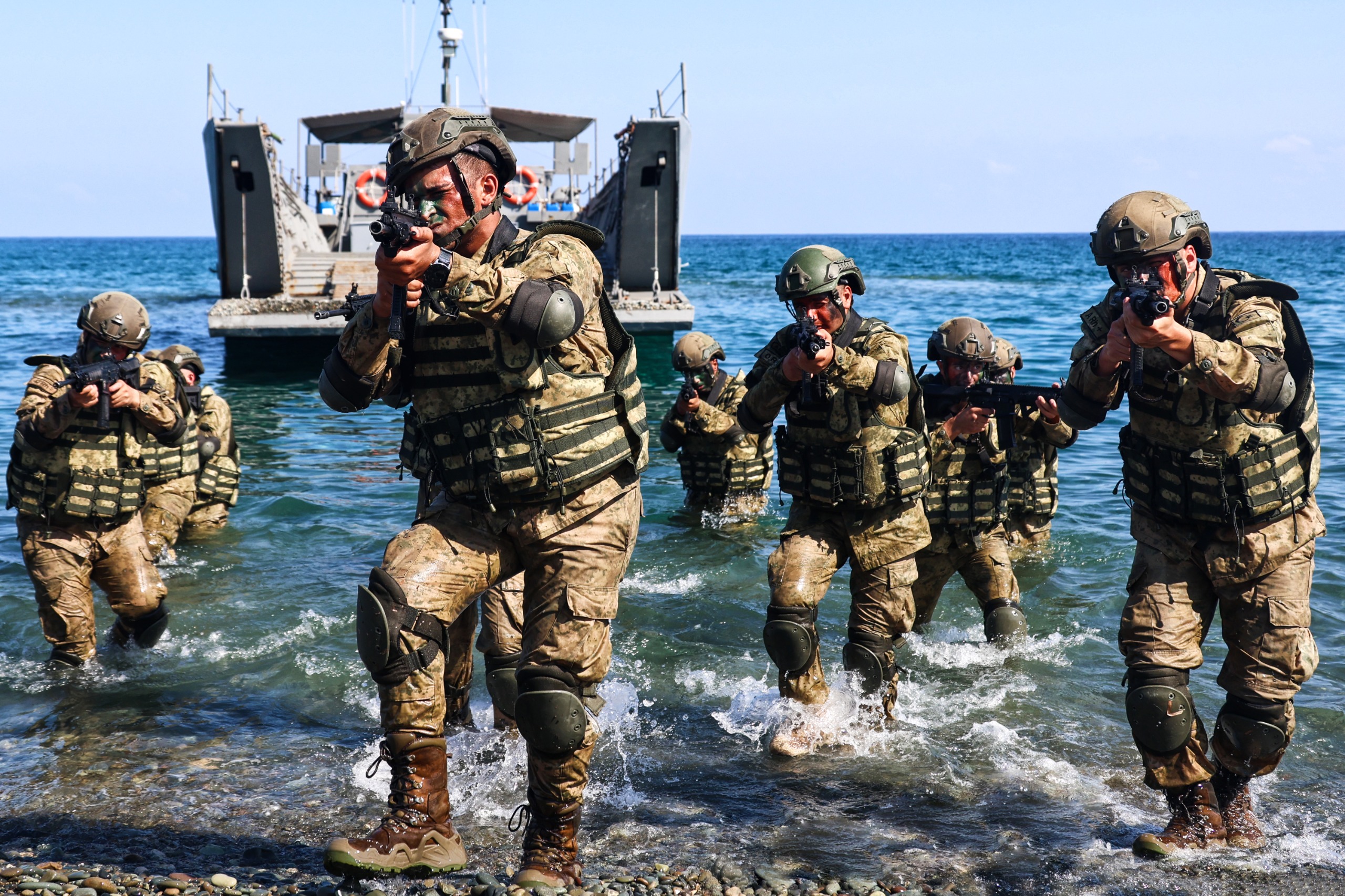
Yet the prominence of defense spending stands out. At 9.65 billion lira ($211.0 million), defense allocations account for roughly 47 percent of the total assistance package, making security one of the central pillars of the agreement. The document explicitly states that Turkey will continue activities aimed at safeguarding northern Cyprus and strengthening security cooperation on the island
Cyprus has remained divided since 1974, when Turkish forces intervened following a coup backed by supporters of union with Greece. Northern Cyprus declared independence in 1983 and is recognized only by Turkey, which maintains a military presence there.
The agreement leaves little doubt that Ankara views that presence as part of a long-term strategic commitment rather than a temporary arrangement linked to unresolved peace negotiations. It describes the preservation of the Turkish Cypriot community and the continued existence of northern Cyprus as matters of fundamental importance to Turkey.
Taken together, the document signals a notable shift in emphasis. Rather than framing Cyprus primarily as a diplomatic dispute awaiting resolution, Turkey increasingly presents northern Cyprus as a strategic asset at the intersection of conflicts and power struggles extending from Gaza and the Gulf to the Caucasus, Central Asia and the eastern Mediterranean.