
Abdullah Bozkurt/Stockholm
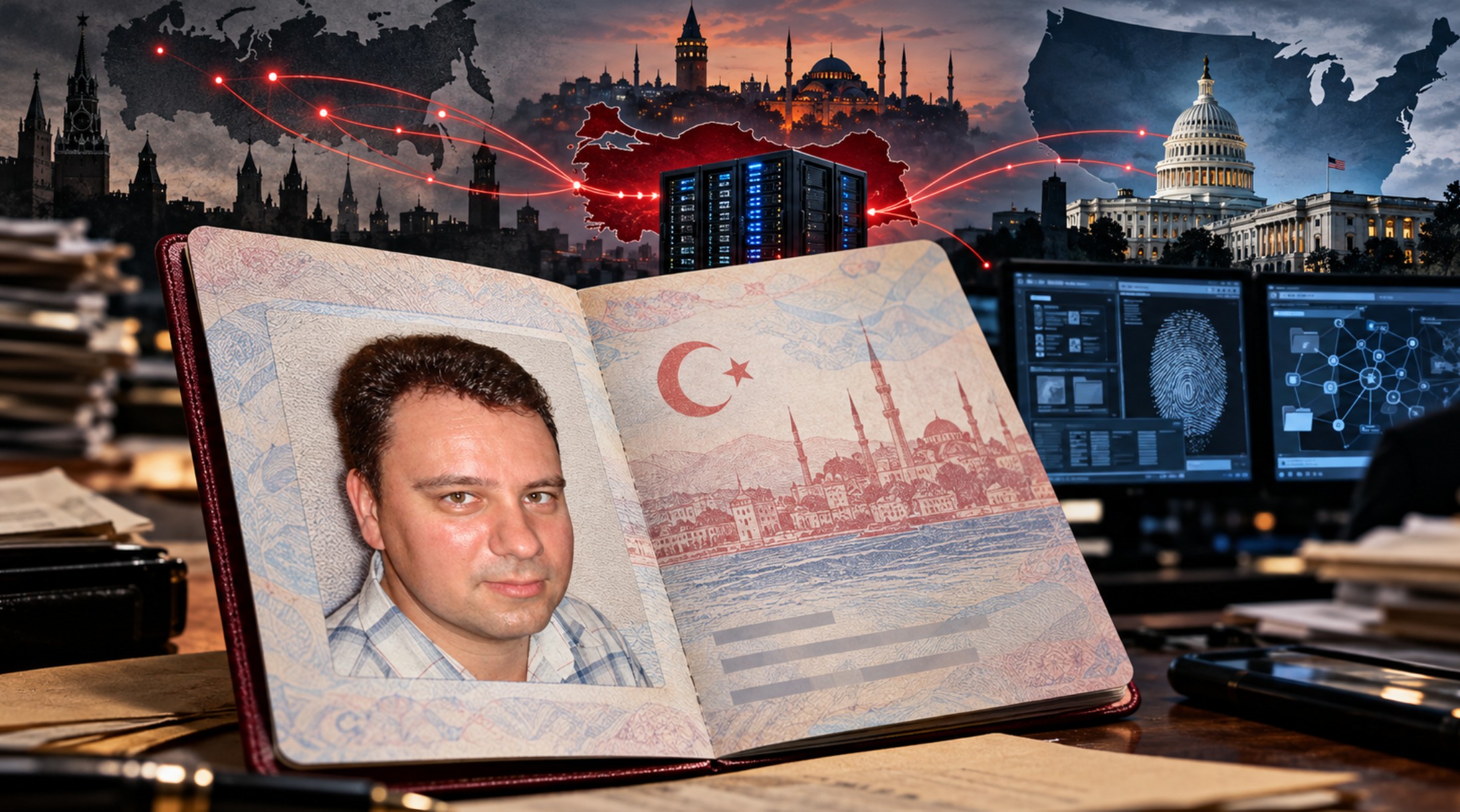
Hossein Hafez Amini, a naturalized Turkish citizan originally from Iran and an alleged operative of the Islamic Revolutionary Guard Corps-Quds Force (IRGC-QF), appears to have shut down his primary aviation business in Turkey and gone into hiding after his covert activities and sanctions-evasion network were exposed.
At the same time hundreds of Iranian-linked companies continue to emerge across Turkey, creating a broad pool of corporate entities that investigators and Western officials say can be used for sanctions evasion, money laundering and covert operations.
Amini had operated in Turkey through his Istanbul-based aviation company, Rey Havacilik Ithalat Ihracat Sanayi ve Ticaret Anonim Sirketi, also known as Rey Airlines, which US authorities say functioned as a logistical and operational platform for the IRGC-QF’s covert activities in Turkey and the broader region.
Trade registry filings reviewed by Nordic Monitor show that Amini, using the Turkified version of his name, Hüseyin Hafezamini, suspended operations at Rey Air. The company’s status at the Istanbul Chamber of Commerce is currently listed as suspended (askıda), meaning it has been officially categorized as inactive in the trade registry.
Such a suspension typically occurs when a company fails to pay its mandatory annual chamber fees for two consecutive years or cannot be reached at its registered legal address. In practical terms, the designation means the company cannot issue official invoices, conduct normal banking transactions or participate in public tenders, and it risks eventual dissolution and removal from the trade registry.
The official trade registry does not yet show that the company has been dissolved. The most recent filing, dated December 7, 2020, reaffirmed Amini as chairman of the board until November 27, 2023, with Hafize Erdogan, a Turkish national, listed as a board member. The absence of more recent registry activity, combined with the suspension notice, suggests that Amini abandoned the company and disappeared from public view.

The company was established by Erdogan on September 25, 2014, with Erdogan as the sole owner until 90 percent of the shares were transferred to Amini in October 2018.
The filings identify several Turkish nationals as having roles in Amini’s company. One was Mehmet Akgül, an Istanbul-based accountant who prepared the company’s financial reports and helped manage share transfers and capital increases. Akgül’s name also appeared in board meeting records. In an October 2017 filing, another Turkish national, Murat Çakıcı, was listed in a similar registry role.
The company displayed several characteristics commonly associated with a front or shell entity. It changed business addresses repeatedly and, at one point in April 2016, operated for about a year from the special cargo area used by general aviation services at Istanbul Atatürk Airport.
According to findings released by the US government, the company gave Amini access to actors in Turkey’s aviation sector and helped him facilitate sanctions-evasion activity and other covert operations on behalf of Iran.
The US findings show that Amini used his connections in the aviation industry and his Turkey-based airline to support covert IRGC-QF operations, including kidnapping and assassination plots targeting dissidents of the Iranian regime living in Turkey.
US authorities further revealed that Amini leveraged his Turkish commercial network to facilitate aircraft charters, smuggling operations and sanctions-evasion schemes benefiting the Quds Force, the IRGC’s elite external operations branch responsible for clandestine activities, proxy warfare and overseas terrorism operations.
Washington also accused Amini and Rey Airlines of participating in aircraft transfers to Iran’s Pouya Air, an Iranian airline affiliated with the IRGC that has been under US sanctions since March 2012 pursuant to Executive Order 13224 for acting on behalf of the Quds Force.
Pouya Air, formerly known as Yas Air, has long been accused by Western governments of transporting weapons, military equipment and operatives for the IRGC across the Middle East.
In June 2023 the US Treasury designated Amini pursuant to Executive Order 13224, as amended, for “having materially assisted, sponsored, or provided financial, material, or technological support for, or goods or services to or in support of, the IRGC-QF.” Rey Airlines was simultaneously designated for being owned or controlled by Amini.
Corporate documents show Rey Airlines maintained an unusually broad mandate covering passenger transport, aircraft spare parts, aerospace training, technical aviation services, storage operations and government contracting. The broad commercial scope provided ideal cover for covert procurement and sanctions-evasion activities tied to the IRGC-QF.
Information obtained by Nordic Monitor further indicates that Amini maintained several aviation-related companies inside Iran, many of them registered in the strategically important Maku Free Zone near the Turkish border. These included Arum Irsa Airlines, the Irsa Sanat Omid Company and the Arian Sar Iranian Company, all of which were involved in aviation services, aircraft maintenance, import-export operations and transportation logistics.
Turkish authorities have long faced criticism for failing to effectively disrupt Iranian intelligence and Quds Force activities on Turkish soil despite repeated allegations of espionage, assassination attempts and covert operations targeting dissidents, Israeli interests and foreign nationals.
Iranian intelligence networks have increasingly used Turkey as a logistical hub because of the country’s large transportation infrastructure, permissive financial environment and relatively weak enforcement against sanctions violations, according to Western intelligence assessments.
Amini’s disappearance and the apparent shutdown of Rey Airlines suggest that public exposure may have disrupted at least part of the IRGC-QF’s aviation and procurement infrastructure operating out of Turkey.
That does not mean, however, that the Quds Force has abandoned Turkey as a platform for logistics, procurement and financial activity. Each year Iranian nationals establish hundreds of companies in Turkey, and some later obtain Turkish citizenship, creating a large pool of entities that could be used to support clandestine operations.
The scale of Iran-linked company establishment in Turkey stands out when compared with the relatively modest level of bilateral trade, raising questions about hidden capital flows and sanctions-evasion activity. Company registration data reviewed by Nordic Monitor show that the number of Iran-linked firms founded in Turkey has risen sharply, even outpacing German-backed company creation despite Germany’s far larger trade relationship with Turkey.
Figures from the March 2026 company establishment statistics of the Union of Chambers and Commodity Exchanges of Turkey (TOBB) show that 37 Iran-partnered foreign-capital companies were established in that month alone. That put Iran ahead of Germany, which accounted for 34 new companies, even though Turkey-Germany trade reached $52.03 billion in 2025.

By contrast, Turkey-Iran trade totaled $5.6 billion in 2025, while Turkish-Iranian trade in the first three months of 2026 reached only $1.3 billion, a decline of about 7.6 percent from the same period a year earlier, according to figures attributed to TurkStat.
The mismatch is notable. In March 2026 Iran generated more new foreign-partnered companies in Turkey than Germany did, even though Germany’s trade volume with Turkey was roughly 10 times larger and trade with Iran was declining.
The cumulative January–March 2026 figures show the same pattern. Iran-linked companies reached 109, edging out Germany’s 105. Syria was in a separate category, with 1,207 new companies, driven largely by post-Assad reconstruction, refugee-linked commerce and renewed economic activity between Turkey and Syria.
The Iranian rise is not new. In the first quarter of 2025 Iran-linked firms ranked first among foreign-capital company establishment in Turkey, with 64 companies, ahead of Germany’s 48. By the first quarter of 2026 Iran-linked company formations had climbed to 109, a 70 percent increase from the previous year’s first-quarter level.
The sectoral distribution also raises questions. Of the 109 Iran-linked companies established in the first quarter of 2026, 33 were in wholesale and retail trade, 13 in telecommunications, computer programming and information services, 11 in professional, scientific and technical activities, nine in manufacturing and nine in accommodation and food services. These sectors are broad enough to support legitimate commerce, but they are also flexible enough to be used for sanctions-evasion schemes or as vehicles to obscure covert activity.
The discrepancy suggests that Iranian-linked company creation in Turkey may not be explained by normal trade volume alone. Instead, the data point to a pattern in which Turkey functions as a commercial shelter, financial transit point and corporate staging ground for Iranian nationals and Iranian-linked capital at a time when Tehran remains under extensive sanctions pressure.
These figures also do not account for possible shell companies established through Turkish nationals, naturalized citizens or other proxies, as in the case of Rey Air.
Over the last decade the Islamist government of President Recep Tayyip Erdogan has repeatedly demonstrated an unwillingness to crack down on Iranian sanctions-evasion networks operating through Turkey and, in some cases, appears to have actively facilitated such schemes by exploiting the country’s banking, corporate and financial infrastructure.
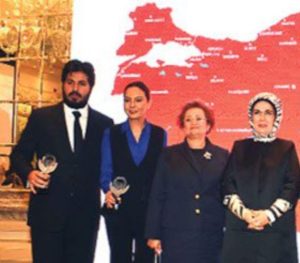
The most prominent example was the multibillion-dollar sanctions-busting network orchestrated by Turkish-Iranian gold trader Reza Zarrab, who used Turkish banks, front companies and gold transactions to help Iran evade US sanctions targeting its oil and banking sectors.
According to US federal prosecutors, Zarrab operated a sophisticated scheme that enabled Iran to secretly access billions of dollars in oil and gas revenues that had been trapped in Turkey due to international sanctions. The network allegedly relied heavily on Turkey’s state-owned Halkbank, whose senior executives were accused of knowingly processing fraudulent transactions on behalf of Iranian entities.
A recent US Treasury sanctions announcement described a vast Iranian “shadow banking” network that uses exchange houses, front companies and shipping firms across jurisdictions including Turkey, the UAE, Hong Kong and China to evade sanctions and finance covert activity.
On May 19, 2026, the Treasury sanctioned more than 50 companies, individuals and vessels accused of helping Iran move billions of dollars through clandestine financial and commercial channels tied to the IRGC.
The sanctions specifically targeted Amin Exchange, an Iranian currency exchange house accused of facilitating hundreds of millions of dollars in transactions for sanctioned Iranian banks and petrochemical firms through a network of front companies operating in Turkey and other jurisdictions.
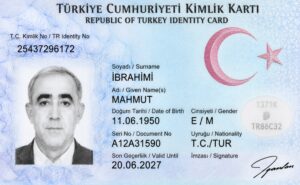
The Treasury statement identified several Turkey-linked individuals in the network. Among them was Turkey-based Iranian national Ali Hazrati Chakherlo, a board member of Amin Exchange, as well as Iranian nationals Yousef Ebrahimi and Mahmoud Ebrahimi, who later acquired Turkish citizenship and were described as key figures in operating the exchange network.
The sanctions notice emphasized that senior operatives in Iran’s shadow-finance system frequently acquire Turkish citizenship and establish companies in Turkey to facilitate international transactions, move funds and disguise the true ownership of assets and commercial operations.
The Treasury also said the Iranian network maintained front companies and financial facilitators spanning multiple jurisdictions, with Turkey serving as one of the principal hubs for cross-border money laundering and sanctions-evasion activities linked to the Iranian oil, petrochemical and banking sectors.
These findings reinforce longstanding concerns among Western governments that Turkey has become an important operating environment for Iranian sanctions-evasion and shadow-finance networks because of its permissive corporate registration system, accessible banking infrastructure, large import-export sector and strategic location linking Europe, the Middle East and Asia.
The recent surge in Iran-linked company creation in Turkey, despite the relatively stagnant trade volume, has sharpened those concerns, particularly because many of the new firms operate in sectors long associated with sanctions circumvention, procurement activity and opaque financial transfers.