
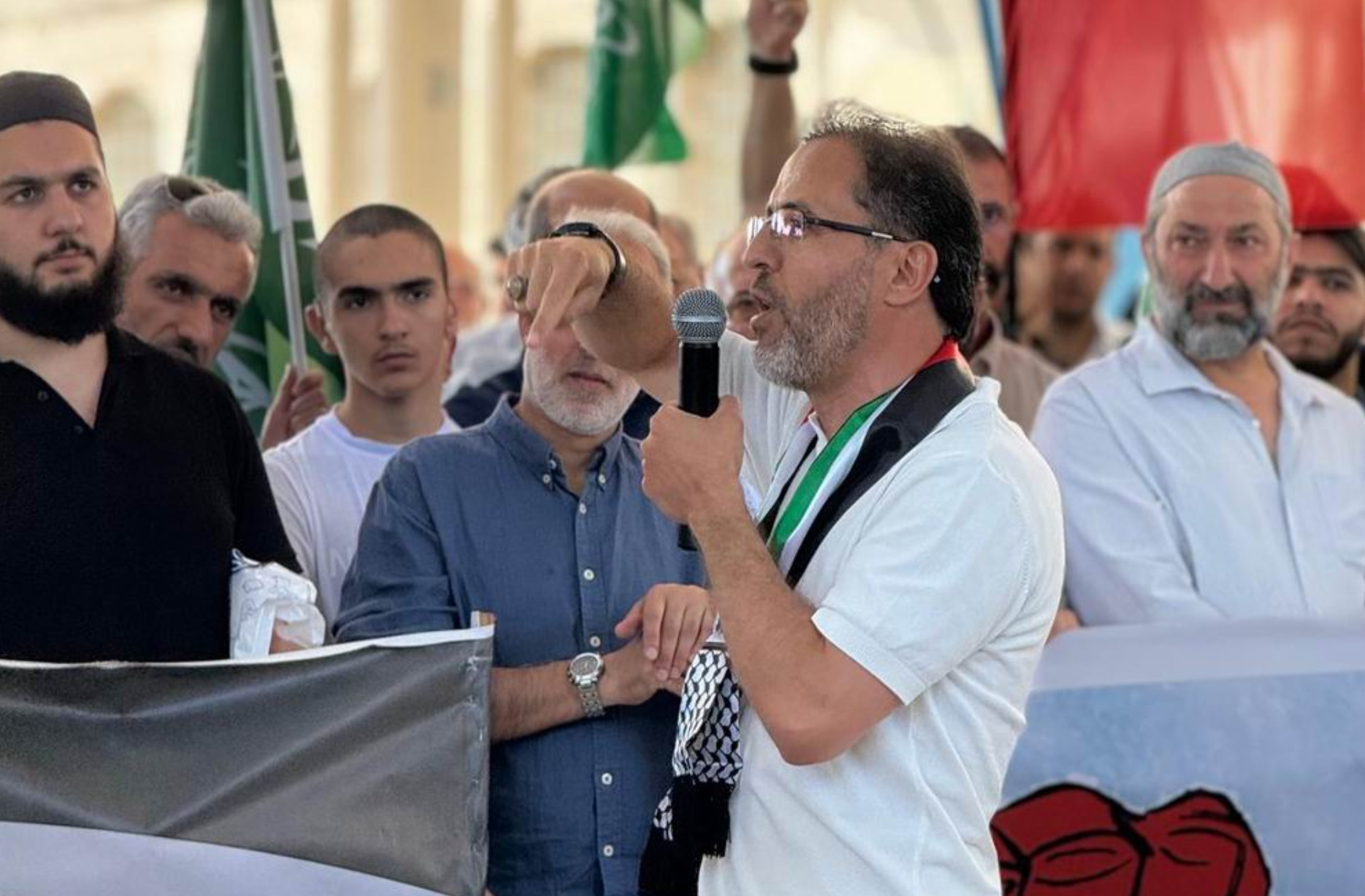
Abdullah Bozkurt/Stockholm
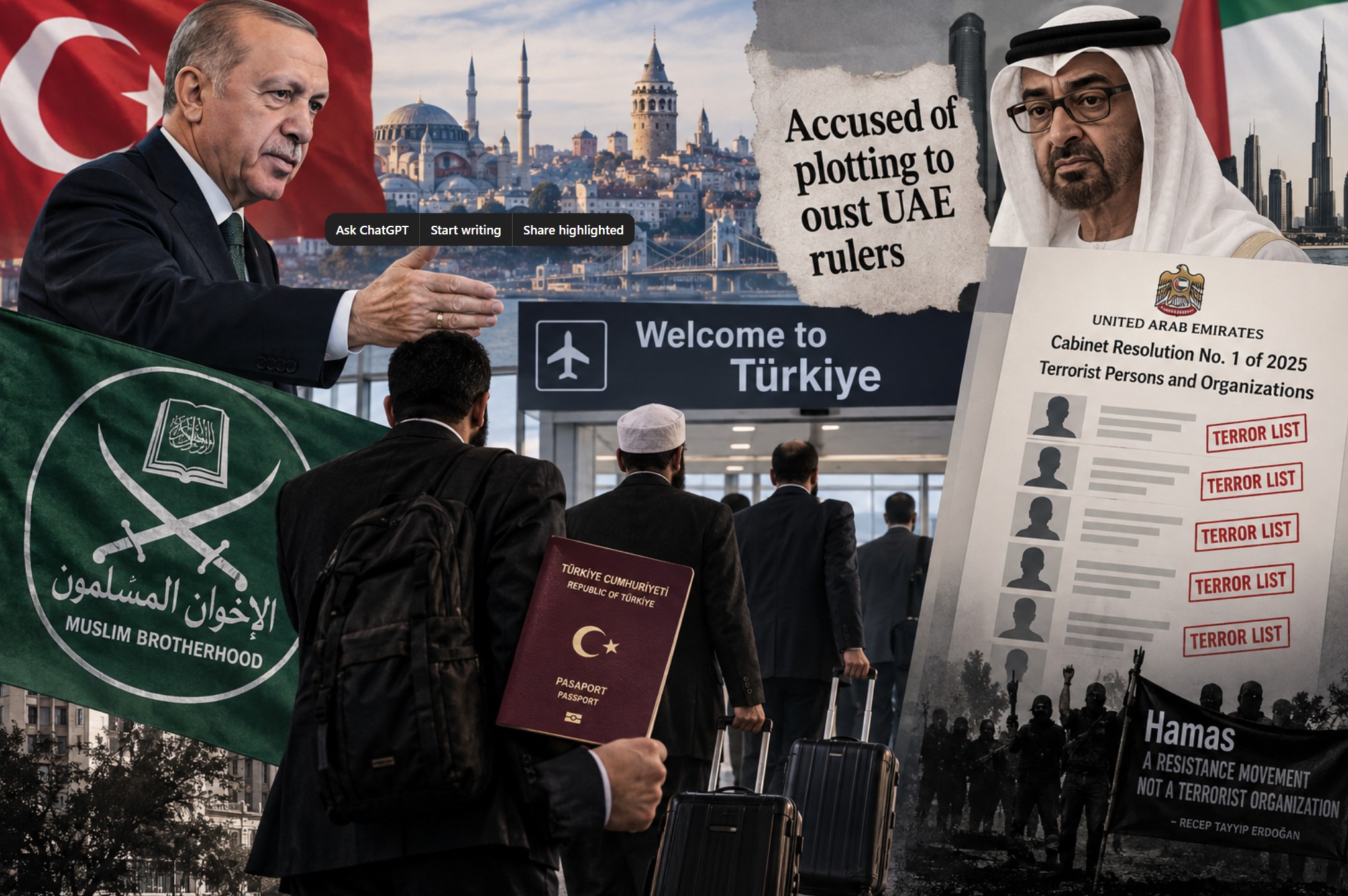
A convicted senior figure in the Palestinian jihadist group Hamas who later settled in Turkey has provided rare insider details on how the Islamist government of Recep Tayyip Erdogan embraced and protected Hamas operatives, describing personal assurances from the Turkish president that members of the organization would be treated like his own family and afforded the same protection as his own children.
Musa Akkari, a Jerusalem-born Palestinian and veteran member of the Izz ad-Din al-Qassam Brigades, Hamas’s military wing, recounted the details during a nearly two-hour interview broadcast by the hardline Islamist Akit TV network. His remarks offer one of the clearest firsthand accounts yet of Turkey’s role as a sanctuary for Hamas operatives exiled under the terms of the 2011 Gilad Shalit prisoner exchange.
According to Akkari, he arrived in Turkey aboard a special government aircraft dispatched by Erdogan, who was serving as prime minister at the time. He and nine other Hamas-linked prisoners were flown from Egypt to Ankara after being transported by bus from Israel following their release in the landmark prisoner swap between Israel and Hamas.
Akkari has remained active on behalf of Hamas since his arrival in Turkey. Over the years he emerged as one of the organization’s most prominent representatives in the country, cultivating ties with senior Turkish officials, participating in public events, organizing rallies and helping coordinate fundraising, logistics and political outreach activities.

For example, Akkari was among a select group of participants in Turkish President Erdogan’s April 2024 meeting with Hamas chief Ismail Haniyeh. He sat alongside senior Hamas leaders Khaled Meshaal, Khalil al-Hayya and Zaher Jabarin, underscoring his access to both Hamas’s top leadership and Turkey’s highest political and security circles. On the Turkish side Erdogan was accompanied by Foreign Minister Hakan Fidan, intelligence chief İbrahim Kalın, National Security and Foreign Policy Adviser Akif Çağatay Kılıç and other senior officials, highlighting the significance of the meeting and Akkari’s standing within Hamas. Akkari was also present at the Hamas meeting held with the Turkish president in Ankara on January 29, 2025.
Akkari is also believed to be a driving force behind Kubbe Medya ve Eğitim Dış Ticaret Limited Şirketi, a Hamas-linked media and propaganda company formally incorporated in Istanbul in March 2014.
Official corporate records show that the company was initially established by Sheikh Ahmed al-Omari, also known in Turkey as Ahmad Bilik, a prominent Muslim Brotherhood figure who serves as head of the Jerusalem (Al-Quds) Committee of the International Union of Muslim Scholars, a Brotherhood outfit. Al-Omari is also the head of the Islamic Scholars Association in Lebanon and has Turkish as well as Lebanese citizenship.
The company was subsequently transferred in December 2021 to Palestinian national Younis A.Y. Abujarad. Corporate filings indicate that Abujarad later acquired Turkish citizenship and adopted the Turkish name Yunus Yıldız, according to records submitted in November 2025.

Although Akkari’s name does not appear in the company’s official trade registration documents, evidence suggests that he has been closely involved with Kubbe since its inception. His LinkedIn profile identifies him as a manager at the company, indicating a direct operational role despite the absence of any formal ownership in public records.
The arrangement mirrors a broader pattern seen in Hamas-linked networks operating in Turkey, where influential figures often remain behind the scenes while associates or trusted intermediaries formally control companies, associations and other legal entities. Such structures allow key operatives to maintain influence and direct activities while minimizing their visibility in official records and reducing exposure to sanctions or regulatory scrutiny.
Akkari later established the Palestine Diplomacy Center (Filistin Diplomasi Merkezi in Turkish), an organization that functions as a Hamas-linked platform in Turkey. Following his appointment as Hamas Turkey representative in February 2023, replacing Jihad Yaghmour (Cihat Yagmur) and especially after designation by the United States in 2024, Akkari largely withdrew from public view but continued to operate behind the scenes, according to individuals familiar with Hamas networks in Turkey.

The United States designated Akkari as a Specially Designated Global Terrorist in June 2024. The US Department of the Treasury identified him as a key member of Hamas’s international fundraising and support network and accused him of facilitating activities on behalf of the organization while residing in Turkey.
According to the Treasury, Akkari played a role in Hamas financial and operational structures outside the Palestinian territories and was involved in efforts to support the organization’s international activities.
Akkari’s public responsibilities increasingly shifted to his close associate Zahir Elbek, who became the organization’s visible representative while Akkari reportedly continued directing activities from the background.
Ebek, Akkari’s pointman, is also a member of Hamas who is a childhood friend to Huzeyfe (Hudhayfa) Samir Abdullah al-Kahlout, better known as Abu Ubaida, who served as the longtime spokesman of Hamas’s military wing until he was killed in an Israeli strike in Gaza on August 30, 2025. While Ebek was leading a student union at Ahmad al-Shukeiri High School, Abu Ubaida was his deputy. The two were actively involved with Hamas starting in their youth.

The arrangement by which Ebek was put in the forefront while Akkari assumed private role reflects a broader pattern observed among Hamas networks operating in Turkey. When key figures become subject to US sanctions or international scrutiny, the organization frequently promotes new public representatives while keeping sanctioned or flagged operatives active behind the scenes.
The practice has enabled Hamas-affiliated structures to continue operating while reducing public exposure for designated individuals. Turkish authorities have advised Hamas to adopt such tactics to create an excuse for plausible deniability while allowing sanctioned figures to remain in the country and continue to operate despite growing international pressure.
Akkari openly acknowledged his involvement with Hamas’s military wing during the interview and described participating in the 1992 abduction of Israeli border policeman and reservist Nissim Toledano, an operation carried out by Hamas in an effort to secure the release of the group’s founder, Sheikh Ahmed Yassin.
During the interview Akkari praised Erdogan’s government for what he described as its exceptional hospitality toward former Hamas prisoners who were expelled from their homeland as part of the Shalit exchange.

“People in Turkey welcomed us with tremendous hospitality,” Akkari said.
More significantly, he recounted what he described as a direct assurance from Erdogan to the exiled Hamas operatives.
“Our president [Erdogan] told us, ‘Just as we protect our own children, we will protect you and care for you in the same way,’” Akkari said.
The statement amounts to one of the most explicit public acknowledgments by a Hamas operative that Turkey functioned not merely as a temporary refuge but as a state-backed sanctuary for members of the organization.
The October 2011 agreement between Israel and Hamas secured the release of Israeli soldier Gilad Shalit after more than five years in Hamas captivity in exchange for 1,027 Palestinian prisoners. Israel reportedly insisted that dozens of released inmates — particularly those accused of direct involvement in deadly attacks — be deported abroad rather than allowed to return to the Palestinian territories.
Erdogan’s strongly pro-Hamas government volunteered to become one of the principal destinations for several of these exiled operatives. Turkey subsequently emerged as a major hub for Hamas political, financial and logistical activities outside Gaza.
Over the past decade Ankara has repeatedly denied accusations by Israel and Western governments that Hamas uses Turkish territory for operational purposes. Turkish officials have consistently maintained that Hamas members residing in Turkey are engaged solely in political and diplomatic activities.
However, intelligence assessments produced by Israel, the United States and several European governments have long alleged that Hamas established extensive financial, logistical and organizational infrastructure inside Turkey.
Israeli authorities have accused Hamas of using Turkey as a base for fundraising, recruitment, funds transfers, procurement activities, cyber operations and operational coordination related to activities in the West Bank and elsewhere.
The Akkari interview appears to reinforce longstanding allegations that Turkey provided systematic shelter and political protection to Hamas-linked individuals following the Shalit exchange.
Akkari also described his close relationships with some of Hamas’s most influential leaders during his years in Israeli prisons, including Yahya Sinwar, the now-deceased Hamas leader in Gaza widely regarded as one of the principal architects of the October 7, 2023, attacks on Israel.
According to Akkari, Sinwar was deeply involved in Hamas intelligence structures even during his imprisonment and was widely respected among inmates. He described Sinwar as exceptionally intelligent, courageous and influential.

The interview additionally highlighted the extent to which pro-government Turkish media outlets continue to provide a platform for Hamas-linked personalities. Throughout the broadcast Akkari was portrayed as a heroic resistance figure, while the host Muharrem Coşkun largely echoed Hamas narratives regarding Israel, Gaza and the October 7 attacks.
Akkari repeatedly praised Erdogan for publicly defending Hamas following the October 7 attacks and thanked the Turkish president for rejecting allegations that Hamas committed atrocities against civilians during the assault.
He argued that Erdogan was the first major world leader to challenge what he characterized as an Israeli and Western propaganda campaign portraying Hamas as a terrorist organization after the attacks. According to Akkari, Erdogan’s stance helped weaken international support for Israeli narratives and encouraged other political leaders around the world to adopt similar positions.
The interview, aired originally on May 11, 2024, underscores how Turkey has evolved into one of Hamas’s most important foreign political and logistical environments under Erdogan’s rule, despite mounting scrutiny from Western governments over Ankara’s ties to the Islamist militant organization.
US Treasury officials and Israeli intelligence agencies have repeatedly warned that Hamas-linked operatives residing in Turkey continue to enjoy freedom of movement, access to business networks and varying degrees of political protection while helping manage structures that extend across the Middle East, Europe and beyond.
When asked whether he feared becoming the target of an Israeli assassination operation in Turkey, Akkari appeared confident that such an operation would be difficult to carry out.
He argued that Israel would need to “think a thousand times” before attempting any such action on Turkish soil, contrasting Turkey with other countries where Israeli intelligence services have historically conducted covert operations.
Akkari specifically referenced comments made by Ronen Bar, head of Israel’s domestic intelligence agency Shin Bet, who publicly threatened to pursue Hamas figures abroad including in Turkey after the October 7 attacks. He also pointed to the response from Turkish intelligence chief İbrahim Kalın, who warned Israel that any attempt to conduct assassinations in Turkey would carry serious consequences.
Perhaps most revealingly, Akkari discussed high-level meetings between Erdogan and Hamas leaders held behind closed doors in Turkey. His detailed account suggested that he was closely connected to senior Hamas decision-makers and had direct knowledge of conversations between the Turkish president and Hamas leadership.
According to Akkari, Hamas leaders thanked Erdogan for his support and requested the continuation and expansion of Turkish assistance to the organization. He indicated that Turkish backing remained a central topic during discussions with Hamas officials, underscoring the strategic importance the group attaches to its relationship with Ankara.
Taken together, Akkari’s remarks provide a rare glimpse into the close relationship that has developed between Erdogan’s government and Hamas over the past decade, offering unusually direct testimony from a US-designated Hamas operative who continues to live and operate in Turkey under the protection of the Turkish state.