
Abdullah Bozkurt/Stockholm
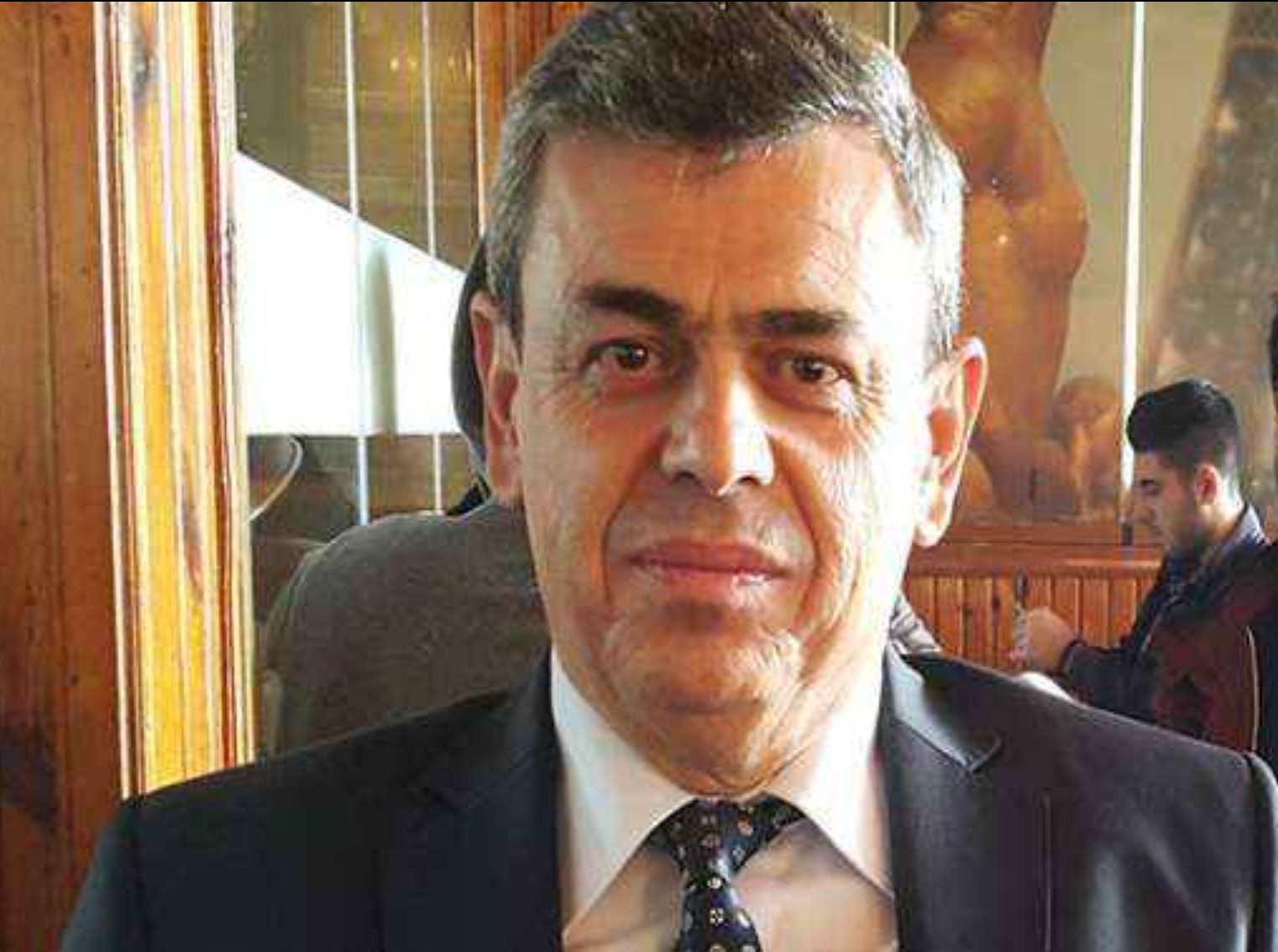
A police chief who authorized horrific torture sessions against critics of the authoritarian regime of Turkish President Recep Tayyip Erdogan was quietly allowed to retire with his full pension despite credible complaints of abuse, sexual assault and ill treatment committed under his watch. He avoided any criminal liability, reinforcing a climate of impunity for crimes that were part of a systematic and deliberate government policy of intimidation.
According to a cache of court documents obtained by Nordic Monitor, Mustafa Kılıç, a 33-year-old teacher’s assistant, described in detail the horrific ordeal of torture and abuse he suffered at the hands of police officers operating under the command of Kocaeli provincial police chief Levent Yarımel. The police chief was never held to account for crimes committed under his authority or with his approval. He retained his full pension, was shielded from criminal prosecution and continues to live freely in Turkey.
Kılıç, who was silenced for months through police intimidation, eventually overcame his fear of further abuse and gave a harrowing, minute-by-minute account to judges of how he was beaten, humiliated, threatened with electrocution and sexually abused in police custody after a late-night raid on his home in the aftermath of Turkey’s July 2016 coup attempt, which was a false flag operation by Turkish intelligence to empower the Erdogan government.
His testimony, recorded first before the Kocaeli 4th High Criminal Court on June 9, 2017, and later before the Ankara 16th High Criminal Court on July 19, 2017, lays out in stark detail how coercive interrogations were used to extract false statements and how medical safeguards meant to prevent torture and abuse were rendered meaningless by the constant presence of police officers in doctors’ examination rooms.
Kılıç told judges that police knocked on his door at 11:00 p.m. on July 27, 2016, as his family slept. At the time, his baby daughter was just 2 months old and his other child was 2 years old.
He described roughly 10 officers storming the apartment, rushing through rooms, seizing devices and shouting orders. His children began crying in fear. “My daughter started crying out of terror,” he recalled. “I picked up my child to calm her down, but they kept yelling at me in front of my family.”
Kılıç emphasized that he did not resist arrest. Even so, officers forced his arms behind his back and put on handcuffs — a measure permitted under Turkish law only in cases involving violent suspects — tightening them until they cut into the bones of his wrists, despite his pleas that this not be done in front of his children. He said he was roughed up on the spot by the commanding officer at the scene and threatened with further violence.
“He said, ‘Don’t worry, you’ll get what’s coming to you. When we take you to the police station, we’ll turn you into a faggot,’” Kılıç testified, describing a threat of sexual assault and molestation.
He said male officers ransacked his wife’s underwear drawers despite the presence of a female officer who could have conducted the search, humiliating the family and violating their privacy.
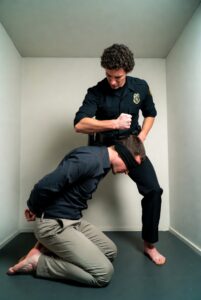
After being taken to a police station, Kılıç said he was placed in a small room, blindfolded and ordered by a curly-haired police officer to kneel and bow his head. He was told he would die in custody and that nothing could prevent it under the state of emergency, which the government used to grant police unchecked powers despite constitutional safeguards and the European Convention on Human Rights, which prohibits the suspension of fundamental rights and freedoms even under emergency rule.
The police officer with a curly hair played recordings from a mobile phone. “What I remember is that he made me listen to someone saying, ‘Fethullah Gülen is an uncircumcised infidel; if he is going to enter heaven, then I will not.’ Then he told me to repeat it. I couldn’t think of anything except the pain. When I repeated it incorrectly, blows landed on my head and back. Again, countless hard blows struck my head and back.”
Kılıç had worked as a teacher’s assistant in educational institutions affiliated with the Gülen movement, which has been critical of Erdogan’s government, including its alleged tolerance and support of armed jihadist groups and pervasive corruption within the administration. Members of the movement came under a sweeping crackdown after the late Turkish Islamic scholar Fethullah Gülen refused to endorse Erdogan after 2013 and became a primary target of a government-led witch hunt aimed at punishing critics and political opponents in Turkey.
Erdogan falsely branded the movement as a terrorist organization, although it has never been associated with violence in more than half a century of existence and has been active in science education, women’s empowerment, interfaith dialogue and community outreach. The government shut down more than a thousand schools established by the movement in Turkey, seized tens of billions of dollars in assets owned by businesspeople linked to the group and launched what critics describe as fabricated criminal proceedings against nearly a million people associated with the movement over the past decade.
Kılıç was swept up in the government’s relentless crackdown and, according to his testimony, was forced to incriminate himself through false statements extracted under torture.
“The pain I suffered was indescribable and unbearable. When I screamed from the pain, police said, ‘Why are you screaming like a woman?’ and hit me again. When I prayed silently, he said, ‘Why aren’t you talking?’ and kept hitting my head and back, either with his fists or with some object. He was doing all of this with great pleasure — he was enjoying himself,” Kılıç told the judges.
“I said countless times, ‘I am innocent, why are you treating me like this?’ But saying this only made police laugh and beat me even more. The police officer was taking pleasure in torturing me. He crushed my feet again and again, and then blows rained down on my head and back. I don’t remember how many times he struck me, but it went on for hours.”
“He kept saying, ‘This is just the beginning, this is just the beginning.’ I was thinking to myself that if what they were doing was only the beginning, then they were going to kill me. Even in war, women and children are not touched — yet the officers who are paid with my taxes and whose duty is to protect my life, property and family told me, ‘Soon the men will go and take your wife from the house. Whatever we did to you, we will do the same to her, and we will leave your children alone at home.’”
More officers later joined the torture session. “They began forcing my feet on the floor apart from the inside outward. It felt as if my legs were going to tear off from my groin. I was subjected to this torture many times. While doing this, they were laughing and having fun. … I understood one thing very clearly: They were not doing this kind of torture for the first time,” he said.
“I thought my skull was going to crack. My head, my back, my legs — everything hurt. I couldn’t breathe,” he added.
He told judges that officers mocked him while striking him repeatedly and ignored his pleas that he was short of breath. “When I said I couldn’t breathe, they laughed,” Kılıç said. “They lifted my head, forced me to kneel again, and continued beating me.”
According to his testimony, officers focused on his hands, feet and toes, crushing them under their shoes. “They started crushing my toes,” he said. “The pain was unbearable. They stomped again and again while telling me to ‘talk.’”
Throughout the ordeal, he said, the violence was paired with verbal humiliation and threats designed to break him psychologically. “They kept saying, ‘We’ll make you speak,’” Kılıç recalled.

Kılıç testified that officers threatened to escalate the torture further. “They said, ‘We will give you electricity,’” he told the court, describing threats of electrocution as part of a broader pattern of coercion while he was handcuffed and held in stress positions for hours.
At one point, he said, an unknown liquid substance was poured over his head while he was restrained, intensifying his fear that the threats would be carried out. “I was soaked while in pain and terrified,” he said.
Kılıç alleged that the abuse included sexual torture, stating that police inserted a baton into his anus during interrogation. He said he was beaten until morning and then transferred to the Anti-Smuggling and Organized Crime Unit (KOM), a unit in the Ankara Police Department notorious for torturing regime critics, where he was again subjected to abuse.
He told the court that he was unable to report the torture because police officers remained in the examination room and had threatened him on the way to the hospital during routine checks in both Kocaeli and Ankara. “The police stayed in the examination room,” he told the judges. “The doctor looked scared and said, ‘There’s nothing to report.’” In the absence of any medical documentation, the court declined to consider the torture allegations.
Kılıç said the constant presence of officers during transport and procedures in hospitals and courtrooms prevented him from reporting what had been done to him, creating an atmosphere of intimidation that followed him from police custody into hospitals and courtrooms. “There was physical assault and there was sexual abuse,” he said. “But I couldn’t speak about it freely because the police were right there next to me.”
Kılıç repeatedly told judges that he was innocent and that the violence was aimed at forcing him to accept a narrative rather than uncovering facts. “I did nothing,” he said. “Yet they treated me like this to make me say what they wanted.”
In court, he rejected statements attributed to him in police records and denied any involvement in criminal activity.
Although police accused him of involvement in the July 15, 2016, coup attempt, records and evidence showed that Kılıç had nothing to do with the limited military mobilization that night. On the contrary, he and his extended family were preoccupied with arranging a marriage for his nephew, Ahmet Kılıç, the son of his older brother. He explained that on July 15 the family went to the nearby city of Gölcük to formally ask for a girl’s hand in marriage for Ahmet. The engagement ceremony took place on July 18, 2016.
Evidence presented against him included employment records from Turkey’s social security system showing he had worked at Karamürsel Damla Özel Eğitim, Kocaeli Akademi and Özel Memba Eğitim A.Ş., all educational institutions affiliated with the Gülen movement. Prosecutors also cited alleged use of the encrypted messaging application ByLock, which was not criminalized under Turkish law, and his Bank Asya account, which he used to receive salary payments. These were listed as criminal evidence even though the European Court of Human Rights has repeatedly ruled that use of ByLock or having an account at a lawfully operating bank cannot, by itself, constitute a crime.
Kılıç was arrested on August 12, 2016, after nearly two weeks of abuse and torture in police custody in both Kocaeli and Ankara.
After months in prison, he finally gathered the courage to report the torture to the court. In a written petition filed with the Ankara 16th High Criminal Court, he detailed the abuse, but the court took no action on his complaint. When he later took the stand in June, he put all the torture details on the record and urged the judges to act on them, yet the court again failed to take any steps regarding the torture allegations.
Kılıç’s account mirrors hundreds of testimonies collected by human rights groups documenting torture and ill-treatment in the weeks and months following the failed July 2016 coup, when tens of thousands were detained in mass sweeps with a near-total disregard for the rule of law, due process and fair trial protections. His testimony stands out for its level of detail and for being entered into the official court record, including descriptions of stress positions, beatings to the head and extremities, threats of electrocution and sexual abuse.
By putting these allegations before judges, Kılıç forced the judiciary to confront claims that coercive interrogations and intimidation were used to manufacture confessions and shape prosecutions in politically charged cases. Yet the court declined to refer the torture allegations to prosecutors, despite its legal obligation to do so.
In the meantime, police chief Yarımel, who encouraged torture practices in police stations in Kocaeli, retired in the summer of 2017 and has never been held accountable for the abuse and torture committed under his command.