
Levent Kenez/Stockholm
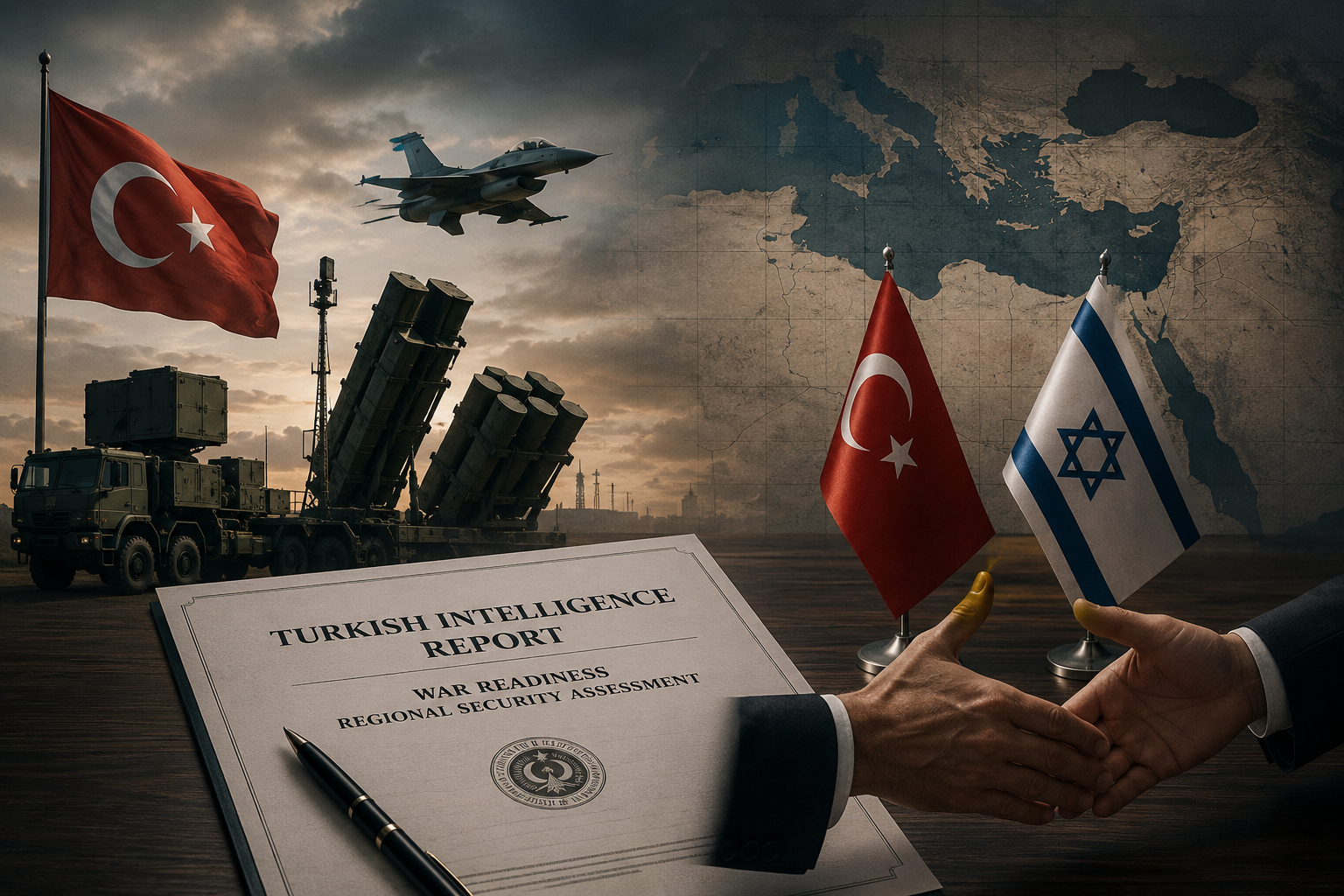
A Turkish government-linked intelligence report argues that the 40-day war involving the United States, Israel and Iran has fundamentally reshaped regional security calculations, prompting calls for a major overhaul of Turkey’s defense posture while also urging Ankara to preserve communication channels with Israel despite growing strategic competition.
Prepared by the National Intelligence Academy and published on May 20, 2026, the report analyzes the conflict that began on February 28, 2026, and its implications for modern warfare, shifting regional balances and Turkey’s long-term strategic priorities. Its key recommendations include stronger air and missile defenses, protection of critical infrastructure, enhanced security for senior officials and continued dialogue with Israel amid escalating geopolitical tensions.
The document portrays the war as evidence that future conflicts will be defined not only by military hardware but also by production capacity, data networks, artificial intelligence, infrastructure resilience and the ability of states to sustain operations under prolonged pressure.
Among its central conclusions is that Turkey should strengthen sustainable defense-industrial production, expand its air and missile defense architecture, reinforce strategic infrastructure security, improve resilience against information warfare and increase societal preparedness for crisis conditions.
The report argues that recent conflicts have demonstrated the vulnerability of centralized military structures and fixed installations. It recommends greater emphasis on distributed command-and-control systems, redundant networks and flexible operational structures capable of functioning even when parts of the system are degraded or targeted.
A major theme running through the document is the changing nature of military deterrence. The report states that modern conflicts increasingly target not only military forces but also the infrastructure that enables military operations. Energy facilities, communications networks, logistics hubs, radar systems and data centers emerged as primary targets during the war, according to the study.
For Turkey, this means defense planning can no longer focus exclusively on conventional military assets. The report calls for a comprehensive security approach that integrates military, cyber, electronic, intelligence and psychological dimensions.
One of the most striking sections addresses the security of individuals in positions of authority. The report states that modern warfare has evolved into a system designed not only to destroy physical assets but also to disrupt decision-making capacity. It notes that senior military officers, political leaders, technical specialists and bureaucrats were directly targeted during the conflict, while advances in artificial intelligence, open-source intelligence and surveillance technologies have increased the visibility and vulnerability of key personnel.
Text of National Intelligence Academy report:
As a result, the academy argues that the issue of personal security should be reassessed in the new war environment.
The report says personal security can no longer be treated as a matter of physical protection alone. Instead, it recommends integrating data security, communications security, movement management, digital visibility controls and counterintelligence measures into a unified framework.
It warns that facial recognition technologies, location tracking systems, artificial intelligence-assisted targeting tools and the growing availability of publicly accessible data are erasing the traditional distinction between physical and digital security.
The document also emphasizes the need to protect the continuity of state functions during crises. Distributed systems, backup capabilities and alternative operating models are described as essential for maintaining operational effectiveness if command structures or critical facilities come under attack.
The report’s assessment of Israel is among its most closely viewed sections. It argues that Israel’s military and political behavior following the war could create new areas of competition with Turkey, particularly in Syria, the eastern Mediterranean and broader regional security arrangements. It suggests that Israel may seek to expand its operational footprint in Syria and Lebanon while continuing efforts to shape regional security dynamics in its favor.
The study says Israeli political and military discourse increasingly portrays Turkey as a strategic challenge. It warns that relations between the two countries could be characterized by controlled competition and periods of heightened tension.
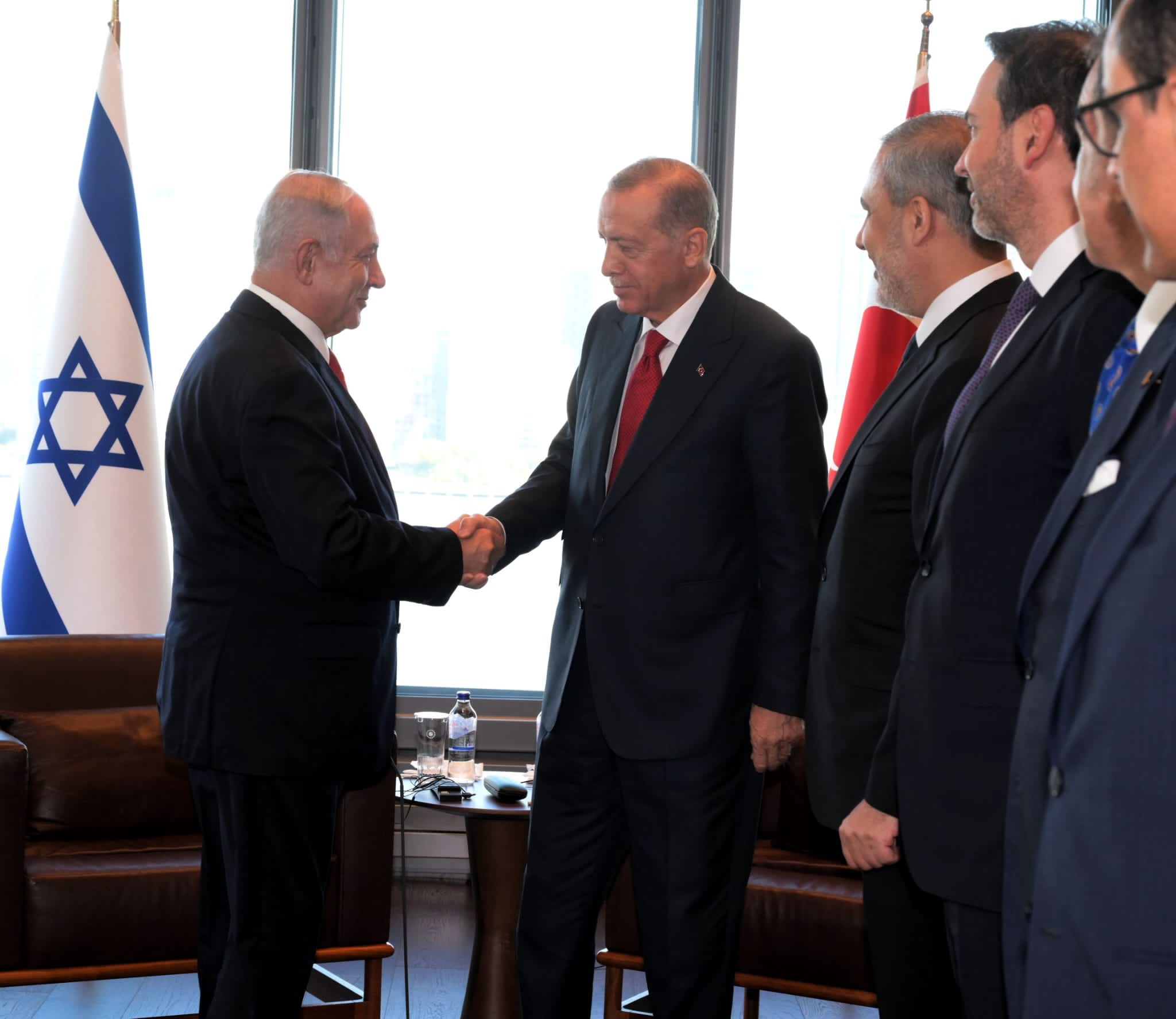
Yet despite these concerns, the academy explicitly advises against severing communications with Israel. Instead, it recommends what it describes as a multilayered strategy that combines diplomacy with deterrence.
Rather than adopting an approach that cuts communication channels with Israel, Turkey should preserve a rational basis for dialogue while at the same time maintaining its military deterrence and regional coordination capacity at the highest level, the report states.
That recommendation stands out as one of the clearest policy prescriptions in the document. It suggests that Ankara should simultaneously preserve diplomatic contact, strengthen military readiness and deepen cooperation with regional partners.
The report also identifies regional balancing as a key Turkish objective. It argues that Turkey’s military capabilities, defense-industrial base, diplomatic flexibility and regional reach put it in a position to play a stabilizing role in a rapidly changing security environment.
At the same time it warns that military power alone will not be sufficient. The study repeatedly stresses the importance of production capacity and sustainability. It introduces what it calls a “three-dimensional depth” approach to defense industry planning, combining advanced technology, large-scale production capability and long-term supply security.
The report argues that recent wars have demonstrated that stockpiles, manufacturing capacity and secure supply chains can be as important as technological sophistication. It notes that prolonged conflicts place extraordinary pressure on ammunition production, logistics systems and industrial infrastructure.
Another recommendation focuses on strengthening air and missile defense systems. The report concludes that no defensive shield is impenetrable and argues that future security architectures must integrate offensive capabilities, cyber tools, electronic warfare systems and artificial intelligence-supported decision-making.
It also calls for stronger protection of energy infrastructure, communications systems and transportation networks, warning that future adversaries are likely to target these assets early in any conflict.
Beyond military issues, the document links national security to economic resilience and connectivity projects. It argues that disruptions in the Strait of Hormuz, the Red Sea and regional energy routes have increased the strategic importance of alternative trade and transport corridors.
The report emphasizes Turkey’s position in strategic regional initiatives such as the Iraq-Turkey Development Road Project, which connects the Persian Gulf to Europe and the Trans-Caspian East-West-Middle Corridor, describing them as strategic assets that could strengthen the country’s role in regional logistics, energy and trade networks.
The overall conclusion is that the US-Israel-Iran war reflects a broader shift in which military, economic, technological and societal factors are increasingly intertwined. For Turkey, the takeaway is clear: Expand defense production, strengthen air and missile defense, protect critical infrastructure and key personnel, build societal resilience and maintain diplomatic flexibility while keeping channels open with Israel.