Levent Kenez/Stockholm
The government of Turkish President Recep Tayyip Erdogan in 2014 halted a major counterterrorism and espionage investigation into the illegal Tevhid Selam network, an affiliate of the Iranian-based Quds Force, after it uncovered links between Turkish nationals, government officials and Iranian operatives, while the police officers and prosecutors who led the case were later jailed. More than a decade later, one of the central figures in that case, Nureddin Şirin, has resurfaced in Iran, leading a 72-person group from Turkey and publicly declaring readiness to fight alongside Iranian forces, a development that has renewed scrutiny of the original investigation and the fate of those who conducted it.
On April 12 Şirin and a group of supporters crossed into Iran through the Gürbulak Border Gate to express support for Iran amid ongoing attacks. Before crossing, Şirin made a brief statement saying that they would travel across several provinces and participate in demonstrations.
Şirin delivered a speech in Iran on April 22 in which he said they had come “to stand with honorable Iran against the United States and Israel” under the banner of Iran’s late Supreme Leader Ali Khamenei. He stated that the group had gathered to demonstrate loyalty to Mojtaba Khamenei, the new supreme leader and son of Ali Khamenei, describing him as the guiding authority and said they had come to unite, raise their fists against enemies and prepare to take up arms.
Nureddin Şirin speaks at a pro-regime rally in Iran on April 22, 2026:
Şirin told the audience that his group was ready to act “as soldiers,” emphasizing that they were prepared to fight “with our blood and our lives,” and that their visit was intended to openly declare their allegiance and readiness to confront Iran’s adversaries together with its leadership.
In 2010 Turkish police launched an investigation into the Tevhid Selam organization, which authorities identified as an affiliate of Iran’s Quds Force. The probe was triggered in part by a speech Şirin delivered in May of that year in which he threatened Jewish communities worldwide and declared them targets following the detention of a figure linked to a Turkish aid group.
At the time İstanbul counterterrorism police sought prosecutorial approval to investigate Şirin and his associates, citing concerns about potential attacks. The investigation soon expanded, uncovering what police described as a sophisticated espionage network involving Turkish and Iranian operatives. Some individuals were found to be operating under diplomatic cover at Iranian missions in Turkey, while others were embedded in domestic institutions.
According to official documents, the investigation also revealed extensive infiltration into Turkish state structures and identified connections between local actors and Iranian intelligence networks. The findings pointed to a coordinated effort involving both ideological and operational elements.

The course of the investigation changed dramatically after corruption probes in December 2013 implicated high-level figures close to the government, including Turkish-Iranian businessman Reza Zarrab and cabinet members. The government dismissed those cases as a coup attempt and moved to shut them down.
In the aftermath, the Tevhid Selam investigation was also halted. Prosecutors were removed and police officers involved in the case were reassigned. The intelligence files were transferred to then-prosecutor İrfan Fidan, now a member of Turkish Constitutional Court, who issued a decision of non-prosecution.
Fidan went further, encouraging suspects in the case to file complaints against the investigators. A sweeping legal process followed, targeting police officers, prosecutors and judges who had authorized surveillance and other investigative measures.

By July 2014 senior officers including former İstanbul counterterrorism chief Yurt Atayün were arrested and subsequently jailed. They were accused of fabricating evidence and attempting to undermine the government, charges they denied in court. Atayün testified that all actions taken during the investigation had been carried out under the authority of prosecutors and in accordance with the law.
The crackdown effectively dismantled the investigative team and halted further inquiry into the alleged network.
Pro-government narratives at the time framed the investigation as an unjust campaign against religious and pro-Iranian individuals. Şirin himself continued his public activities and later became editor-in-chief of Kudüs TV, a broadcaster known for its pro-Iranian stance.
Below is the document dated May 12, 2010, that was sent by the Istanbul police to the public prosecutor’s office for permission to start the investigation into Şirin and his inner circle:
Kudüs TV was shut down on November 1, 2016, under emergency decree powers following a coup attempt in Turkey, with authorities citing national security concerns. Police raided its headquarters in Istanbul’s Bağcılar district, seized assets and sealed the building. The closure, carried out under a statutory decree, was reversed by the government less than two months later, and the station resumed broadcasting on December 31, 2016. It has since expressed support for Iran-aligned groups in the region, including militias in Iraq.
Şirin has also publicly praised Qasem Soleimani, the Iranian general killed in a US airstrike in January 2020. In a televised statement following Soleimani’s death, Şirin said the commander had played a decisive role in stopping the 2016 coup attempt in Turkey and that President Erdogan was aware of his actions. This claim has not been officially denied by Turkish authorities
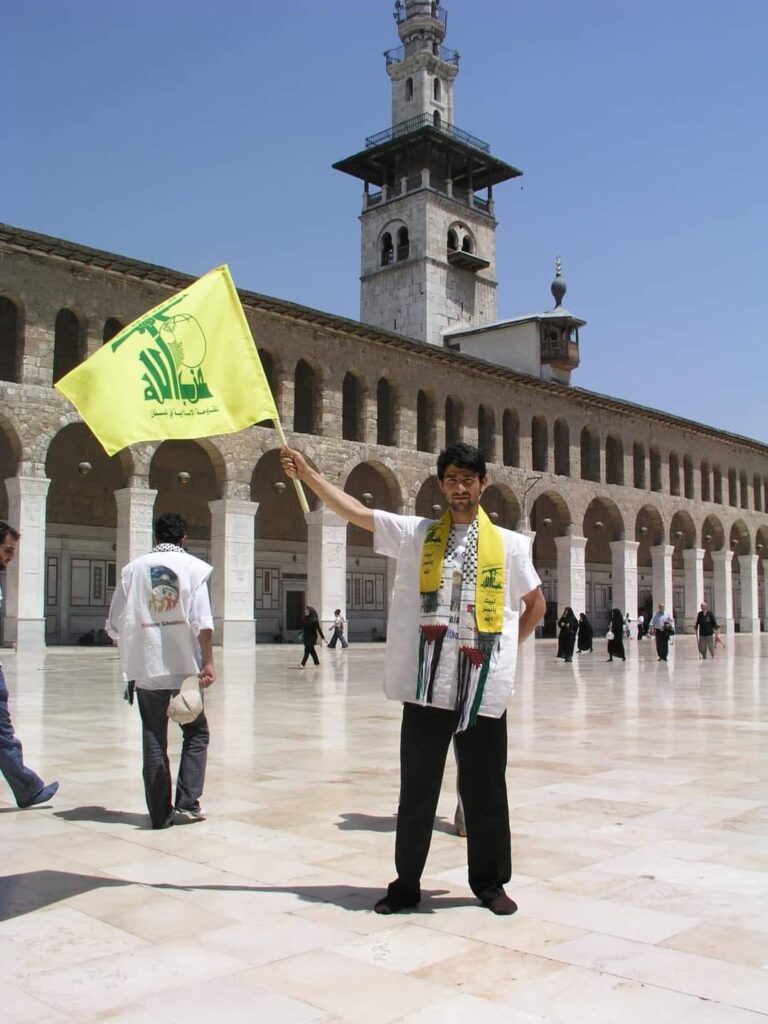
Nordic Monitor previously reported that Şirin played a role in recruitment networks linked to Iran’s Quds Force, including the case of Yakup Erdal, a Turkish militant killed in a November 21, 2023, Israeli drone strike in Lebanon. According to confidential documents cited in the report, Erdal was nurtured within pro-Iranian circles associated with figures such as Şirin before leaving Turkey for Lebanon, where he joined Hamas’s military wing, the Izz al-Din al-Qassam Brigades, which also has a presence in southern Lebanon, and operated near the Israeli border until he was killed.
The report described Erdal’s path from Turkey to an Iran-aligned battlefield network as part of a broader pattern in which individuals connected to circles around Şirin were recruited and deployed in regional conflicts. His death was later publicly commemorated in Turkey, with local ceremonies and participation by public figures, highlighting how individuals linked to these networks were both active in foreign conflicts and publicly recognized after their deaths.