
Abdullah Bozkurt/Stockholm
Over more than a decade, organized crime syndicates ranging from drug trafficking networks to racketeering groups have operated with near-total impunity in Turkey, shielded by officials embedded in key state institutions.
Evidence drawn from judicial proceedings, investigative files and public disclosures indicates that elements within the judiciary, law enforcement and intelligence services have systematically protected criminal actors, pointing to what appears to be an entrenched, informal arrangement among powerful figures at the top of the country’s governance structure.
This transformation has not only eroded Turkey’s internal security architecture but has also spilled beyond its borders. European authorities are increasingly alarmed by the expanding footprint of Turkish criminal networks across the continent. These groups have been linked to narcotics distribution, illicit arms trafficking, large-scale money-laundering operations and human smuggling rings exploiting migration routes into the European Union.
Analysts say the permissive environment in Turkey has effectively turned the country into a logistical hub for transnational crime, enabling syndicates to coordinate operations with minimal interference. Intelligence-sharing mechanisms between Turkey and its European partners have reportedly come under strain, amid concerns that sensitive information could be compromised due to institutional infiltration.
A pattern of impunity has been reinforced by the treatment of officials whose alleged ties to organized crime have surfaced publicly. Rather than facing disciplinary or judicial consequences, several high-ranking figures have been rewarded with promotions or key appointments, reinforcing the perception that such relationships are not only tolerated but quietly endorsed by the government of Recep Tayyip Erdogan and his far-right ally Devlet Bahçeli, who is widely believed to wield significant influence over police, military and intelligence structures.
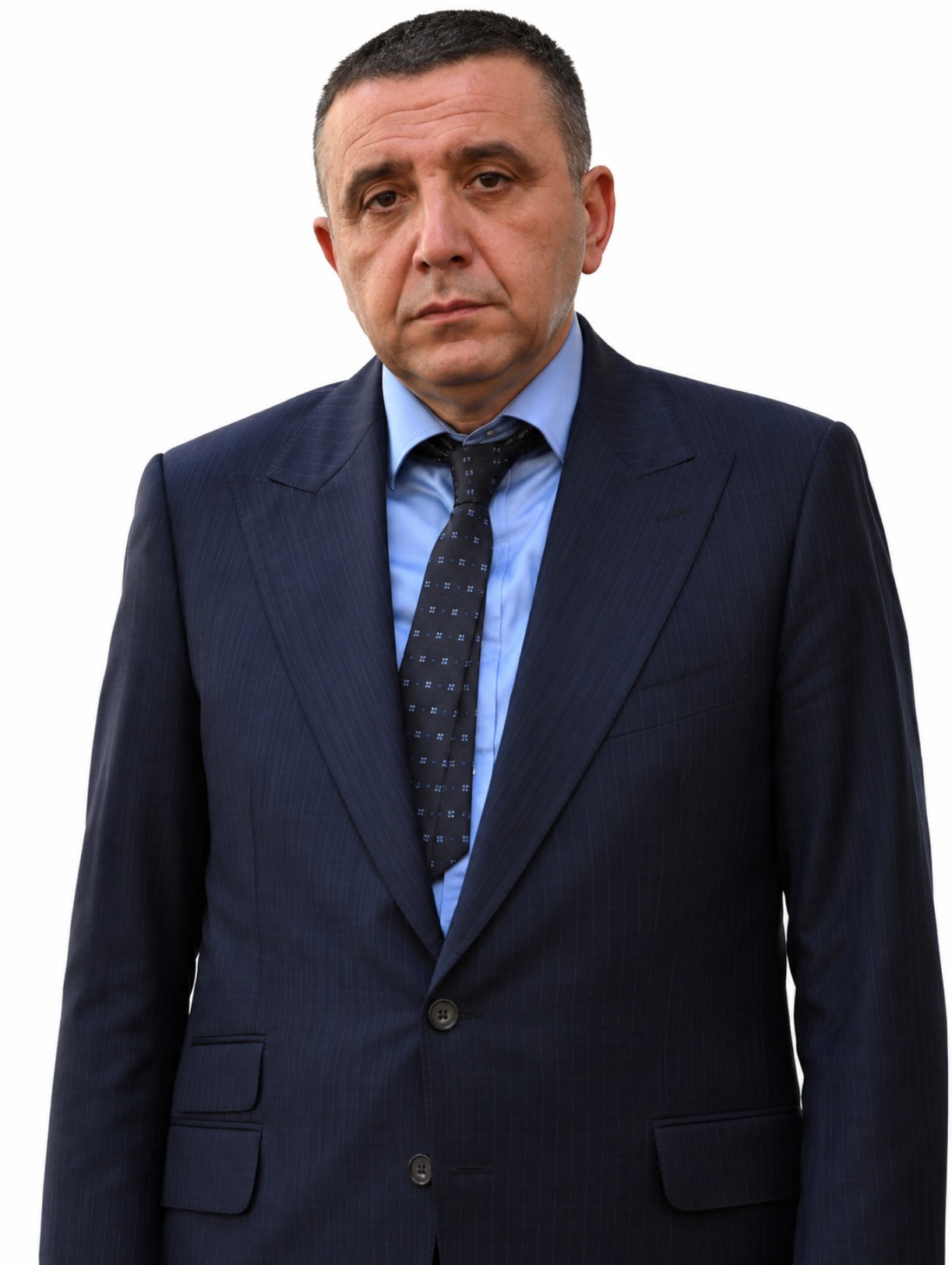
One prominent case involves Yüksel Kocaman, who previously served as chief public prosecutor in Ankara. Evidence has emerged suggesting that Kocaman maintained close ties with Ayhan Bora Kaplan, a crime boss accused of running a large network involved in drug trafficking, extortion and violent offenses in the capital.
A newly surfaced document in the money laundering case against Kaplan details financial transactions linking Kocaman to benefits allegedly provided by the crime figure. The document, submitted to the Ankara 77th Criminal Court of First Instance, includes a report prepared by Turkey’s Financial Crimes Investigation Board (MASAK) outlining payments made for a luxury vehicle registered in Kocaman’s name.
According to the report the payments did not originate from Kocaman but from the account of Sevda S., an assistant working at a restaurant owned by Kaplan. Records show that on October 2, 2019, two payments — 5,000 Turkish lira as a deposit and 338,650 lira as the vehicle price — were transferred to Borusan Oto, with payment descriptions explicitly referencing Kocaman.
Just one day later, Kocaman registered a BMW 3.20 luxury vehicle in his name, a sequence that appears to corroborate testimony from Serdar Sertçelik, a defendant in the Kaplan case who, as a secret witness, alleged that Kaplan had purchased a BMW for Kocaman.
The financial trail continued. The BMW was later upgraded to a BMW 5.20 through a transaction involving an additional payment of 150,000 lira. In November 2020 that vehicle was exchanged for a Land Rover valued at approximately 1.1 million lira, with a further 210,000 lira reportedly paid by Kocaman’s wife, Ayça Kocaman. Documentation of these payments was submitted as part of the investigation.
These findings add to earlier allegations that surfaced following Kaplan’s arrest in September 2023. At the time, claims emerged that Kocaman had received not only a luxury vehicle but also high-end furnishings for a villa in Ankara’s Gölbaşı district, allegedly financed by Kaplan. Additional MASAK reports included in the case file point to payments made under the guise of rent by another defendant, Kürşad Tan Hakbilir, further reinforcing suspicions of an ongoing financial relationship between Kocaman and Kaplan’s network.
During the relevant period, the monthly salary of a senior judge or prosecutor stood at around 15,000 lira, a figure that appears inconsistent with the scale of the luxury purchases detailed in the investigation. Public attention was also drawn to Kocaman’s lifestyle, including a high-profile Bodrum vacation shortly before his wedding in September 2020, where he reportedly traveled by helicopter and stayed at a resort with nightly rates exceeding 9,000 lira.
In return for these alleged benefits, Kocaman is accused of intervening in multiple investigations involving Kaplan during his tenure as Ankara chief public prosecutor, closing seven case files related to the crime figure.
Despite the serious allegations and mounting evidence, Kocaman was promoted to a senior judgeship at the Supreme Court of Appeals, one of the country’s highest judicial bodies, in a move approved by Erdogan.
Kocaman also played a central role in sweeping crackdowns on critics of the government, particularly members of the Gülen movement — a faith-based network opposed to Erdogan’s rule. He was involved in mass purges targeting pro-NATO military officers, the prosecution of thousands of judges and prosecutors on made-up charges and indictments against senior military figures based on fabricated evidence following a false flag coup attempt in 2016. His record of loyalty to the government appears to have outweighed concerns about alleged criminal links.
A similar pattern can be observed in the career of Akın Gürlek, the former chief public prosecutor in Istanbul. Known for pursuing politically sensitive cases against Erdogan’s critics, including members of the main opposition, Gürlek was recently appointed minister of justice, a decision widely interpreted as prioritizing political loyalty over accountability.
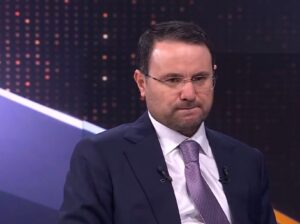
Gürlek has also faced allegations of leveraging judicial investigations as tools of coercion and blackmail. A businessman who later fled to the United States has publicly claimed that he was threatened by individuals linked to Gürlek and organized crime figures and was asked to pay $2 million. After refusing, he reportedly faced judicial action and a smear campaign in the pro-government media orchestrated by journalists aligned with Gürlek.
The confessions of Cemil Önal, who worked as a bookkeeper for the criminal enterprise of Halil Falyalı from 2014 to 2021 and played a key role in establishing a large-scale money laundering scheme that transferred illicit funds out of northern Cyprus — a territory controlled by Turkey — have also shed light on how criminal groups became embedded with senior officials in Turkey.
Önal detailed how former interior minister Süleyman Soylu and former vice president Fuat Oktay accepted millions of dollars in bribes while in office in exchange for protection from criminal investigations. He also shared audio recordings of conversations with members of the Turkish judiciary, in which bribes were discussed in return for dismissing cases against the network.
Despite the gravity of the allegations and supporting material, no investigation was launched in Turkey. Önal was assassinated on May 1, 2025, in the bar of the hotel where he was staying in The Hague. In the aftermath Soylu was appointed chairman of the interior committee in the Turkish Parliament, while Oktay assumed the chairmanship of the foreign affairs committee. Neither has faced any investigation over alleged ties to organized crime or accusations of receiving millions in bribes.
Numerous other cases point to a broader pattern in which officials who assist Erdogan’s government in controversial or unlawful practices are shielded from accountability and rewarded, despite credible allegations of misconduct.
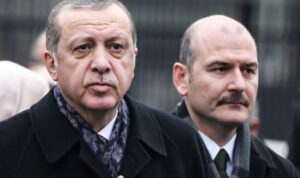
Critics argue that these practices of the Erdogan government reflect a governance model in which loyalty to the executive branch takes precedence over the rule of law. In such an environment investigations into organized crime, particularly those with political implications, are frequently stalled, diluted or redirected.
The consequences extend well beyond Turkey’s borders. European law enforcement agencies, including Europol, have documented a rise in criminal operations linked to Turkish networks. These include heroin trafficking routes from Southwest Asia into Europe, cocaine distribution channels connecting Latin America to European ports and increasingly sophisticated financial schemes designed to launder illicit proceeds.
Officials in several European capitals warn that Turkey’s domestic policies are indirectly enabling these networks. The erosion of judicial independence, the politicization of law enforcement and collusion with criminal actors have created what some describe as a safe operating environment for organized crime groups seeking regional expansion.
Recent investigations in countries such as Germany, Italy, Spain, the Netherlands and Sweden have uncovered cells connected to Turkish syndicates involved in violent turf wars, contract killings and large-scale narcotics distribution. Authorities note that these groups often exploit diaspora communities, operate through seemingly legitimate business fronts and rely on encrypted communication platforms to coordinate cross-border activities.
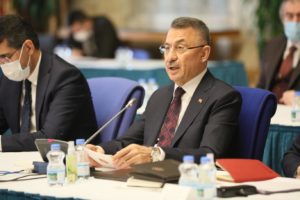
When faced with pressure abroad, these networks are believed to regroup in Turkey, using the country as a fallback base where they can reorganize operations and leverage domestic logistics, corporate structures and financial systems to continue their activities with relative ease.
Despite mounting evidence and growing international concern, Ankara has consistently dismissed criticism, insisting that it remains committed to combating organized crime and terrorism. However, the gap between official statements and observable outcomes, particularly the absence of high-level prosecutions, continues to fuel skepticism among international observers.
Experts say reversing this trajectory would require comprehensive structural reforms, including restoring judicial independence, strengthening oversight mechanisms and ensuring transparency in law enforcement. There is little indication that such reforms are forthcoming. President Erdogan and his associates benefit from the current environment, enriching themselves through kickbacks from criminal syndicates while leveraging these networks to exert pressure not only on domestic opponents but, at times, on foreign partners through the implicit threat of disruption to public order and security.
Turkey has, in effect, become deeply entrenched as a central node in global organized crime networks. Numerous notorious figures found safe haven in the country, with some obtaining citizenship or new identities. This dynamic carries consequences that extend far beyond Turkey’s borders and are likely to continue reverberating across Europe and other regions.