
Nordic Monitor/Stockholm
Turkey’s National Intelligence Organization (MIT) moved to contain the fallout from an exposé of its plans to stage a clandestine false-flag operation against neighboring Greece, secretly filing a criminal complaint against investigative journalist Abdullah Bozkurt and his suspected sources in an apparent attempt to discredit the revelations, establish plausible deniability and intimidate potential whistleblowers.
The intelligence agency’s intervention led to an arrest warrant in February 2023 and a formal criminal prosecution in November 2026, with Turkish authorities seeking to punish the journalist for exposing an intelligence operative and his activities.
In a striking contradiction MIT dismissed the October 2022 Nordic Monitor investigation as baseless and unfounded while simultaneously accusing Bozkurt of revealing MIT’s operations and the identity, position, duties and activities of intelligence personnel. The agency invoked Turkey’s sweeping intelligence secrecy legislation, despite maintaining that the reported preparations for an operation against Greece were not true.
The three-page classified criminal complaint, obtained by Nordic Monitor, was dated October 27, 2022, some two weeks after the exposé. It was addressed to the Ankara Chief Public Prosecutor’s Office and signed by Ümit Ulvi Canik, a senior legal adviser acting on behalf of then-MIT chief Hakan Fidan. Canik subsequently followed Fidan to Turkey’s Foreign Ministry, where he was appointed director general of legal services after Fidan became foreign minister in June 2023 and transformed the diplomatic service into yet another intelligence arm of the Turkish state.
The criminal case continued for more than four years. An arrest warrant was issued for Bozkurt on February 22, 2023, and prosecutor Abdulsamed Barman filed an indictment on November 3, 2026, accusing him of violating Article 27 of Law No. 2937, which criminalizes the disclosure of information about intelligence personnel.
The indictment identified MIT as the complainant and cited a separate agency communication dated October 27, 2022, as part of the evidence supporting the prosecution.
On November 13, 2026, the Ankara 70th Criminal Court of First Instance issued a ruling transferring the case to the Ankara 2nd Criminal Court of First Instance, the court designated under Turkish press legislation to hear certain criminal cases involving internet news websites.
Secret Turkish intelligence document reveals the agency’s alarm over an exposé of its alleged false-flag operation against Greece and its attempt to contain the fallout by filing a criminal complaint against investigative journalist Abdullah Bozkurt:
Most significantly, the judicial documents explicitly identified Kemal Eskintan, the intelligence operative named in Nordic Monitor’s original investigation as the man responsible for organizing the operation against Greece, as a MIT staff member whose identity, duties and activities were protected under Turkish law.
The newly obtained documents offer an unusually detailed account of how Turkey’s intelligence agency responded to investigative reporting on its covert activities, moving from a classified complaint to an arrest warrant and criminal prosecution of a journalist operating from exile.
On October 10, 2022, Nordic Monitor published an investigation titled “Secretive Turkish intelligence unit set to conduct clandestine operation in Greece.”
The report, based on information obtained from sources familiar with the operation, detailed preparations by a specially trained clandestine unit established within MIT to conduct military-style operations abroad without relying entirely on Turkish military or police special forces.
According to the investigation Turkish President Recep Tayyip Erdogan and his intelligence chief Hakan Fidan were considering several options for escalating tensions with Greece ahead of Turkey’s 2023 presidential and parliamentary elections.
These included sabotage on Greek islands near the Turkish mainland, raising Turkish flags on disputed or uninhabited islands and rock formations and conducting a false-flag operation that could be used to justify a Turkish military response.
The report identified Eskintan, a former Turkish military officer who had transferred to MIT, as the intelligence operative responsible for organizing the clandestine unit and preparing the proposed operation. Eskintan, also known by the alias Abu Furqan, was described as a trusted associate of Fidan and a central figure in the agency’s expanding covert operations overseas.
The investigation reported that the proposals had been discussed within a restricted circle around Erdogan and Fidan and that the Turkish president had not yet selected a final course of action. The plan was shelved after it was exposed by Nordic Monitor.
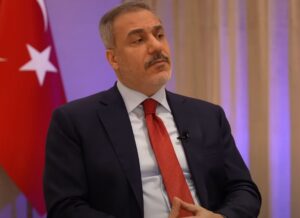
The classified complaint, marked GİZLİ (SECRET), was prepared after the article was published and addressed to the Ankara Chief Public Prosecutor’s Office. The agency identified Bozkurt as the author of the article and named other individuals whose identities remained to be determined as potential suspects.
The inclusion of unidentified suspects expanded the scope of the requested investigation beyond the journalist and opened the possibility of pursuing whistleblowers suspected of providing information about the intelligence agency’s covert activities. MIT attached a six-page copy of the Nordic Monitor investigation to its complaint, presenting it as evidence.
The intelligence agency summarized the central points of the article, including the establishment of a secret unit, preparations for operations against Greek islands, the possible involvement of Turkish military assets and Eskintan’s responsibility for coordinating the mission.
It also reproduced the allegation that the operation was intended to manufacture a confrontation with Greece ahead of the 2023 elections and generate nationalist support for Erdogan.
MIT characterized these claims as unfounded but offered no detailed factual rebuttal in the complaint. Instead, it requested the prosecution of Bozkurt and other individuals suspected of involvement.
One of the most revealing aspects of the classified complaint is the contradiction between MIT’s denial of the alleged operation and its simultaneous assertion that the publication exposed protected intelligence personnel and their activities.
That combination of accusations raised a fundamental question: If the alleged clandestine operation against Greece was entirely fabricated, what genuine intelligence information had the journalist unlawfully disclosed? MIT did not answer that question in its three-page complaint.
Nor did it identify which specific claims concerning the operation were factually incorrect, provide a competing explanation for Eskintan’s responsibilities or offer evidence disproving the preparations described in the article. Instead, the agency argued that the publication was criminal because it exposed intelligence personnel and their operations.
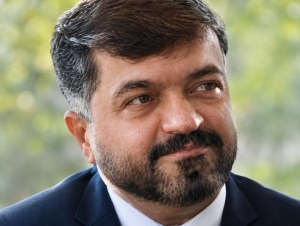
The subsequent indictment and court ruling made the contradiction even more consequential by identifying Eskintan as the intelligence officer whose information had allegedly been disclosed.
The judicial proceedings revealed that MIT’s complaint quickly developed into a criminal investigation that resulted in an arrest warrant on February 22, 2023. The warrant was issued more than six years after Bozkurt had left Turkey and approximately four months after publication of the article concerning the false-flag operation against Greece.
The timing was also noteworthy because Turkey was approaching its May 2023 presidential and parliamentary elections, the same elections that Nordic Monitor’s original investigation had identified as a political motivation for the proposed operation.
On November 3, 2026, Ankara public prosecutor Abdulsamed Barman issued an indictment accusing Bozkurt of disclosing the identities of MIT personnel. In the indictment Barman claimed that the publication disclosed information about MIT personnel and that sufficient suspicion existed to initiate criminal proceedings under Article 27 of the intelligence services law.
The document did not demonstrate that the original reporting was false or that the journalist had obtained information through unlawful means. Instead, the criminal charge focused on the alleged disclosure of protected information through an internet publication.
The indictment marked a substantial escalation from MIT’s October 2022 complaint, confirming that the intelligence agency’s effort to pursue the journalist had resulted in a formal criminal case more than four years after the original publication.
The November 13, 2026, ruling provided one of the most consequential new details in the case. In reviewing the indictment and the underlying allegations, the Ankara 70th Criminal Court explicitly identified Kemal Eskintan as an MIT officer. The court stated that the criminal investigation had established that the October 10, 2022, Nordic Monitor report publicly disclosed information concerning Eskintan’s identity, duties and activities.
The ruling repeated the prosecution’s description of the article, including allegations that MIT had established a secret, specially trained unit to escalate tensions with Greece, that the unit would receive support from the Turkish military to conduct operations against Greek islands and that the plans had been submitted to Erdogan by the intelligence chief. It also reproduced the allegation that the operation would be carried out by a clandestine unit under Eskintan’s command if Erdogan approved it.
That confirmation is particularly relevant because the original Nordic Monitor investigation identified Eskintan as the official entrusted with organizing the clandestine operation against Greece. The judicial document thus corroborated his status as a MIT staff member, a central element of the reporting.
On November 13, 2026, the case was transferred to the Ankara 2nd Criminal Court of First Instance for trial.
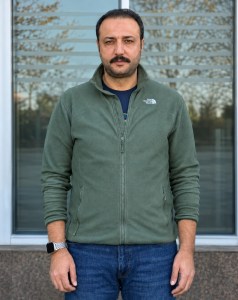
The classified MIT complaint did not target Bozkurt alone. It also demanded an investigation into unidentified additional suspects, using the Turkish expression “tespit edilecek diğer şüpheliler.” The complaint did not explicitly name confidential journalistic sources or demand their identification as such.
Nevertheless, because the underlying investigation relied on information obtained from individuals familiar with a sensitive intelligence operation, the request potentially extended the criminal inquiry to those suspected of providing or facilitating the disclosure.
For intelligence personnel, former military officers or other potential whistleblowers, the possibility of being identified through a criminal investigation could serve as a warning against sharing information with the press.
The October 2022 Nordic Monitor investigation identified Eskintan as a central figure in MIT’s transformation from a primarily intelligence-gathering organization into an agency capable of conducting independent clandestine military-style operations overseas.
A former Turkish military officer, Eskintan served as a project officer in the General Staff Directorate for Counterintelligence and Security between July 2006 and June 2007, according to a military personnel document cited in the original investigation.
He was subsequently recruited into MIT after Fidan assumed leadership of the organization in 2010. According to Nordic Monitor’s reporting, Eskintan initially worked in a department responsible for providing protective services before taking charge of the Department for Special Operations (Özel Faaliyetler Dairesi) in 2014.
The department was described as increasingly involved in clandestine overseas missions, including operations in Syria, Iraq and Libya. The earlier report alleged that Eskintan played a major role in organizing and supporting armed groups operating in Syria, facilitating cross-border intelligence missions and coordinating operations targeting Erdogan’s critics abroad.
It also linked him to preparations for the proposed operation against Greece. The secret unit was established to give MIT greater operational independence from conventional military and police special forces, allowing the agency to conduct clandestine missions under its own command structure.
The original Nordic Monitor investigation emerged during a period of heightened tensions between Turkey and Greece, both members of NATO. In 2022 Erdogan repeatedly escalated his rhetoric toward Greece amid disputes over Aegean airspace, maritime boundaries, the militarization of Greek islands and competing territorial claims.
Against this backdrop Nordic Monitor reported that MIT had developed clandestine options intended to provoke a crisis that could be politically useful to Erdogan’s government ahead of the 2023 elections. The reported proposals ranged from symbolic provocations on disputed or uninhabited territory to sabotage and a false-flag operation intended to create the appearance of an external threat.
The political objective was to mobilize nationalist sentiment and shift public attention from Turkey’s deteriorating economic conditions toward an external security confrontation.
The case against Bozkurt illustrates how a national intelligence agency’s effort to challenge unwanted reporting can develop into prolonged criminal proceedings against a journalist, particularly where broad intelligence secrecy provisions are used to restrict disclosures about officials and their activities.
What began as an investigation into a potential covert provocation between two NATO members has therefore become a documented criminal case involving intelligence secrecy, journalistic disclosures and the use of Turkey’s judicial system against reporting published from abroad.