
Abdullah Bozkurt/Stockholm
Turkey’s Defense Ministry has disclosed that it is conducting preparations for scenarios ranging from crisis and heightened tension to outright war as Ankara closely monitors a rapidly expanding military partnership between Israel and Greece, according to an official government document.
In a letter sent to a lawmaker in the Turkish Parliament on August 10 and signed by Defense Minister Yaşar Güler, the ministry said work concerning “possible crisis, tension and war” in Turkey’s surrounding region is continuing in close coordination among all relevant state institutions. The unusually explicit reference to war came in a response focused specifically on Greece’s military posture in the Aegean and its growing defense relationship with Israel.
In an unprecedented paradigm shift in Turkey’s war plans, Güler coupled Ankara’s contingency planning for war with an acknowledgment that Turkey is closely tracking Israeli-Greek military cooperation and developments affecting Turkish security and interests in the Aegean and eastern Mediterranean.
“Studies regarding all kinds of developments, including possible crisis, tension and war, that may occur in our region … continue meticulously in full coordination with all units of our state,” the ministry said in the document.
The letter explicitly refers to coordination across state institutions and agencies, suggesting that the planning is not limited to the military but also involves a broader range of national resources deployed across Turkey. The language points to preparations for a potentially wide-ranging mobilization in response to what Ankara appears to view as an emerging hostile axis in its neighborhood.
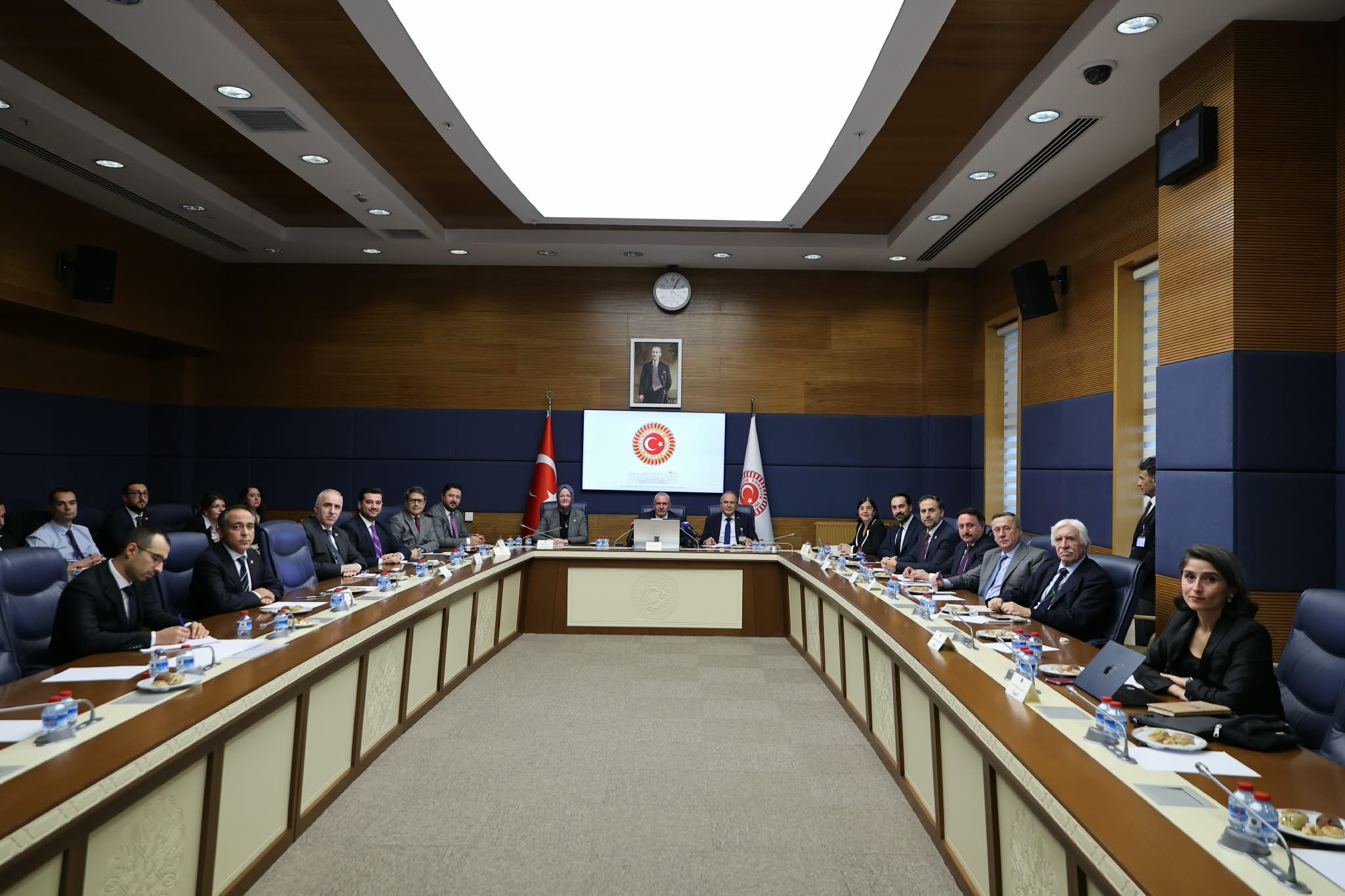
The letter was in response to an inquiry made by Republican People’s Party (CHP) lawmaker Hasan Öztürkmen, a neo-nationalist politician who questioned the government about the military buildup on Greek islands close to the Turkish coast and the implications of Greece’s increasingly extensive defense cooperation with Israel.
Turkish Defense Minister Yaşar Güler said in an August 10 letter to parliament that Ankara is preparing for possible crisis, tension and war scenarios while closely monitoring expanding military cooperation between Greece and Israel:
The inquiry reflected mounting concern in Ankara over Greece’s modernization of its forces, particularly the acquisition of Israeli weapons and air defense technology.
The lawmaker cited reports alleging that Greece was preparing to reinforce islands close to Turkey with Israeli-made air defense systems, construct underground military facilities and harden command centers and ammunition depots. He also asked whether Greece was building or upgrading runways for combat aircraft on islands near Turkey and whether Patriot batteries or systems of Israeli origin were being deployed there.
One of his central questions concerned the scale of Israeli-Greek military cooperation and whether the government regarded it as a threat to Turkish national security. Öztürkmen also asked what countermeasures Ankara was developing against Greece’s planned multilayered “Achilles Shield” air and missile defense architecture.
Güler did not provide operational details about Turkish countermeasures, force deployments or contingency plans. Instead, the ministry offered a broad but pointed assessment.
The ministry said it continuously monitors what Ankara considers Greek activities in the Aegean and eastern Mediterranean that violate Turkey’s “rights, interests and concerns” and international law, adding that necessary steps are rapidly taken.
The letter cites not only threats and risks but also opportunities, suggesting that emerging changes in Turkey’s neighborhood could also create openings to advance the country’s national interests, although it does not elaborate on what those opportunities might be.
The ministry then directly addressed Israel.
It acknowledged that Greece and Israel have developed military cooperation in recent years in the defense industry, military training, exercises and technology. Against what it described as a changing, multipolar security environment characterized by global and regional uncertainty and an expanding range of risks and threats to Turkey, the ministry said Israel’s military cooperation with Greece is being “closely monitored.”
Ankara also maintained that Turkey’s security and its rights and interests in the Aegean would be protected “under all circumstances.”
Greek Defense Minister Nikos Dendias said after meeting with Israeli Defense Minister Israel Katz in Athens on January 20 that cooperation between the two countries now covers the “entire spectrum,” including operational interoperability, joint exercises, research, innovation, defense technology and the military industry.
The two countries signed a 2026 defense cooperation program providing for 29 activities in Greece and 25 in Israel. They also agreed to exchange expertise on countering unmanned aerial vehicle swarms, unmanned underwater systems and cyber threats. Dendias described the relationship as part of a broader Greece-Cyprus-Israel-US framework in the eastern Mediterranean.
On June 4 the Israeli and Greek defense ministries signed a roughly $750 million (€650 million) agreement for Elbit Systems’ PULS precision rocket artillery system. The package includes launchers, precision-guided rockets of different ranges and loitering munitions. Israel’s Defense Ministry described the agreement as evidence that the strategic security partnership between the two countries had reached its “highest point.”

On July 23 Greece approved the acquisition of a multilayered air defense system worth up to €3.5 billion from Israel. The system forms the core of the Greek “Achilles Shield,” integrating Israeli radar and missiles produced by Rafael and Israel Aerospace Industries to provide anti-ballistic missile, anti-aircraft and anti-drone protection.
Greek Defense Minister Dendias said the system should become fully operational within 35 months and that Greek companies would manufacture at least 25 percent of it. Greece is simultaneously pursuing a larger €28 billion military modernization program through 2036 that includes up to 40 US-made F-35 fighters, new frigates, drones and other advanced systems.
The strategic relationship is also acquiring a broader regional dimension. Israeli Defense Ministry Director General Amir Baram said at the Herzliya Conference on June 30 that Israel should help construct a new regional architecture involving countries stretching “from India through the UAE to Greece and Cyprus.” His remarks were primarily framed around countering Iran rather than Turkey, but they demonstrate how Greece and Cyprus are increasingly incorporated into Israel’s long-term regional security calculations.
Athens, for its part, rejects Ankara’s contention that Greece is unlawfully militarizing the eastern Aegean islands.
The Greek Foreign Ministry said in March that Turkish claims concerning demilitarization were “unfounded” and had repeatedly been rejected. Athens argues that different treaty regimes apply to different islands, maintains that it retains the right to self-defense and says its defensive preparedness is necessary because of regional instability and what Greece regards as continuing Turkish threats.
The dispute therefore involves sharply conflicting interpretations of the security and legal order in the Aegean. Turkey invokes restrictions contained in the Lausanne and Paris treaties and accuses Athens of turning islands near the Turkish mainland into increasingly fortified military positions. Greece disputes Ankara’s interpretation and says its forces are defensive and justified by the security environment.
What makes Güler’s August letter particularly noteworthy is the language used by Ankara to describe its own preparations. Rather than limiting the answer to diplomatic protests or routine military monitoring, the ministry confirmed that government institutions are coordinating preparations covering the full escalation spectrum including war.
That language has gained additional weight because Turkish-Israeli tensions have simultaneously moved closer to direct military confrontation in neighboring Syria.
On August 18, eight days after Güler signed the letter, Israeli aircraft struck the Abu al-Duhur airbase in northwestern Syria. Israel said Damascus was preparing to allow Turkish troops to deploy there and argued that such a deployment would constitute a threat to Israeli security. Turkey denied that a military delegation was present and condemned the Israeli strike as reckless.
Israeli Defense Minister Katz subsequently warned President Recep Tayyip Erdogan against dragging Turkey into “dangerous adventures in Syria,” while Washington moved to strengthen a deconfliction mechanism among Israel, Turkey and Syria in an effort to prevent military miscalculation. US officials said they did not believe an Israeli-Turkish confrontation was imminent, but the intervention itself demonstrated concern that operations by the two regional powers could bring their forces into dangerous proximity.
The combination of the Syrian confrontation, Israel’s growing strategic partnership with Greece and Cyprus and Athens’ major acquisition of Israeli missile, artillery and air defense technology is reshaping Ankara’s threat calculations across more than one theater.
Turkey’s August 10 document does not amount to an announcement that war with Greece or Israel is certainly expected. But it provides a rare official acknowledgment that Ankara is incorporating the possibility of war into coordinated state planning while specifically scrutinizing the military relationship being built between Israel and its traditional rival Greece.
For Ankara, what was once largely a bilateral Greek-Turkish contest over the Aegean is increasingly intersecting with a much wider regional security realignment, one in which Israeli weapons, technology, training and strategic cooperation are becoming embedded in Greece’s military architecture at the same time that the Turkish-Israeli rivalry is intensifying from the eastern Mediterranean to Syria.