
Abdullah Bozkurt/Stockholm
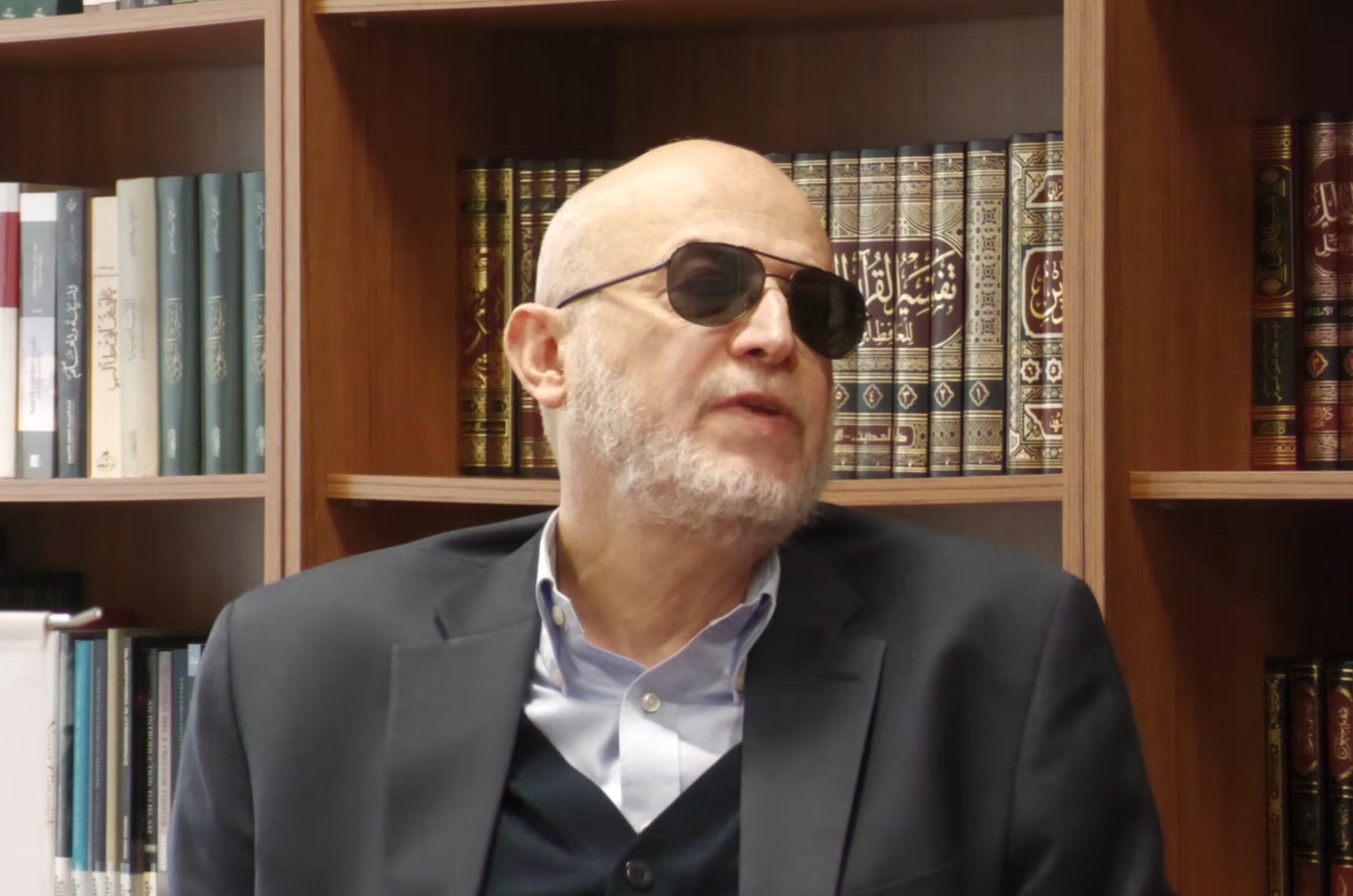
A senior figure linked to the Palestinian Islamic Jihad (PIJ), an Iran-backed Palestinian militant group designated as a terrorist organization by the United States and the European Union and granted an influential platform in Turkey under President Recep Tayyip Erdogan’s Islamist government, has revealed what he described as a Turkish “grand strategy” aimed at countering Western and Israeli influence, while saying that his network has been working to lay the intellectual and political groundwork for such a regional security architecture.
Sami Al-Arian, a Palestinian-American academic who has been allowed to build an influential political and academic platform in Turkey with generous help from Erdogan’s government, has claimed that a “very senior Turkish decision maker” once told him that Ankara’s “grand strategy” should rest on close relations among Turkey, Iran and Pakistan.
Al-Arian made the disclosure while advocating the creation of a new regional security architecture centered on the three Muslim-majority powers and designed to reduce dependence on the United States and diminish the presence and influence of outside powers in the Middle East.
Speaking during a webinar on the war involving Iran, Israel and the United States on April 8, Al-Arian argued that the existing security order in the Gulf had reached an “inflection point” and should eventually be replaced with a regionally controlled system.
According to Al-Arian, the latest regional conflict demonstrated that Middle Eastern countries should rethink that dependency. “The structure was based on American protection by establishing these dozens of military bases,” he said, adding that the region had now reached “a very important point where they need to rethink the security structure.”
He then outlined what he presented as the alternative: a security architecture built around Turkey, Iran and Pakistan.

“The best way to do this,” Al-Arian said, would be “to establish a regional security structure particularly with the main countries in the region.”
“I’m talking about Turkey, Iran and Pakistan,” he continued. “These are three very important countries, and they need to actually think of this strategy.”
It was at that point that Al-Arian disclosed the previously unreported conversation with the senior Turkish official. “I once talked to a very senior Turkish decision maker many years ago and I asked him what Turkey’s strategic vision was,” Al-Arian said.
He then clarified that he had specifically asked about Turkey’s “grand strategy.” According to Al-Arian, the unidentified Turkish official replied that Ankara needed to establish “a very good relationship among Iran, Turkey and Pakistan.”
Al-Arian said he was “pleasantly surprised” by the answer and described it as “brilliant,” although he added that he had been disappointed that no Arab country had been included in the formulation.
Al-Arian did not identify the official or say when the conversation took place, but the disclosure is noteworthy because Al-Arian used the alleged conversation as validation for the regional security model he was openly promoting in the webinar rather than merely recounting it as a historical anecdote.
He called for intellectuals and policymakers to begin developing a common framework to make that happen and considered the webinar as part of this effort to lay the groundwork for such grand strategy.
“What would a security structure be? What would be the common theme, the common thread that we can build so that we can reduce foreign influence, reduce foreign presence in the region?” he said.
He differentiated such a system from Iran’s existing “axis of resistance,” acknowledging that many governments would be reluctant to join the Iranian-led network because of the political and strategic costs.

“So we can have, let’s say, a region-based security axis,” he said, dividing regional governments according to their political alignment with Israel, saying some could never become part of the proposed architecture because, in his terminology, they had already joined what he called the “Zionist axis.”
Al-Arian said Turkey, Iran and Pakistan should take the leading role in that process. “The role of Turkey and Pakistan would be paramount as well as Iran to bring these [Gulf countries and Arab states] countries together by building such a structure,” he said. He concluded by calling for scholars from the three countries to begin studying the practical possibilities and obstacles involved in establishing such a security apparatus.
“I hope we can actually have this conversation … [with] scholars together from the three main countries … and start to see what the possibilities, roadblocks and obstacles are for such a regional security apparatus,” he said.
The remarks were consistent with Al-Arian’s broader argument throughout the webinar that the Iran conflict had demonstrated the weakness of the American-led regional order.
Earlier in his presentation he portrayed Iran as having emerged stronger from the confrontation and argued that Tehran’s resistance to US and Israeli military pressure could encourage governments and political movements across the region to reject foreign intervention.
He explicitly argued that the war had demonstrated that regional countries did not need US security guarantees.
“We do not need American protection,” he said, describing such protection as “a farce” and “a facade” and arguing that regional states needed to depend more heavily on themselves.
Al-Arian also presented Iran’s military performance as a model worthy of study. He praised Tehran’s asymmetric warfare strategy, including its use of missiles and drones, and said Iran’s approach would likely be taught at military and strategic institutions because it had enabled Tehran to withstand opponents possessing vastly greater military power.
He further described control of the Strait of Hormuz as a form of strategic deterrence comparable, in practical effect, to a nuclear weapon.
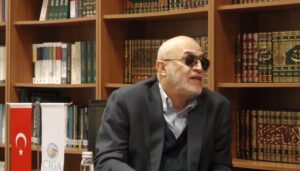
“The Strait of Hormuz becomes your nuclear bomb,” Al-Arian said, arguing that the ability to impose massive economic costs could deter future attacks on Iran.
Al-Arian also argued that Iran’s military response had strengthened Tehran politically because it was perceived as defending itself rather than initiating the confrontation.
His praise went beyond Iran’s defensive capabilities. He said the conflict demonstrated that countries resisting American and Israeli influence could ultimately establish a new regional order and that movements rejecting foreign intervention would be encouraged by Iran’s example.
The proposed Turkey-Iran-Pakistan structure therefore appears embedded in a much broader ideological vision in which the existing US-led security order is gradually displaced by cooperation among regional powers that Al-Arian regards as capable of acting independently from Washington.
That is particularly relevant given Al-Arian’s position in Turkey.
Al-Arian, who moved to Turkey after years of criminal and legal proceedings in the United States related to the Palestinian Islamic Jihad (PIJ), has been given a prominent academic platform at Istanbul Sabahattin Zaim University, where he founded and runs the Center for Islam and Global Affairs (CIGA).
Nordic Monitor previously reported that Al-Arian has enjoyed access to senior figures in the Erdogan government and government-linked institutions and has appeared at events along with influential officials, including İbrahim Kalın, the current head of Turkey’s National Intelligence Organization (MIT).
He has also met with Turkish government officials through CIGA and has been able to operate openly in Turkey despite his controversial history in the United States.
Al-Arian was prosecuted in the US in a terrorism-related case involving the PIJ. In 2006 he pleaded guilty to a conspiracy charge involving services provided to individuals associated with the PIJ and was later deported to Turkey.
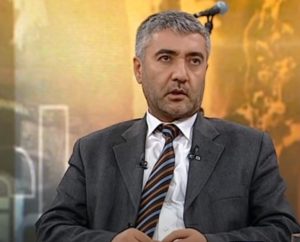
Since establishing himself in Turkey, he has repeatedly used CIGA and other platforms to promote a strongly anti-Israel and anti-US interpretation of regional politics.
Nordic Monitor reported in March 2025 that Al-Arian had portrayed Israel as a threat not merely to Palestinians but also ultimately to Turkey, urged Ankara to sever remaining ties with Israel and advocated dismantling what he described as Zionist political structures.
The latest remarks take that position a significant step further.
Rather than merely identifying Israel and the United States as threats, Al-Arian is now articulating what he believes should replace the security system associated with them: a regionally controlled architecture in which Turkey, Iran and Pakistan would serve as the principal strategic pillars.
His reference to a “very senior Turkish decision maker” is therefore potentially the most revealing part of the discussion.
If accurately recounted, it suggests that the concept of building Turkey’s geopolitical strategy around close relations with Iran and Pakistan had circulated at a senior level in Ankara well before Al-Arian publicly advanced essentially the same formula.
The identity of the official remains unknown, but Kalin may the official he was referring to given that Al-Arian had long cultivated relations with him when the MIT chief was serving as Erdogan’s national security advisor and spokesperson.
Like Al-Arian, Kalın has also long been known for his pro-Iran views. Nordic Monitor previously documented his writings and commentary in Iran-funded publications in the 1990s, when the young Kalın published articles praising Iran’s supreme religious leader, Ayatollah Ali Khamenei.
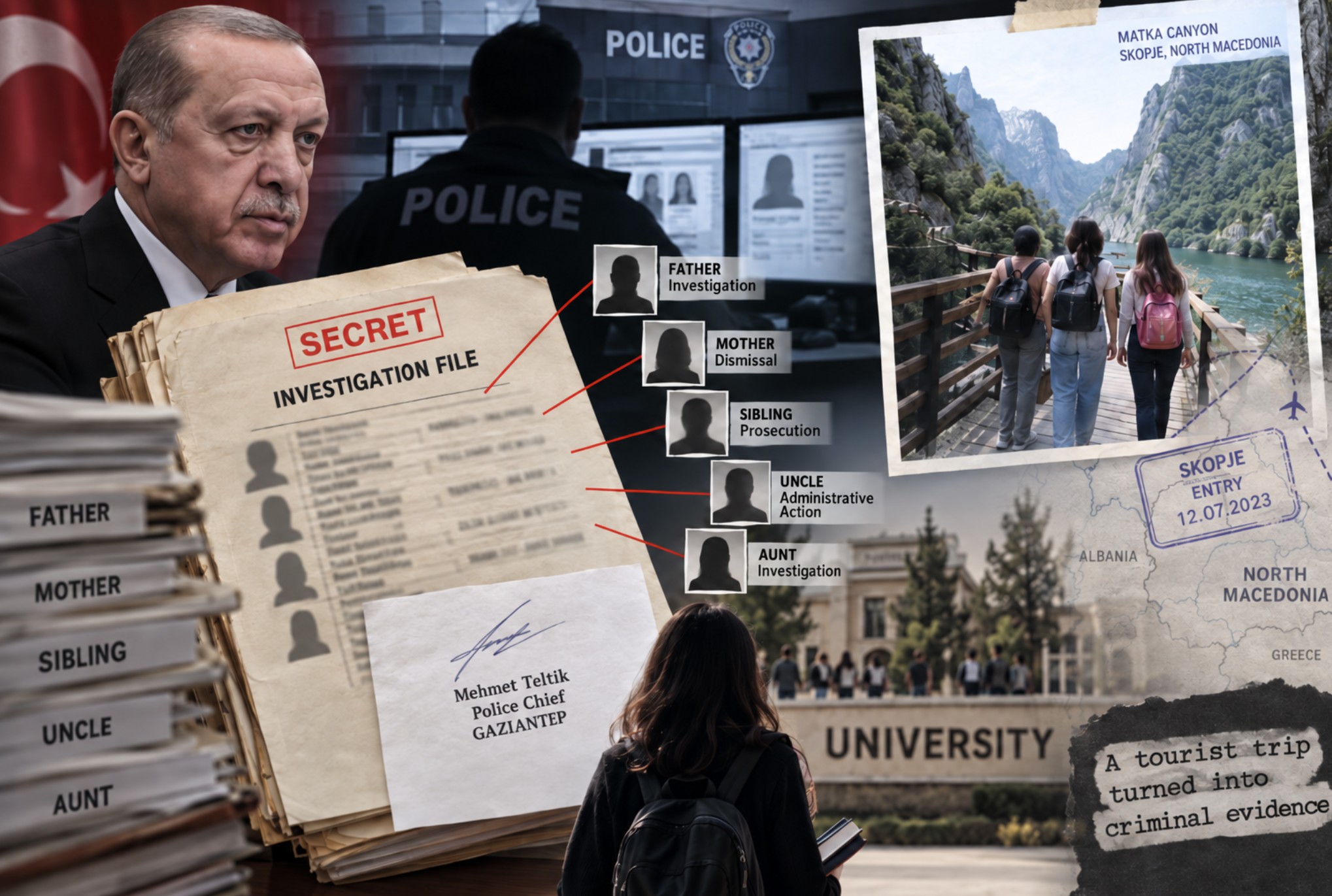
Al-Arian’s recollection of his conversation with a senior Turkish official appears to reflect an ideological orientation that Erdogan has long pursued privately. According to documents recovered during a Turkish police investigation into an Islamic Revolutionary Guard Corps (IRGC) Quds Force network operating in Turkey between 2011 and 2014, Erdogan had privately expressed deep hostility toward NATO, the United States, Europe and Israel as early as 2010.

Evidence incorporated into the case file indicated that Erdogan told loyalist lawmakers that once he had accumulated sufficient power, he knew “what to do with NATO, Europe and Israel.” At the same time, he opposed NATO’s Kürecik missile-defense radar in southeastern Turkey and favored closer political, economic and military relations with Iran.
“When I get a chance, I know what to do with NATO, Europe and Israel. I’m going to f*ck their mothers. NATO and the US are as terrorist as Israel,” Erdogan, then prime minister and head of the government, was quoted as telling loyalist lawmakers during a private meeting.
The conversation was later relayed to IRGC headquarters by a Turkish Quds Force operative who had spoken with the lawmakers, according to the investigation. The Quds Force probe was subsequently shut down by Erdogan before prosecutors could secure arrest warrants for Turkish and Iranian suspects. Among those investigated was Sefer Turan, a senior Erdogan aide and longtime pro-Iran Islamist who has advised the Turkish president on Middle Eastern affairs.
Erdogan later moved substantially in the direction reflected in those remarks. Following the false flag coup attempt of 2016, his government purged large numbers of pro-NATO officers from the Turkish Armed Forces, including roughly two-thirds of serving generals and admirals. Ankara also resisted US sanctions on Iran, expanded political and economic ties with Tehran and repeatedly clashed with Turkey’s NATO allies.
Ankara has not publicly announced the adoption of a grand strategy centered on confronting the West and Israel by aligning Turkey with Iran. However, concerns that the government may be moving in that direction have grown amid Ankara’s policy choices, institutional restructuring, the appointment of anti-Western figures to key government posts and the increasingly hostile rhetoric directed at Israel and Western governments by Turkey’s senior leadership over the past decade.